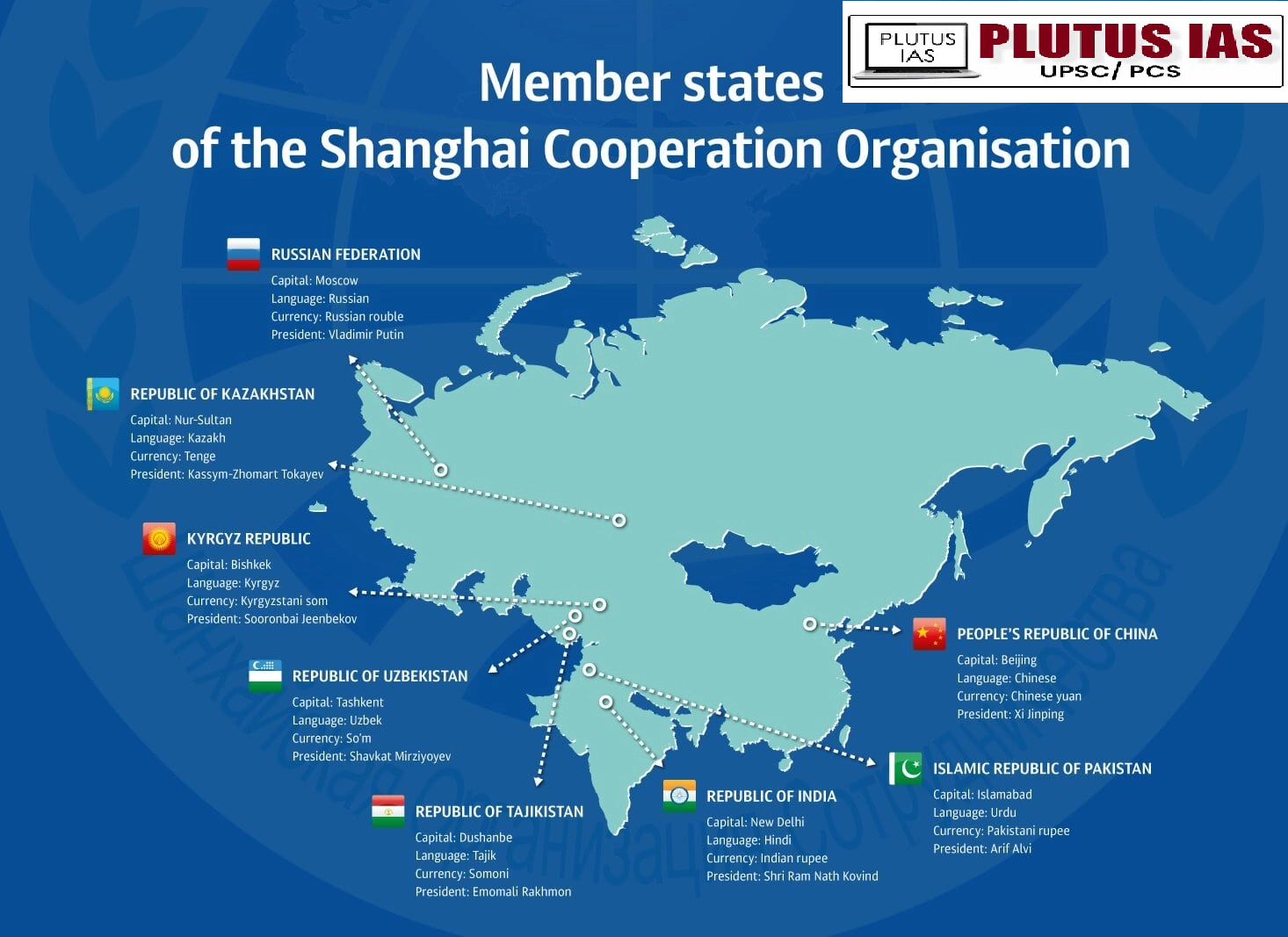
Significance of Shanghai Cooperation Organization (SCO):
1. Regional Security: The SCO addresses security challenges in Eurasia, focusing on counter-terrorism, extremism, and separatism to maintain stability among member states.
2. Economic Cooperation: The organization facilitates economic collaboration, promoting trade, investment, and connectivity, which enhances regional economic integration.
3. Political Dialogue: The SCO provides a platform for member states to engage in dialogue, allowing countries with diverse political systems to discuss various issues.
4. Counterbalance to Western Influence: The SCO serves as a counterbalance to Western alliances like NATO, promoting a multipolar world order that aligns with its members’ interests.
5. Cultural Exchange: The organization fosters cultural cooperation and people-to-people exchanges, enhancing mutual understanding and respect among its diverse cultures.
6. Infrastructure Development: The SCO encourages infrastructure projects, including initiatives like the Belt and Road Initiative (BRI), aimed at improving connectivity and economic development.
7. Collective Defense Initiatives: Member states conduct joint military exercises and share intelligence, enhancing their collective security capabilities against common threats.
Significance for India:
1. Regional Security: The SCO provides India with a platform to collaborate on security issues, particularly counter-terrorism, which is vital for addressing cross-border terrorism concerns.
2. Economic Opportunities: Through the SCO, India can enhance trade and investment ties with Central Asian countries, aligning with its “Act East” policy and diversifying its energy sources.
3. Cultural Diplomacy: The organization fosters cultural exchanges, allowing India to strengthen its soft power and build mutual understanding with member states.
4. Strategic Partnerships: Participation in the SCO helps India cultivate relationships with key regional players like China and Russia, facilitating dialogue on various geopolitical issues.
5. Counterbalance to China: The SCO enables India to engage with Central Asian nations to counterbalance China’s influence in the region and assert its own strategic interests.
6. Access to Afghanistan: The SCO provides a forum for India to discuss the security situation in Afghanistan, ensuring that its interests are represented in regional stability efforts.
7. Joint Military Collaboration: India can participate in joint military exercises and security initiatives, enhancing its defence capabilities and regional presence.
Issues with the SCO :
1. Geopolitical Rivalry:India’s relationship with China and Pakistan within the SCO framework poses challenges, especially given the historical tensions and territorial disputes.
2. Counter-Terrorism: India is concerned about cross-border terrorism and expects the SCO to take a stronger stance on this issue, particularly in the context of Pakistan’s role.
3. China’s Influence: India is wary of China’s growing influence within the SCO and the potential for China to dominate discussions and decisions that may not align with Indian interests.
4. Limited Regional Engagement: India’s influence in Central Asia is limited compared to that of China and Russia, which affects its ability to leverage the SCO effectively for regional partnerships.
5. Economic Cooperation Challenges: While the SCO promotes economic collaboration, India faces barriers such as infrastructure deficits and political instability in some member countries, hindering trade opportunities.
6. Belt and Road Initiative (BRI): India’s opposition to the BRI due to sovereignty concerns complicates its participation in SCO initiatives that align with China’s infrastructure projects.
7. SCO’s Focus on Security:The organization’s strong emphasis on security may limit discussions on economic and cultural cooperation, which are equally important for India.
Future Course of Action of SCO Regarding India:
1. Strengthening Counter-Terrorism Efforts: The SCO may enhance counter-terrorism initiatives, allowing India to voice concerns about cross-border terrorism and collaborate on intelligence sharing.
2. Enhancing Economic Cooperation: The organization will likely promote trade and investment between India and Central Asian countries, supporting India’s “Act East” policy.
3. Facilitating Dialogue on Regional Security: The SCO could facilitate discussions involving India, Pakistan, and Afghanistan to address regional security concerns and promote stability.
4. Cultural and People-to-People Exchanges: Increased cultural initiatives may foster mutual understanding and strengthen ties between India and Central Asian nations.
5. Infrastructure Development Collaboration: The SCO might support projects that enhance regional connectivity, aligning with India’s infrastructure development interests.
6. Engagement on Global Challenges: The organization could involve India in discussions on global issues like climate change and cybersecurity, recognizing its significant role.
7. Balancing China’s Influence: The SCO may provide India with a platform to counterbalance China’s influence, promoting a more equitable distribution of power among member states.
Conclusion:
India’s involvement in the Shanghai Cooperation Organization (SCO) since 2017 offers opportunities for enhanced regional security, counter-terrorism cooperation, and economic integration with Central Asia. However, it faces challenges in navigating complex geopolitical dynamics, especially with China and Pakistan. The SCO’s potential for dialogue and mutual understanding, combined with India’s proactive engagement, can strengthen regional stability and address global issues. Ultimately, India’s participation is vital for shaping its role in Eurasian politics while pursuing its national interests.





No Comments