


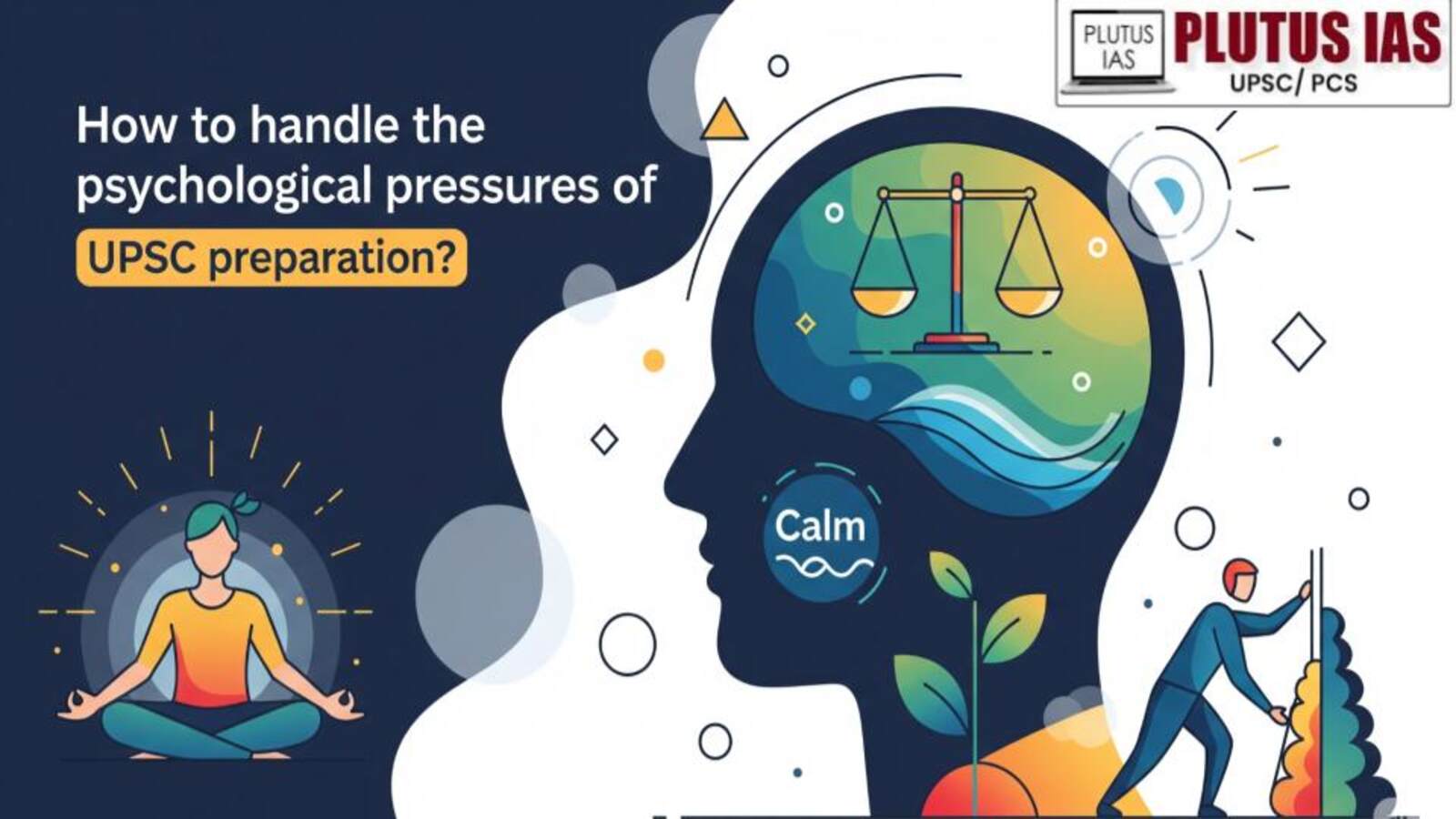
31 Jul How to handle the psychological pressures of UPSC preparation?
Prepping for UPSC CSE is training for knowledge and mental endurance. While the syllabus is broad and the competition stiff, what remains silent is the weighty emotional and psychological pressure of UPSC preparation. The anxiety levels get heightened, doubt creeps in, burnout is imminent, and depression can set in, for some, through these long years of UPSC preparation.
How to handle the psychological pressure of UPSC preparation?
Managing and accepting these pressures becomes just as important as studying polity or the economy. Recognising the dynamics between aspiring UPSC candidates, especially when one is sitting for them amid a whirlpool of emotions, mentorship, and a balanced study regime, Plutus IAS tries to offer supportive solutions holistically. In this article, we share tips that can indeed help deal with these pressures during UPSC preparations and ease this tough journey with expert guidance.
Why Is UPSC Preparation Psychologically Challenging?
The UPSC journey normally lasts about 1.5 to 2 years, and inside this time frame, aspirants face:
- Uncertainty about results
- Academic fatigue due to continuous studying
- Peer pressure and comparison
- Fear of failure
- Loneliness, especially for out-of-station candidates in cities like Delhi
The pressure of UPSC preparation arises not only from the exam itself but also from societal expectations, family responsibilities, and financial burdens. Managing this pressure is key to sustaining motivation and performance.
Strategies to Control UPSC Preparations Pressure
1. Structured Planning and Realistic Goals
Unrealistic goals, when set, can cause one to feel burnt out and frustrated. So rather, break targets down:
- Set weekly and monthly goals
- Focus on quality, not quantity
- Follow an individual schedule, as given by mentors at Plutus IAS
The personalised mentorship system at Plutus IAS works towards effective planning so that the mental load stays low and the progress remains measurable.
2. Break and Maintain Routine
Aspirants think more time on studies means higher productivity. Balance is what matters here.
- Short breaks after a study session
- At least 7 hours of sleep
- Routine with time for exercise and just any light entertainment
Plutus IAS encourages aspiring candidates to maintain discipline without getting rigid at it. The batch scheduling is so flexible that it allows time for oneself.
3. Mindfulness and Meditation
Such techniques may inculcate a mindset of meditation or even simple breathing exercises that help reduce anxiety.’Increasing the consciousness for about 10 to 15 minutes can:
- Help maintain attention
- Reduce stress hormones
- Enhance memory
Many UPSC toppers credit meditation for helping them stay calm under pressure.
4. The Dreaded Comparison Game
Social media platforms, Telegram discussion groups, or casual peer-group talks have all become set-ups for somebody to be compared against another. However, each aspirant has a distinct journey to being.
- Focus on your growth
- Limit exposure to toxic or overly competitive study groups
- Surround yourself with positive, supportive peers — something fostered in the Plutus IAS community
5. Find a Mentor and Speak Up
Many aspirants suffer in silence with emotional lows, hence the need to talk: friends, family, and mentors. Plutus IAS, for instance, provides one-on-one mentorship where students can gain:
- Academic feedback
- Motivation when low phases occur
- Emotional guidance from experienced faculty
- This often realigns goals and re-establishes confidence.
6. Have a Party for Small Wins
It can be so draining emotionally to wait for the final results to say that all the hard work was worth it.
- Celebrate finishing a book
- Celebrate improvements in mock test scores
- Celebrate consistency, not perfection
To this end, Plutus IAS carries out internal reviews and mock evaluations in order to provide regular milestones that students can be proud of.
Conclusion
That is the real UPSC pressure, and therefore, it cannot be ignored. But with the right mindset, support system, and coping strategies, it gets manageable and even transformative. Never forget, UPSC is not just about becoming an officer. It is a journey of personal growth, discipline, and resilience. Institutions like Plutus IAS do not merely help students pass an exam; rather, they build leaders who can stand strong even under the greatest of pressures.
Related article
Top UPSC Sociology Optional coaching
Best UPSC Online Coaching Institute
Top Online IAS Coaching Institute

- Effective communication skills For UPSC Preparation - August 20, 2025
- Enhance UPSC CSE Preparation with Spaced Repetition Learning - August 20, 2025
- Digital vs. Handwritten Notes: Which UPSC CSE Notes are perfect for Preparation? - August 14, 2025

No Comments