


13 Sep Biotech Powerhouse: How India is Reshaping the Global Bioeconomy
This article covers “Daily Current Affairs” and Topic details ” From Biotech Powerhouse: How India is Reshaping the Global Bio economy
SYLLABUS MAPPING:
GS- 3-Science & Technology- Biotech Powerhouse: How India is Reshaping the Global Bio economy
FOR PRELIMS
What are the major challenges and opportunities for India in becoming a global leader in bio economy by 2030?
FOR MAINS
What is the BioE³ Policy? Explain its significance in promoting sustainable biomanufacturing in India.
Why in the News?
India’s bio economy has witnessed a remarkable transformation, growing from USD 10 billion in 2014 to USD 165.7 billion in 2024, now contributing 4.25% to the national GDP of USD 3.89 trillion. With a bold target of reaching USD 300 billion by 2030, this sector is drawing national and global attention. The surge is being driven by significant strides in biotechnology, agricultural innovation, biomanufacturing, and healthcare—positioning India as a global leader in sustainable and innovation-driven growth. The sector’s rapid expansion and strategic importance make it a focal point in current economic and policy discussions.
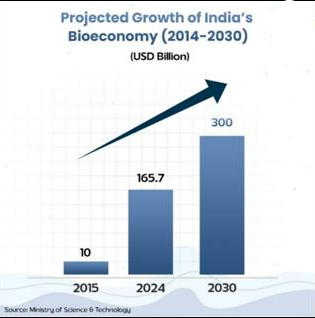
Key Drivers of India’s Bio-economy Success
India’s Bio Economy, valued at $165.7 billion in 2024, is driven by four major subsectors that highlight the country’s strengths in science, innovation, and sustainability.
Bio Industrial
Valued at $78.2 billion, this segment accounts for nearly half of the bio economy. It includes biofuels, bioplastics, green chemicals, and enzymatic applications across industries. Powered by biosynthetic processes and recombinant DNA technology, it reflects India’s strong push toward a green and circular economy.
Bio Pharma & Bio Medical
Contributing $58.4 billion (35.2%), this sector leads in pharmaceuticals, diagnostics, biologics, and medical devices. With a focus on gene editing, precision medicine, and cancer therapies, India is globally recognized for delivering affordable and innovative healthcare solutions.
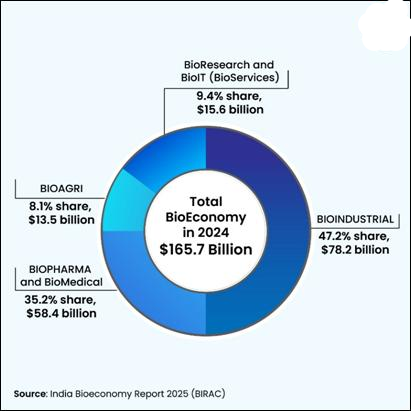
Bio Research and Bio IT (Bio Services)
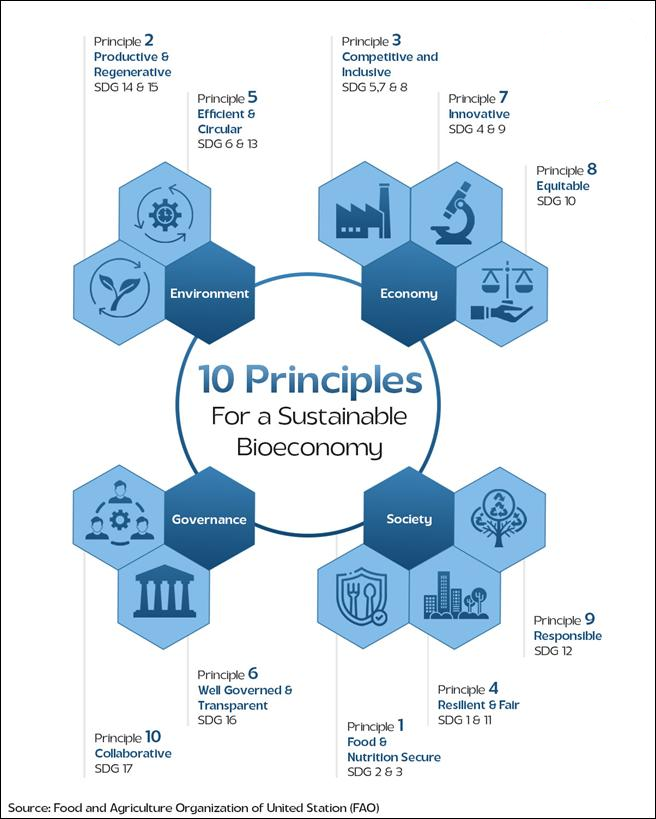
Together, these subsectors showcase how India’s Bio Economy is expanding rapidly—linking healthcare, agriculture, industry, and research to create jobs, boost sustainability, and provide affordable solutions for the world.
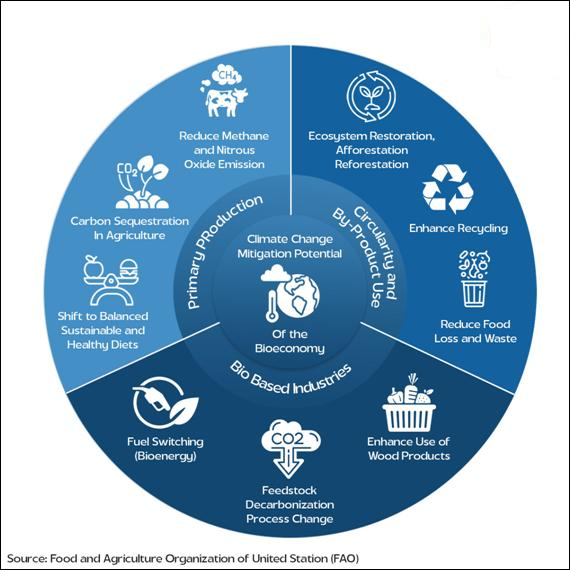
Climate Change Mitigation Potential of the Bio economy
The bio economy has strong potential to mitigate climate change by reducing greenhouse gas emissions and promoting sustainable practices. It supports cleaner farming methods, carbon storage in agriculture, balanced diets, and forest restoration. At the same time, it encourages recycling, reduced food waste, bioenergy use, and greener industrial processes. By combining these approaches, the bio economy helps lower emissions while advancing sustainability and resource efficiency.
Contribution of Key States
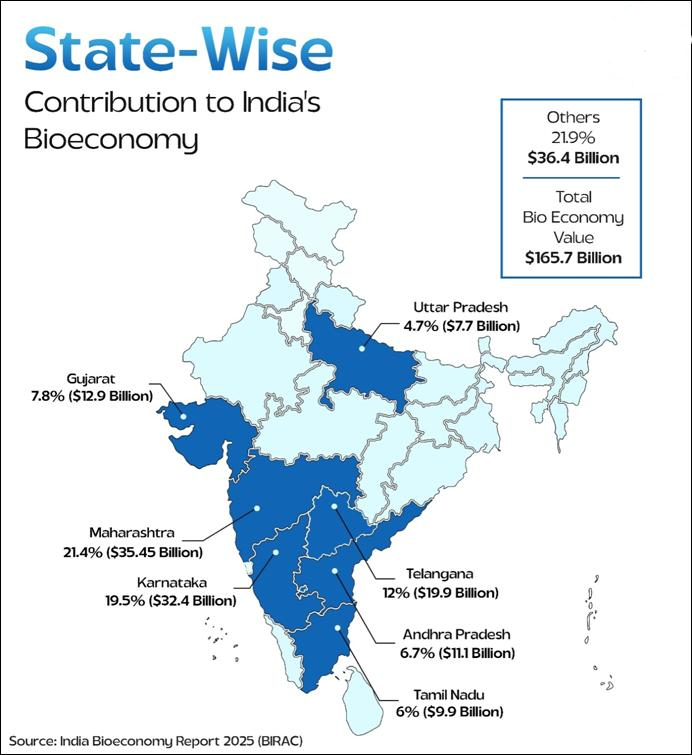
As in 2024, Maharashtra leads India’s Bio economy with a value of $35.45 billion, representing 21.4% of the total Bio economy value of $165.7 billion. Karnataka follows closely with $32.4 billion (19.5%), while Telangana contributes $19.9 billion (12%). Gujarat adds $12.9 billion (7.8%), Andhra Pradesh $11.1 billion (6.7%), Tamil Nadu $9.9 billion (6%) and Uttar Pradesh contributes $7.7 billion (4.7%) respectively. The “Others” category, which includes various smaller states, totals $36.4 billion, accounting for 21.9% of the Bio economy value.
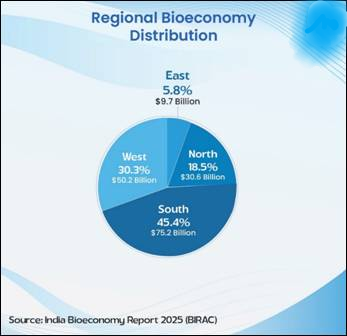
The regional distribution of India’s Bio Economy highlights the dominance of the Southern region, which contributed 45.4% ($75.2 billion), reflecting its strong biotechnology base and innovation ecosystem. The Western region followed with 30.3% ($50.2 billion), supported by major industrial hubs. The Northern region accounted for 18.5% ($30.6 billion), showcasing steady growth in biotech enterprises. Meanwhile, the Eastern region contributed 5.8% ($9.7 billion), indicating emerging opportunities and potential for expansion. This regional spread underscores the pivotal role of the South and West, while also pointing towards the growing significance of the North and East in shaping India’s Bio economy.
BioE3 Policy to Boost Biomanufacturing
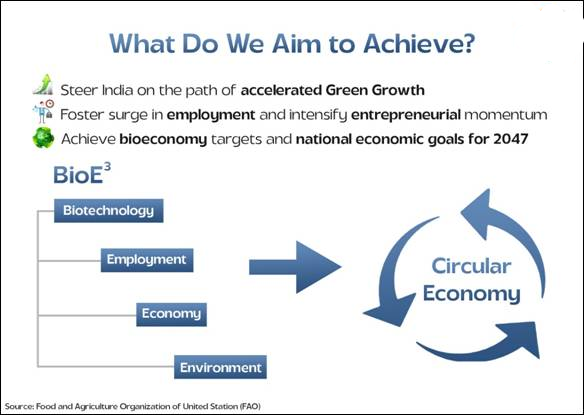
The Union Cabinet approved the proposal of the Department of Biotechnology (DBT) on 24 August 2024 for India’s first biotechnology policy, the BioE3 Policy (Biotechnology for Economy, Environment and Employment). The policy focuses on fostering high-performance biomanufacturing and lays down the framework for the Biomanufacturing and Bio foundry Initiative. This initiative aims to promote green growth by shifting from consumptive manufacturing to regenerative and sustainable practices.
At an interactive meet of DBT and Biotechnology Industry Research Assistance Council (BIRAC) with industry stakeholders, Dr. Jitendra Singh noted that India now accounts for 21 of the 121 Bio-Companies globally, positioning the country among the early movers in institutionalizing biomanufacturing policy. He emphasized that biomanufacturing is central to India’s vision of self-reliance, adding that “BioEnablers are the foundation of India’s next wave of biotechnology-led growth.”
To drive this growth, 21 advanced Bio Enabler facilities have been launched across the country, offering shared infrastructure for startups, SMEs, industries, and academic institutions. Their focus areas include microbial biomanufacturing, smart proteins, sustainable agriculture, functional foods, carbon capture, marine biotechnology, and next-generation cell and gene therapies.
The Key Questions: Why, How, What
| Question | Context/Challenge | Biotechnology Solution | Impact/Outcome |
|---|---|---|---|
| Why? | – Climate change – Unsustainable material consumption – Excessive resource utilization – Waste generation |
Biotechnology offers sustainable alternatives to traditional industrial processes | Addresses global environmental threats through innovative, regenerative solutions |
| How? | – Need for scalable, efficient, and eco-friendly systems | – Use of living factories and biological machines – Engineering flexible designs – Reclaiming resources from waste – Utilizing in situ resources |
Enables biological manufacturing with reduced environmental impact |
| What? | – Shift to bio-based, sustainable manufacturing | – Manufacturing using living systems – Development of bio-based products – Advancements in medical treatments – Support for industrial innovation |
Creation of versatile, cost-effective, and scalable processes driving economic and environmental sustainability |
Nationwide BioE3 Challenge to Drive Youth-Led Biotech Solutions
The BioE3 Challenge for Youth is a nationwide programme launched by Dr. Jitendra Singh to encourage young innovators under the theme “Design Microbes, Molecules and More”. Organised by the Department of Biotechnology, it invites participation from school students (Classes 6-12) and university students, researchers, faculty, startups and Indian nationals. The focus is on developing safe biological solutions to address challenges in health, agriculture, environment and industry.
Starting from October 2025, the challenge will be announced on the first of every month. The ten best entries each month will receive a cash prize of ₹1 lakh along with recognition and mentoring. In addition, 100 participants will be selected for funding support of up to ₹25 lakh through BIRAC to convert their ideas into proof-of-concept solutions. These participants will also get access to incubation facilities and infrastructure at BRIC+ institutions across India.
By empowering young talent and promoting grassroots innovation, the BioE3 Challenge aims to build a culture of problem solving and creativity while contributing to India’s journey towards a sustainable and self-reliant bioeconomy.
Biotech Milestones of 2025: India’s Leap Forward
1. Global Vaccine Leadership: India has solidified its position as a global vaccine powerhouse. The Serum Institute of India increased its share of the global vaccine market (excluding COVID-19 vaccines) from 19% in 2021 to 24% in 2024, reflecting its expanding production capacity and global reach. The country is now home to three of the top ten global vaccine manufacturers—Serum Institute, Bharat Biotech, and Biological E. Indian vaccine manufacturers supplied 40% of the World Health Organization’s (WHO) total vaccine procurement, with 20% of exports directed to the WHO African Region, underscoring India’s critical role in global health equity.
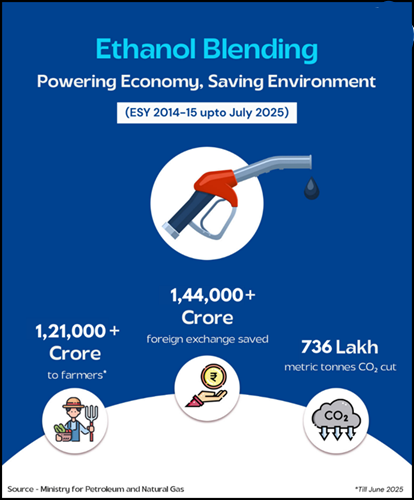
2. Ethanol Blending Success: India achieved 20% ethanol blending in 2025, five years ahead of the 2030 target. Farmers earned ₹1.21 lakh crore (2014–2025); ₹40,000 crore expected in 2025 alone. Blending saved ₹1.44 lakh crore in forex by replacing 245 LMT of crude oil.
3. Precision Medicine & Preventive Healthcare: India launched Nafithromycin, a homegrown antibiotic to combat AMR.
New vaccines introduced: Quadrivalent influenza and 14-valent PCV. CAR T-cell therapy, AI diagnostics, and gene-based treatments are transforming healthcare.
4. Bio economy’s Global Impact by 2050: Global bio economy projected to grow to $30 trillion, ~12% of world GDP by 2050. India’s bio economy may reach $1.4–2.7 trillion, contributing up to 12% of GDP. This growth supports net-zero targets, green jobs, and sustainable development.
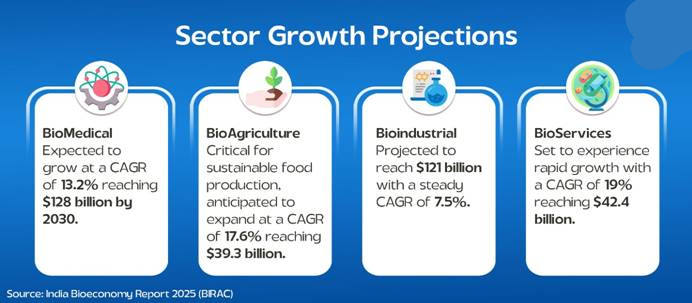
5. Target: $300 Billion by 2030: India’s bio economy set to grow from $151B (2023) to $300B (2030) at 12.3% CAGR. Projected contributions: Bio Medical ($128B), Bio Industrial ($121B), Bio Agri ($39.3B), Bio Services ($42.4B). Growth reflects India’s focus on innovation, sustainability, and self-reliance.
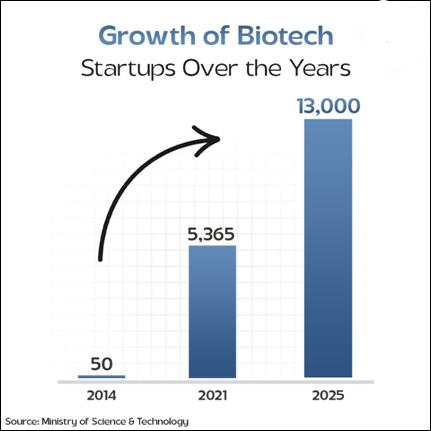
6. Startup & Med Tech Surge: Biotech startups surged 142%, from 5,365 (2021) to 13,000 (2025). Over 800 products developed and $600M raised in follow-on funding. FDI in Med Tech rose to $618M in 2024, boosting innovation and global partnerships
FDI in Med Tech sector rose from $370 million in 2022 to $618 million in 2024. Although funding fluctuated, the ecosystem remains vibrant. Domestic innovation and global collaborations position India as a key player in biotech and health-tech.
Conclusion
As a dynamic and rapidly expanding sector, India’s bio economy reflects the country’s preparedness to lead in the era of sustainable growth. From ethanol blending and vaccine leadership to breakthroughs in precision medicine and biomanufacturing, the sector reflects the nation’s ability to turn challenges into opportunities. With an ambitious target of reaching USD 300 billion by 2030 and projected growth of up to USD 2.7 trillion by 2050, India is set to emerge as a global bio economy powerhouse. The continued focus on biotechnology, green energy, and youth-led innovation ensures that the bio economy will play a central role in achieving the twin goals of economic prosperity and environmental stewardship, making India a model for the world in building a sustainable future.
Prelims question:
Q. With reference to India’s bioeconomy, consider the following statements:
1. BioIndustrial is the largest contributing subsector.
2. India achieved 20% ethanol blending in petrol by 2030.
3. The BioE³ Policy was launched to promote regenerative manufacturing practices.
Which of the above statements are correct?
A. 1 and 2 only
B. 1 and 3 only
C. 2 and 3 only
D. 1, 2 and 3
Answer: B
Mains Question:
Q. India’s bio economy is emerging as a key driver of sustainable and inclusive growth. Discuss the major achievements, policy interventions, and future potential of the sector. Also highlight its role in addressing climate and developmental challenges.
(250 words)

- Europe’s AI Rules May Become India’s Opportunity - August 14, 2026
- Transparency as the Foundation of Trust in Medicine - August 14, 2026
- A Timely Reset for the Food Security Act: From Foodgrain Security to Nutrition Security - August 13, 2026

No Comments