


15 Sep India’s Vote at the UNGA on Palestine: Strategic Autonomy in Action
This article covers “Daily Current Affairs” and Topic details ” From India’s Vote at the UNGA on Palestine: Strategic Autonomy in Action
SYLLABUS MAPPING:
GS-2- International Relations- India’s Vote at the UNGA on Palestine: Strategic Autonomy in Action
FOR PRELIMS
What is the I2U2 group? How is it useful for India?
FOR MAINS
What are the major opportunities and challenges for India in balancing its relations with conflicting powers in West Asia?
Why in the News?
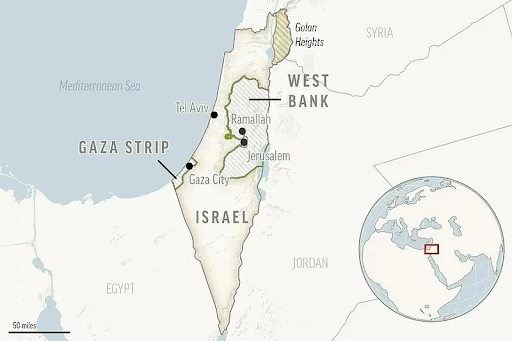
India recently voted in favour of a United Nations General Assembly resolution endorsing the ‘New York Declaration,’ a framework aimed at resolving the Israeli–Palestinian conflict through the two-state solution. Introduced by France, the resolution garnered overwhelming support with 142 countries backing it, 10 voting against, and 12 abstaining. It reflects a renewed global push to end the ongoing Gaza war and to establish a sovereign Palestinian state existing peacefully alongside Israel.
Bilateral
1. Security: Joint military drills counter-terrorism; intelligence sharing; cyber & maritime security; defence tech transfer.
2. Agriculture: Best practices in irrigation & farming; climate-resilient crop research; agri-tech innovation; food processing & cold-chain development.
3. Economy Trade: expansion; investment opportunities; infrastructure & energy collaboration; digital economy; connectivity & technology partnerships.
Regional
1. West Asia: Vital for India’s energy security (oil & gas imports); large Indian diaspora; maritime security in Arabian Sea; balancing ties with Israel, Palestine, Gulf states, and Iran.
2. Strategic Autonomy: Independent foreign policy; balancing US, Russia, and regional powers; flexibility in global forums (UN, BRICS, G20); avoiding alignment while securing national interest.
3. I2U2 (India–Israel–UAE–USA): Promotes food security, clean energy, digital innovation; boosts West Asian connectivity; new investment opportunities; complements India’s Act West policy.
Global level
1. UNSC: Push for permanent membership; advocacy of reforms for fair representation; active role in peacekeeping & global security.
2. Global Power: Emerging as voice of Global South; balancing relations with US, Russia, EU, China; leadership in G20 and BRICS.
3. Global Initiatives: Champion of climate action (ISA, LiFE, CDRI); promoting multilateralism; leadership in digital public goods and development partnerships.
4. Terrorism: Strong voice for UN Comprehensive Convention on International Terrorism (CCIT); global cooperation on counter-terrorism financing, cyber threats, and extremist networks.
Key Issues
| Level | Key Issues |
|---|---|
| Bilateral | – Security cooperation (defence, cyber, maritime) – Agricultural technology & food security – Trade imbalance and market access – Investment flows & technology transfer |
| Regional | – West Asia instability (Israel–Palestine, Iran–Saudi tensions) – Balancing ties amid rivalries – Maintaining strategic autonomy in shifting alliances – I2U2 cooperation in food security, energy, and connectivity |
| Global | – UNSC reforms and India’s bid for permanent seat – Balancing global power equations (US–China rivalry, Russia conflict) – Global initiatives on climate, energy & digital commons – Counter-terrorism cooperation through CCIT and FATF |
Way forward
1. Strengthen Dialogue & Diplomacy: Promote consistent high-level engagements to resolve disputes and build trust.
2. Deepen Economic Integration: Expand trade, investment, and technology partnerships for mutual growth.
3. Enhance Security Cooperation: Joint action on counter-terrorism, cyber threats, and maritime security.
4. Promote Multilateralism: Push for UNSC reforms, climate action, and equitable global governance.
5. Balance Strategic Autonomy: Maintain independent foreign policy while building constructive regional and global coalitions.
Conclusion
India’s support for the New York Declaration underscores its commitment to a peaceful two-state solution, while carefully balancing ties with both Israel and Arab nations. As West Asia remains volatile, India’s strategic autonomy allows it to pursue national interests without aligning rigidly with any bloc. Bilateral cooperation in Defence, agriculture, and trade remains key to India’s development. Regionally, India must sustain engagement through platforms like I2U2, while globally, it continues to push for UNSC reforms, lead on climate and digital commons, and advocate strong counter-terrorism measures.
Prelims question:
Q. With reference to India’s multi-level foreign policy challenges, consider the following statements:
1. At the bilateral level, India’s key concerns include trade imbalance, technology transfer, and food security.
2. At the regional level, India’s engagement through I2U2 aims to address instability in East Asia.
3. At the global level, India advocates for UNSC reforms and plays a proactive role in counter-terrorism through CCIT and FATF.
How many of the above statements are correct?
(a) Only one
(b) Only two
(c) All three
(d) None
Answer: B
Mains Question:
Q. India recently voted in favour of the UN’s New York Declaration supporting a two-state solution to the Israel–Palestine conflict. In this context, critically analyse how India balances its strategic interests in West Asia with its commitment to multilateralism, strategic autonomy, and global peace. Also, highlight key challenges and opportunities at the bilateral, regional, and global levels.
(250 words)

- Europe’s AI Rules May Become India’s Opportunity - August 14, 2026
- Transparency as the Foundation of Trust in Medicine - August 14, 2026
- A Timely Reset for the Food Security Act: From Foodgrain Security to Nutrition Security - August 13, 2026

No Comments