


09 Oct India–Afghanistan Relations Enter a New Phase: Taliban Foreign Minister’s First Visit to New Delhi
This article covers “Daily Current Affairs” and India–Afghanistan Relations Enter a New Phase: Taliban Foreign Minister’s First Visit to New Delhi
SYLLABUS MAPPING:
GS- 2- International Relations-India–Afghanistan Relations Enter a New Phase: Taliban Foreign Minister’s First Visit to New Delhi
FOR PRELIMS
What are the economic and trade dimensions of India–Afghanistan relations under the Taliban regime?
FOR MAINS
What are the key challenges India faces in dealing with the Taliban government?
Why in the News?
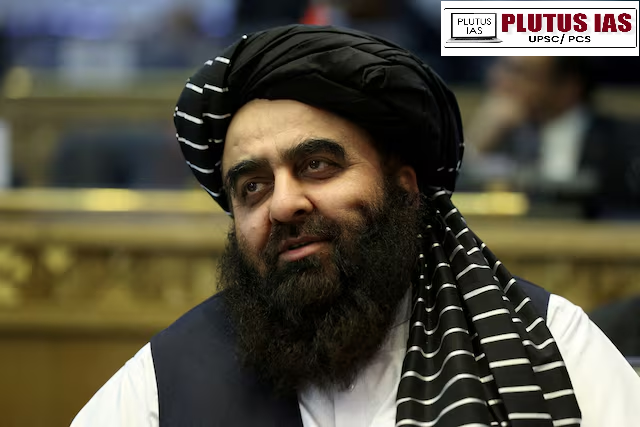
Afghan Foreign Minister Amir Khan Muttaqi is set to hold talks with Indian External Affairs Minister S. Jaishankar and other senior officials in New Delhi. The discussions will focus on political, economic, and trade issues. This marks a significant step as India, which had shut its embassy in Kabul following the 2021 U.S. withdrawal and the Taliban’s return to power, gradually re-engages with Afghanistan through limited diplomatic and humanitarian channels despite not officially recognizing the Taliban government.
Background
India and Afghanistan have shared traditionally friendly and culturally rich ties. However, after the U.S. withdrawal from Afghanistan in August 2021 and the Taliban’s return to power, India shut down its embassy in Kabul due to security concerns. In 2022, New Delhi cautiously reopened a “technical mission” to facilitate humanitarian aid, medical support, and trade assistance, marking a limited diplomatic return without officially recognizing the Taliban regime.
Purpose of the Visit
1. Enhancing bilateral cooperation and political engagement
2. Expanding trade exchanges and exports of Afghan dry fruits
3. Discussing healthcare cooperation and consular services
4. Exploring port facilities and regional connectivity opportunities
India’s Ministry of External Affairs confirmed that Foreign Minister S. Jaishankar and senior officials will hold discussions with Muttaqi on political, economic, and trade issues.
Significance of the Visit
| Dimension | Key Points |
|---|---|
| 1. Political and Diplomatic Dimensions | – The visit symbolizes a tentative thaw in India–Taliban relations. – Despite not recognizing the Taliban government, India is engaging pragmatically to protect its regional interests. – The UN Security Council Committee temporarily lifted the travel ban on Taliban Foreign Minister Amir Khan Muttaqi, facilitating the visit. – Indicates the Taliban’s increasing outreach to regional powers for legitimacy and recognition. |
| 2. Economic and Trade Dimensions | – Afghanistan aims to diversify trade partners and reduce dependency on Pakistan by accessing Indian markets and ports like Chabahar (Iran). – India continues to provide humanitarian assistance — wheat, medicines, and COVID-19 vaccines. – Enhanced trade in dry fruits, saffron, and minerals can help Afghanistan’s struggling economy. |
| 3. Regional and Strategic Dimensions | – The visit follows a regional conference in Moscow attended by India, Pakistan, Iran, China, and Central Asian countries, where participants opposed foreign military bases — indirectly referring to U.S. presence. – India’s engagement seeks to maintain regional stability and counter threats such as terrorism and narcotics trafficking. – The dialogue helps India safeguard its developmental projects in Afghanistan like the Salma Dam and Kabul Parliament building. |
| 4. International Context | – Russia is the only country to have officially recognized the Taliban government, while China, Iran, and Pakistan maintain working relations. – India’s cautious approach reflects a policy of “functional engagement without formal recognition.” – The visit indicates the Taliban’s desire for broader diplomatic acceptance beyond its traditional allies. |
Challenges
1. Security and Terrorism Threats: India remains wary of anti-India terror groups like LeT and JeM operating from Afghan soil. The risk of Afghanistan again becoming a terror haven threatens regional stability.
2. Lack of Political Legitimacy: The absence of an internationally recognized government makes formal agreements and long-term cooperation difficult for India.
3. Human Rights and Gender Concerns: Restrictions on women’s education, work, and public life under Taliban rule clash with India’s democratic and humanitarian values.
4. Diplomatic Tightrope: India must balance engagement with the Taliban while maintaining ties with the U.S. and Western allies that oppose official recognition.
5. Trade and Connectivity Hurdles: Poor infrastructure, banking barriers, and Pakistan’s denial of land access hinder India–Afghanistan trade, making Chabahar Port crucial.
6. Pakistan’s Influence: Islamabad’s deep ties with the Taliban limit India’s strategic space and affect its regional outreach efforts.
7. Uncertain Future of Indian Investments: India’s $3 billion worth of projects—like the Salma Dam and Kabul Parliament—face risks due to Afghanistan’s political and security instability.
India’s approach
1. Pragmatic and Cautious Engagement: India maintains limited engagement to protect strategic interests without officially recognizing the Taliban government.
2. Humanitarian Assistance: Provides food security support and essential supplies to vulnerable Afghan populations.
3. Health and Education Support: Offers healthcare aid and educational opportunities, especially for Afghan students in India.
4. Regional Dialogue Participation: Takes part in regional forums to promote stability and prevent extremism spillover into India.
5. People-Centric Focus: Prioritizes initiatives that directly benefit Afghan civilians, strengthening goodwill and humanitarian credibility.
Way Forward
1. Gradual Expansion of Engagement: India can increase economic and humanitarian assistance while maintaining political distance from the Taliban.
2. Strengthen Regional Cooperation: Collaborate with Iran, Central Asia, and Russia to promote stability and counter security threats.
3. UN-Mediated Engagement: Engage through the United Nations to address governance, human rights, and accountability issues.
4. Conditional Normalization: Full diplomatic normalization should depend on the Taliban’s adherence to international norms, gender rights, and inclusive governance.
5. Protect Development Projects: Safeguard India’s investments in infrastructure, education, and energy projects to ensure continuity and long-term impact.
6. Promote People-Centric Initiatives: Focus on programs that directly benefit Afghan civilians, such as health, education, and food security, to strengthen goodwill.
7. Monitor Security Risks: Maintain vigilance against terrorism and narcotics trafficking, ensuring that Afghanistan does not become a launchpad for anti-India activities.
Conclusion
Amir Khan Muttaqi’s visit to India reflects a shift towards pragmatic diplomacy in South Asia. While India remains cautious, the engagement signals its recognition of Afghanistan’s geopolitical importance and the need to maintain open channels of communication. For the Taliban, the visit serves as a platform to seek economic cooperation and diplomatic legitimacy in a rapidly evolving regional order.
Prelims question:
Q. Consider the following countries :
1. Azerbaijan
2. Kyrgyzstan
3. Tajikistan
4. Turkmenistan
5. Uzbekistan
Which of the above have borders with Afghanistan
A. 1, 2 and 5 only
B. 1, 2, 3 and 4 only
C. 3, 4 and 5 only
D. 1, 2, 3, 4 and 5
Answer: C
Mains Question:
Q. “Discuss the significance of the recent visit of Afghanistan’s Taliban Foreign Minister to India. How does it reflect India’s evolving approach towards Afghanistan and the broader regional dynamics in South Asia?”
(250 words)

- RBI’s Shrinking Real-Rate Cushion Amid Rising Inflation and Strong Demand - September 21, 2026
- India’s NGOs at a New Funding Crossroads - September 21, 2026
- Deep-Sea Discovery, Environmental Responsibility - September 19, 2026

No Comments