


16 Oct India Nears Complete Elimination of Naxalism: LWE-Affected Districts Drop to 11 Ahead of 2026
This article covers “Daily Current Affairs” and the Topic India Nears Complete Elimination of Naxalism: LWE-Affected Districts Drop to 11 Ahead of 2026
SYLLABUS MAPPING:
GS-03- Internal Security- India Nears Complete Elimination of Naxalism: LWE-Affected Districts Drop to 11 Ahead of 2026
FOR PRELIMS
What measures can be taken to ensure that developmental projects in tribal areas are both inclusive and conflict-sensitive?
FOR MAINS
What can be done to help surrendered Maoists return to normal life?
Why in the News?
The Central Government announced a significant decline in Left-Wing Extremism (LWE) in India, with the number of Naxal-affected districts reduced to 11 in 2025, down from 18 in March 2025 and 126 in 2013. The number of “most-affected districts” has also decreased from six to three within the last seven months.
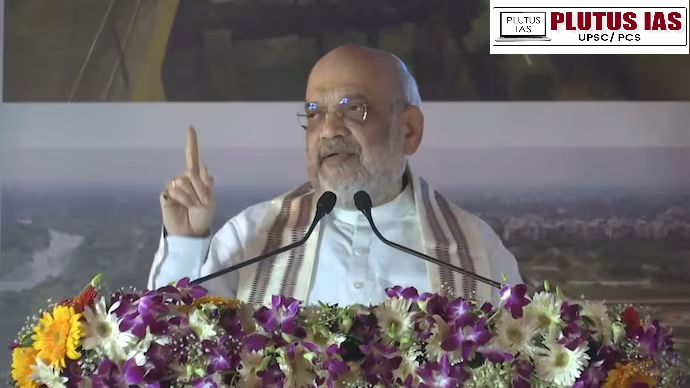
Home Minister Amit Shah hailed this as a “historic milestone in eliminating Naxalism”, stating that under Prime Minister Narendra Modi’s vision of a terror-free India, continued counter-insurgency efforts and people-centric development have significantly weakened the movement. The government aims to completely eradicate Naxalism by March 31, 2026.
Causes of Left-Wing Extremism
1. Economic Disparities: Widespread poverty, landlessness, and unemployment, especially in tribal belts, have fueled resentment. Resource extraction without fair compensation or rehabilitation has alienated locals.
2. Political Alienation: Tribal and marginalized groups often feel excluded from mainstream politics and local governance, driving them toward extremist ideologies.
3. Administrative Lapses: Poor governance, corruption, and inadequate law enforcement have created a governance vacuum exploited by Maoists.
4. Social Injustice and Human Rights Violations: Displacement, police excesses, and lack of rehabilitation have fostered anger and mistrust toward the state.
5. Failure of Land Reforms: Ineffective redistribution and illegal land acquisition by elites have worsened inequalities.
6. Exploitation by Middlemen: Tribal farmers and forest dwellers face chronic exploitation in markets due to absence of institutional support.
7. Weak Law Enforcement: Difficult terrain, limited police presence, and logistical challenges hinder effective operations.
Government Policies to Address LWE
1. Security Measures
Operation SAMADHAN: A holistic strategy combining intelligence-based operations, coordinated action by central and state forces, and fortified police infrastructure.
Deployment of CAPFs: CRPF and elite units like CoBRA battalions play a key role in neutralizing Maoist groups.
Establishment of 175 new security camps (since 2019) in LWE zones to fill security vacuums.
2. Developmental Initiatives
Special Infrastructure Scheme (SIS): Enhances road, telecom, and service connectivity.
Aspirational Districts Programme: Targets socio-economic development in backward districts.
Skill Development and Employment: Expansion of MGNREGA and livelihood programs to create local job opportunities. Construction of 13,620 km of roads and installation of 13,823 telecom towers in affected areas.
Financial inclusion via 4,903 post offices, 955 bank branches, and 839 ATMs in 30 most affected districts.
3. Surrender and Rehabilitation: Comprehensive rehabilitation policies offering financial aid, housing, and vocational training to surrendered cadres. Successful examples in Chhattisgarh and Jharkhand highlight the impact of humane reintegration measures.
4. National Policy and Action Plan (2015): Integrates security, rights-based development, and good governance to address both the symptoms and root causes of extremism.
5. Financial and Logistical Control: Choking of funds through tracking extortion networks and illegal mining revenues used to finance Maoist operations.
Challenges in LWE Elimination
1. Geographical Barriers: Dense forests and poor connectivity provide natural shelters for Maoists.
2. Local Support: Deep-rooted socio-economic grievances sustain limited support among marginalized communities.
3. Security Force Losses: Over 12,000 lives lost since 2000; IEDs remain a major threat.
4. Maoist Financing: Continued extortion and illegal mining sustain insurgent logistics.
5. Slow Development Implementation: Corruption and bureaucratic hurdles delay on-ground impact.
6. Advanced Warfare Tactics: Use of drones, encrypted messaging, and cyber propaganda complicates counter-operations.
7. Human Rights Concerns: Excessive force and wrongful detentions can alienate locals and bolster Maoist narratives.
Recent Trends in LWE
1. Declining Influence: Sharp fall in Maoist strongholds and violence; many senior leaders neutralized.
2. Shift in Tactics: Increased use of IEDs and digital propaganda instead of direct confrontation.
3. State-Level Successes: Andhra Pradesh and Telangana have virtually eliminated LWE; Odisha and Jharkhand have achieved major gains.
4. Attacks on Infrastructure: Targeting roads, telecom towers, and development projects to resist state penetration.
5. Rise in Surrenders: Large-scale desertions due to amnesty schemes and internal Maoist divisions.
Q. Consider the following statements regarding Left-Wing Extremism (LWE) in India:
1. The term “Red Corridor” refers to regions with a high presence of Maoist activities.
2. LWE is primarily concentrated in northeastern states of India.
3. The number of LWE-affected districts has decreased over the years due to government interventions.
Which of the statements given above is/are correct?
(a) 1 and 2 only
(b) 1 and 3 only
(c) 2 and 3 only
(d) 1, 2, and 3
ANSWER: B
Mains Question:
Q. Discuss the role of security forces and community engagement in countering LWE. How can a balanced approach between force and development be achieved?
(250 words)

- RBI’s Shrinking Real-Rate Cushion Amid Rising Inflation and Strong Demand - September 21, 2026
- India’s NGOs at a New Funding Crossroads - September 21, 2026
- Deep-Sea Discovery, Environmental Responsibility - September 19, 2026

No Comments