


24 Nov Suryakiran 2025: Deepening India–Nepal Military Ties and Regional Stability
This article covers “Daily Current Affairs” and From Suryakiran 2025: Deepening India–Nepal Military Ties and Regional Stability
SYLLABUS MAPPING
GS- 2 — International Relations – Suryakiran 2025: Deepening India–Nepal Military Ties and Regional Stability
FOR PRELIMS
What is Exercise Suryakiran?
FOR MAINS
What is the significance of mountain warfare training in Exercise Suryakiran for both India and Nepal?
Why in the News?
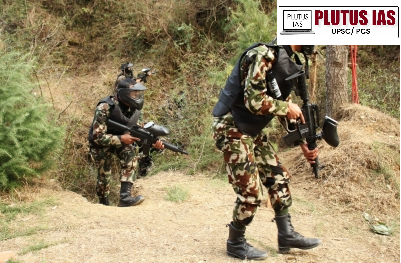
India and Nepal are set to begin the 19th edition of the bilateral military exercise ‘Suryakiran’ from November 25 to December 8, 2025, in Pithoragarh, Uttarakhand. This annual exercise—one of the largest bilateral initiatives between the two armies—aims to deepen defence cooperation, enhance operational interoperability, and strengthen historical military ties rooted in geography, culture, and strategic interdependence.
Introduction
Exercise Suryakiran is a key component of India–Nepal defence engagement, conducted alternately in both countries since its inception. It focuses on counter-terrorism, jungle warfare, high-altitude operations, disaster response, and technological integration, reflecting shared regional security challenges.
The 19th edition highlights the growing emphasis on mountain warfare, counter-terrorism readiness, and modern military applications, especially as both countries operate in rugged Himalayan terrains and face similar security threats.
Objectives of Exercise Suryakiran
The 2025 edition aims to:
1. Enhance operational synergy between the Indian and Nepalese armies.
2. Train forces in jungle warfare and counter-terrorism operations in hilly and mountainous terrain.
3. Integrate niche military technologies to improve surveillance, mobility, and tactical efficiency.
4. Share best practices, doctrines, and Standard Operating Procedures (SOPs).
5. Strengthen interoperability for UN peacekeeping operations, where both countries are major contributors.
6. Reinforce trust, camaraderie, and long-standing defence ties.
Key Features of the 19th Edition of Exercise Suryakiran (2025)
| Category | Details |
|---|---|
| 1. Location & Duration | Location: Pithoragarh, Uttarakhand Duration: November 25 – December 8, 2025 |
| 2. Training Components | • Advanced jungle warfare drills • Mountain-based counter-terror operations • Room intervention & hostage-rescue drills • High-altitude survival techniques • Drone-based surveillance & anti-drone training • Joint tactical exercises using modern communication & battlefield systems |
| 3. Technological Integration | • UAV-based reconnaissance • AI-enabled battlefield awareness • Terrain-specific tactical communication • Use of simulators for combat training Note: Marks a shift from traditional infantry drills to tech-enabled joint operations. |
Reflection on the 18th Edition (2024–25): A Foundation for 2025
The previous edition, held in Saljhandi, Nepal, included:
1. 334 Indian Army personnel
2. Focus on operational preparedness, aviation support, medical support, and environmental protection
3. Exchange of best practices on mountain warfare
4. Combined tasks to respond jointly in disaster-prone situations
5. These outcomes built trust and set the stage for more sophisticated interoperability exercises in 2025.
Significance of Exercise Suryakiran for India–Nepal Military & Strategic Relations
| Category | Key Points |
|---|---|
| 1. Strengthening Defence Cooperation | • Suryakiran is a cornerstone of India–Nepal defence ties. • India supports Nepal Army through: – Modernisation assistance – Supply of defence equipment – Extensive training programs – Military scholarships |
| 2. Enhancing Interoperability | • Joint training helps soldiers understand each other’s operational strategies. • Harmonisation of SOPs. • Better coordination for joint missions, including UN Peacekeeping (UNPKF). |
| 3. Addressing Common Security Challenges | Both nations face: • Cross-border crime • Smuggling & human trafficking • Natural disasters (floods, earthquakes) • Border-security challenges in difficult terrain → Exercise improves preparedness for these shared concerns. |
| 4. Cooperation in HADR (Humanitarian Assistance & Disaster Relief) | • India has played a key role in Nepal’s disaster response: – 2015 Earthquake: Rescue teams, medical aid, reconstruction – COVID-19: Vaccines, supplies – Ongoing support: Communication & logistics systems • Joint training enhances HADR coordination and readiness. |
| 5. Building People-to-People & Military-to-Military Bonds | • Thousands of Gorkha soldiers serve in the Indian Army. • Officers attend courses in each other’s academies. • A shared soldiering tradition deepens trust and camaraderie. |
Geopolitical and Strategic Dimensions
1. Strengthening Stability in the Himalayan Region: The exercise enhances joint preparedness for operations in mountainous terrain, ensuring coordinated responses to security challenges along the sensitive Himalayan belt. This cooperation contributes to long-term regional stability and reinforces secure borders.
2. Maintaining Strategic Balance Amid External Influence: With Nepal deepening its engagement with other global powers, India’s steady defence partnership through Suryakiran helps maintain strategic equilibrium and ensures that the Himalayan region does not become a zone of great-power competition.
3. Advancing India’s Neighbourhood First Policy: Regular military engagement supports India’s broader diplomatic strategy of prioritising security, connectivity, and cooperation with its immediate neighbours. This exercise showcases India’s commitment to Nepal’s defence capacity-building and regional peace.
4. Boosting Interoperability and Crisis Response: The exercise strengthens interoperability between both armies, essential for coordinated responses during cross-border threats, counterterrorism operations, and natural disasters—particularly critical in the disaster-prone Himalayan region.
5. Reinforcing People-to-People and Institutional Linkages: Beyond strategic benefits, Suryakiran institutionalises military-to-military ties and reinforces cultural and historical bonds, as both armies share long-standing traditions such as the Gorkha regiments. This deepens mutual trust and limits any geopolitical drift.
Q. Exercise ‘Suryakiran’ is one of the most significant institutionalised defence engagements between India and Nepal. Discuss its objectives, key features, and strategic significance for bilateral relations, with special reference to regional stability and India’s Neighbourhood First Policy.
(250 words)

- RBI’s Shrinking Real-Rate Cushion Amid Rising Inflation and Strong Demand - September 21, 2026
- India’s NGOs at a New Funding Crossroads - September 21, 2026
- Deep-Sea Discovery, Environmental Responsibility - September 19, 2026

No Comments