Status of Vultures in Assam
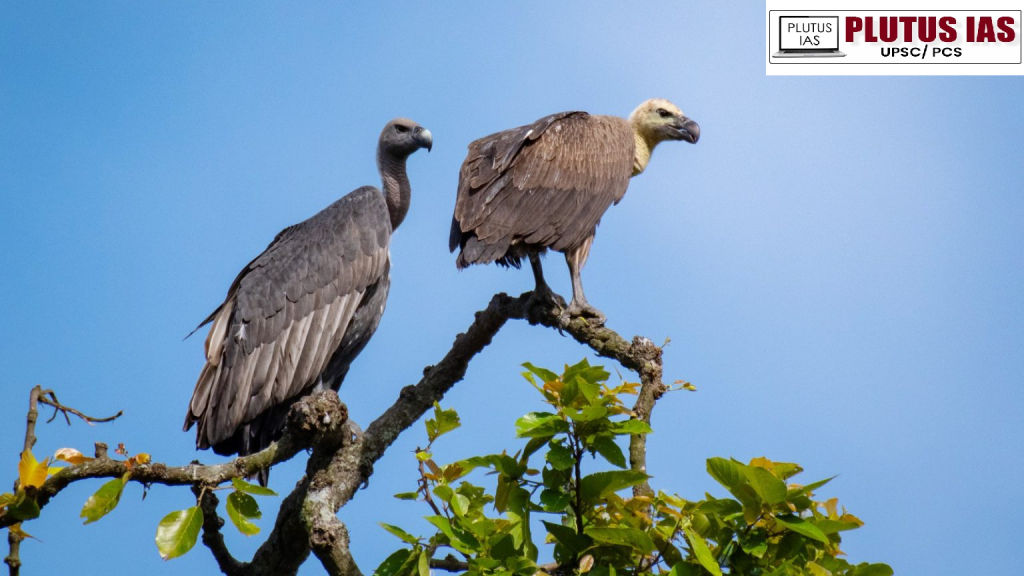
1. Assam is the stronghold of Slender-billed vultures, hosting the largest breeding population in India, especially around the Kaziranga landscape.
2. White-rumped vultures occur widely across the state but have suffered massive crashes.
3. VCBC Rani holds one of the largest captive populations of Gyps vultures in South Asia and leads conservation in collaboration with BNHS.
Socio-Cultural Significance
1. Vultures are traditionally associated with environmental balance in rural India.
2. Seen near riverbank cremation grounds, they symbolize the natural cycle of decay and purification.
3. Hindu mythology venerates vultures through Jatayu and Sampati from the Ramayana, symbolising courage and sharp vision.
Causes of Vulture Decline
| Category |
Details |
| 1. Catastrophic Diclofenac Poisoning |
– Diclofenac (veterinary NSAID) caused kidney failure and visceral gout in vultures feeding on treated livestock carcasses.
– Even 0.8–1% carcass contamination triggered nationwide population collapse.
– Resulted in >97% decline in White-rumped and Slender-billed vultures (1990s–2000s).
– White-rumped vulture population: fell to ~11,000 by 2007.
– Slender-billed vulture population: dropped to ~1,000 by 2007.
– Current population (2023–25): only 750–1,000 Slender-billed vultures remain. |
| 2. Secondary Threats |
– Habitat loss and fragmentation.
– Poison-baiting for carnivore control.
– Unsafe NSAIDs such as aceclofenac and nimesulide are still in use.
– Poisoning from pesticide-laced carcasses.
– Infrastructure threats such as electrocution and collisions (in some areas). |
| 3. Ecological Fallout of Decline |
– Increase in feral dog populations due to the absence of vultures.
– Rise in human–animal conflict and scavenger competition.
– Surge in rabies cases, contributing to an estimated ~500,000 human deaths (2000–2005).
– Collapse of natural scavenging services, leading to sanitation issues and slower carcass decomposition. |
Conservation and Reintroduction Efforts in Assam
Why Kaziranga’s 6th Addition Was Chosen
1. Large, undisturbed forested landscape
2. Abundant carrion from wild herbivores
3. Strong anti-poaching presence
4. Reduced NSAID contamination due to awareness among nearby communities
5. Low human interference
A scientifically designed release aviary has been constructed at Tewaripal Forest Camp, supervised by BNHS, to conduct a stepwise soft release that allows vultures to acclimatize before full dispersal.
Role of the Vulture Conservation Breeding Centre (VCBC), Rani
VCBC-Rani, jointly run by the Assam Forest Department and the Bombay Natural History Society (BNHS), is South Asia’s leading vulture conservation institution.
Key contributions:
1. More than 15 years of scientific breeding
2. Over 800 vultures bred nationwide under BNHS-led programmes
3. Development of advanced rearing, tagging, monitoring, and soft-release protocols
4. Creation of a genetically and demographically stable captive population of both species
Significance of the Initiative
1. Strengthens India’s Largest Vulture Recovery Programme: The release of captive-bred vultures reinforces the country’s long-term conservation strategy, integrating breeding, scientific monitoring, and safe release protocols.
2. Boosts Survival Prospects of Critically Endangered Gyps Vultures: By introducing genetically diverse, captive-bred individuals into secure habitats, the programme improves chances of population revival for species like the White-rumped and Slender-billed vultures.
3. Restores Ecological Scavenging Services: Vultures play a vital role in carcass disposal. Their return helps reduce feral dog numbers, prevent disease outbreaks, and improve overall ecosystem health in Northeast India.
4. Improves Forest and Wildlife Health in Kaziranga Landscape: The initiative supports natural carrion processing, reduces pathogen loads, and contributes to a more balanced predator–scavenger food web within the extended Kaziranga ecosystem.
5. Promotes Community Awareness and Safe Veterinary Practices: The programme involves local communities and veterinarians, encouraging a shift toward vulture-safe NSAIDs and reducing poisoning incidents—essential for long-term survival.
6. Establishes a National Model for Landscape-Level Reintroductions: This scientifically guided effort serves as a replicable model for species recovery under Indian field conditions, combining habitat suitability, anti-poaching, soft-release protocols, and community engagement.
Conclusion
The CZA’s approval to release captive-bred White-rumped and Slender-billed vultures into the 6th Addition of Kaziranga marks a pivotal moment in India’s vulture recovery journey. Assam—already a biological stronghold for these critically endangered species—has demonstrated leadership through scientific conservation, community engagement, and long-term planning. While diclofenac-era losses cannot be reversed overnight, sustained interventions, safe veterinary practices, and careful habitat management offer a realistic path toward restoring stable, wild vulture populations in the Northeast.
If implemented with continued vigilance and community support, this initiative could become a model for global raptor reintroduction efforts and reaffirm India’s commitment to ecological balance and biodiversity conservation.





No Comments