


02 Feb Union Budget 2026: An In-Depth Analysis of Priorities, Policies, and Impact
This article covers “Daily Current Affairs” and From Union Budget 2026: An In-Depth Analysis of Priorities, Policies, and Impact
SYLLABUS MAPPING
GS- 3-Economy- Union Budget 2026: An In-Depth Analysis of Priorities, Policies, and Impact
FOR PRELIMS
What are the key priorities of the Union Budget 2026?
FOR MAINS
What are the main highlights of the Union Budget 2026?
Why in the News?
The Union Budget 2026–27 marks a significant shift in India’s pharmaceutical strategy by placing biopharma and biologic medicines at the core of healthcare and manufacturing policy. This reflects the government’s recognition that the future of medicine lies increasingly in biotechnology-driven therapies, especially in the context of rising non-communicable diseases (NCDs) and global demand for advanced biologics. By prioritising biopharma, the Budget aims to move India up the pharmaceutical value chain—from a global supplier of low-cost generics to a centre for innovation-led, high-value biologic medicines, strengthening both public health outcomes and economic growth.
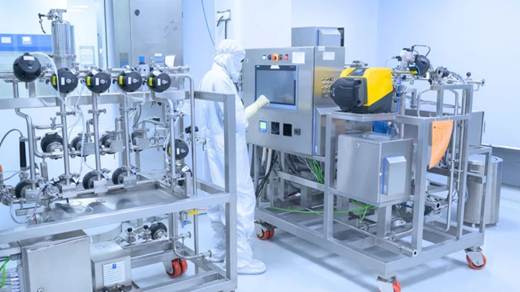
What is Biopharma?
Biopharma, or biopharmaceuticals, refers to medicines developed and manufactured using living biological systems such as human or animal cells, microorganisms, fungi or enzymes. Unlike conventional chemically synthesised drugs, biopharmaceuticals are produced using biotechnology-based processes, making them more complex, targeted and precise. Examples include: Vaccines, Monoclonal antibodies, Gene and cell therapies, Recombinant proteins and modern insulin, Biosimilars
Union Budget 2026–27: Biopharma SHAKTI Initiative
| Component | Key Provisions (Union Budget 2026–27) | Significance |
|---|---|---|
| Biopharma SHAKTI Initiative | • National mission with ₹10,000 crore outlay over 5 years • Strengthens end-to-end biopharma ecosystem – R&D, manufacturing, clinical trials, regulation |
• Reduces import dependence • Positions India as a global hub for biologics & biosimilars |
| Human Resource Capacity Expansion | • Establishment of 3 new NIPERs • Upgradation of 7 existing NIPERs |
• Addresses shortage of highly skilled manpower • Supports research, manufacturing & regulatory expertise |
| Clinical Research Infrastructure | • Development of 1,000+ accredited clinical trial sites across India | • Boosts capacity for advanced biologics trials • Makes India a preferred global destination for ethical clinical research |
| Regulatory Capacity Building | • Strengthening CDSCO • Induction of specialised scientific & technical personnel |
• Ensures faster approvals • Enhances global regulatory alignment for complex biologics |
Why This Matters
The Budget integrates manufacturing scale, skilled manpower, clinical research capacity and regulatory credibility into a unified framework. This signals a clear intent to:
Shift India from cost-based competitiveness to innovation-driven leadership
Improve domestic access to affordable biologic therapies
Enhance India’s credibility in global pharmaceutical governance
Government Initiatives Strengthening India’s Biopharma Ecosystem
National Biopharma Mission (NBM) – Innovate in India (i3)
Launched in 2017, with a total outlay of ₹1,500 crore, co-funded by the World Bank.
Implemented by BIRAC under the Department of Biotechnology (DBT)
Aims to transform India into a $100 billion biotech industry and capture 5% of global pharma share.
Key Achievements:
Support to 101 projects involving 150+ organisations and 30 MSMEs
Creation of 1,000+ jobs, including scientists and researchers
Development of vaccines (HPV, dengue), biosimilars (cancer, diabetes), diagnostics and medical devices
Support for Genome India Programme (10,000 genome sequencing)
NBM as a Catalyst for Health Innovation
1. Enabled indigenous development of affordable technologies such as:
2. India’s first domestically developed MRI scanner (Voxel Grids Innovations)
3. India’s first biosimilar of Liraglutide for Type-2 diabetes (Levim Lifetech)
4. Supported the world’s first DNA-based COVID-19 vaccine (ZyCoV-D)
5 . Established extensive clinical trial networks, IP facilitation and incubation centres
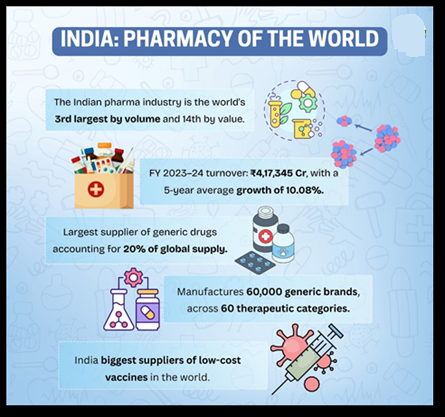
BIRAC-led Innovation Support
Established 95 bio-incubation centres across India
Key schemes:
Biotechnology Ignition Grant (BIG) – up to ₹50 lakh
SEED Fund – early equity support
LEAP Fund – commercialisation support
जनCARE – Amrit Grand Challenge for digital health innovations
Manufacturing and Industrial Strengthening
PLI Scheme for Pharmaceuticals
Bulk Drug Parks Scheme
Strengthening of Pharmaceutical Industry (SPI) Scheme
These measures aim to:
Reduce import dependence on APIs
Upgrade MSMEs to global manufacturing standards
Strengthen supply chain resilience and export competitiveness
PRIP Scheme, BioE3 Policy and Bio-RIDE
PRIP Scheme (₹5,000 crore): Supports R&D in new drugs, biosimilars, precision medicine and MedTech.
BioE3 Policy (2024): Focus on biomanufacturing, Bio-AI hubs and sustainable innovation.
Bio-RIDE Scheme (₹9,197 crore): Integrates R&D, entrepreneurship, biomanufacturing and biofoundries.
Conclusion
The Union Budget 2026–27 reflects a coherent and forward-looking policy approach to building a resilient biopharma ecosystem spanning research, innovation, manufacturing and entrepreneurship. As India’s disease burden shifts toward chronic and non-communicable conditions, access to advanced biologic therapies becomes critical for long-term health security. The Biopharma SHAKTI initiative, backed by substantial financial commitment and institutional reforms, represents a decisive step in this direction. By strengthening domestic capabilities in biologics and biosimilars, enhancing regulatory credibility and expanding clinical research infrastructure, the initiative reinforces India’s ambition to emerge as a global biopharma manufacturing and innovation hub.
Best ias coaching in delhi Best ias coaching in chandigar
Prelims question:
Q. With reference to the Biopharma SHAKTI Initiative announced in Union Budget 2026–27, consider the following statements:
1. It aims to strengthen India’s end-to-end ecosystem for biologics and biosimilars.
2. It includes expansion of NIPERs and development of nationwide clinical trial infrastructure.
3. It is implemented by the Central Drugs Standard Control Organisation (CDSCO).
Which of the statements given above is/are correct?
(a) 1 and 2 only
(b) 2 and 3 only
(c) 1 and 3 only
(d) 1, 2 and 3
Answer:
Q. Discuss the significance of the Biopharma SHAKTI Initiative announced in the Union Budget 2026–27 in transforming India’s pharmaceutical sector. How does it align with India’s broader healthcare and manufacturing objectives?
(250 words)

- RBI’s Shrinking Real-Rate Cushion Amid Rising Inflation and Strong Demand - September 21, 2026
- India’s NGOs at a New Funding Crossroads - September 21, 2026
- Deep-Sea Discovery, Environmental Responsibility - September 19, 2026

No Comments