


16 Apr Indian Railways: Journey from Steam Engines to a Modern Transport Backbone
This article covers “Daily Current Affairs” and Indian Railways: Journey from Steam Engines to a Modern Transport Backbone
SYLLABUS MAPPING
GS–3 – Indian Economy- Indian Railways: Journey from Steam Engines to a Modern Transport Backbone
FOR PRELIMS
What steps can be taken to improve Indian Railways?
FOR MAINS
What are the major achievements of Indian Railways in recent years?
Why in the News?
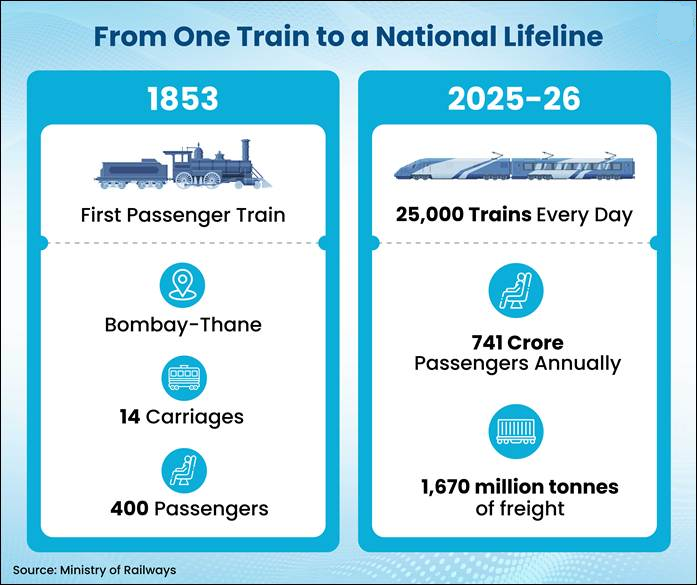
Indian Railways, one of the largest railway networks in the world, has undergone a remarkable transformation since its inception in 1853. What began as a modest steam-powered service between Bombay and Thane has evolved into a technologically advanced, electrified, and digitally integrated transport system. Today, it not only ensures mass mobility but also serves as a critical backbone of India’s economic growth and logistics network.
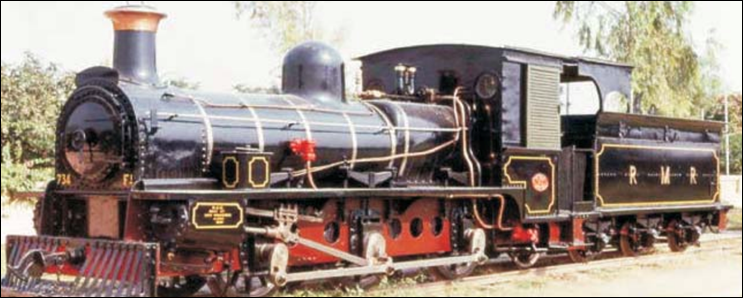
Historical Evolution of Indian Railways
1. Early Phase (1853–1900): Steam Era and Expansion
The journey began on 16 April 1853, when the first passenger train ran from Bombay to Thane, covering about 34 km. Operated by the Great Indian Peninsula Railway, it marked the beginning of modern transportation in India.
Rapid expansion followed, with railway lines reaching about 14,500 km by 1880.
Multiple gauges (broad, metre, and narrow) were introduced to suit diverse geographical conditions.
Engineering milestones like the Darjeeling Himalayan Railway (1881) showcased innovation in difficult terrains.
Indigenous capability emerged with the first steam locomotive built in Ajmer in 1895.
2. Transition Phase (1900–2000): Electrification and Modernization
The twentieth century witnessed a gradual shift from steam to diesel and electric traction.
1925: First electric train introduced between Bombay VT and Kurla.
Post-1947: Integration of 42 railway systems into a unified national network.
1952: Zonal reorganization improved administrative efficiency.
1985: Phasing out of steam locomotives.
Modern Transformation of Indian Railways (21st Century)
| Area | Key Developments | Data / Facts | Impact / Significance |
|---|---|---|---|
| Railway Electrification | Near-complete electrification of broad gauge network | – 99.6% electrified (March 2026) – Increased from 21,801 km (2014) to 69,873 km (2026) |
– Saves ~180 crore litres diesel annually – Reduces import dependence – ~70% cheaper than diesel – ₹6,000 crore savings – Higher electrification than UK, Russia, China |
| Infrastructure Upgradation & Speed | Track renewal and speed enhancement | – 54,600 km tracks renewed (2014–2026) – 80% network supports 110 km/h+ |
– Improved safety – Better punctuality – Increased efficiency |
| Passenger Services & Modern Trains | Introduction of modern trains | Vande Bharat Express: – Launched 2019 – 9+ crore passengers Amrit Bharat Express: |
– Promotes Make in India – Better comfort & speed – Affordable travel for common people – Inclusive development |
| High-Speed Rail Development | Bullet train projects and corridors | – Mumbai–Ahmedabad corridor: 508 km – Speed: 320 km/h – 7 proposed corridors (~4,000 km) |
– Faster inter-city travel – Economic growth corridors – Technological advancement |
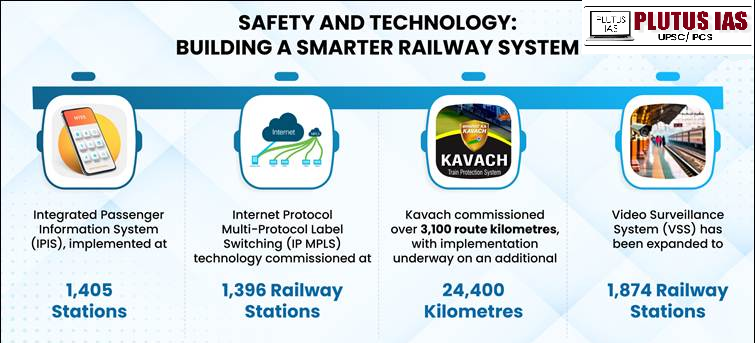
| Digitalization & Safety Systems | Adoption of modern technology | – KAVACH: 3,100 km (target 24,400 km) – AI surveillance: 1,800+ stations – IP-MPLS network – IPIS system |
– Enhanced safety – Real-time passenger information – Improved communication – Efficient railway operations |
Significance of Indian Railways
1. Economic Engine: Acts as a backbone of the economy by facilitating movement of goods, boosting trade, supporting industries, and reducing logistics costs.
2. Freight and Logistics Backbone: Plays a crucial role in bulk transportation of coal, cement, food grains, and other essential commodities, ensuring supply chain efficiency.
3. Social Integration: Connects remote, rural, and backward regions with urban centers, promoting national unity and balanced regional development.
4. Affordable Mobility: Provides low-cost transportation to millions of people daily, making it the most accessible mode of travel for all sections of society.
5. Environmental Sustainability: Increasing electrification reduces carbon emissions, fuel consumption, and dependence on fossil fuels, supporting green growth.
6. Strategic and Disaster Support: Plays a vital role in defense logistics and emergency response by enabling rapid movement of troops, relief materials, and essential services.
Way Forward for Indian Railways
1. Infrastructure Expansion: Complete Dedicated Freight Corridors (DFCs) and expand high-speed rail networks to enhance capacity, reduce congestion, and improve efficiency.
2. Technological Upgradation: Accelerate implementation of KAVACH and adopt advanced technologies like AI, IoT, and Big Data for smart and safe railway operations.
3. Sustainability and Green Transition: Promote renewable energy usage, increase energy efficiency, and work towards achieving net-zero carbon emissions.
4. Passenger-Centric Reforms: Improve passenger comfort, cleanliness, punctuality, and expand user-friendly digital services for a better travel experience.
5. Strengthening Safety Mechanisms: Enhance track maintenance, modern signaling systems, and real-time monitoring to ensure higher safety standards.
6. Institutional and Financial Reforms: Encourage Public-Private Partnerships (PPP), improve project execution efficiency, and ensure better financial management.
Conclusion
Indian Railways exemplifies a journey of continuous transformation—from steam engines to electrified high-speed systems. It reflects the dynamic interplay of technology, policy, and public service. As India aspires to become a $5 trillion economy, the role of railways becomes even more critical in ensuring sustainable, inclusive, and efficient growth. By combining scale with innovation and tradition with modernization, Indian Railways will continue to drive India’s progress in the decades to come.
Q. With reference to Indian Railways, consider the following statements:
1. Indian Railways has achieved 100% electrification of its broad gauge network.
2. KAVACH is an indigenous automatic train protection system aimed at preventing collisions.
3. Dedicated Freight Corridors are designed to separate freight and passenger traffic.
Which of the statements given above is/are correct?
(a) 1 and 2 only
(b) 2 and 3 only
(c) 1 and 3 only
(d) 1, 2 and 3
Answer: A
Q. Indian Railways has evolved from a colonial transport system into a modern engine of economic growth. Discuss its significance and the key reforms required to enhance its efficiency, safety, and sustainability
(250 words)

- Europe’s AI Rules May Become India’s Opportunity - August 14, 2026
- Transparency as the Foundation of Trust in Medicine - August 14, 2026
- A Timely Reset for the Food Security Act: From Foodgrain Security to Nutrition Security - August 13, 2026

No Comments