


15 Jul IPC-UPPPC MoU: Boosting Pharma Quality & Regulatory Excellence in UP
Subject Relevance — Where This Topic Fits
- GS Paper II — Governance, Social Justice (Health Sector) | GS Paper III — Economy (Industrial Policy, Infrastructure, MSMEs), Science and Technology (Biotechnology, Health Technology)
- Prelims: Indian Pharmacopoeia Commission (IPC), Uttar Pradesh Pharmacopoeia Council (UPPPC), Memorandum of Understanding (MoU), Pharmaceutical Quality Standards, Regulatory Excellence, Pharmacovigilance, Materiovigilance, MSME Support
- Essay: The Role of Regulatory Frameworks in Fostering Innovation and Public Health, Synergistic Federalism: A Catalyst for Sectoral Growth and Development
Quick Revision: The IPC-UPPPC MoU is a strategic partnership to enhance pharmaceutical and medical device quality, regulatory excellence, and patient safety in Uttar Pradesh, fostering innovation and supporting MSMEs through cooperative federalism.
Why is this in the news?
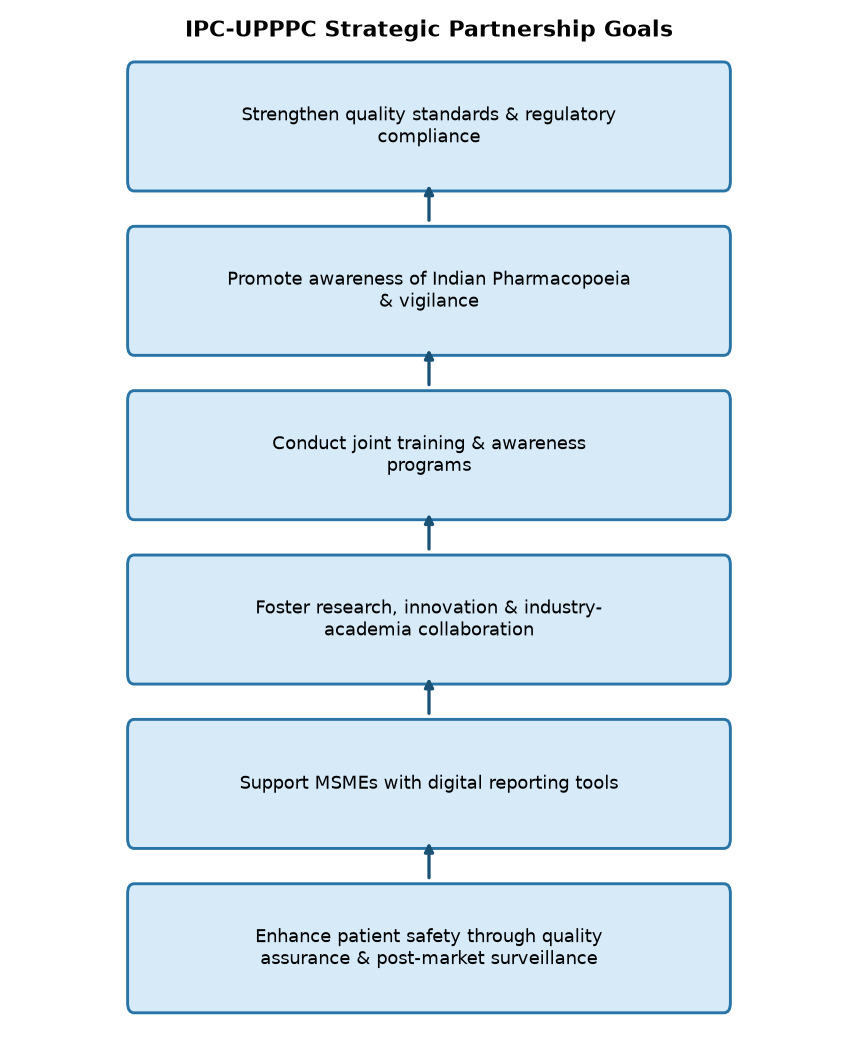
The Indian Pharmacopoeia Commission (IPC) recently signed a Memorandum of Understanding (MoU) with the Uttar Pradesh Pharmacopoeia Council (UPPPC) on July 14, 2026, during the YEIDA MedTech Investors Meet and Site Visit 2026 in Greater Noida. This strategic collaboration aims to bolster quality standards, regulatory compliance, innovation, and capacity building within the pharmaceutical and medical device ecosystem, particularly in Uttar Pradesh, with a broader vision of enhancing patient safety and supporting Micro, Small, and Medium Enterprises (MSMEs) through digital reporting tools.
Background
- India is a global leader in generic drug production, often referred to as the ‘pharmacy of the world,’ supplying over 50% of global vaccine demand, 40% of generic demand in the US, and 25% of all medicine in the UK.
- The pharmaceutical sector in India is projected to reach US$ 130 billion by 2030, driven by increasing healthcare expenditure, a large patient pool, and government support.
- Uttar Pradesh, with its significant population and burgeoning industrial landscape, is strategically positioned to become a major hub for pharmaceuticals and medical devices.
- Ensuring robust quality control and regulatory oversight is paramount to maintaining India’s reputation as a reliable pharmaceutical supplier and safeguarding public health.
- The IPC, as the National Standard Setting Organization, plays a crucial role in setting standards for drugs manufactured, sold, and consumed in India.
- The need for localized regulatory strengthening and capacity building, especially at the state level, is critical for effective implementation and enforcement of national standards.
Understanding the Indian Pharmacopoeia Commission (IPC) and Uttar Pradesh Pharmacopoeia Council (UPPPC)
- **Indian Pharmacopoeia Commission (IPC):** An autonomous institution of the Ministry of Health and Family Welfare, Government of India, established to set standards for drugs in India.
- **Mandate of IPC:** To update and publish the Indian Pharmacopoeia (IP), which specifies standards for identity, purity, and strength of drugs, ensuring their quality and safety.
- **Functions of IPC:** Develops monographs for drugs, excipients, and medical devices; promotes rational use of medicines; and conducts training programs on pharmacopoeial standards.
- **Pharmacovigilance Programme of India (PvPI):** Operated by IPC, it monitors the safety of medicines and collects data on Adverse Drug Reactions (ADRs) to ensure patient safety.
- **Materiovigilance Programme of India (MvPI):** Also managed by IPC, it monitors the safety and performance of medical devices.
- **Uttar Pradesh Pharmacopoeia Council (UPPPC):** A state-level body likely established to complement the IPC’s efforts by focusing on the specific pharmaceutical and medical device ecosystem within Uttar Pradesh.
- **Role of UPPPC (as inferred from MoU):** To facilitate the implementation of national standards, promote regulatory compliance, and foster innovation at the state level, tailored to local industry needs.
- **Significance of State-level Councils:** They act as crucial intermediaries, translating national guidelines into actionable strategies for regional manufacturers and healthcare providers, ensuring last-mile compliance.
Key Features
| Feature of IPC-UPPPC MoU | Significance |
|---|---|
| Strengthening Quality Standards and Regulatory Compliance | Ensures pharmaceutical and medical device products meet stringent national and international benchmarks, enhancing patient safety and market credibility. |
| Promoting Awareness of Indian Pharmacopoeia, Pharmacovigilance, and Materiovigilance | Educates stakeholders on critical quality and safety protocols, fostering a culture of adherence and proactive reporting of adverse events. |
| Joint Training Programs, Workshops, and Awareness Campaigns | Builds capacity among industry professionals, regulators, and healthcare providers, leading to improved manufacturing practices and better product oversight. |
| Fostering Research, Innovation, and Industry-Academia Collaboration | Drives the development of new drugs and medical devices, encourages indigenous R&D, and bridges the gap between scientific discovery and industrial application. |
| Supporting MSMEs through Digital Tools for Adverse Event Reporting | Simplifies compliance for smaller enterprises, enabling them to contribute to safety monitoring without significant resource burden, thereby promoting inclusive growth. |
| Enhancing Patient Safety through Quality Assurance and Post-Market Surveillance | Establishes a robust system for continuous monitoring of product safety and efficacy throughout their lifecycle, protecting public health. |
Why it Matters
Enhancing Public Health and Patient Safety
- The MoU directly contributes to safeguarding public health by ensuring that all pharmaceutical and medical device products available in Uttar Pradesh meet the highest quality and safety standards.
- Robust pharmacovigilance and materiovigilance mechanisms, bolstered by this partnership, will facilitate early detection and mitigation of adverse events, thereby reducing patient harm.
- Increased awareness and capacity building among healthcare professionals and the public will empower informed decision-making regarding medication and medical device usage.
Boosting Uttar Pradesh’s Pharmaceutical and MedTech Ecosystem
- This collaboration positions Uttar Pradesh as a leading hub for pharmaceuticals, medical devices, and healthcare technologies by fostering an environment of quality, innovation, and global competitiveness.
- Attracting further investment in the state’s healthcare manufacturing sector, leading to job creation and economic growth.
- The focus on MSMEs through digital tools will integrate smaller players into the quality ecosystem, promoting inclusive industrial development and strengthening the local supply chain.
Strengthening India’s Regulatory Framework and Global Competitiveness
- The partnership exemplifies a model of cooperative federalism, where national standards are effectively implemented and reinforced at the state level, leading to a more cohesive and robust regulatory landscape.
- By ensuring adherence to international quality benchmarks, Indian pharmaceutical and medical device products will gain greater trust and acceptance in global markets, boosting exports.
- Fostering research and innovation within the state contributes to India’s overall scientific and technological prowess in the healthcare domain, reducing reliance on imports and promoting self-reliance (Atmanirbhar Bharat).
Challenges
1. Ensuring Uniform Implementation Across Diverse MSMEs
- Varying levels of technological adoption and financial capacity among MSMEs can hinder uniform implementation of digital reporting tools and quality standards.
- Lack of skilled manpower and awareness in smaller units poses a significant challenge to adopting new regulatory practices.
UPSC Link: GS Paper III — Industrial Policy; GS Paper II — Governance
2. Resource Constraints and Infrastructure Gaps
- Adequate funding, trained personnel, and state-of-the-art laboratory infrastructure are crucial for effective regulatory oversight and quality testing, which may be limited.
- Maintaining and upgrading infrastructure to keep pace with evolving technologies in pharmaceuticals and medical devices is a continuous challenge.
UPSC Link: GS Paper III — Infrastructure; GS Paper II — Governance
3. Coordination and Data Sharing Challenges
- Effective coordination between IPC, UPPPC, state drug control authorities, and other stakeholders is vital but can be complex due to multiple agencies involved.
- Ensuring seamless and secure data sharing for adverse event reporting and market surveillance across various platforms can be technically challenging.
UPSC Link: GS Paper II — e-Governance; GS Paper III — Science and Technology
4. Resistance to Change and Compliance Burden
- Some manufacturers, especially smaller ones, may perceive new regulations and reporting requirements as an additional burden, leading to resistance.
- The transition to new quality assurance protocols requires significant investment in training and process re-engineering.
UPSC Link: GS Paper III — Industrial Policy; GS Paper II — Governance
Challenges — UPSC Perspective
| Issue | Concern |
|---|---|
| Capacity Building for MSMEs | Ensuring all MSMEs, regardless of size or location, have the necessary resources and training to comply with enhanced quality and reporting standards. |
| Regulatory Harmonization | Achieving consistent interpretation and enforcement of national standards across different state-level authorities to prevent regulatory arbitrage. |
| Technological Adoption | Bridging the digital divide among manufacturers to effectively utilize digital tools for adverse event reporting and data management. |
| Funding and Investment | Securing sustained financial resources for infrastructure development, research, and training initiatives outlined in the MoU. |
| Skilled Manpower Availability | Addressing the shortage of qualified professionals in quality control, regulatory affairs, and R&D within the state’s pharmaceutical sector. |
Government Initiatives — Must-Memorise for Prelims
- Production Linked Incentive (PLI) Scheme for Pharmaceuticals
- PLI Scheme for Medical Devices
- Scheme for Promotion of Bulk Drug Parks
- Scheme for Promotion of Medical Device Parks
- Ayushman Bharat Digital Mission (ABDM)
- National Health Policy 2017
- Startup India Initiative (for MedTech startups)
- MSME Samadhaan (Delayed Payment Monitoring System)
- ZED Certification Scheme (Zero Defect Zero Effect)
- Pradhan Mantri Bhartiya Janaushadhi Pariyojana
Way Forward
- Develop a phased implementation roadmap with clear milestones and measurable outcomes for all aspects of the MoU, prioritizing critical areas like training and digital tool adoption.
- Establish a dedicated joint working group comprising experts from IPC, UPPPC, industry, and academia to oversee implementation, address challenges, and foster continuous improvement.
- Leverage digital platforms not only for adverse event reporting but also for disseminating best practices, e-learning modules, and real-time regulatory updates to all stakeholders.
- Incentivize MSMEs for adopting quality standards and digital reporting through financial assistance, tax benefits, or preferential procurement policies.
- Strengthen industry-academia linkages to promote demand-driven research, skill development, and innovation relevant to the state’s pharmaceutical and medical device sector.
- Conduct regular audits and performance evaluations of the implemented programs to ensure effectiveness, identify gaps, and facilitate timely corrective actions.
- Promote international collaborations and benchmarking with global regulatory bodies to align Indian standards with the best global practices, enhancing export potential.
- Launch comprehensive public awareness campaigns to educate consumers about drug quality, patient safety, and the importance of reporting adverse events.
UPSC Value Addition
Keywords for Mains Answer-Writing
Pharmaceutical Ecosystem · Regulatory Excellence · Patient Safety · Quality Assurance · Pharmacovigilance · Materiovigilance · MSME Empowerment · Innovation Hub · Cooperative Federalism · Public Health Governance · Global Competitiveness · Atmanirbhar Bharat · Digital Transformation · Capacity Building
Constitutional & Policy Linkages
- Article 246 (Seventh Schedule, List III – Concurrent List, Entry 20: Economic and Social Planning; Entry 28: Drugs and Poisons)
- Article 256 (Obligation of States and the Union)
- Drugs and Cosmetics Act, 1940 (Primary legislation governing drug regulation)
- Medical Devices Rules, 2017 (Specific rules for medical device regulation)
- National Health Policy, 2017 (Vision for healthcare quality and access)
Concept Flow
IPC-UPPPC MoU Signed → Enhanced Quality Standards & Regulatory Compliance → Improved Patient Safety & Product Efficacy → Boosted Pharmaceutical & MedTech Ecosystem in UP → Increased Investment & Innovation → Strengthened India’s Global Pharmaceutical Position → Better Public Health Outcomes
Prelims Practice Questions
Q1. With reference to the Indian Pharmacopoeia Commission (IPC), consider the following statements:
1. It is an autonomous institution under the Ministry of Health and Family Welfare.
2. It is responsible for setting standards for drugs manufactured, sold, and consumed in India.
3. The Pharmacovigilance Programme of India (PvPI) is operated by the IPC.
- A. 1 only
- B. 2 and 3 only
- C. 1 and 2 only
- D. 1, 2 and 3
Answer: D. 1, 2 and 3 — Statement 1 is correct: IPC is indeed an autonomous institution under the Ministry of Health and Family Welfare. Statement 2 is correct: Its primary mandate is to set standards for drugs in India through the Indian Pharmacopoeia. Statement 3 is correct: The PvPI, which monitors adverse drug reactions, is operated by the IPC.
Q2. The recent MoU between IPC and UPPPC aims to strengthen the pharmaceutical and medical device ecosystem. Which of the following is NOT an explicit objective of this partnership?
- A. Promoting awareness of Indian Pharmacopoeia and vigilance programs.
- B. Providing digital tools for adverse event reporting to MSMEs.
- C. Establishing a new national drug manufacturing facility in Uttar Pradesh.
- D. Fostering research, innovation, and industry-academia collaboration.
Answer: C. Establishing a new national drug manufacturing facility in Uttar Pradesh. — Options A, B, and D are explicitly mentioned as objectives in the news, focusing on awareness, digital support for MSMEs, and fostering innovation. Option C, establishing a new national drug manufacturing facility, is not an explicit objective of this particular MoU, although it might be an indirect outcome of a strengthened ecosystem.
Mains Practice Question
✍ The recent Memorandum of Understanding between the Indian Pharmacopoeia Commission (IPC) and the Uttar Pradesh Pharmacopoeia Council (UPPPC) signifies a crucial step towards bolstering India’s pharmaceutical and medical device sector. Analyze the multifaceted significance of this partnership in enhancing public health, fostering economic growth, and strengthening India’s global position as a pharmaceutical hub. Discuss the key challenges that might impede its effective implementation and suggest a comprehensive way forward. (250 words)
Approach: Begin by briefly introducing the IPC-UPPPC MoU and its core objective. In the first part, elaborate on the significance across public health (patient safety, quality assurance), economic growth (MSME support, investment, innovation, UP as a hub), and global positioning (regulatory excellence, export competitiveness). In the second part, identify key challenges such as resource constraints, MSME capacity, coordination issues, and resistance to change. Conclude with a comprehensive way forward, including phased implementation, digital leverage, incentives, industry-academia collaboration, and continuous evaluation.
Source: PIB (Press Information Bureau)


No Comments