


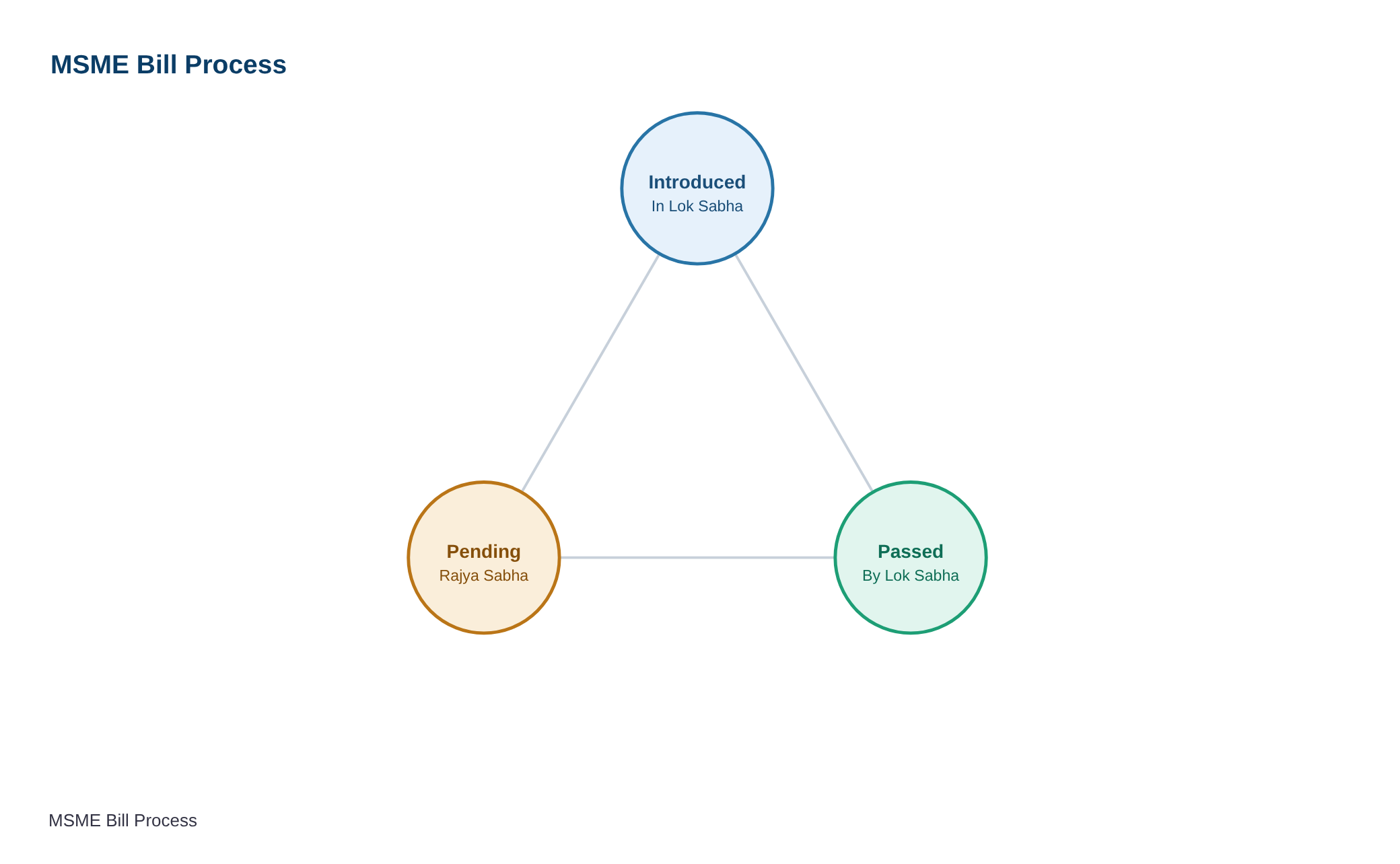
07 Aug Lok Sabha Passes MSME Bill 2024: Key Provisions for UPSC Exam
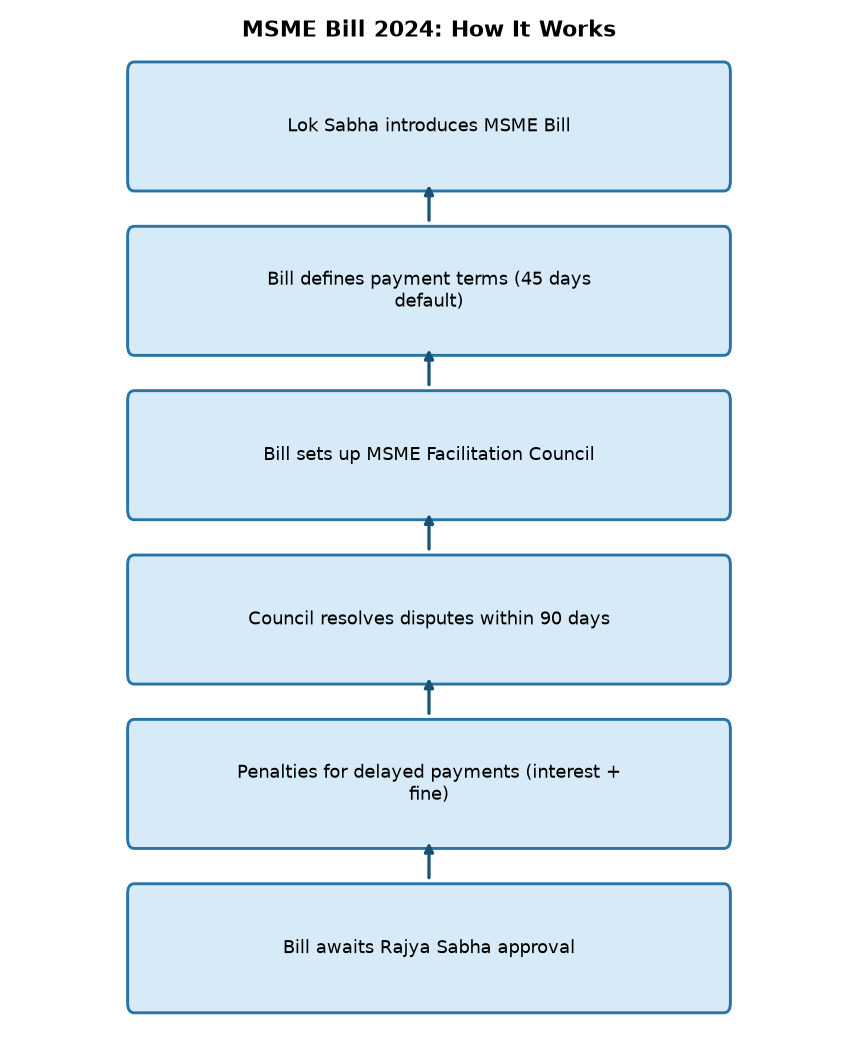
✎ MSME Bill 2024 enforces 15-day payment limit and faster dispute resolution to protect MSMEs from cash flow crises.
Relevance for UPSC & State PCS: Polity
The Lok Sabha recently passed the Micro, Small and Medium Enterprises Development (MSMED) Amendment Bill, 2024, aimed at addressing long-standing issues of payment delays and dispute resolution faced by MSMEs. The bill introduces stricter timelines for settling dues from buyers, including large corporations and government entities, which often delay payments beyond the stipulated 45-day period under the existing MSMED Act. By mandating faster payments and imposing penalties for non-compliance, the legislation seeks to ease the cash flow crunch that has crippled many small businesses, particularly in sectors like manufacturing and services. Additionally, the bill proposes mechanisms to expedite dispute resolution through dedicated facilitation councils, reducing the burden on courts and ensuring quicker justice for MSMEs entangled in payment-related conflicts.
For UPSC and State PCS aspirants, this development holds significant relevance as it intersects with governance, economic policies, and constitutional provisions. The bill’s emphasis on timely payments aligns with the government’s broader push for ease of doing business and financial inclusion, a recurring theme in UPSC’s syllabus under topics like “Government Policies and Interventions” and “Economic Development.” The constitutional angle emerges from the Centre’s role in regulating inter-state trade and commerce, as outlined in Article 301 of the Constitution, which ensures freedom of trade but also allows for state intervention to protect vulnerable sectors like MSMEs. Aspirants should also note how the bill reflects the Centre’s cooperative federalism approach, as payment delays often involve state-owned enterprises or public sector undertakings, necessitating coordination between the Union and state governments.
The dispute resolution aspect of the bill ties into the judicial reforms discourse, another critical area for UPSC preparation. The establishment of dedicated facilitation councils mirrors the government’s efforts to reduce pendency in courts, a challenge frequently highlighted in reports by the Law Commission of India and the Supreme Court. For State PCS aspirants, understanding how state-level MSME policies interact with central legislation is crucial, as many states have their own MSME promotion boards and grievance redressal mechanisms. The bill’s provisions could serve as a case study for questions on inter-governmental coordination, fiscal federalism, and the role of quasi-judicial bodies in economic governance.
From an examination perspective, the MSME bill offers multiple angles for answer-writing and interview discussions. UPSC mains questions could probe the bill’s impact on the informal sector, its compliance challenges, or its alignment with global best practices like the UN’s Sustainable Development Goals (SDG 8, which promotes decent work and economic growth). State PCS aspirants might be asked to analyze how their respective states can leverage the bill to boost local industries or integrate it with existing schemes like the Prime Minister’s Employment Generation Programme (PMEGP). The bill also underscores the importance of data-driven policymaking, as tracking payment delays and dispute resolutions will require robust
Source: ndtv.com
Practice Questions
Q1. What is the primary objective of the MSME Bill recently passed by the Lok Sabha?
- To provide financial subsidies to MSMEs for expansion
- To tackle payment delays and speed up dispute resolution for MSMEs
- To mandate a minimum wage for all MSME employees
- To exempt MSMEs from all tax obligations
Answer
To tackle payment delays and speed up dispute resolution for MSMEs — The MSME Bill aims to address payment delays faced by Micro, Small, and Medium Enterprises (MSMEs) and expedite the resolution of disputes related to these delays, ensuring better cash flow and operational efficiency for MSMEs.
Q2. Which legislative body passed the MSME Bill to tackle payment delays?
- Rajya Sabha
- Lok Sabha
- President of India
- Supreme Court
Answer
Lok Sabha — The Lok Sabha, the lower house of the Indian Parliament, is the legislative body that passed the MSME Bill to address payment delays and dispute resolution for MSMEs.
Generated by AanyaAi for educational purpose.

- राज्यों द्वारा सरकारी प्रतिभूतियों की नीलामी में ₹16,750 करोड़ का सफल संग्रह - September 22, 2026
- RBI Auction Results: State Govt Securities Yield Trends & Implications for UPSC 2026 - September 22, 2026
- सुप्रीम कोर्ट का चुनाव आयोग से बड़ा सवाल: दिल्ली में 33 लाख मतदाताओं को नोटिस देने का क्या आधार है? - September 22, 2026

No Comments