


14 Aug Science Tech 2026: Key Initiatives for UPSC & State PCS Aspirants
Department of BiotechnologyScience Tech 2026BRICS-National Institute of ImmunoNational Technology DayTechnology transferSTIP 2020✎ Science Tech 2026 is a ‘whole-of-government’ platform that integrates 14 ministries and departments to showcase indigenous technologies, facilitate technology transfer, and bridge the lab-to-market gap, aligning with India’s…
Subject Relevance — Where This Topic Fits
- GS Paper II — Governance, Transparency and Accountability (Institutional Mechanisms for Science & Technology) | GS Paper III — Science and Technology (Development and Applications) | GS Paper III — Environment and Disaster Management (Climate and Agricultural Technologies)
- Prelims: National Technology Day, Department of Biotechnology (DBT), BRICS-National Institute of Immunology (NII), CSIR-Prima ET-11, Hemophilia A Factor VIII inhibitor test, Multiplex RT-PCR for Dengue, Chikungunya, Zika, Glacial lake bathymetry survey solution, CSIR@100 Roadmap
- Essay: The Role of Science and Technology in Realising a Developed India by 2047, Institutional Synergy and Multi-Stakeholder Collaboration as Catalysts for Innovation
Quick Revision: Science Tech 2026 is a ‘whole-of-government’ platform that integrates 14 ministries and departments to showcase indigenous technologies, facilitate technology transfer, and bridge the lab-to-market gap, aligning with India’s Vision 2047 for a developed nation.
Why is this in the news?
The Department of Biotechnology (DBT) organised ‘Science Tech 2026’, a first-of-its-kind national initiative on National Technology Day (11 May 2026) at BRICS-National Institute of Immunology (NII), New Delhi, to showcase over 100 indigenous technologies developed across 14 ministries and departments. The event underscored a ‘whole-of-government’ approach to science, technology and innovation, facilitating technology transfer and commercialisation, and was highlighted in a written reply to the Rajya Sabha on 13 August 2026.
Background
- The Government of India has consistently emphasised the integration of science, technology and innovation (STI) into national development through policies such as the National Science, Technology and Innovation Policy (STIP) 2020 and the Vision 2047 for a ‘Developed India’.
- National Technology Day (11 May) commemorates India’s technological achievements, including the Pokhran-II nuclear tests and the first indigenous aircraft, and serves as a platform to showcase indigenous innovation.
- The Department of Biotechnology (DBT), under the Ministry of Science and Technology, plays a pivotal role in promoting biotechnology research, development and commercialisation in India.
- The BRICS-National Institute of Immunology (NII) serves as a hub for immunology research and fosters international collaboration in biomedical sciences.
- Institutional mechanisms such as the Council of Scientific and Industrial Research (CSIR) and Indian Council of Medical Research (ICMR) are key drivers of applied research and technology deployment in India.
- The ‘whole-of-government’ approach in STI policy aims to break silos between ministries, departments and research institutions to accelerate innovation and its societal impact.
What is the Science Tech 2026 initiative?
- Science Tech 2026 is a national-level platform launched by the Department of Biotechnology (DBT) on National Technology Day (11 May 2026) at BRICS-NII, New Delhi, to promote a unified vision for science, technology and innovation in India.
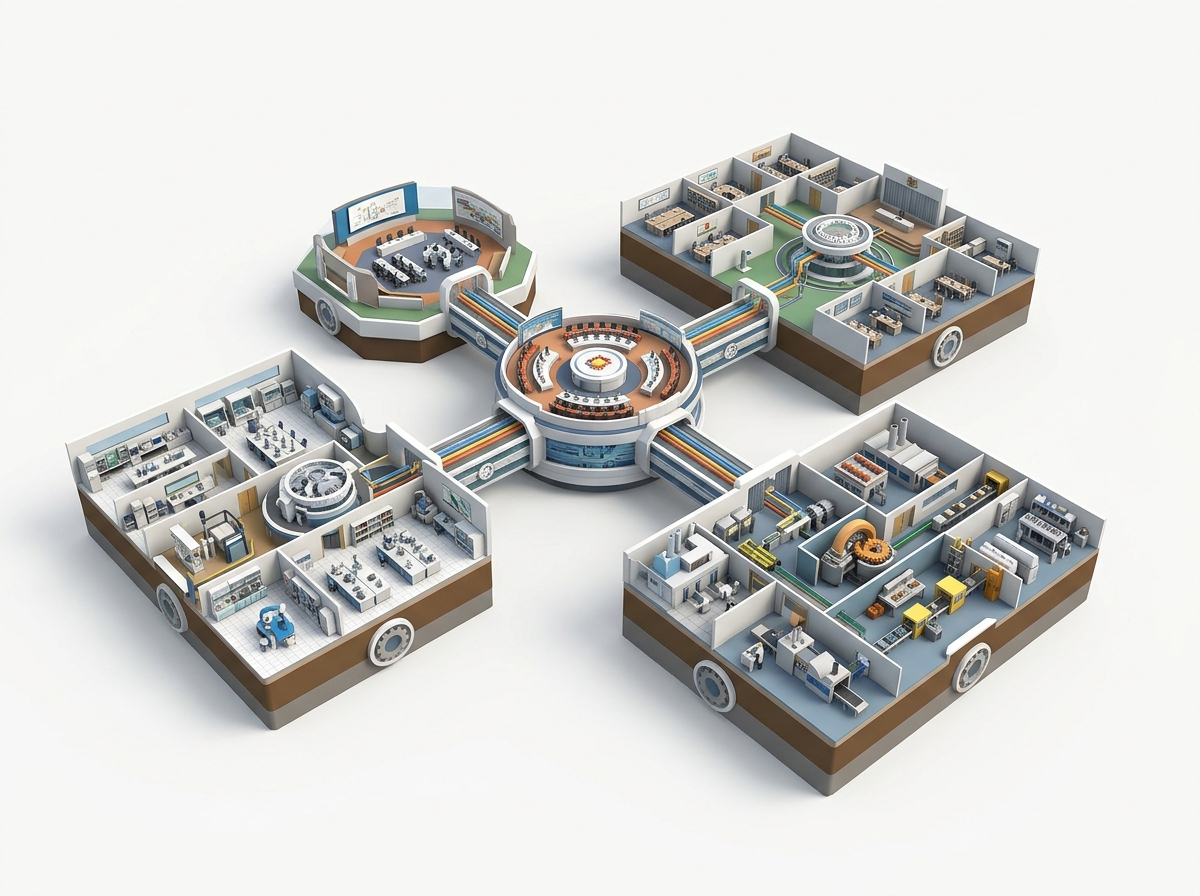
- The initiative adopts a ‘whole-of-government’ approach, bringing together 14 ministries and departments, their autonomous institutions and laboratories to showcase indigenous technologies across critical sectors.
- The event featured over 100 indigenously developed technologies spanning space and geospatial technology, climate and agri-food technology, biomedical and health technology, green chemicals, advanced materials, electronics, semiconductors, energy, deep-sea and atmospheric technology.
- A compendium titled ‘Tech-Sangrah’ was released, cataloguing nearly 300 technologies developed by participating institutions, many of which have already been commercialised or licensed, while others are in the deployment pipeline to support national development goals.
- The initiative facilitated technology transfer and licensing agreements between research institutions and industry, including technologies such as the DBT-BRIC accelerated crop innovation platform, CSIR-Prima ET-11 electric tractor, and ICMR’s multiplex RT-PCR for vector-borne diseases.
- Science Tech 2026 served as a strategic platform to bridge the gap between laboratory research and industrial application, fostering collaboration among policymakers, scientists, industry leaders, startups and young researchers.
- The initiative aligns with India’s broader STI policy framework, including the STIP 2020, to accelerate innovation-led growth and self-reliance.
Key Features
| Feature | Significance |
|---|---|
| ‘विज्ञान टेक 2026’ initiative | A first-of-its-kind national platform to showcase India’s R&D capabilities across 14 ministries and autonomous institutions, aligning with the ‘Whole-of-Government’ approach. |
| ‘टेक-संग्रह’ compendium | A curated repository of ~300 indigenous technologies, many already commercialised or licensed, supporting national development goals. |
| Cross-sectoral technology display | Exhibition of over 100 technologies across 7 key domains: space, biopharma, green chemicals, advanced materials, semiconductors, deep-sea, and climate-smart agriculture. |
| Technology transfer and licensing | Direct industry engagement for technology transfer and licensing agreements, fostering public-private partnerships. |
| Strategic roadmap for CSIR@100 | A forward-looking document outlining CSIR’s innovation trajectory till 2042, aligned with ‘Viksit Bharat 2047’. |
Why it Matters
Institutional Synergy
- Demonstrates inter-ministerial collaboration under the ‘Whole-of-Government’ paradigm, breaking silos between scientific departments and ministries.
- Strengthens linkages between research institutions (e.g., DBT-BRIC, ICMR, CSIR) and industry, accelerating translational research.
- Provides a unified platform for policymakers, scientists, entrepreneurs, and startups to co-create solutions for national priorities.
Economic and Industrial Impact
- Promotes indigenous technology commercialisation, reducing import dependence in critical sectors like semiconductors, green chemicals, and biopharma.
- Facilitates technology licensing, creating revenue streams for public R&D institutions and fostering MSME growth.
- Supports ‘Atmanirbhar Bharat’ by showcasing scalable, high-impact technologies in agriculture, healthcare, and energy.
Strategic and Geopolitical Relevance
- Highlights India’s scientific and technological prowess, aligning with global innovation indices and attracting foreign direct investment (FDI) in R&D.
- Showcases self-reliance in strategic sectors such as deep-sea technology, space, and advanced materials, enhancing national security.
- Demonstrates India’s commitment to addressing global challenges like climate change, pandemics, and food security through technology.
Human Capital Development
- Engages young researchers, startups, and industry leaders, nurturing a culture of innovation and entrepreneurship.
- Provides a mentorship ecosystem for budding scientists and engineers, bridging the gap between academia and industry.
- Encourages interdisciplinary collaboration, essential for solving complex societal problems.
Challenges
1. Fragmentation in R&D Ecosystem
- Lack of seamless integration between central ministries, state agencies, and private sector, leading to duplication of efforts.
- Limited awareness among industries about indigenous technologies, hindering adoption and commercialisation.
UPSC Link: GS3: Science & Tech
2. Commercialisation Bottlenecks
- Regulatory hurdles and bureaucratic delays in technology transfer and licensing processes.
- Insufficient venture capital and angel funding for deep-tech startups, stifling innovation.
- Limited industry-academia collaboration in high-risk, high-reward research areas.
UPSC Link: GS3: IPR & Startups
3. Skill Gaps and Talent Retention
- Shortage of skilled manpower in emerging technologies like semiconductors, AI, and green chemistry.
- Brain drain and lack of competitive incentives to retain top talent in public R&D institutions.
UPSC Link: GS2: Education & Skill Development
4. Infrastructure and Funding Constraints
- Inadequate lab infrastructure and outdated equipment in many government research institutions.
- Inconsistent funding mechanisms for long-term, high-impact research projects.
UPSC Link: GS3: Infrastructure & Science Funding
5. Public-Private Partnership Challenges
- Mismatch between industry needs and research outputs, leading to low demand for indigenous technologies.
- Lack of trust and transparency in IP-sharing agreements between public institutions and private entities.
UPSC Link: GS3: PPP Models
Challenges — UPSC Perspective
| Issue | Concern |
|---|---|
| Regulatory delays | Slow approval processes for technology transfer and licensing, discouraging industry participation. |
| Funding volatility | Unpredictable budget allocations for R&D, affecting continuity of long-term projects. |
| Talent migration | Loss of skilled researchers to foreign institutions or private sector due to better incentives. |
| Technology adoption barriers | Industry reluctance to adopt unproven or niche technologies without demonstrated ROI. |
| IPR complexities | Ambiguities in patent filing, licensing, and revenue-sharing models for public-funded innovations. |
| Infrastructure gaps | Outdated lab facilities and limited access to advanced instrumentation in tier-2/3 cities. |
Way Forward
- Establish a dedicated ‘National Technology Transfer Authority’ to streamline licensing and commercialisation processes across ministries.
- Create a centralised digital platform for real-time tracking of indigenous technologies, their adoption status, and industry demand.
- Introduce tax incentives and subsidies for industries adopting indigenous technologies, particularly in green chemistry and semiconductors.
- Expand funding for translational research through public-private partnerships, with a focus on high-risk, high-reward projects.
- Strengthen industry-academia collaboration by mandating internships, joint projects, and shared infrastructure in engineering colleges and research labs.
- Develop a ‘Technology Readiness Level (TRL)’ framework to assess and prioritise technologies for commercialisation.
- Launch a national campaign to raise awareness about indigenous technologies among MSMEs and startups, highlighting success case studies.
- Enhance skill development programs in emerging technologies through collaborations with global institutions and industry leaders.
UPSC Value Addition
Keywords for Mains Answer-Writing
Science Technology 2026 initiative · inter-ministerial collaboration in R&D · indigenous technology commercialisation · Atmanirbhar Bharat in science and technology · technology transfer mechanisms · CSIR 100 roadmap · BRICS-NII scientific collaboration · multi-stakeholder innovation ecosystem · National Technology Day 2026 · public-private technology partnerships
Concept Flow
National Technology Day (11 May 2026) → Launch of ‘विज्ञान टेक 2026’ → Multi-ministerial collaboration → Showcase of 100+ indigenous technologies → Technology transfer & licensing → ‘टेक-संग्रह’ compendium → Industry-academia engagement → Acceleration of translational research → Alignment with ‘Viksit Bharat 2047’ → Long-term economic and strategic impact.
Prelims Practice Questions
Q1. Consider the following statements regarding the ‘Science Tech 2026’ initiative: 1. It was launched by the Ministry of Science and Technology on National Technology Day, 11 May 2026. 2. The initiative showcased technologies developed by 14 ministries and departments. 3. The ‘Tech-Sangrah’ document released contains approximately 300 technologies. 4. The event included technology licensing agreements between government laboratories and private industry. How many of the above statements are correct?
- Only one
- Only two
- Only three
- All four
Answer: All four — Statements 1, 3, and 4 are correct. Statement 2 is incorrect as the initiative was organised by the Department of Biotechnology (DBT), not the Ministry of Science and Technology.
Q2. Which of the following is NOT a key technology domain highlighted under the ‘Science Tech 2026’ initiative?
- A. Space and geospatial technology
- B. Deep ocean and atmospheric technology
- C. Nuclear fusion technology
- D. Bio-industrial and green chemicals
Answer: C. Nuclear fusion technology — Nuclear fusion technology is not mentioned as a key domain in the initiative. The highlighted domains include space and geospatial technology, deep ocean and atmospheric technology, bio-industrial and green chemicals, among others.
Q3. Assertion (A): The ‘Science Tech 2026’ initiative aims to bridge the gap between laboratory research and industrial application. Reason (R): The initiative released a ‘Tech-Sangrah’ document compiling approximately 300 technologies for commercialisation and deployment.
- Both A and R are true, and R is the correct explanation of A
- Both A and R are true, but R is not the correct explanation of A
- A is true, but R is false
- A is false, but R is true
Answer: Both A and R are true, but R is not the correct explanation of A — Both the assertion and reason are true. The initiative explicitly aims to bridge the gap between research and application, and the ‘Tech-Sangrah’ document serves as a compilation of technologies for commercialisation and deployment, directly supporting this objective.
Mains Practice Question
✍ The Government of India’s ‘Science Tech 2026’ initiative represents a paradigm shift in the national innovation ecosystem. Critically examine the institutional architecture, collaborative mechanisms, and policy instruments underpinning this initiative. Also, analyse its potential to accelerate India’s journey towards becoming a ‘Viksit Bharat’ by 2047. (15 Marks)
Approach: MODEL-ANSWER SKELETON:
1. **Institutional Architecture**:
– Role of the Department of Biotechnology (DBT) as the nodal agency.
– Involvement of 14 ministries/departments (e.g., CSIR, ICMR, MoES) and their autonomous institutions.
– Establishment of BRICS-National Institute of Immunology (BRICS-NII) as a hub for collaborative research.
2. **Collaborative Mechanisms**:
– ‘Whole-of-Government’ approach: integration of diverse scientific and technological capabilities.
– Technology transfer and licensing agreements between government laboratories and private industry.
– Release of ‘Tech-Sangrah’ (compilation of ~300 technologies) to facilitate commercialisation and deployment.
3. **Policy Instruments**:
– National Technology Day as a platform for showcasing indigenous technologies.
– Focus on key technology domains: space and geospatial, climate and agri-food, bio-pharma and health, green chemicals, advanced materials, electronics and semiconductors, deep ocean and atmospheric technologies.
– CSIR@100 roadmap: alignment with the vision of ‘Developed India 2047’ and deep technological innovation.
4. **Potential to Accelerate ‘Viksit Bharat’ by 2047**:
– Strengthening the innovation ecosystem by bridging the gap between laboratory research and industrial application.
– Enhancing public-private partnerships and technology commercialisation.
– Promoting indigenous technology development to reduce import dependence and foster self-reliance.
– Facilitating interdisciplinary collaboration and knowledge exchange among scientists, policymakers, industry, and startups.
5. **Critical Analysis**:
– Strengths: Multi-stakeholder engagement, focus on commercialisation, alignment with national development goals.
– Challenges: Institutional silos, bureaucratic hurdles, funding constraints, and ensuring equitable access to technologies.
– Way Forward: Strengthening institutional capacities, streamlining regulatory frameworks, and fostering a culture of innovation and entrepreneurship.
Source: PIB (Press Information Bureau)
Generated by AanyaAi for educational purpose.

- Gurugram’s groundwater extraction exceeds limit by 212%; HC seeks ban - October 4, 2026
- स्वतंत्रता सेनानी श्यामजी कृष्ण वर्मा की जन्म जयंती पर पीएम का श्रद्धांजलि - October 4, 2026
- KWML’s Feasibility Reports for Water Metro in 18 Cities: UPSC & PCS Insights - October 3, 2026

No Comments