


31 Aug Israel-Greece $3.5B Arms Deal: UPSC Perspective on Defence Ties
✎ The signing of the largest-ever bilateral arms deal between Israel and Greece, valued at approximately €3 billion, underscores the growing strategic defence cooperation between the two nations amid shared regional security…
Subject Relevance — Where This Topic Fits
- GS Paper II — International Relations: Bilateral, regional and global groupings involving India and/or affecting India’s interests; GS Paper III — Security: Challenges to internal security through communication networks, role of external state and non-state actors in creating challenges | GS Paper III — Economy: Effects of liberalisation on the economy, changes in industrial policy and their effects on industrial growth
- Prelims: Achilles Shield, David Sling, SPYDER, Stockholm International Peace Research Institute (SIPRI), Eastern Mediterranean Disputes, NATO membership
- Essay: The interplay between technological advancement and national security in the 21st century, Global arms trade: economic incentives versus ethical and geopolitical consequences
Why is this in the news?
The signing of the largest-ever bilateral arms deal between Israel and Greece, valued at approximately €3 billion, underscores the growing strategic defence cooperation between the two nations amid shared regional security challenges in the Eastern Mediterranean. This agreement, encompassing advanced air-defence systems and layered missile defence technologies, highlights Israel’s expanding role as a major arms exporter and reflects broader shifts in global defence procurement patterns, particularly in the context of modern hybrid warfare threats.
Background
- Greece has been modernising its armed forces to address evolving security threats, including long-standing disputes with Turkey over maritime boundaries and exclusive economic zones in the Eastern Mediterranean.
- The Eastern Mediterranean has emerged as a critical flashpoint due to competing claims over energy resources, maritime sovereignty, and the presence of non-state actors, necessitating robust defence postures from littoral states.
- Israel’s defence industry has gained prominence globally due to the battle-tested efficacy of its weaponry, particularly in countering asymmetric threats such as drones, ballistic missiles, and cyber-enabled warfare.
- NATO membership of both Greece and Turkey has added a layer of strategic complexity to regional security dynamics, influencing defence procurement decisions.
What is the Israel-Greece bilateral defence agreement?
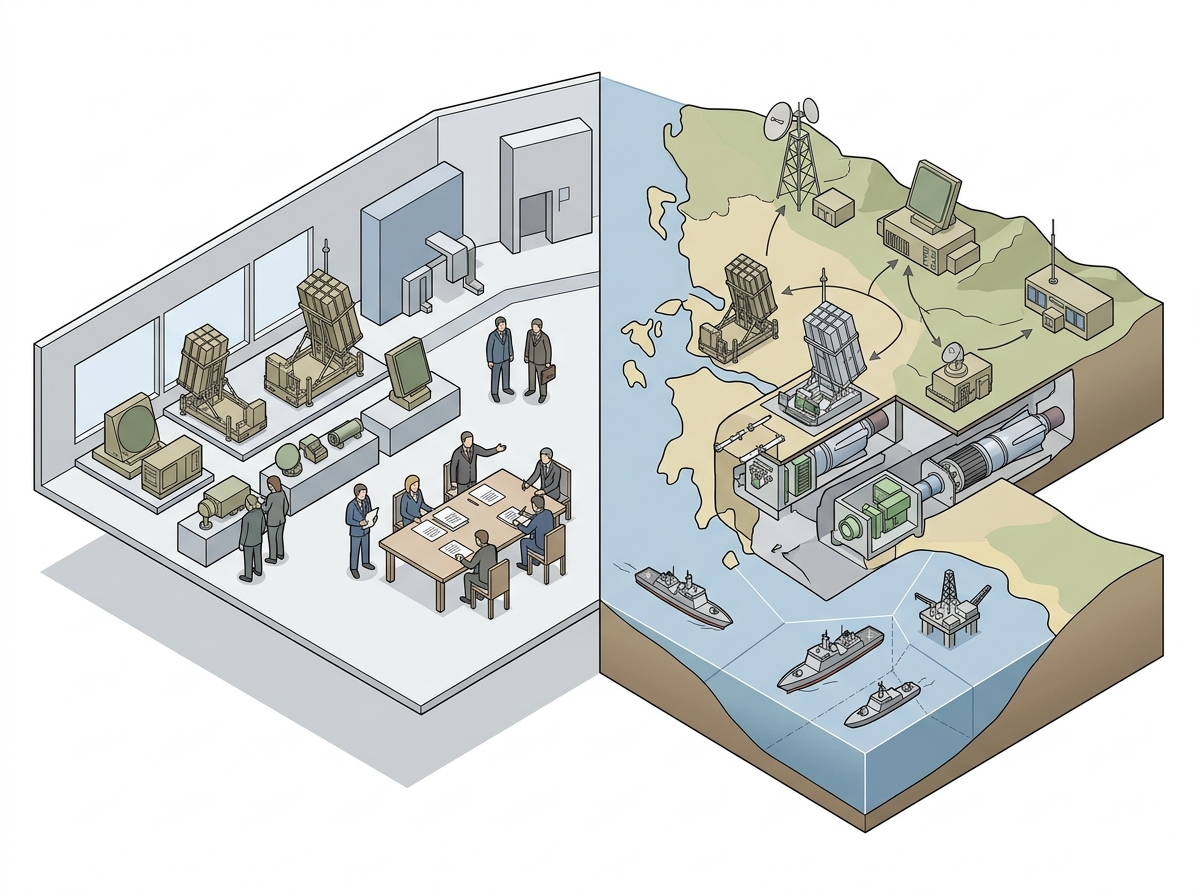
- The agreement, termed ‘Achilles Shield’, represents the largest bilateral defence export deal between Israel and Greece, valued at approximately €3 billion (USD 3.5 billion).
- The deal includes a multilayered air-defence system incorporating Israeli technologies such as David Sling (an advanced medium-to-long-range missile defence system) and SPYDER (a quick-reaction surface-to-air missile system).
- A complementary agreement worth USD 30 million (€26 million) involves the sale of Rafael’s Drone Dome systems, designed to counter drone threats through electronic warfare and kinetic interception.
- The systems provided under the deal are intended to address a spectrum of threats, including ballistic missiles, drones, and hybrid warfare tactics, aligning with Greece’s updated defence doctrine.
- The agreement marks Israel’s first provision of a complete array of defence weapons to a single country, integrating air defence, command-and-control systems, and layered missile defence capabilities.
- Greece’s Defence Minister emphasised that modern conflicts have rendered traditional defence doctrines obsolete, necessitating integration of advanced technologies such as satellite communications, cyber defences, and unmanned systems.
- The deal is part of a broader trend of deepening defence ties between Israel and Greece over the past decade, including prior agreements for flight training schools, anti-tank guided missiles, and drone systems.
- The agreement reflects Israel’s strategic pivot toward Europe and the Mediterranean, leveraging its technological edge in defence systems to strengthen alliances in the face of regional instability.
Key Features
| Feature | Significance |
|---|---|
| Multi-layered air defence system (Achilles Shield) | Represents Israel’s first complete defence package for Greece, integrating ballistic missile defence, drone interception, and layered surveillance systems. |
| David Sling and SPYDER systems | Advanced medium-range and short-range air defence systems, respectively, designed to counter ballistic missiles, cruise missiles, and unmanned aerial vehicles. |
| National command and control system | Enables real-time integration of sensors, weapons, and decision-making nodes, enhancing operational synergy across Greece’s armed forces. |
| Drone Dome systems (USD 30 million) | Electronic warfare suite for countering drone threats, including detection, jamming, and kinetic interception, addressing modern asymmetric warfare challenges. |
| Record Israeli arms exports (USD 19 billion) | Demonstrates Israel’s growing role as a global defence exporter, leveraging battle-tested systems and rapid technological adaptation to meet diverse client demands. |
Why it Matters
Strategic Security Dynamics
- Reinforces NATO’s eastern Mediterranean flank by augmenting Greece’s air defence capabilities amid rising tensions with Türkiye over maritime boundaries and regional influence.
- Demonstrates Israel’s pivot toward European defence partnerships, diversifying its export markets beyond traditional Middle Eastern and Asian clients.
- Highlights the strategic value of Israel’s defence technology in addressing hybrid warfare threats, including drones, cyber intrusions, and hybrid tactics.
Economic Implications
- Bolsters Israel’s defence industry, contributing to GDP growth and technological innovation, with exports reaching record highs despite geopolitical controversies.
- Provides Greece with a cost-effective pathway to modernise its armed forces, reducing reliance on legacy systems and enhancing interoperability with NATO standards.
- Creates ripple effects in the global arms market, potentially altering supply chains and pricing dynamics for air defence systems.
Technological Advancements
- Showcases the integration of AI-driven command systems, real-time data fusion, and electronic warfare capabilities in modern defence architectures.
- Underscores the role of Israel’s defence sector in pioneering solutions for layered air defence, a critical requirement in contemporary conflict scenarios.
- Illustrates the convergence of cyber, space, and kinetic domains in military operations, reflecting the evolving nature of warfare.
Geopolitical Ramifications
- Deepens defence cooperation between Israel and Greece, strengthening ties in the Eastern Mediterranean amid shifting regional alliances.
- May influence broader NATO strategies in the Mediterranean, particularly in countering non-state actor threats and hybrid warfare tactics.
- Raises questions about the balance of power in the Eastern Mediterranean, where maritime disputes and energy resources intersect with military posturing.
Challenges
1. Regional Arms Race Escalation
- Risk of triggering a defensive counter-response from Türkiye, potentially leading to an arms buildup in the Eastern Mediterranean.
- Could exacerbate existing tensions in the Aegean Sea and Eastern Mediterranean, complicating diplomatic efforts to resolve maritime disputes.
- May incentivise other regional actors to accelerate their own defence modernisation programs, further destabilising the security environment.
UPSC Link: GS II: International Relations
2. Ethical and Legal Scrutiny of Arms Exports
- Increased global scrutiny of Israel’s arms exports due to ongoing conflicts and allegations of violations of international humanitarian law.
- Potential reputational risks for Greece as a recipient of systems linked to controversial military engagements, affecting its diplomatic standing.
- Need for stricter export controls and transparency mechanisms to align with international arms trade regulations (e.g., Arms Trade Treaty).
UPSC Link: GS II: International Treaties
3. Sustainability of Defence Modernisation
- Long-term financial burden on Greece’s defence budget, particularly if maintenance, upgrades, and training costs escalate over time.
- Risk of technological obsolescence if systems are not continuously updated to counter evolving threats such as hypersonic missiles or AI-driven warfare.
- Dependency on foreign suppliers (Israel) for critical defence technologies may limit Greece’s strategic autonomy in crisis situations.
UPSC Link: GS III: Economic Development
4. Cyber and Hybrid Warfare Vulnerabilities
- Increased exposure to cyber-attacks targeting command and control systems, particularly as warfare becomes more network-centric.
- Potential for adversaries to exploit drone swarms or electronic warfare tactics to overwhelm layered air defence systems.
- Need for robust cybersecurity frameworks and hybrid warfare doctrines to mitigate asymmetric threats.
UPSC Link: GS III: Security
Challenges — UPSC Perspective
| Issue | Concern |
|---|---|
| Maritime boundary disputes | Escalation of tensions in the Eastern Mediterranean due to overlapping claims and resource exploration rights. |
| Arms race dynamics | Potential for a regional spiral of defence modernisation, increasing military expenditures and mistrust. |
| Export control regimes | Challenges in ensuring compliance with international arms trade treaties amid geopolitical pressures. |
| Technological obsolescence | Risk of systems becoming outdated if not continuously upgraded to address emerging threats. |
| Cybersecurity threats | Vulnerability of integrated defence systems to cyber intrusions and electronic warfare attacks. |
| Financial sustainability | Long-term budgetary strain on Greece’s defence procurement and maintenance costs. |
Way Forward
- Conduct a joint Israel-Greece strategic review to assess the operational readiness and interoperability of the deployed systems, ensuring seamless integration with NATO frameworks.
- Establish a bilateral technical working group to address cybersecurity vulnerabilities in the command and control systems, incorporating AI-driven threat detection.
- Develop a phased modernisation roadmap for Greece’s armed forces, prioritising indigenous defence manufacturing alongside foreign acquisitions to reduce dependency.
- Strengthen export control mechanisms in line with the Arms Trade Treaty, ensuring transparency in arms transfers and adherence to international humanitarian law.
- Enhance regional dialogue mechanisms, such as the Eastern Mediterranean Gas Forum, to de-escalate tensions and promote confidence-building measures.
- Invest in research and development for counter-drone and electronic warfare technologies, leveraging Israel’s expertise while fostering domestic innovation.
- Promote multilateral defence cooperation within NATO to share best practices in layered air defence and hybrid warfare mitigation.
UPSC Value Addition
Keywords for Mains Answer-Writing
Defence exports · Military-industrial complex · Strategic partnerships in defence · Air defence systems · Israel-Greece bilateral relations · NATO defence modernisation · Multilayered air defence architecture · Defence procurement policy · Global arms trade dynamics · Battle-tested defence technology
Concept Flow
Regional geopolitical tensions in the Eastern Mediterranean → Escalation of maritime boundary disputes → Greece’s need for modernised defence capabilities → Israel’s record-high arms exports → Bilateral negotiations for defence cooperation → Signing of the Achilles Shield agreement → Integration of multi-layered air defence systems → Operational deployment and NATO interoperability → Potential escalation of regional arms race → Calls for diplomatic de-escalation and confidence-building measures
Prelims Practice Questions
Q1. Consider the following statements regarding the Israel-Greece defence deal signed in 2026:
1. The deal includes a multilayered air defence system using Israeli technology.
2. The agreement is valued at approximately $3.5 billion.
3. The deal is the first instance of Israel providing a complete array of defence weapons against ballistic missiles and drones.
4. The complementary deal for Drone Dome systems is valued at $300 million.
How many of the above statements are correct?
- Only one
- Only two
- Only three
- All four
Answer: Only three — Statements 1, 2, and 3 are correct. Statement 4 is incorrect as the complementary deal for Drone Dome systems is valued at $30 million, not $300 million.
Q2. Assertion (A): Israel has surpassed the United Kingdom to become the world’s seventh-largest arms exporter.
Reason (R): The Stockholm International Peace Research Institute (SIPRI) reported in March 2026 that Israel’s arms exports reached record highs, driven by battle-tested defence technologies.
Options:
A. Both A and R are true, and R is the correct explanation of A.
B. Both A and R are true, but R is NOT the correct explanation of A.
C. A is true, but R is false.
D. A is false, but R is true.
Answer: ? — Both Assertion (A) and Reason (R) are true. The Reason (R) correctly explains the Assertion (A) as SIPRI’s report attributes Israel’s rise in global arms exports to its record-high exports and battle-tested technologies.
Q3. Which of the following systems is NOT included in the Israel-Greece defence deal signed in 2026?
A. David Sling
B. SPYDER
C. Iron Dome
D. National Command and Control System
- A
- B
- C
- D
Answer: C — The Iron Dome system is not mentioned in the Israel-Greece defence deal. The deal includes David Sling, SPYDER, and a new national command and control system.
Mains Practice Question
✍ The proliferation of defence partnerships, such as the recent Israel-Greece bilateral arms deal, reflects evolving geopolitical dynamics and the strategic imperatives of modern militaries. Critically analyse the implications of such defence collaborations for global arms trade governance and national security strategies. (15 Marks)
Approach: MODEL-ANSWER SKELETON:
1. **Introduction (2 marks)**: Define defence partnerships and their significance in contemporary geopolitics. Mention the Israel-Greece deal as a case study.
2. **Geopolitical and Strategic Dimensions (4 marks)**:
– Discuss the role of shared strategic interests (e.g., countering hegemonic ambitions, regional stability).
– Highlight the role of NATO and regional security architectures (e.g., Eastern Mediterranean disputes).
– Explain how battle-tested technologies (e.g., multilayered air defence systems) drive such partnerships.
3. **Global Arms Trade Governance (4 marks)**:
– Reference frameworks like the Arms Trade Treaty (ATT) and their limitations.
– Discuss the role of transparency, accountability, and ethical considerations in arms transfers.
– Critique the lack of a universal regulatory mechanism for defence collaborations.
4. **National Security Implications (3 marks)**:
– Analyse how such deals enhance or undermine national security (e.g., deterrence, technological self-reliance).
– Discuss the balance between strategic autonomy and dependence on external suppliers.
– Reference India’s defence procurement policies (e.g., ‘Make in India’, Atmanirbhar Bharat) as a comparative framework.
5. **Conclusion (2 marks)**: Summarise the dual-edged nature of defence partnerships—opportunities for security enhancement versus risks of dependency and geopolitical entanglements. Provide a balanced view on the need for multilateral governance in arms trade.
Source: orissapost.com
Generated by AanyaAi for educational purpose.
Related guides on our sites
- Best PSIR optional coaching for upsc
- Best PSIR optional teacher for upsc
- Best teacher of PSIR optional for upsc
- Best PSIR optional coaching in delhi for UPSC

- India-Australia AUSTRAHIND 2026 Exercise: Key Highlights for UPSC & State PCS - October 22, 2026
- एससीओ बैठक में भारत का आतंकवाद विरोध: क्षेत्रीय सहयोग पर जोर - October 22, 2026
- SEC Directs Strict SC Order Compliance for Andhra ULB Polls - October 22, 2026

No Comments