


07 Sep Defence Ministry Approves Rs 1.10 Lakh Crore Procurement for Armed Forces
✎ The Defence Acquisition Council (DAC) approves capital acquisition proposals through the Acceptance of Necessity (AoN) mechanism, with 98% of procurements earmarked for the Indian industry, underscoring the government’s…
Subject Relevance — Where This Topic Fits
- GS Paper III — Security, Defence and Disaster Management | GS Paper III — Indigenisation of Technology and Defence Manufacturing | GS Paper II — Government Policies and Interventions for Development in various sectors
- Prelims: Defence Acquisition Council (DAC), Acceptance of Necessity (AoN), Capital Acquisition, CBRN Recce Vehicles, Marine Gas Turbines (MGT), Ground-Based Multi-Purpose Jammer (GBMPJ), DEFSAC System, Self-Propelled Mechanical Mine Layers (MML), Sarvatra Bridge System
- Essay: The Role of Indigenous Defence Manufacturing in National Security, Balancing Strategic Autonomy and Global Defence Partnerships
Quick Revision: The Defence Acquisition Council (DAC) approves capital acquisition proposals through the Acceptance of Necessity (AoN) mechanism, with 98% of procurements earmarked for the Indian industry, underscoring the government’s commitment to defence modernisation and indigenisation under the DPP framework.
Why is this in the news?
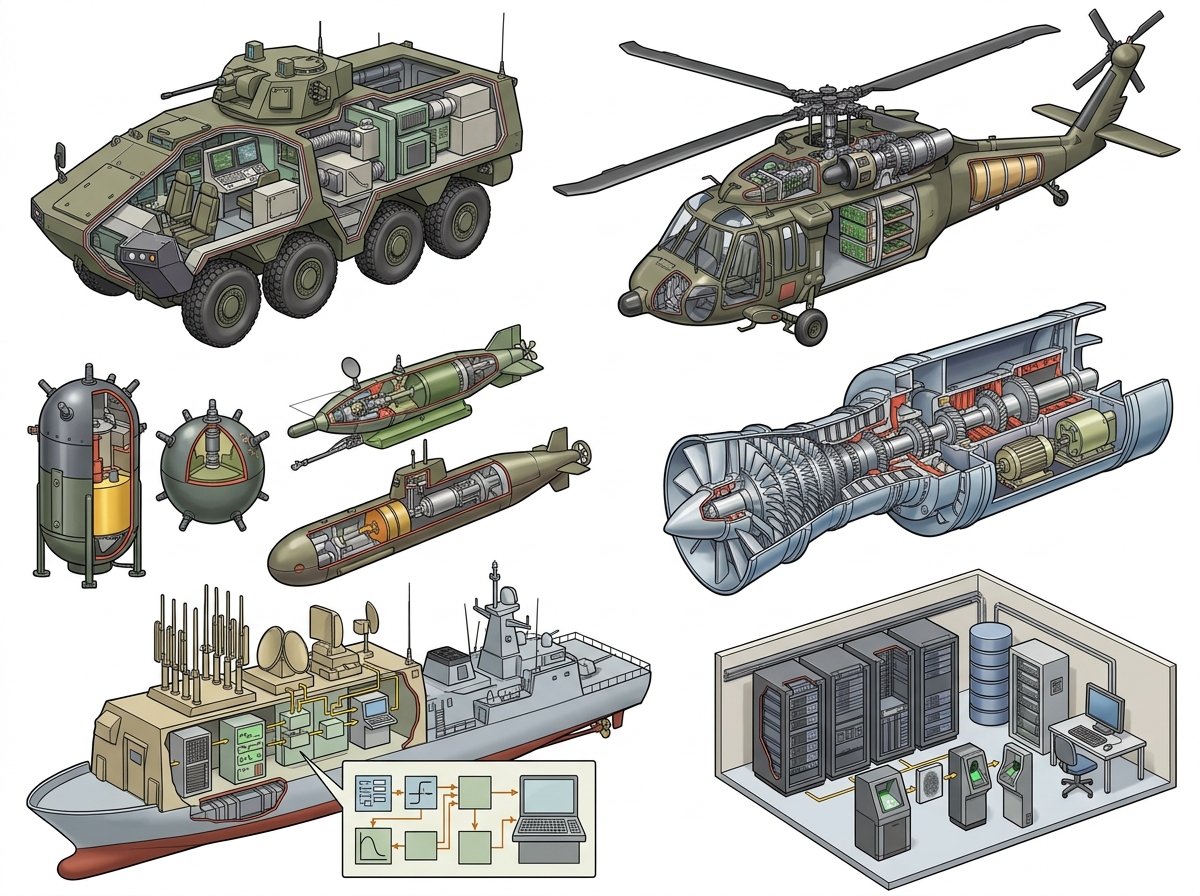
On 7 September 2026, the Defence Acquisition Council (DAC), chaired by the Union Minister of Defence, accorded Acceptance of Necessity (AoN) to capital acquisition proposals worth approximately ₹1.10 lakh crore for the Indian Armed Forces. This decision underscores the government’s commitment to defence modernisation, operational readiness, and indigenisation of defence equipment, with 98% of procurements earmarked for the domestic industry. The proposals span critical domains including CBRN reconnaissance, advanced helicopters, mine warfare systems, naval propulsion, electronic warfare, and identity management systems, reflecting a strategic shift towards self-reliance in defence preparedness.
Background
- The Defence Acquisition Council (DAC) is the apex decision-making body of the Ministry of Defence, established under the Defence Procurement Procedure (DPP) to oversee capital acquisitions for the Armed Forces.
- The Acceptance of Necessity (AoN) is the first formal step in the capital acquisition process, signifying the government’s in-principle approval for procurement, followed by detailed project formulation and tendering.
- India’s defence indigenisation drive has been accelerated through initiatives such as ‘Make in India’, ‘Atmanirbhar Bharat’, and the Defence Procurement Procedure (DPP) 2020, which prioritise indigenous design, development, and manufacturing.
- The Defence Research and Development Organisation (DRDO) and other public sector undertakings (PSUs) like Bharat Electronics Limited (BEL), Hindustan Aeronautics Limited (HAL), and Mazagon Dock Shipbuilders Limited (MDL) play a pivotal role in developing indigenous defence systems.
- The Indian Armed Forces have been modernising their equipment profile to address evolving security challenges, including threats from adversarial states, terrorism, and technological asymmetries in warfare.
- The Defence Budget for 2026-27 allocates a significant portion to capital expenditure for modernisation, reflecting a long-term strategic vision for self-reliance and technological upgradation.
Defence Acquisition Process and Indigenous Capital Procurement
- The Defence Acquisition Council (DAC) is the highest decision-making body for defence procurements, chaired by the Union Minister of Defence, and includes the Chiefs of the three Armed Forces, Secretary Defence, Secretary Defence Production, and other senior officials.
- The capital acquisition process in India follows a structured framework under the Defence Procurement Procedure (DPP), which outlines stages such as Identification of Requirements, Acceptance of Necessity (AoN), Request for Proposal (RFP), Evaluation of Proposals, Contract Negotiation, and Contract Execution.
- Acceptance of Necessity (AoN) is a critical administrative approval granted by the DAC, signifying the government’s recognition of the necessity of a particular defence procurement to meet operational requirements.
- The ‘Make’ procedure under DPP 2020 is designed to promote indigenous design, development, and manufacturing, with provisions for government-funded projects (Make-I) and industry-funded projects (Make-II).
- Indigenous procurement is prioritised under the ‘Buy (Indian-IDDM)’ category, where Indian vendors with indigenous content above a specified threshold are given preference, thereby fostering self-reliance in defence manufacturing.
- The Defence Industrial Base in India comprises Defence PSUs, Ordnance Factories, private sector entities, and start-ups, with a growing emphasis on research and development (R&D) to reduce dependency on foreign vendors.
- The capital acquisition proposals approved by the DAC on 7 September 2026 include systems such as CBRN Recce Vehicles, Marine Gas Turbines, and Ground-Based Multi-Purpose Jammers, which are designed to enhance the operational capabilities of the Indian Armed Forces across land, sea, and air domains.
- The focus on indigenisation aligns with the broader national agenda of ‘Atmanirbhar Bharat’ (Self-Reliant India), aiming to reduce import dependence, enhance technological sovereignty, and strengthen the defence industrial ecosystem.
Key Features
| Feature | Significance |
|---|---|
| Chemical, Biological, Radiological and Nuclear (CBRN) Recce Vehicles | Enables detection, identification, monitoring, and marking of contaminated areas, enhancing operational safety and response in CBRN threat scenarios. |
| High Mobility Vehicles (HMV) | Provides enhanced operational capabilities, logistic support, and mobility in challenging terrains, improving deployment and sustenance of forces. |
| Self-Propelled Mechanical Mine Layers (MML) | Facilitates rapid and responsive minelaying in difficult terrains, contributing to defensive and offensive operational strategies. |
| Advanced Light Helicopters (ALH) | Executes complex missions across diverse terrains and operational situations, augmenting aerial mobility and support for both Army and Air Force. |
| Arudhra Radars | Replaces existing Air Route Surveillance Radars at Naval Air Stations, improving airspace monitoring and maritime domain awareness for the Navy. |
| Ground-Based Multi-Purpose Jammer (GBMPJ) | Provides effective electronic warfare capability by jamming adversarial radar systems, enhancing electronic countermeasures and battlefield superiority. |
| Defence Forces Secure Access Card (DEFSAC) System | Replaces paper-based identity systems with an interoperable RFID-based smart card, improving security, authentication, and operational efficiency. |
Why it Matters
Strategic Autonomy
- Approximately 98% of procurements are sourced from the Indian industry, aligning with the ‘Atmanirbhar Bharat’ initiative to reduce dependency on foreign defence vendors and strengthen indigenous defence manufacturing.
- Procurement of Marine Gas Turbines (MGT) for the Navy reduces reliance on foreign propulsion systems, enhancing self-sufficiency in critical defence technologies.
- Development and procurement of indigenous platforms such as ALHs and CBRN Recce Vehicles demonstrate progress in reducing import dependence for high-technology defence equipment.
Operational Capability Enhancement
- CBRN Recce Vehicles and HMVs improve the Army’s operational readiness in diverse and hostile environments, including CBRN threat scenarios and rugged terrains.
- MMLs and the Sarvatra Bridge System enable rapid deployment and cross-terrain mobility, critical for maintaining operational tempo during conflicts or humanitarian missions.
- Arudhra Radars and GBMPJ enhance the Navy’s and Air Force’s electronic warfare and surveillance capabilities, respectively, contributing to battlefield dominance.
- DEFSAC modernises identity management, ensuring secure, interoperable, and efficient authentication across defence forces.
Industrial and Economic Impact
- The capital acquisition of ₹1.10 lakh crore provides substantial business opportunities for Indian defence manufacturers, fostering growth in the defence industrial base.
- Indigenous development and procurement stimulate R&D in critical defence technologies, promoting innovation and skill development within the domestic sector.
- Long-term contracts and orders create employment and ancillary opportunities, contributing to economic growth and technological advancement.
Inter-Services Synergy
- Collaborative procurement across the Army, Navy, and Air Force ensures standardisation of equipment and systems, improving interoperability and joint operational effectiveness.
- Shared platforms such as ALHs and CBRN Recce Vehicles facilitate cross-service utilisation, optimising resource allocation and operational flexibility.
Challenges
1. Indigenisation and Technology Transfer
- Achieving self-reliance in critical defence technologies such as marine gas turbines and advanced radars requires sustained investment in R&D and collaboration with domestic industries.
- Balancing the need for immediate operational capability with long-term indigenous development poses challenges in timelines and technology absorption.
- upsc_link:
- Technology transfer agreements with foreign vendors may still be necessary for certain high-end systems, complicating the indigenisation process.
2. Supply Chain and Manufacturing Readiness
- Scaling up domestic manufacturing to meet large-scale procurement demands requires significant upgrades in infrastructure, workforce skills, and quality control processes.
- Ensuring timely delivery of indigenously produced equipment while maintaining cost-efficiency remains a persistent challenge in defence production.
- upsc_link:
3. Integration with Existing Systems
- Integrating new platforms such as CBRN Recce Vehicles and DEFSAC with legacy systems may require retrofitting and compatibility adjustments, adding to implementation complexity.
- Standardising interfaces across diverse equipment types to ensure seamless interoperability across the three services is a non-trivial technical challenge.
- upsc_link:
4. Budgetary and Fiscal Constraints
- Allocating sufficient capital for large-scale defence acquisitions while balancing other national priorities such as healthcare, education, and infrastructure development is a recurring fiscal challenge.
- Ensuring predictable and timely release of funds for defence procurement is critical to avoid delays in operational capability enhancement.
- upsc_link:
Challenges — UPSC Perspective
| Issue | Concern |
|---|---|
| Indigenisation Gaps | Inability to fully replace certain critical imported components may persist despite policy push for self-reliance. |
| Manufacturing Bottlenecks | Limited domestic capacity for high-precision components could delay procurement timelines. |
| Legacy System Compatibility | Integration of new systems with existing platforms may require significant retrofitting efforts. |
| Fiscal Allocation Pressures | Balancing defence capital expenditure with other developmental expenditures remains a challenge. |
| Technology Absorption | Ensuring rapid and effective absorption of transferred technologies into domestic production lines. |
Way Forward
- Accelerate technology transfer and joint development initiatives with domestic industries to bridge indigenisation gaps in critical defence technologies.
- Enhance manufacturing infrastructure through public-private partnerships, including the establishment of defence industrial corridors and skill development programmes.
- Streamline procurement processes to ensure timely release of funds and avoid delays in capital acquisition, leveraging digital platforms for transparency and efficiency.
- Promote R&D collaborations between DRDO, academic institutions, and private sector to develop next-generation defence technologies indigenously.
- Strengthen supply chain resilience by incentivising MSMEs and startups to participate in defence manufacturing, ensuring a diversified and robust production base.
- Establish standardised interfaces and protocols for inter-service equipment to enhance interoperability and reduce integration challenges.
- Monitor and evaluate the performance of procured systems through rigorous field trials and post-deployment assessments to ensure operational efficacy.
- Foster international partnerships for dual-use technologies and niche capabilities where domestic development may be constrained by time or resource limitations.
UPSC Value Addition
Keywords for Mains Answer-Writing
Defence Acquisition Council · Capital Acquisition · Make in India for Defence · Acceptance of Necessity (AoN) · Self-Propelled Mechanical Mine Layers · Advanced Light Helicopters · Ground-Based Multi-Purpose Jammer · Defence Forces Secure Access Card · CBRN Recce Vehicles · Marine Gas Turbines · Defence Procurement Procedure · Indigenisation in Defence · Defence Research and Development Organisation · Strategic Partnership Model · Defence Industrial Base
Concept Flow
Parliamentary approval of defence budget → Defence Acquisition Council (DAC) identifies operational gaps → Acceptance of Necessity (AoN) for capital acquisitions → Indigenous sourcing prioritised under ‘Atmanirbhar Bharat’ → Procurement of platforms such as CBRN vehicles, radars, and jammer systems → Integration with existing forces → Enhanced operational capability → Strengthened strategic autonomy.
Prelims Practice Questions
Q1. Consider the following statements regarding the Defence Acquisition Council (DAC):
1. The DAC is chaired by the Prime Minister of India.
2. The DAC accords Acceptance of Necessity (AoN) for capital acquisition proposals.
3. The DAC is responsible for the procurement of defence equipment exclusively from foreign vendors.
4. The DAC’s decisions are final and binding on the armed forces.
How many of the above statements are correct?
- Only one
- Only two
- Only three
- All
Answer: Only two — Statement 1 is incorrect: the DAC is chaired by the Defence Minister. Statement 2 is correct: the DAC accords AoN for capital acquisition proposals. Statement 3 is incorrect: the DAC promotes procurement from the Indian industry under the ‘Make in India’ initiative. Statement 4 is incorrect: the DAC’s decisions are in-principle approvals and not final procurement orders.
Q2. Assertion (A): The Defence Acquisition Council (DAC) has approved capital acquisition proposals worth Rs 1.10 lakh crore for the Indian armed forces.
Reason (R): The DAC’s approvals are based on the recommendations of the Chiefs of Staff Committee and are aimed at enhancing the operational capabilities of the armed forces.
In the context of the above two statements, which one of the following is correct?
- Both A and R are true and R is the correct explanation of A
- Both A and R are true but R is not the correct explanation of A
- A is true but R is false
- A is false but R is true
Answer: Both A and R are true but R is not the correct explanation of A — Assertion (A) is true as reported. Reason (R) is also true: the DAC’s approvals are based on the recommendations of the Chiefs of Staff Committee and aim to enhance operational capabilities. However, R does not directly explain A, as A is a factual statement about the approval amount, while R describes the process and intent behind such approvals.
Q3. Match the following defence equipment with their respective armed forces:
Column I (Equipment) Column II (Armed Force)
a. Arudhra Radars 1. Indian Army
b. CBRN Recce Vehicles 2. Indian Navy
c. Ground-Based Multi-Purpose Jammer 3. Indian Air Force
d. Sarvatra Bridge System 4. Indian Coast Guard
- a-2, b-1, c-3, d-4; a-2, b-1, c-4, d-3; a-1, b-2, c-3, d-4; a-3, b-1, c-2, d-4
- answer_letter_indexing_keyword_array_indexing_keyword_array_indexing_keyword_array_indexing_keyword_array_indexing_keyword_array_indexing_keyword_array_indexing
- answer_array_indexing_keyword_array_indexing_keyword_array_indexing_keyword_array_indexing_keyword_array_indexing_keyword_array_indexing
Answer: a-2, b-1, c-3, d-4; a-2, b-1, c-4, d-3; a-1, b-2, c-3, d-4; a-3, b-1, c-2, d-4 — a. Arudhra Radars are procured for the Indian Navy to replace existing Air Route Surveillance Radars. b. CBRN Recce Vehicles are for the Indian Army to detect and monitor chemical, biological, radiological, and nuclear threats. c. Ground-Based Multi-Purpose Jammer is for the Indian Air Force to provide effective jamming against adversary radars. d. Sarvatra Bridge System is for the Indian Army to provide composite crossings during operations.
Mains Practice Question
✍ The Defence Acquisition Council (DAC) has recently accorded Acceptance of Necessity (AoN) for capital acquisition proposals worth Rs 1.10 lakh crore, with a significant emphasis on indigenisation. Critically examine the role of the DAC in India’s defence procurement framework, highlighting its institutional structure, decision-making process, and the strategic implications of its recent approvals. Also, analyse the challenges faced by the DAC in achieving the objectives of the ‘Make in India’ initiative in the defence sector. (15 Marks)
Approach: MODEL-ANSWER SKELETON:
1. **Institutional Structure of the DAC**:
– Composition: Defence Minister (Chairperson), Chiefs of Staff Committee, Defence Secretary, Secretary (Defence Production), Secretary (Defence R&D), Chief of Integrated Defence Staff, and other senior officials.
– Role: Highest decision-making body for capital acquisitions in the Ministry of Defence (MoD).
2. **Decision-Making Process**:
– AoN as the first step: In-principle approval for capital acquisition proposals.
– Defence Procurement Procedure (DPP): Guides the procurement process post-AoN, including categorisation (Buy (Indian), Buy & Make (Indian), Make, etc.).
– Strategic Partnership Model (SPM): Facilitates long-term partnerships with Indian private sector entities for defence manufacturing.
3. **Strategic Implications of Recent Approvals**:
– Indigenisation: 98% of procurements to be sourced from Indian industry, aligning with ‘Make in India’ and reducing import dependency.
– Capability Enhancement: Procurement of CBRN Recce Vehicles, Advanced Light Helicopters (ALHs), Marine Gas Turbines (MGT), and Ground-Based Multi-Purpose Jammers (GBMPJ) to bolster operational readiness.
– Technological Self-Reliance: Development of Marine Gas Turbines (MGT) by DRDO to reduce dependency on foreign vendors.
4. **Challenges in Achieving ‘Make in India’ Objectives**:
– Technology Transfer and Absorption: Delays in technology transfer from foreign vendors and limited indigenous R&D capabilities.
– Cost and Time Overruns: Historical issues with cost and time overruns in defence projects (e.g., Tejas, INS Vikrant).
– Regulatory and Bureaucratic Hurdles: Complexity in the DPP and delays in approvals.
– Private Sector Participation: Limited participation of private sector due to high entry barriers, lack of long-term contracts, and competition from Defence Public Sector Undertakings (DPSUs).
– Skill Gaps: Shortage of skilled manpower in defence manufacturing and R&D.
5. **Way Forward**:
– Streamlining DPP: Simplify procedures to reduce delays and improve efficiency.
– Strengthening R&D: Increase funding and incentives for indigenous R&D through collaborations with academic institutions and private sector.
– Promoting MSMEs: Encourage participation of Micro, Small, and Medium Enterprises (MSMEs) in defence manufacturing.
– Public-Private Partnerships: Foster partnerships between DPSUs and private sector for technology transfer and joint ventures.
Balance of Views:
– Optimistic View: Recent approvals reflect a shift towards self-reliance and indigenisation, with long-term strategic benefits.
– Pessimistic View: Challenges such as bureaucratic delays, technological gaps, and private sector reluctance may hinder the realisation of ‘Make in India’ objectives in defence.
Source: orissapost.com
Generated by AanyaAi for educational purpose.

- संयुक्त राष्ट्र महासभा अध्यक्ष का Rohingya संकट से सीख: विश्वास और AI पर बल - September 19, 2026
- UNGA President’s Rohingya Crisis Lessons for UPSC: Trust & AI Challenges - September 19, 2026
- HAL ने IAF को दो LCA ट्रेनर विमान सौंपे: सुरक्षा तैयारी में बड़ा कदम - September 19, 2026

No Comments