


18 Feb Conserving The National Heritage: Safeguarding India’s Ancient Wonders
SYLLABUS MAPPING:
GS- 01 -Indian Heritage and Culture: Conserving The National Heritage: Safeguarding India’s Ancient Wonders
FOR PRELIMS
what are the major phases of Indian architecture?
FOR MAINS
What are the major threats to India’s historical monuments? What are the various government measures to protect them?
Due to climate change and extreme weather events, India’s cultural and archaeological heritage is under severe threat. According to UNESCO reports, rising sea levels are endangering coastal heritage sites, while heat waves and heavy rainfall are accelerating the decay of historical monuments. With the 2025 Kumbh Mela approaching and increased government funding for conservation, protecting India’s heritage has become a national priority, demanding urgent action.
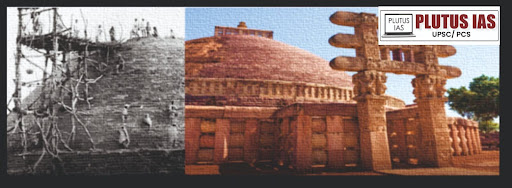
The Rich History of Indian Culture in Architecture
1. Indus Valley Civilization (2500 BCE – 1900 BCE): The cities of Harappa and Mohenjo-Daro exhibit advanced urban planning, drainage systems, and grid-based street designs.
2. Buddhist Architecture: The stupas at Sanchi and the rock-cut caves at Ajanta and Ellora exemplify early Indian craftsmanship and religious devotion.
3. Hindu Temple Architecture: Temples such as the Brihadeshwara Temple in Tamil Nadu and the Sun Temple at Konark showcase intricate carvings, massive gopurams, and sacred symbolism.
4. Mughal Architecture: The Taj Mahal, Red Fort, and Fatehpur Sikri reflect Persian influences and artistic excellence.
5. Colonial and Modern Architecture: The Victoria Memorial, Gateway of India, and Rashtrapati Bhavan blend Indian and European styles, symbolizing India’s colonial and post-independence identity.
Examples of Architectural Wonders Across India
Taj Mahal (Uttar Pradesh): A symbol of love and architectural brilliance.
Hampi (Karnataka): The capital of the Vijayanagar Empire with stunning temple ruins.
Khajuraho Temples (Madhya Pradesh): Known for their intricate sculptures and depictions of human expressions.
Government Measures to Protect India s Rich Heritage:
Legislative Framework :
1. The Ancient Monuments and Archaeological Sites and Remains (AMASR) Act, 1958, protects monuments from encroachments.
2. The National Policy on Monuments, Antiquities, and Archaeological Sites guides conservation efforts.
Government Initiatives
| Scheme | Date of Inauguration | Ministry | Features |
|---|---|---|---|
| Adopt a Heritage 2.0 | 2024 | Ministry of Tourism & Ministry of Culture | Corporate involvement in the conservation of lesser-known monuments. |
| PRASAD (Pilgrimage Rejuvenation and Spiritual Augmentation Drive) | 2014 | Ministry of Tourism | Develops infrastructure and facilities at pilgrimage sites to enhance heritage tourism. |
| Swachh Iconic Places (SIP) Initiative | 2016 | Ministry of Housing and Urban Affairs | Targets cleanliness and preservation of heritage sites like Taj Mahal, Ajanta Caves, and Golden Temple. |
| Mausam Project | 2014 | Ministry of Culture | Focuses on maritime heritage conservation along India’s coastal regions, such as historic trade routes in Lothal, Gujarat. |
| Vibrant Villages Programme | 2023 | Ministry of Home Affairs | Enhances conservation and promotion of cultural heritage in border villages to boost tourism and local economy. |
| National Cultural Audiovisual Archives (NCAA) | 2014 | Ministry of Culture | Digitally archives India’s rich cultural and architectural heritage for future generations. |
| Adopt a Heritage Scheme | 2017 | Ministry of Tourism | Private companies adopt heritage sites for maintenance and promotion; 25 monuments adopted as per PIB 2024. |
| HRIDAY (Heritage City Development and Augmentation Yojana) | 2015 | Ministry of Housing and Urban Affairs | Focuses on urban heritage conservation with ₹500 crore allocated for development. |
| National Mission on Monuments and Antiquities (NMMA) | 2007 | Ministry of Culture | Over 3 lakh antiquities digitized for documentation. |
| UNESCO Collaboration | Ongoing | Ministry of Culture & UNESCO | India partners with UNESCO for site preservation and cultural awareness programs, with $10 million allocated for 2024. |
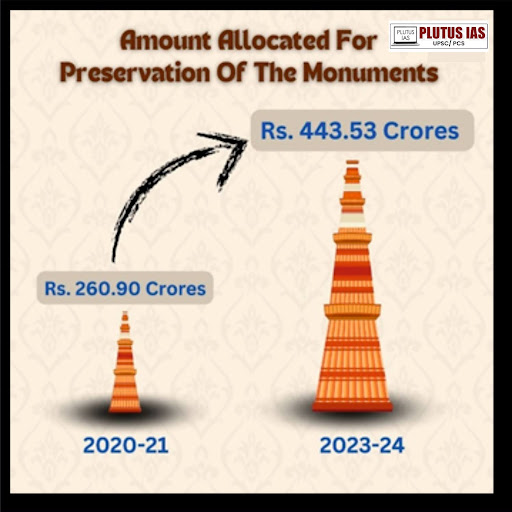
Significance of India’s Architectural Heritage:
1. Cultural Identity: Architectural sites connect citizens with India’s historical legacy. For example, the ruins of Nalanda University represent India’s ancient knowledge traditions and Buddhist heritage. As per the PIB report (2024), Nalanda has been included in India’s priority list for UNESCO heritage conservation projects.
2. Tourism and Economy: Heritage tourism contributes nearly 2.1% of India’s GDP, generating employment for 87 lakh people. The PIB (2024) highlights that the Taj Mahal alone attracted 7 million visitors last year, significantly boosting the local economy in Agra.
3. Educational Value: Structures serve as living classrooms for students and historians. The Rashtrapati Bhavan and Parliament House are examples of where modern governance meets historical architecture. The 2024 ASI report emphasizes the role of digital archives in making historical knowledge more accessible to students nationwide.
4. Spiritual and Artistic Value: Temples, mosques, and churches represent India’s religious harmony and artistic excellence. The Golden Temple in Amritsar is a significant religious and architectural marvel, attracting millions of devotees each year. The Culture Ministry (2024) has allocated ₹500 crore for the restoration of religious heritage sites across India.
Issues Concerned With the Preservation of Indian Architecture
1. Urbanization and Encroachment: Rapid expansion of cities threatens historical sites with illegal constructions.
2. Pollution and Climate Change: Acid rain, pollution, and temperature fluctuations damage structures like the Taj Mahal.
3. Neglect and Lack of Funds: Insufficient government funding leads to poor maintenance of lesser-known monuments.
4. Theft and Smuggling of Artifacts: Illegal trade in antiquities leads to the loss of cultural treasures.
5.Unregulated Tourism: High footfall at sites like Hampi and Ajanta caves leads to wear and tear of ancient carvings.
Ways To Preserve India’s Rich Architecture
1. Community Participation: Local communities should be involved in preservation efforts through awareness programs. For example, the “Adopt a Heritage” initiative encourages local businesses and individuals to contribute to the upkeep of historical sites.
2. Sustainable Tourism Practices: Limiting visitor numbers and using eco-friendly restoration techniques. The Taj Mahal now restricts daily visitors to 40,000 to prevent damage, as per the latest PIB report (2024).
3. Technology Integration: Use of 3D mapping, AI, and laser scanning to digitally preserve structures. The ASI (2024) has mapped 500 monuments digitally to assist in long-term conservation.
4. Strengthening Laws: Enhancing penalties for encroachment and illicit trade in antiquities. The UNESCO Convention on the Means of Prohibiting and Preventing Illicit Import, Export, and Transfer of Cultural Property (1970) supports India’s efforts in protecting artefacts.
5. Corporate and NGO Partnerships: Collaboration with private organizations for funding and expertise. The “Adopt a Heritage 2.0” program has led to 25 major monuments being supported by corporate sponsors.
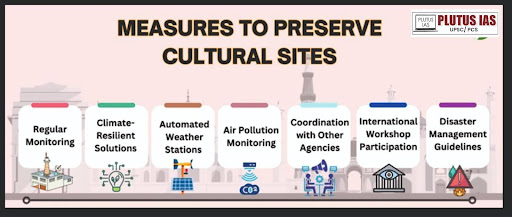
Conclusion
Preserving India’s architectural heritage is not just a duty but a necessity to maintain the country’s cultural identity and economic strength. Government policies, community participation, and technological advancements can play a significant role in safeguarding these wonders. India’s historical structures are a testament to its glorious past, and proactive efforts must be taken to ensure that they continue to inspire future generations.
Download Plutus IAS Current Affairs (Eng) 18th Feb 2025
Prelims Questions:
Q. Which of the following initiatives is aimed at urban heritage conservation in India?
(a) HRIDAY
(b) PM Awas Yojana
(c) Start-Up India
(d) Digital India
Answer: A
Mains Questions:
(250 words, 15 marks)


No Comments