


08 Mar National Board for Wildlife (NBWL): A Critical Institution for Wildlife Conservation in India
This article covers “Daily Current Affairs” and topic details of National Board for Wildlife (NBWL): A Critical Institution for Wildlife Conservation in India
SYLLABUS MAPPING:
GS- 03-Biodiversity & Environment- National Board for Wildlife (NBWL): A Critical Institution for Wildlife Conservation in India
FOR PRELIMS
Importance of NBWL in implementing India’s commitments under international wildlife conservation treaties.
FOR MAINS
Role of NBWL in addressing this issue and propose long-term solutions for coexistence between humans and wildlife.
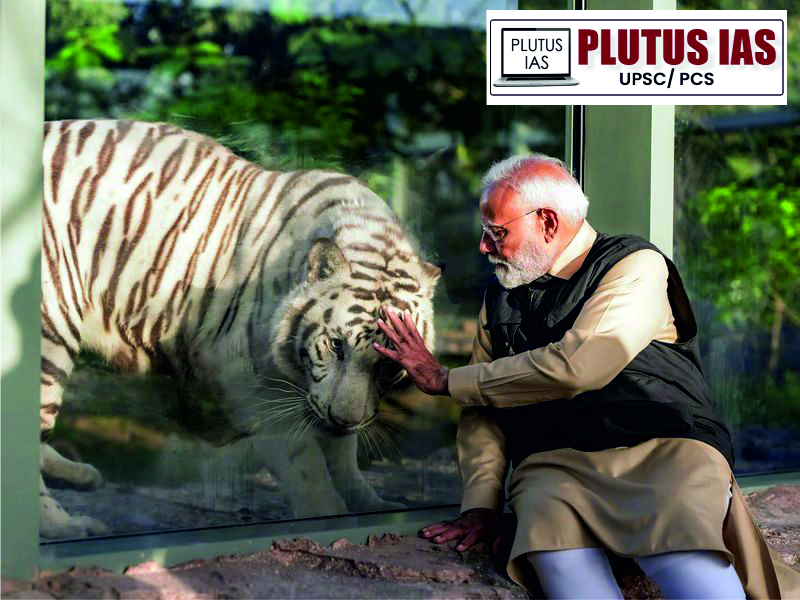
The National Board for Wildlife (NBWL) has recently been in the spotlight as Prime Minister Narendra Modi chaired its latest meeting to discuss critical decisions regarding wildlife conservation and habitat protection. During this meeting, key policies were deliberated upon, including new proposals for protected areas, mitigation measures for developmental projects affecting wildlife corridors, and strategies for enhancing biodiversity conservation. The board’s decisions have far-reaching implications for India’s environmental policies, especially in the context of balancing development with ecological sustainability.
What is NBWL?
The National Board for Wildlife (NBWL) is the apex advisory body in India responsible for wildlife conservation and protection. It is formed under the Wildlife (Protection) Act, 1972, and plays a crucial role in shaping policies related to wildlife conservation, approving developmental projects in eco-sensitive zones, and recommending necessary measures to protect biodiversity.
Formation of NBWL
NBWL was established in accordance with Section 5A of the Wildlife (Protection) Act, 1972. It was created to replace the Indian Board for Wildlife, which was earlier responsible for advising the government on matters related to wildlife preservation.
The board has a statutory status, and its recommendations are significant for ensuring that developmental activities do not negatively impact India’s rich wildlife heritage. Over the years, NBWL has played a decisive role in shaping India’s conservation policies and implementing measures to safeguard the country’s diverse flora and fauna.
Composition of NBWL
NBWL is chaired by the Prime Minister of India and includes various members, such as:
1. Union Minister for Environment, Forest and Climate Change (Vice-Chairperson)
2. Members of Parliament
3. Secretaries of Various Ministries (such as Power, Tribal Affairs, and Agriculture)
4. Chiefs of State Forest Departments
5. Representatives from NGOs and Conservationists
6. Experts in Wildlife Conservation
The board also includes official and non-official members who contribute their expertise in conservation, policymaking, and governance.
Responsibilities of NBWL
NBWL is tasked with multiple responsibilities aimed at strengthening wildlife conservation efforts in India:
1. Approval of Projects Affecting Protected Areas: Any developmental project impacting wildlife sanctuaries, national parks, or eco-sensitive zones must receive NBWL’s approval before proceeding.
2. Formulating Conservation Policies: The board advises the central government on framing policies and laws to protect endangered species and habitats.
3. Reviewing Conservation Measures: It assesses the effectiveness of conservation projects and suggests improvements where necessary.
4. Monitoring Wildlife Protection Efforts: The board evaluates compliance with wildlife laws and ensures that conservation strategies are effectively implemented.
5. Promoting Sustainable Development: NBWL works on balancing ecological preservation with infrastructure development by recommending mitigation measures.
Major Decisions by NBWL
Over the years, NBWL has made several landmark decisions that have significantly impacted India’s conservation landscape:
1. Expansion of Protected Areas: The board has approved new protected areas, including wildlife sanctuaries and national parks, to enhance biodiversity conservation.
2. Mitigation Measures for Infrastructure Projects: NBWL has recommended eco-sensitive measures such as constructing wildlife corridors and underpasses to reduce human-animal conflicts.
3. Stricter Regulations for Mining and Industrial Activities: The board has scrutinized projects that could lead to deforestation and habitat destruction, ensuring compliance with environmental norms.
4. Approval of Tiger Reserves and Conservation Plans: The board has played a crucial role in approving and implementing tiger conservation projects under the Project Tiger initiative.
Issues Related to Wildlife Conservation in India
Despite NBWL’s efforts, wildlife conservation in India faces several challenges:
1. Habitat Destruction:Rapid urbanization, deforestation, and encroachment have led to significant habitat loss for many species. The expansion of infrastructure projects like highways and railways has fragmented wildlife corridors, affecting animal migration patterns.
2. Human-Wildlife Conflict: As human settlements expand into forested areas, incidents of human-wildlife conflict have risen. Cases of elephant and leopard attacks on villages and retaliatory killings of animals highlight the urgent need for better mitigation strategies.
3. Illegal Wildlife Trade: Poaching and illegal wildlife trade continue to threaten species like tigers, rhinos, and pangolins. Despite stringent laws, organized wildlife crime remains a challenge.
4. Climate Change: Changing climate patterns are affecting wildlife habitats, leading to alterations in food availability and migration routes. Rising temperatures and unpredictable monsoon patterns are impacting species survival.
5. Weak Implementation of Laws: Although India has robust wildlife protection laws, enforcement remains weak in many areas due to lack of resources, corruption, and political interference.
Way Forward for Wildlife Conservation
To strengthen wildlife conservation efforts in India, the following steps must be undertaken:
1. Strengthening Conservation Laws: Amendments to the Wildlife Protection Act should focus on stricter penalties for illegal activities and improved monitoring mechanisms.
2. Community Involvement in Conservation: Local communities should be empowered through eco-tourism and sustainable livelihood programs to encourage them to protect wildlife.
3. Enhancing Wildlife Corridors: Infrastructure projects must integrate wildlife corridors and safe passageways to reduce habitat fragmentation.
4. Use of Technology: Advanced tracking systems, camera traps, and artificial intelligence can help monitor wildlife populations and prevent poaching.
5. Stronger International Cooperation: India should collaborate with global conservation organizations to tackle issues like illegal wildlife trade and habitat destruction.
Conclusion
The National Board for Wildlife (NBWL) plays a crucial role in shaping India’s wildlife conservation policies. While it has taken significant steps to balance development with ecological sustainability, challenges like habitat loss, human-wildlife conflict, and climate change continue to pose serious threats. Strengthening conservation laws, involving communities, and using technology effectively can go a long way in ensuring a sustainable future for India’s wildlife. With proactive measures and strong political will, NBWL can continue to be a guiding force in preserving India’s rich biodiversity for future generations.
Download Plutus IAS Current Affairs (Eng) 8th March 2025
PRELIMS Questions:
Q: Which of the following statements about the National Board for Wildlife (NBWL) is correct?a) NBWL is a statutory body formed under the Environment Protection Act, 1986.
b) The Prime Minister of India serves as the Chairperson of NBWL.
c) NBWL does not have any role in approving infrastructure projects affecting wildlife.
d) The board primarily focuses on marine biodiversity conservation.
Answer: B
Mains Questions:
Q. India has a robust legal framework for wildlife conservation, yet challenges like habitat destruction and poaching persist. Critically examine the role of NBWL in addressing these issues and suggest ways to improve its efficiency. (250 words, 15 marks)


No Comments