


16 May How to prepare for Anthropology optional? Study Plan for Anthropology optional.
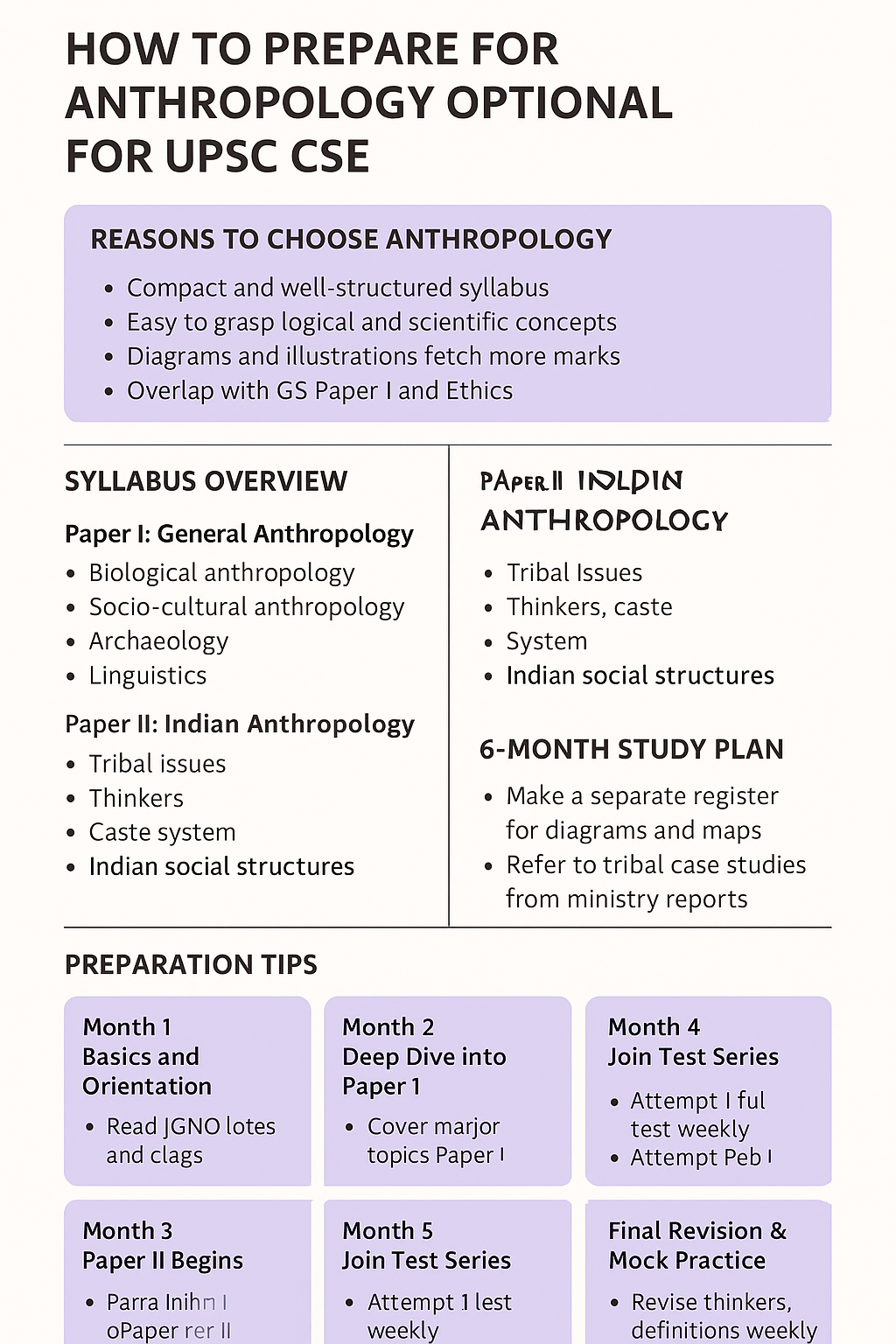
How to Prepare for Anthropology Optional for UPSC CSE
Why Choose Anthropology as an Optional Subject?
Anthropology is increasingly becoming a preferred optional subject among UPSC aspirants due to its well-defined syllabus, scientific approach, and scoring potential. Here’s why it is a smart choice:
- Compact and well-structured syllabus
- Logical and scientific concepts – easy to grasp even for non-arts students
- Illustrations and diagrams fetch better marks
- Overlap with topics in General Studies Paper I and Ethics
Understanding the Anthropology Optional Syllabus
The syllabus is divided into two papers:
- Paper I: General Anthropology – covers biological anthropology, socio-cultural anthropology, archaeology, and linguistics.
- Paper II: Indian Anthropology – focuses on tribal issues, Indian anthropology thinkers, caste system, and Indian social structures.
You can download the official syllabus from UPSC.gov.in.
Best Books and Resources for Anthropology Optional
- Paper I:
- P. Nath – Physical Anthropology
- Ember & Ember – Anthropology
- IGNOU BA Anthropology Notes
- Paper II:
- Nadeem Hasnain – Indian Anthropology
- Indian Anthropology by R.N. Sharma (selective reading)
Note: Use structured handwritten notes or mentorship guidance by Dr. Huma Hassan from PlutusIAS for conceptual clarity and diagram practice.
Answer Writing Strategy
Anthropology answers are evaluated based on conceptual clarity, diagrams, examples, and case studies. Here’s how to score high:
- Use flowcharts, diagrams, and maps wherever possible
- Quote tribal case studies from Indian context
- Structure answers: Introduction → Body → Conclusion
- Use standard terminologies and definitions
- Practice writing 1-2 answers daily after 2 months of basic preparation
6-Month Study Plan for Anthropology Optional
Month 1: Basics and Orientation
- Read IGNOU Notes and P. Nath for Paper I basics
- Understand sub-fields: socio-cultural, biological, archaeological anthropology
- Start making short notes and diagrams
Month 2: Deep Dive into Paper I
- Cover major topics like human evolution, race, primates, kinship, and culture
- Watch videos and take mentorship guidance for better understanding
- Start practicing small diagrams
Month 3: Paper II Begins
- Start Indian Anthropology – caste, tribes, linguistic and racial groups
- Refer to Nadeem Hasnain and class notes
- Attempt 1 full test of Paper I
Month 4: Integrate GS & Anthropology
- Identify overlapping topics in GS Paper I and Ethics
- Revise Paper I regularly while continuing Paper II
- Begin writing answers for Paper II
Month 5: Join Test Series
- Enroll in a test series like PlutusIAS Test Series for Anthropology optional
- Attempt 1 test weekly and revise answers based on feedback
- Complete short notes and diagram bank
Month 6: Final Revision & Mock Practice
- Revise both papers using your own notes
- Solve Previous Year Questions (PYQs)
- Focus on answer writing, structure, and time management
Topper Tips for Anthropology Optional
- Make a separate register for diagrams and maps
- Refer to tribal case studies from annual reports of Tribal Ministry
- Use toppers’ notes but tailor them to your understanding
- Revise thinkers, definitions, and concepts weekly
Conclusion
Anthropology is a scoring optional with the right mix of visual presentation and conceptual clarity. If you are consistent and analytical in your approach, scoring 280+ is very much achievable. With expert mentorship from teachers like Dr. Huma Hassan and test series support, Anthropology can become your strongest pillar in UPSC Mains.


No Comments