


08 Jul GREEN HYDROGEN: INDIA’S NEXT ENERGY REVOLUTION
|
GS PAPER III — SUBJECT AREAS Environment & Ecology · Science & Technology · Energy Security · Infrastructure · Government Policies & Interventions |
PRELIMS TOPICS National Green Hydrogen Mission · Renewable Energy · Electrolysers · Hydrogen Economy · Public Sector Undertakings (PSUs) |
① WHY IS THIS IN NEWS?
Bharat Heavy Electricals Limited (BHEL) signed a Strategic Collaboration Agreement (SCA) with the Indian arm of German electrolyser technology company thyssenkrupp nucera, for supplying and gradually manufacturing alkaline electrolyser systems in India.
The partnership supports India’s National Green Hydrogen Mission by promoting domestic manufacturing, technology transfer, and indigenous production under the Make in India initiative.
② EDITORIAL CONTEXT
India has set an ambitious goal of becoming a global hub for green hydrogen production. Achieving Net Zero emissions by 2070 requires deep decarbonisation of difficult sectors such as steel, fertilizers, refineries, shipping, and heavy transport.
The biggest challenge, however, remains the high cost of producing green hydrogen — mainly because electrolyser technology is expensive and largely imported.
The BHEL–thyssenkrupp nucera partnership tackles this challenge directly, bringing advanced electrolyser technology into India while enabling phased indigenous manufacturing, thereby reducing import dependence and strengthening India’s clean-energy manufacturing ecosystem.
③ WHAT IS GREEN HYDROGEN?
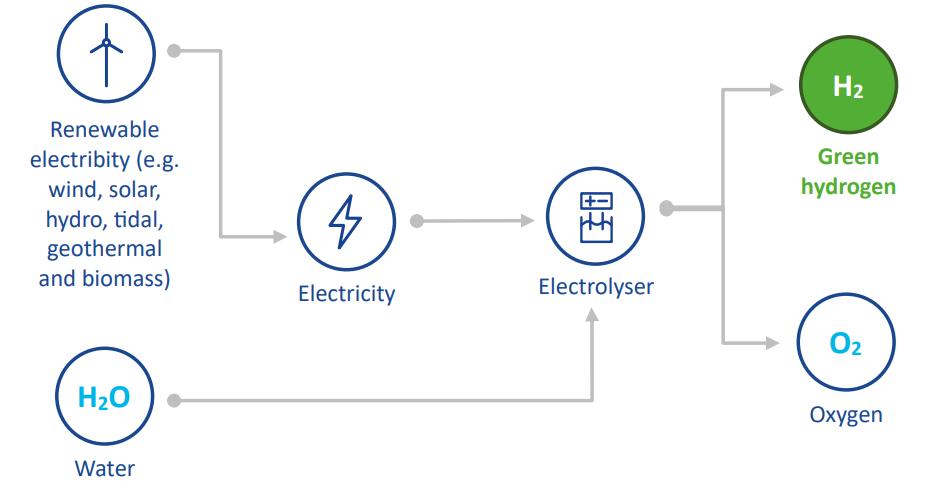
Green hydrogen is produced by splitting water into hydrogen and oxygen through electrolysis, using electricity generated exclusively from renewable sources like solar or wind.
Types of Hydrogen — Prelims Comparison Table
|
Type |
Source |
Carbon Emissions |
|
Grey Hydrogen |
Natural Gas |
High |
|
Blue Hydrogen |
Natural Gas + Carbon Capture |
Moderate |
|
Green Hydrogen |
Renewable Energy + Electrolysis |
Nearly Zero |
|
📌 MUST-REMEMBER FOR PRELIMS ▸ Grey Hydrogen → from Natural Gas → High emissions ▸ Blue Hydrogen → Natural Gas + Carbon Capture → Moderate emissions ▸ Green Hydrogen → Renewable Electricity + Electrolysis → Nearly Zero emissions |
④ WHAT IS AN ELECTROLYSER?
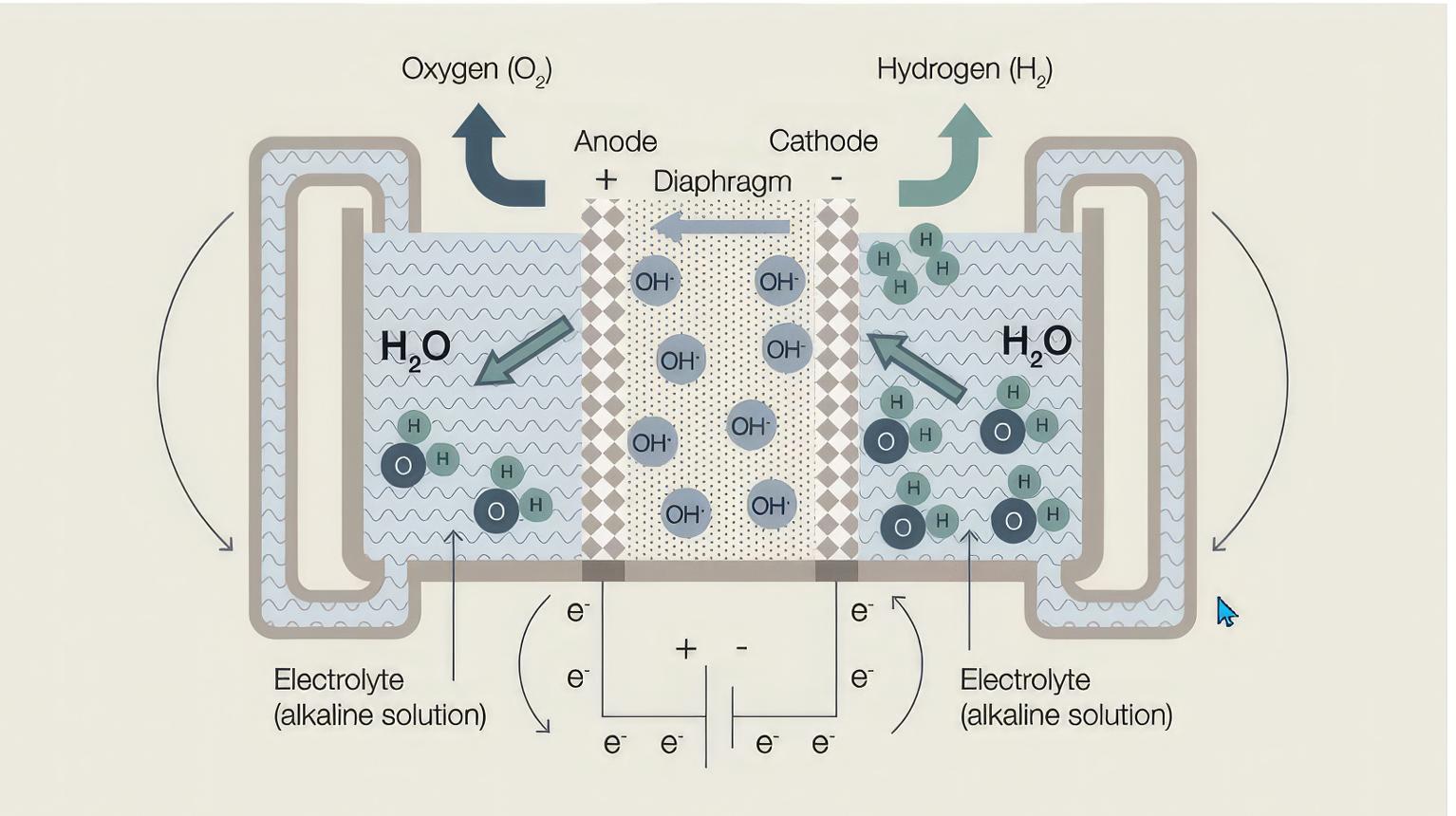
An electrolyser is a machine that uses electricity to split water into Hydrogen and Oxygen. When the electricity used is renewable, the hydrogen produced becomes Green Hydrogen.
● Alkaline Electrolyser — mature, cost-effective, used in BHEL–thyssenkrupp nucera partnership
● PEM (Proton Exchange Membrane) Electrolyser
● Solid Oxide Electrolyser
Note: The BHEL partnership focuses specifically on Alkaline Electrolysers, currently among the most mature and cost-effective technologies for large-scale production.
⑤ NATIONAL GREEN HYDROGEN MISSION
|
2023 YEAR LAUNCHED |
₹19,744 Cr MISSION OUTLAY |
5 MMT TARGET BY 2030 |
Main Objectives:
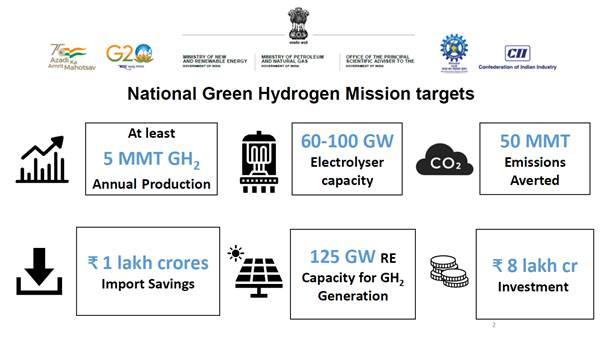
● Produce 5 Million Metric Tonnes (MMT) of Green Hydrogen annually by 2030
● Create 125 GW of renewable energy capacity
● Reduce fossil fuel imports
● Make India a global exporter of Green Hydrogen
● Generate large-scale employment
● Promote indigenous manufacturing
⑥ WHY GERMANY MATTERS?
Germany is among the world’s leading countries in hydrogen technology and electrolyser manufacturing.
|
🇮🇳 India Offers ● Cheap renewable electricity ● Large market ● Manufacturing capability ● Export potential |
🇩🇪 Germany Offers ● Advanced technology ● Research ● Industrial expertise ● European market access |
This partnership exemplifies technology transfer, strategic economic cooperation, and clean-energy diplomacy.
⑦ SIGNIFICANCE OF THE BHEL–GERMAN COLLABORATION
● 1. Technology Transfer — Access to world-class electrolyser technology
● 2. Make in India — Promotes domestic manufacturing instead of imports
● 3. Atmanirbhar Bharat — Develops indigenous clean-energy equipment
● 4. Reduces Import Dependence — India currently imports most advanced electrolysers
● 5. Strengthens Energy Security — Hydrogen can reduce dependence on imported oil and LNG
● 6. Supports Climate Goals — Net Zero by 2070, Paris Agreement, Renewable Energy Targets
● 7. Industrial Decarbonisation — Replaces fossil fuels in steel, fertilizer, refineries, chemicals, heavy transport
● 8. Export Opportunity — Europe is expected to be among the largest importers of green hydrogen; India can become a major supplier
⑧ CHALLENGES
● High production cost
● Expensive electrolysers
● Storage difficulties
● Transportation challenges
● Water requirement
● Lack of hydrogen infrastructure
● Safety concerns
● Limited domestic manufacturing ecosystem
⑨ GOVERNMENT INITIATIVES
● National Green Hydrogen Mission
● Make in India
● Production Linked Incentive (PLI)
● National Solar Mission
● Renewable Purchase Obligations (RPO)
● Green Open Access Rules
|
📌 IMPORTANT DATA FOR PRELIMS (Fact-Based) ▸ India aims to produce 5 MMT Green Hydrogen annually by 2030 ▸ Mission outlay: ₹19,744 crore ▸ Hydrogen is expected to play a major role in decarbonising hard-to-abate sectors ▸ Green hydrogen uses renewable electricity, unlike grey hydrogen (natural gas) |
⑩ UPSC RELEVANCE
|
PRELIMS — Key Concepts ● Electrolysis ● Types of Hydrogen ● Electrolysers ● National Green Hydrogen Mission ● Renewable Energy ● BHEL ● Germany–India Energy Cooperation |
MAINS (GS III) — Focus Areas ● Hydrogen Economy ● Energy Security ● Climate Change ● Renewable Energy ● Public Sector Enterprises ● Technology Transfer ● Clean Energy Transition |
⑪ WAY FORWARD
India must complement technology partnerships with stronger R&D, affordable financing, renewable power expansion, domestic manufacturing of critical components, skilled workforce development, and dedicated hydrogen transport and storage infrastructure.
International collaborations should increasingly evolve into indigenous innovation, enabling India to become both a major producer and exporter of green hydrogen.
⑫ CONCLUSION
The BHEL–thyssenkrupp nucera collaboration marks an important step in India’s transition towards a hydrogen-based economy. Beyond a commercial agreement, it reflects India’s strategy of combining international technology partnerships with domestic manufacturing to accelerate clean energy deployment.
If backed by supportive policies and infrastructure, such initiatives can strengthen energy security, reduce emissions, and position India as a global leader in the emerging green hydrogen market.


No Comments