


08 Jul Three Killed in Debris Slip at Tunnel Site in Wayanad : Lessons for Disaster Risk Reduction & Infrastructure Safety
GEOGRAPHY ENVIRONMENT & ECOLOGY DISASTER MANAGEMENT CLIMATE CHANGE GS PAPER III
📌 Subject Relevance Snapshot
|
Examination Segment |
Topics Covered |
|
Prelims |
Physical Geography & Geomorphology · Environment & Ecology · Disaster Management · Climate Change · Current Affairs · Government Schemes & Institutions |
|
GS Paper III (Mains) |
Disaster Management · Infrastructure Development · Environment Conservation · Climate Change · Internal Security (Emergency Response) |
|
Essay |
Sustainable Development · Development vs Environment · Building a Disaster-Resilient India |
🗞️ Why is this in News?
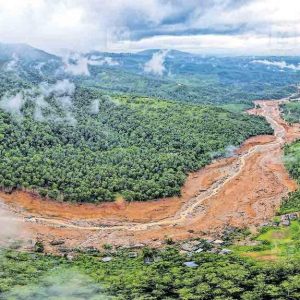
Three workers lost their lives after a massive debris slip/landslide struck a tunnel construction site near Meppady in Wayanad district, Kerala. The incident occurred amid heavy monsoon rainfall and raised serious concerns regarding infrastructure projects in ecologically fragile regions of the Western Ghats. Rescue operations involving multiple agencies were launched immediately. The incident has revived memories of the devastating 2024 Wayanad landslides and renewed debate on balancing development with ecological safety.
📚 Background
● Wayanad is one of India’s most landslide-prone districts.
● The district witnessed one of India’s worst landslide disasters in 2024, causing hundreds of deaths and enormous infrastructure damage.
Since then, experts have repeatedly emphasized:
● Better hazard mapping
● Scientific land-use planning
● Early warning systems
● Safer infrastructure construction
The latest tunnel-site tragedy indicates that disaster vulnerability continues to remain high.
⚠️ Why is Wayanad Highly Vulnerable?
1. Fragile Western Ghats
● UNESCO World Heritage region
● Steep slopes
● Deep weathered soil
● High rainfall — these naturally favour landslides
2. Heavy Monsoon Rainfall
● Annual rainfall: 3000–5000 mm in many locations
● Continuous rainfall saturates soil, reducing slope stability
3. Human Activities
● Road cutting
● Tunnel excavation
● Quarrying
● Deforestation
● Hill cutting — these disturb natural slope equilibrium
4. Climate Change
● Increase in short-duration extreme rainfall events
● Higher frequency of cloudbursts
● Increased landslide probability
⭐ Relevant Facts for UPSC (High-Yield)
|
Fact |
Importance |
|
Western Ghats |
UNESCO World Heritage Site |
|
Wayanad |
Landslide hotspot |
|
Major Trigger |
Intense rainfall |
|
Secondary Trigger |
Excavation & slope instability |
|
Disaster Type |
Geological Disaster |
|
Managing Agency |
NDMA, SDMA, DDMA |
🌍 What Causes Landslides?
|
Natural Causes |
Human Causes |
|
▸ Heavy rainfall ▸ Earthquakes ▸ Weathering ▸ River erosion |
▸ Deforestation ▸ Construction on steep slopes ▸ Mining ▸ Quarrying ▸ Road widening ▸ Tunnel excavation |
🔍 Disaster Management Issues Highlighted
Infrastructure without Adequate Risk Assessment
Development projects in fragile ecosystems require comprehensive geological and environmental assessments.
Worker Safety
Construction workers often remain vulnerable due to:
● Poor emergency evacuation planning
● Insufficient monitoring
● Inadequate safety protocols
Weak Land-use Planning
Construction in hazard-prone zones increases disaster risk.
Climate Adaptation Gap
Extreme weather is increasing faster than adaptation measures.
🏛️ Disaster Management in India — Institutional Framework
|
Body |
Key Role |
|
NDMA — National Disaster Management Authority |
Apex disaster management body; headed by the Prime Minister; frames national disaster policies and guidelines |
|
NDRF — National Disaster Response Force |
Specialized disaster response force; conducts rescue, evacuation, and relief operations |
|
SDMA — State Disaster Management Authority |
Headed by the Chief Minister; coordinates state-level preparedness and response |
|
DDMA — District Disaster Management Authority |
Headed by the District Collector; responsible for district-level disaster planning |
⚖️ Legal Framework
● Disaster Management Act, 2005
● National Disaster Management Plan
● Sendai Framework for Disaster Risk Reduction (2015–2030)
🛡️ Key NDMA Measures for Landslides
● Hazard zonation mapping
● Landslide Early Warning Systems
● Slope stabilization
● Afforestation
● Controlled construction
● Community awareness
● Evacuation planning
🏗️ Government Initiatives Relevant to the Topic
● National Landslide Risk Management Strategy (2019)
● Landslide Atlas of India by the Geological Survey of India
● Early Warning Systems by the India Meteorological Department
● National Disaster Management Plan
● National Landslide Susceptibility Mapping
📊 Important Data for UPSC
|
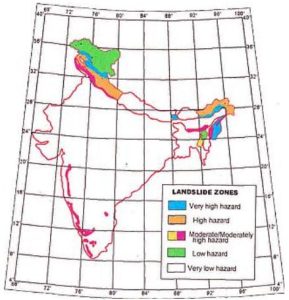
Key Statistics ▸ Around 12–15% of India’s land area is prone to landslides ▸ Approximately 0.42 million sq. km is susceptible to landslide hazards ▸ The Himalayas and the Western Ghats are India’s two major landslide-prone regions ▸ India is among the countries most vulnerable to climate-induced disasters due to its diverse geography |
💡 Significance of this News
1. Highlights Disaster Preparedness
Shows the importance of disaster-resilient infrastructure.
2. Importance of Geological Assessment
Infrastructure projects in fragile regions require scientific planning.
3. Climate Change Reminder
Extreme rainfall events are becoming more frequent.
4. Worker Safety
Calls for stronger occupational safety measures at construction sites.
5. Sustainable Development
Development should proceed without compromising ecological stability.
|
🎯 Relevance for UPSC PRELIMS — Questions may be asked on: ▸ Landslides ▸ Western Ghats ▸ NDMA ▸ NDRF ▸ Disaster Management Act, 2005 ▸ Sendai Framework ▸ Geological Survey of India ▸ IMD Early Warning Systems |
|
🎯 Relevance for UPSC MAINS — GS Paper III — Possible themes: ▸ Landslide disaster management ▸ Climate-resilient infrastructure ▸ Ecologically sensitive development ▸ Environmental Impact Assessment (EIA) ▸ Infrastructure projects in fragile ecosystems ▸ Disaster preparedness and institutional coordination |
✍️ Value Addition for Mains
|
⚠ Challenges |
✔ Way Forward |
|
▸ Poor land-use planning ▸ Weak enforcement of environmental norms ▸ Increasing climate variability ▸ Unplanned hill development ▸ Limited real-time monitoring |
▸ Scientific hazard zonation ▸ Strict Environmental Impact Assessments ▸ Nature-based slope stabilization ▸ Advanced rainfall-triggered early warning systems ▸ Better worker safety protocols ▸ Community-based disaster preparedness ▸ Climate-resilient infrastructure planning |
🔗 Previous UPSC Linkages
Similar themes have appeared in questions on:
● Uttarakhand disasters
● Himalayan ecology
● Western Ghats conservation
● Disaster preparedness
● Climate adaptation
● Sustainable development
📝 UPSC Prelims Practice Questions
Question 1
With reference to landslides in India, consider the following statements:
● 1. Heavy rainfall is one of the major natural triggers of landslides.
● 2. Deforestation can increase landslide susceptibility.
● 3. The Western Ghats are completely free from landslide hazards.
Which of the statements given above are correct?
● A. 1 and 2 only
● B. 2 and 3 only
● C. 1 and 3 only
● D. 1, 2 and 3
ANSWER: A
Explanation:
● Statement 1 is correct because prolonged or intense rainfall saturates soil and destabilizes slopes.
● Statement 2 is correct since removal of vegetation reduces root binding and increases erosion.
● Statement 3 is incorrect because the Western Ghats are one of India’s major landslide-prone regions.
Question 2
Which of the following is the apex statutory authority responsible for laying down policies, plans and guidelines for disaster management in India?
● A. India Meteorological Department
● B. Geological Survey of India
● C. National Disaster Management Authority (NDMA)
● D. National Green Tribunal
ANSWER: C
Explanation: The National Disaster Management Authority is the apex statutory body established under the Disaster Management Act, 2005. It formulates national disaster management policies and guidelines. The IMD provides weather forecasts, the Geological Survey of India undertakes geological studies, and the National Green Tribunal adjudicates environmental cases.
🖊️ UPSC Mains Practice Question
|
GS Paper III — 250 Words ▸ “Increasing frequency of landslides in ecologically fragile regions highlights the need to integrate infrastructure development with disaster risk reduction. Discuss in the context of India’s disaster management framework.” |

- RBI’s Shrinking Real-Rate Cushion Amid Rising Inflation and Strong Demand - September 21, 2026
- India’s NGOs at a New Funding Crossroads - September 21, 2026
- Deep-Sea Discovery, Environmental Responsibility - September 19, 2026

No Comments