


16 Jul Iran Threatens Regional Oil Blockade over U.S. Actions – Why the Strait of Hormuz Matters to the World and India
|
GS Paper I — Geography |
GS Paper II — IR |
GS Paper III — Security/Economy |
Prelims — Map & Current Affairs |
WHY IS THIS IN NEWS?
Iran has warned that it could block or severely disrupt oil exports from the Persian Gulf following renewed U.S. military actions and rising tensions in West Asia. The threat has once again brought global attention to the Strait of Hormuz, one of the world’s most important maritime chokepoints for energy trade. Oil prices have reacted sharply due to fears of supply disruptions.
BRIEF OVERVIEW
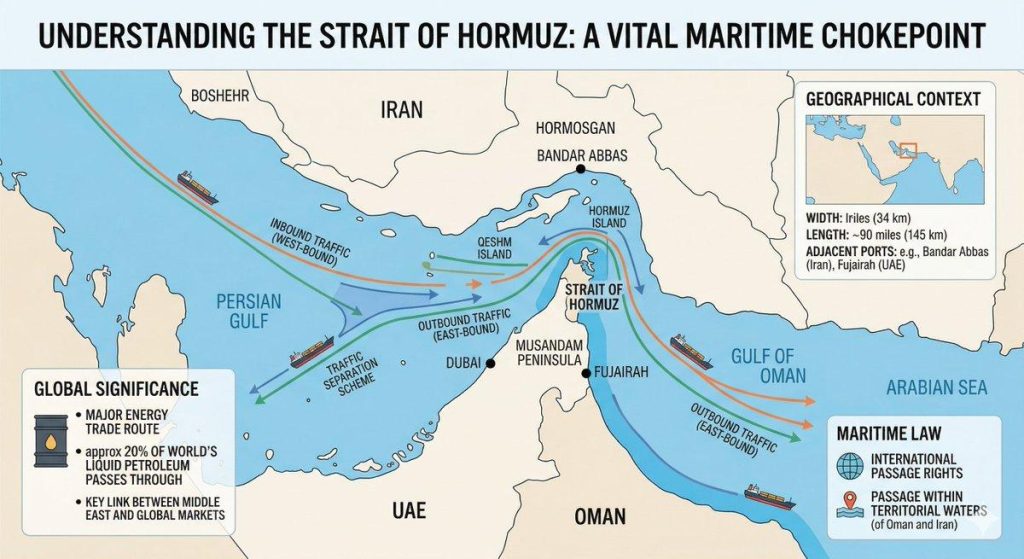
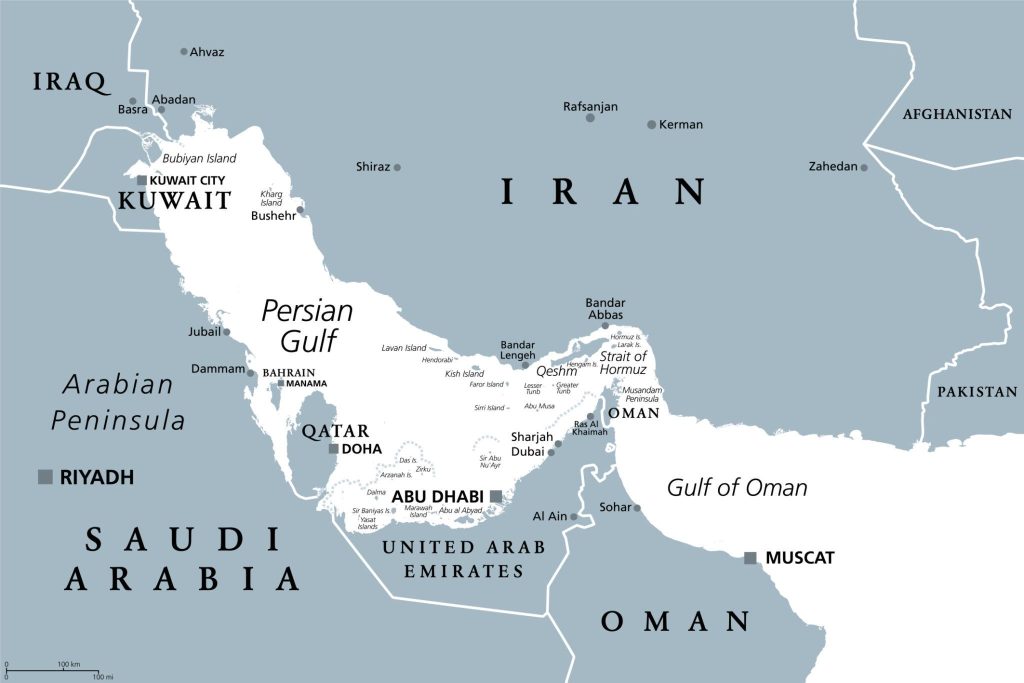
The Strait of Hormuz connects the Persian Gulf with the Gulf of Oman and the Arabian Sea. It serves as the primary export route for crude oil and LNG from Gulf countries such as:
▪ Iran
▪ Saudi Arabia
▪ Iraq
▪ Kuwait
▪ Qatar
▪ United Arab Emirates
If shipping through the Strait is disrupted, the consequences cascade quickly:
▪ Global oil supply falls — fewer tankers can safely transit the route.
▪ International crude oil prices rise — driven by fear of scarcity, not just actual shortage.
▪ Shipping insurance costs increase — war-risk premiums are added for vessels transiting the region.
▪ Inflationary pressures affect importing countries — including India, through costlier fuel and freight.
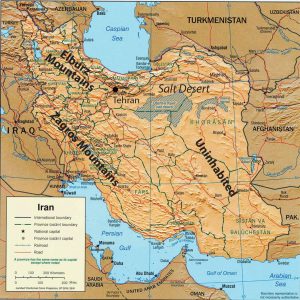
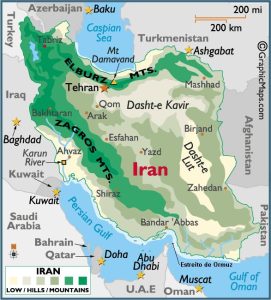
GEOGRAPHY OF IRAN (UPSC PERSPECTIVE)
Location
▪ Situated in South-West Asia (West Asia).
▪ Strategic position between the Caspian Sea and the Persian Gulf.
Neighbouring Countries
▪ Iraq
▪ Turkey
▪ Armenia
▪ Azerbaijan
▪ Turkmenistan
▪ Afghanistan
▪ Pakistan
Important Water Bodies
▪ Persian Gulf
▪ Gulf of Oman
▪ Caspian Sea
▪ Strait of Hormuz
Major Physical Features
▪ Zagros Mountains — western Iran.
▪ Alborz Mountains — north.
▪ Dasht-e Kavir — the Great Salt Desert.
▪ Dasht-e Lut — a hot desert.
Major Ports
▪ Bandar Abbas
▪ Chabahar
▪ Kharg Island — major oil export terminal.
STRAIT OF HORMUZ: WHY IS IT SO IMPORTANT?
|
★ Key Facts for UPSC Prelims ✦ Width at narrowest point: around 33 km. ✦ Navigable shipping lane: roughly 3 km in each direction. ✦ Connects the Persian Gulf to the Arabian Sea (via the Gulf of Oman). ✦ Considered the world’s most strategic oil chokepoint. |
Global Importance
▪ Nearly one-fifth of global oil consumption passes through this route.
▪ Around 20% of global LNG trade also transits through it.
Any closure immediately affects:
▪ Energy markets
▪ Maritime trade
▪ Global inflation
▪ Shipping security
SIGNIFICANCE FOR INDIA
▪ India imports nearly 85% of its crude oil requirements, with a substantial share sourced from West Asian countries.
A prolonged disruption could lead to:
▪ Higher fuel prices
▪ Increased inflation
▪ Widening Current Account Deficit (CAD)
▪ Pressure on the Indian Rupee
▪ Higher transportation and fertilizer costs
India therefore closely monitors developments in the Persian Gulf while maintaining balanced diplomatic relations with both the U.S. and Iran.
INTERNATIONAL RELATIONS PERSPECTIVE
▪ 1. U.S.–Iran Rivalry — Long-standing disputes over Iran’s nuclear programme, sanctions, and regional influence continue to drive tensions.
▪ 2. Energy Security — Control over strategic sea lanes directly affects global energy markets.
▪ 3. Maritime Security — Freedom of navigation has become a major international concern.
▪ 4. Geopolitics of West Asia — The crisis involves multiple stakeholders: Iran, United States, GCC countries, Israel, European nations, China, and India.
IMPORTANT MAP LOCATIONS FOR UPSC
|
⚑ Locate These on the Map ✦ Strait of Hormuz ✦ Persian Gulf ✦ Gulf of Oman ✦ Arabian Sea ✦ Red Sea ✦ Bab-el-Mandeb Strait ✦ Suez Canal ✦ Chabahar Port ✦ Bandar Abbas ✦ Kharg Island |
RELEVANCE FOR UPSC PRELIMS
|
✓ Candidates Should Know ✦ Location of the Strait of Hormuz ✦ Countries bordering the Persian Gulf ✦ Major oil-exporting nations ✦ India’s crude oil import dependence ✦ Important maritime chokepoints ✦ Map of Iran and neighbouring countries |
RELEVANCE FOR UPSC MAINS
GS Paper II
▪ India–West Asia relations
▪ Strategic autonomy
▪ Regional security
▪ Maritime diplomacy
GS Paper III
▪ Energy security
▪ Oil price shocks
▪ Inflation
▪ Economic resilience
▪ Supply chain security
VALUE ADDITION — MAJOR MARITIME CHOKEPOINTS
|
Chokepoint |
Connects |
|
Strait of Hormuz |
Persian Gulf – Gulf of Oman |
|
Bab-el-Mandeb |
Red Sea – Gulf of Aden |
|
Suez Canal |
Mediterranean Sea – Red Sea |
|
Strait of Malacca |
Indian Ocean – Pacific Ocean |
|
Panama Canal |
Atlantic Ocean – Pacific Ocean |
UPSC PRELIMS PRACTICE QUESTIONS
|
Q1. Which of the following statements regarding the Strait of Hormuz is/are correct? 1. It connects the Persian Gulf with the Gulf of Oman. 2. Iran and Oman share coastlines along the Strait. 3. It connects the Mediterranean Sea with the Red Sea. Select the correct answer using the code given below: A. 1 and 2 only B. 2 and 3 only C. 1 only D. 1, 2 and 3 Answer: A Explanation: Statement 1 is correct — the Strait links the Persian Gulf to the Gulf of Oman. Statement 2 is correct — Iran and Oman face each other across the Strait. Statement 3 is incorrect: the Mediterranean Sea and the Red Sea are connected through the Suez Canal, not the Strait of Hormuz. |
|
Q2. Consider the following countries: 1. Iraq 2. Qatar 3. Kuwait 4. Saudi Arabia. Exports from which of the above largely depend upon the Strait of Hormuz? A. 1 and 2 only B. 2, 3 and 4 only C. 1, 2, 3 and 4 D. 1 and 4 only Answer: C Explanation: All four countries export a significant portion of their crude oil and petroleum products through the Strait of Hormuz, making it one of the most strategically important maritime routes for global energy trade. |
UPSC MAINS PRACTICE QUESTION
|
✍ 250-Word Answer Writing Practice ✦ “The Strait of Hormuz is not merely a maritime passage but a geopolitical fulcrum shaping global energy security and India’s strategic interests.” Discuss. |
Suggested approach: introduce the Strait’s geography and trade volume → link disruption risk to global energy security → assess impact on India (CAD, inflation, rupee, diaspora) → discuss India’s strategic responses (Chabahar, strategic petroleum reserves, diversified sourcing, naval presence) → conclude on the case for continued strategic autonomy.

- India’s Research Blindspot: Why India Needs a “Science of Science” - September 17, 2026
- Mining Amendment and Fiscal Federalism: Why Mineral-Rich States Are Concerned - September 17, 2026
- Blockades in the Red Sea and Persian Gulf: Why Maritime Security Matters for India - September 16, 2026

No Comments