


17 Jul PM Modi Unveils Key Development Projects in Chandigarh
Subject Relevance — Where This Topic Fits
- GS Paper I — Urbanization, Social Empowerment | GS Paper II — Government Policies and Interventions for Development in various sectors, Health, Education, Human Resources, Welfare Schemes, Governance | GS Paper III — Infrastructure (Energy, Ports, Roads, Airports, Railways etc.), Investment Models
- Prelims: Chandigarh Model, Smart Cities Mission, Ayushman Bharat Digital Mission, Preventive Healthcare, Medical Tourism, Swachh Bharat Abhiyan, Urban Infrastructure Development, Ease of Living, Public-Private Partnerships, Sustainable Urban Development
- Essay: The synergy of infrastructure, healthcare, and education as pillars of national progress., Urban planning and governance: Crafting sustainable and livable cities for the 21st century.
Quick Revision: Integrated development in healthcare, education, and infrastructure is pivotal for enhancing ‘Ease of Living’ and propelling India towards its ‘Viksit Bharat’ goal, while simultaneously navigating the complexities of rapid urbanization and resource management.
Why is this in the news?
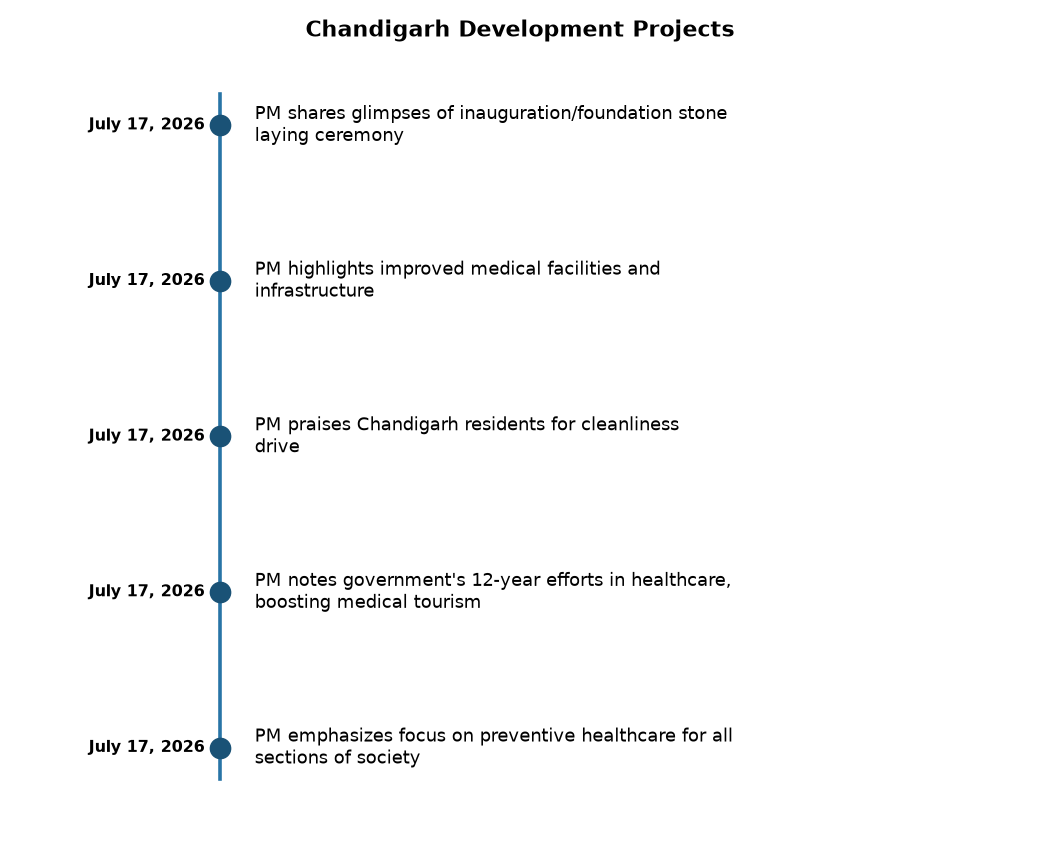
The Prime Minister recently shared glimpses of the inauguration and foundation stone laying ceremonies for various development projects in Chandigarh, encompassing healthcare, education, and road infrastructure. This event highlighted the government’s commitment to enhancing ‘Ease of Living’ and ‘Quality of Life’ through systematic urban development, acknowledging Chandigarh as a prime example of planned national progress and underscoring the importance of public participation in initiatives like Swachhata (cleanliness).
Background
- Chandigarh, a Union Territory and the capital of both Punjab and Haryana, is renowned globally for its urban planning and modern architecture, designed by Le Corbusier.
- The city has consistently ranked high in various indices related to ‘Ease of Living’ and ‘Swachh Survekshan’, reflecting its well-maintained infrastructure and civic consciousness.
- The government’s ‘Viksit Bharat @2047’ vision places significant emphasis on robust infrastructure, accessible healthcare, and quality education as foundational elements for national development.
- Recent policy thrusts have focused on a holistic approach to healthcare, moving beyond curative treatment to include preventive and promotive health, exemplified by initiatives like Ayushman Bharat.
- India’s growing healthcare capabilities, coupled with cost-effectiveness, are positioning it as a significant hub for medical tourism, attracting patients globally.
- The event underscores the continuous efforts to upgrade urban infrastructure, particularly in key sectors, to meet the demands of a growing population and foster economic growth.
The Chandigarh Model of Urban Development
- The Chandigarh Model refers to the city’s unique urban planning and architectural design, conceptualized by Swiss-French architect Le Corbusier.
- It is characterized by a grid-iron pattern of roads, distinct sectors for various functions, and a strong emphasis on green spaces and public amenities.
- The city’s design incorporates principles of modernism, functionalism, and human-centric planning, aiming for a high quality of life for its residents.
- Key features include a well-defined hierarchy of roads (7V system), integration of nature into the urban fabric, and a focus on public health and education infrastructure.
- The model serves as a benchmark for planned cities globally, demonstrating how thoughtful urban design can lead to sustainable and livable environments.
- Its success is often attributed to strict adherence to planning norms, efficient civic administration, and active citizen participation in maintaining civic standards.
- The city’s emphasis on cleanliness, green cover, and well-maintained public services contributes significantly to its high ‘Ease of Living’ scores.
- The ongoing developmental projects aim to further enhance this model by integrating modern amenities and technologies while preserving its foundational principles.
Key Features
| Feature | Significance |
|---|---|
| Integrated Development Projects | Holistic approach to urban growth, addressing multiple sectors simultaneously for synergistic impact. |
| Focus on Healthcare Infrastructure | Enhances access to quality medical services, reduces disease burden, and supports medical tourism. |
| Emphasis on Education Facilities | Boosts human capital development, fosters innovation, and improves socio-economic mobility. |
| Road Infrastructure Upgrades | Improves connectivity, reduces commute times, facilitates trade, and enhances urban mobility. |
| Promotion of ‘Swachhata’ | Fosters public health, environmental sustainability, and civic pride, aligning with national cleanliness drives. |
| Preventive Healthcare Focus | Shifts paradigm from curative to proactive health management, leading to better public health outcomes and reduced healthcare costs. |
Why it Matters
Socio-Economic Development
- Improved healthcare and education infrastructure directly contribute to human capital development, leading to a more productive workforce.
- Enhanced road connectivity facilitates economic activities, reduces logistical costs, and promotes regional trade and commerce.
- Better public services attract investments and skilled professionals, fostering economic growth and job creation within the city and surrounding regions.
Public Health and Well-being
- Upgraded medical facilities ensure better access to advanced treatments and emergency services, improving health outcomes.
- Focus on preventive healthcare reduces the incidence of diseases, particularly among vulnerable populations, and lowers overall healthcare expenditure.
- Cleanliness initiatives (Swachhata) directly impact public health by reducing vector-borne diseases and improving environmental hygiene.
Urban Governance and Planning
- The integrated approach to development projects showcases effective multi-sectoral planning and coordination by urban authorities.
- Chandigarh serves as a model for systematic urban development, demonstrating how planned growth can lead to high ‘Ease of Living’ standards.
- The emphasis on public participation in initiatives like Swachhata highlights the importance of citizen engagement in good governance.
National Aspirations
- These projects align with the national vision of ‘Viksit Bharat @2047’ by strengthening foundational pillars of development.
- India’s emergence as a medical tourism hub is bolstered by the continuous improvement in healthcare infrastructure and service quality.
- The initiatives contribute to the broader goal of enhancing ‘Ease of Living’ for all citizens across urban centres.
Challenges
1. Rapid Urbanization and Infrastructure Strain
- Chandigarh, despite its planned nature, faces increasing population pressure from surrounding areas, straining existing infrastructure.
- Maintaining the delicate balance between urban expansion and preserving the city’s original architectural and green heritage is a continuous challenge.
UPSC Link: GS Paper I — Urbanization; GS Paper III — Infrastructure
2. Funding and Resource Mobilization
- Large-scale infrastructure projects require substantial financial outlays, often necessitating innovative funding mechanisms like Public-Private Partnerships (PPPs).
- Ensuring equitable distribution of resources and benefits across all sections of society remains a concern, especially for marginalized communities.
UPSC Link: GS Paper III — Investment Models; GS Paper II — Government Policies
3. Environmental Sustainability
- The environmental impact of construction activities and increased vehicular traffic needs careful mitigation to maintain Chandigarh’s green credentials.
- Waste management, air quality, and water conservation are critical areas requiring sustained attention amidst developmental thrusts.
UPSC Link: GS Paper III — Environmental Pollution & Degradation
4. Inter-State Coordination
- As a Union Territory and capital to two states, Chandigarh’s development often requires complex coordination with Punjab and Haryana.
- Issues like regional connectivity, resource sharing, and managing peri-urban growth necessitate robust inter-state mechanisms.
UPSC Link: GS Paper II — Federalism, Inter-State Relations
5. Digital Divide and Inclusivity
- While infrastructure improves, ensuring digital literacy and access to technology for all citizens, especially in healthcare and education, is crucial.
- Bridging the gap between advanced facilities and the needs of economically weaker sections requires targeted interventions.
UPSC Link: GS Paper II — Welfare Schemes, Social Justice
Challenges — UPSC Perspective
| Issue | Concern |
|---|---|
| Maintaining Original Master Plan | Balancing new development with the preservation of Le Corbusier’s architectural and planning legacy. |
| Traffic Congestion | Increased vehicular density despite good road infrastructure, leading to congestion and pollution. |
| Water Scarcity | Growing demand for water resources, necessitating efficient management and conservation strategies. |
| Affordable Housing | Rising property prices making housing unaffordable for lower and middle-income groups. |
| Healthcare Accessibility Gaps | Ensuring equitable access to advanced healthcare facilities for all socio-economic strata. |
| Skilled Manpower Shortage | Availability of adequately trained personnel for specialized healthcare and educational institutions. |
Government Initiatives — Must-Memorise for Prelims
- Smart Cities Mission
- Ayushman Bharat Pradhan Mantri Jan Arogya Yojana (PMJAY)
- Ayushman Bharat Digital Mission (ABDM)
- National Health Mission (NHM)
- Swachh Bharat Abhiyan (Urban)
- Pradhan Mantri Gram Sadak Yojana (PMGSY) – relevant for regional connectivity
- National Education Policy (NEP) 2020
- AMRUT (Atal Mission for Rejuvenation and Urban Transformation)
- PM Gati Shakti National Master Plan
- Heal in India initiative
Way Forward
- Adopt a ‘Smart City 2.0’ approach, integrating advanced technologies like AI and IoT for efficient urban management and public service delivery.
- Strengthen Public-Private Partnerships (PPPs) to leverage private sector expertise and funding for large-scale infrastructure projects.
- Prioritize sustainable urban planning, focusing on green infrastructure, renewable energy, and circular economy principles to mitigate environmental impact.
- Enhance inter-agency and inter-state coordination for holistic regional development, especially concerning peri-urban areas and resource sharing.
- Invest in human resource development, particularly in healthcare and education, to ensure a skilled workforce capable of operating advanced facilities.
- Promote active citizen participation and community ownership in urban governance and cleanliness initiatives for sustained impact.
- Focus on data-driven policy making and continuous monitoring and evaluation of developmental projects to ensure efficiency and accountability.
- Develop robust disaster resilience infrastructure and early warning systems to protect urban assets and populations from climate change impacts.
UPSC Value Addition
Keywords for Mains Answer-Writing
Integrated Urban Development · Ease of Living · Quality of Life · Human Capital Formation · Preventive Healthcare · Medical Tourism Hub · Sustainable Urbanization · Smart City Governance · Public-Private Partnerships · Swachh Bharat Abhiyan · Infrastructure Development · Regional Connectivity
Constitutional & Policy Linkages
- Article 239: Administration of Union territories.
- Seventh Schedule (List I, II, III): Distribution of legislative powers related to health, education, and infrastructure.
- Article 243W: Powers, authority, and responsibilities of Municipalities.
- Directive Principles of State Policy (Article 38, 39, 47): State to secure a social order for welfare, right to adequate means of livelihood, duty to raise nutrition and public health.
- National Health Policy 2017: Framework for universal access to quality healthcare.
- National Education Policy 2020: Vision for India’s new education system.
Concept Flow
Governmental Commitment to Development → Investment in Healthcare, Education, Road Infrastructure → Enhanced Public Service Delivery & Connectivity → Improved Quality of Life & Ease of Living → Boost to Human Capital & Economic Growth → Attainment of ‘Viksit Bharat’ Goals
Prelims Practice Questions
Q1. Which of the following statements regarding Chandigarh’s urban planning is/are correct?
1. It was designed by Le Corbusier, emphasizing a grid-iron pattern and green spaces.
2. The city’s master plan prioritizes industrial development over residential areas.
3. Chandigarh is known for its ‘7V system’ of roads, categorizing them by function.
Select the correct answer using the code given below:
- A. 1 only
- B. 1 and 2 only
- C. 1 and 3 only
- D. 1, 2 and 3
Answer: C. 1 and 3 only — Statement 1 is correct as Le Corbusier designed Chandigarh with a grid-iron pattern and significant green spaces. Statement 2 is incorrect; Chandigarh’s master plan balances various functions, not prioritizing industrial development over residential areas. Statement 3 is correct, referring to the hierarchical road system designed for efficient traffic flow.
Q2. Consider the following statements regarding the ‘Preventive Healthcare’ approach:
1. It primarily focuses on treating existing diseases and ailments.
2. It aims to reduce the incidence of diseases through measures like vaccination and hygiene.
3. It is a key component of the Ayushman Bharat Digital Mission.
Which of the statements given above is/are correct?
- A. 1 only
- B. 2 only
- C. 2 and 3 only
- D. 1, 2 and 3
Answer: B. 2 only — Statement 1 is incorrect; preventive healthcare focuses on preventing diseases, not primarily treating existing ones. Statement 2 is correct, as preventive healthcare emphasizes measures like vaccination, sanitation, and lifestyle changes to reduce disease incidence. Statement 3 is incorrect; while ABDM digitizes health records, its primary focus is not preventive healthcare, though it can support preventive initiatives through data. The core of preventive healthcare is proactive health management.
Mains Practice Question
✍ The recent developmental projects in Chandigarh highlight an integrated approach to urban growth. Critically examine how focusing on healthcare, education, and infrastructure can drive ‘Ease of Living’ and contribute to India’s aspiration of becoming a ‘Viksit Bharat’. What are the inherent challenges in sustaining such planned urban development models amidst rapid urbanization?
Approach: Introduce by briefly mentioning the Chandigarh projects and its significance as a planned city. In the first part, discuss how improvements in healthcare (preventive, curative, medical tourism), education (human capital, innovation), and infrastructure (connectivity, economic activity) directly enhance ‘Ease of Living’ and contribute to the ‘Viksit Bharat’ vision. Use examples and government initiatives. In the second part, critically analyze challenges such as maintaining the original master plan, funding, environmental sustainability, inter-state coordination, and inclusivity in the face of rapid urbanization. Conclude with a forward-looking perspective on sustainable and inclusive urban development strategies.
Source: PIB (Press Information Bureau)
Generated by AanyaAi for educational purpose.

- बस्तर दशहरा में राष्ट्रपति मुर्मु: जनजातीय समाज और विकास के पथ पर नया अध्याय - October 24, 2026
- अटल वयो अभ्युदय योजना: वरिष्ठ नागरिकों के लिए एकीकृत देखभाल व्यवस्था - October 24, 2026
- मद्रास उच्च न्यायालय ने तमिलनाडु धर्मार्थ विभाग की लापरवाही पर कड़ी टिप्पणी की - October 23, 2026

No Comments