


20 Jul SC Refuses to Stay Delhi HC Order on CPV Tenders in 4 Missions: Key UPSC Insights
Subject Relevance — Where This Topic Fits
- GS Paper II — Polity and Governance (Judicial Review, Administrative Law) | GS Paper III — Economic Development (Public Procurement, Contractual Obligations)
- Prelims: Judicial review, Public procurement, Consular services, Passport services, Visa services, Delhi High Court, Supreme Court of India, Ministry of External Affairs, Request for Proposal (RFP), L1 bidder
- Essay: Judicial activism vs. judicial restraint: Balancing governance and accountability, The role of transparency in public procurement and its impact on service delivery
Quick Revision: The Supreme Court’s refusal to intervene in the Delhi High Court’s quashing of CPV tenders underscores the judiciary’s role in ensuring transparency in public procurement, while permitting temporary continuity of services to avoid disruption.
Why is this in the news?
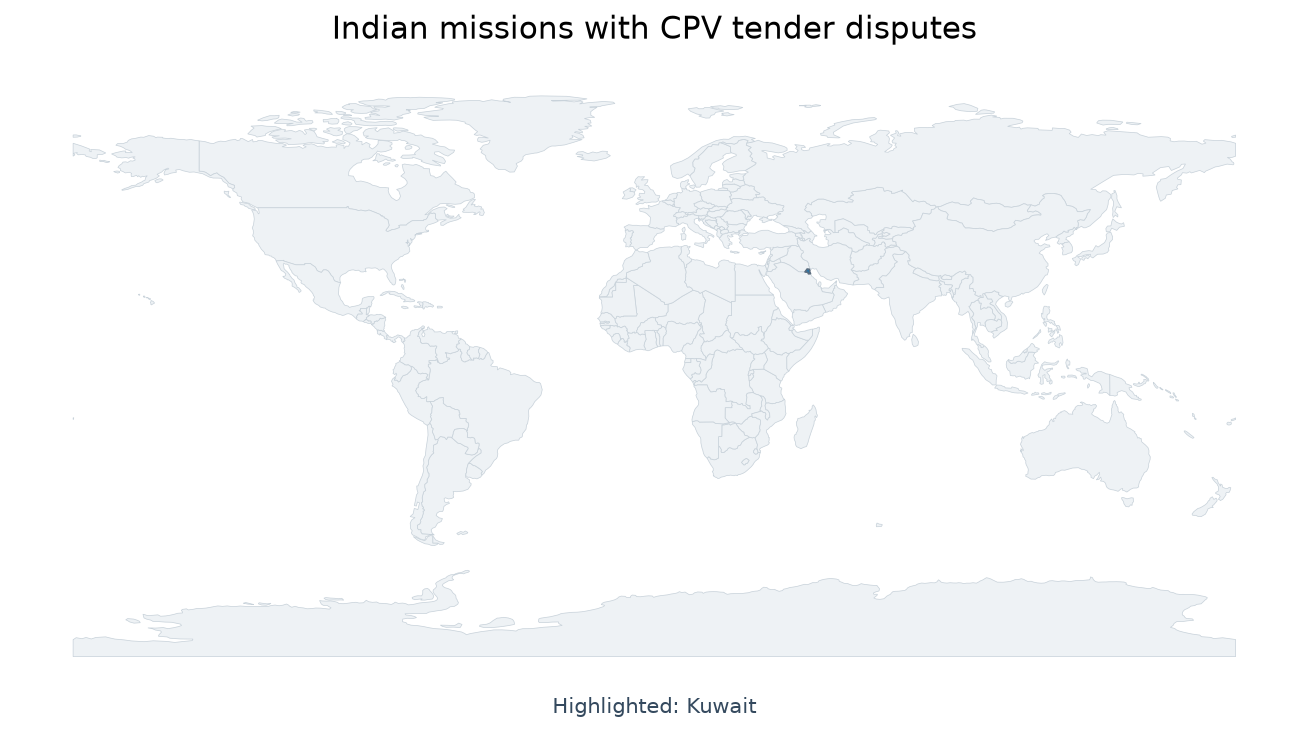
The Supreme Court of India, on July 20, 2026, declined to interfere with a Delhi High Court judgment that quashed tenders for outsourcing Consular, Passport, and Visa (CPV) services at Indian missions in Abu Dhabi, Kuwait, Singapore, and Canberra. The apex court permitted the Ministry of External Affairs to adopt a temporary mechanism to ensure continuity of services until fresh tenders are finalised, underscoring the interplay between judicial review, administrative discretion, and the principle of non-disruption of essential services.
Background
- The Delhi High Court, on July 15, 2026, set aside the tenders awarded for CPV services at four Indian missions, citing lack of transparency in the technical evaluation of bids.
- The High Court directed the Ministry of External Affairs (MEA) to issue fresh Requests for Proposal (RFPs) within a month, ensuring a fair and transparent procurement process.
- The Supreme Court, while refusing to stay the High Court’s order, permitted the MEA to engage incumbent contractors or successful bidders temporarily until the new tender process is completed within three months.
- The dispute arose over allegations that the tender evaluation process favoured certain bidders, with the High Court observing that the assessment terms created an ‘unworkable situation’.
- The MEA contended that the tender was finalised based on the individual competence of bidders, while the unsuccessful bidder argued that lower bids were unfairly ignored.
- This case highlights the tension between administrative efficiency, judicial oversight, and the need for transparency in public procurement, particularly in services of strategic and consular importance.
What is the legal framework governing public procurement in India?
- Public procurement in India is governed by the **General Financial Rules (GFR) 2017**, issued by the Ministry of Finance, which lay down the principles of transparency, fairness, and competition.
- The **Public Procurement (Preference to Make in India) Order, 2017** mandates preference for domestic suppliers in government contracts, subject to certain conditions.
- The **Supreme Court’s doctrine of judicial review** empowers courts to examine the legality, fairness, and procedural propriety of administrative decisions, including tender processes.
- The **Delhi High Court’s jurisdiction** under Article 226 of the Constitution allows it to issue writs for the enforcement of fundamental rights and for other purposes, including judicial review of administrative actions.
- The **principle of non-disruption** ensures that essential services, such as consular, passport, and visa services, are not abruptly halted due to legal or procedural disputes.
- The **temporary mechanism** permitted by the Supreme Court reflects the judiciary’s cautious approach to balancing judicial intervention with administrative continuity.
- The **role of the Solicitor General and Senior Advocates** in representing the government and private parties, respectively, underscores the adversarial nature of tender disputes in courts.
- The **three-month timeline** for completing the fresh tender process imposed by the Supreme Court aims to minimise disruption while ensuring compliance with judicial directives.
UPSC Value Addition
Keywords for Mains Answer-Writing
Consular, Passport and Visa (CPV) services · Public procurement and tendering process · Transparency in government contracts · Judicial review of administrative decisions · Delhi High Court · Supreme Court of India · Ministry of External Affairs · Request for Proposal (RFP) · Lowest bidder (L1) criterion · Technical evaluation of bids · Judicial restraint in policy matters · Administrative law and governance
Prelims Practice Questions
Q1. Which of the following statements regarding the recent Supreme Court decision on CPV tenders is correct?
- The Supreme Court upheld the Delhi High Court’s decision to quash the tenders outright and directed immediate cancellation of all CPV services.
- The Supreme Court directed the Ministry of External Affairs to engage the incumbent contractors permanently until a new tender process is completed.
- The Supreme Court refused to intervene and allowed the Ministry to continue services temporarily with the incumbent contractors or L1 bidders until a fresh tender process is finalised.
- The Supreme Court directed the Delhi High Court to re-evaluate the tenders on its own without any fresh RFP process.
Answer: The Supreme Court refused to intervene and allowed the Ministry to continue services temporarily with the incumbent contractors or L1 bidders until a fresh tender process is finalised. — The Supreme Court did not intervene in the Delhi High Court’s decision to quash the tenders but allowed the Ministry of External Affairs to continue CPV services temporarily with the incumbent contractors or L1 bidders until a fresh tender process is completed within three months.
Q2. The Delhi High Court quashed the tenders for CPV services in four Indian missions on the grounds of:
- Lack of financial viability of the lowest bidder (L1) criterion.
- Unfair technical evaluation of bids and absence of transparency in the procurement process.
- Conflict of interest between the Ministry of External Affairs and the bidders.
- Non-compliance with the General Financial Rules (GFR) by the Ministry.
Answer: Unfair technical evaluation of bids and absence of transparency in the procurement process. — The Delhi High Court set aside the tenders due to lack of transparency in the technical evaluation of bids and an ‘unworkable situation’ in the assessment terms, as observed by the Supreme Court.
Q3. Under the current legal framework governing public procurement in India, which of the following is NOT a mandatory requirement for a valid Request for Proposal (RFP)?
- Public disclosure of the evaluation criteria before the submission of bids.
- Ensuring the lowest bidder (L1) criterion is the sole determinant of contract award.
- Compliance with the principles of fairness, transparency, and non-discrimination.
- Allowing sufficient time for bidders to submit their proposals.
Answer: Ensuring the lowest bidder (L1) criterion is the sole determinant of contract award. — While the lowest bidder (L1) criterion is commonly used, it is not the sole determinant; technical evaluation, compliance with specifications, and other factors may also be considered, as highlighted in the Delhi High Court’s ruling.
Mains Practice Question
✍ Critically examine the role of judicial review in ensuring transparency and fairness in public procurement processes, with particular reference to the recent Supreme Court and Delhi High Court decisions concerning CPV tenders in Indian missions. Substantiate your answer with relevant constitutional and administrative law principles.
Approach: Begin by defining judicial review in the context of administrative actions and its constitutional basis under Articles 14 and 226 of the Constitution. Analyse the Delhi High Court’s decision to quash the tenders, focusing on the principles of transparency, fairness, and non-arbitrariness in the procurement process. Discuss the Supreme Court’s stance of judicial restraint, balancing the need for administrative autonomy with judicial oversight. Conclude by evaluating whether the judiciary’s intervention in this case aligns with the broader objectives of good governance and public accountability in public procurement.
Source: The Hindu
Generated by AanyaAi for educational purpose.

- बस्तर दशहरा में राष्ट्रपति मुर्मु: जनजातीय समाज और विकास के पथ पर नया अध्याय - October 24, 2026
- अटल वयो अभ्युदय योजना: वरिष्ठ नागरिकों के लिए एकीकृत देखभाल व्यवस्था - October 24, 2026
- मद्रास उच्च न्यायालय ने तमिलनाडु धर्मार्थ विभाग की लापरवाही पर कड़ी टिप्पणी की - October 23, 2026

No Comments