


27 Jul कोसी-मेची अंतरराज्यीय लिंक परियोजना: जानिए पूरा विवरण और महत्व
Subject Relevance — Where This Topic Fits
- GS Paper II — India and its Neighbourhood (Bilateral Relations with Nepal) | GS Paper III — Agriculture, Water Resources, and Infrastructure
- Prelims: Kosi-Mechhi Link Project, PMKSY-AIBP, Inter-State Water Disputes, Bihar Flood Management, Nepal-India Joint Projects, GLOF Studies
- Essay: Water Security and Regional Cooperation in South Asia, Sustainable Infrastructure Development for Agricultural Prosperity
Quick Revision: The Kosi-Mechhi Inter-State Link Project is an initiative under PMKSY-AIBP, aimed at diverting Kosi River waters to the Mechi River for irrigation and flood control in Bihar.
Why is this in the news?
The Kosi-Mechhi Inter-State Link Project has been included under the Pradhan Mantri Krishi Sinchayee Yojana-Accelerated Irrigation Benefit Programme (PMKSY-AIBP) with a central assistance of ₹3,652.56 crore, marking a significant step toward enhancing irrigation, flood mitigation, and agricultural productivity in Bihar. Additionally, the project’s linkage with Nepal’s water management initiatives highlights its geopolitical and hydrological significance.
Background
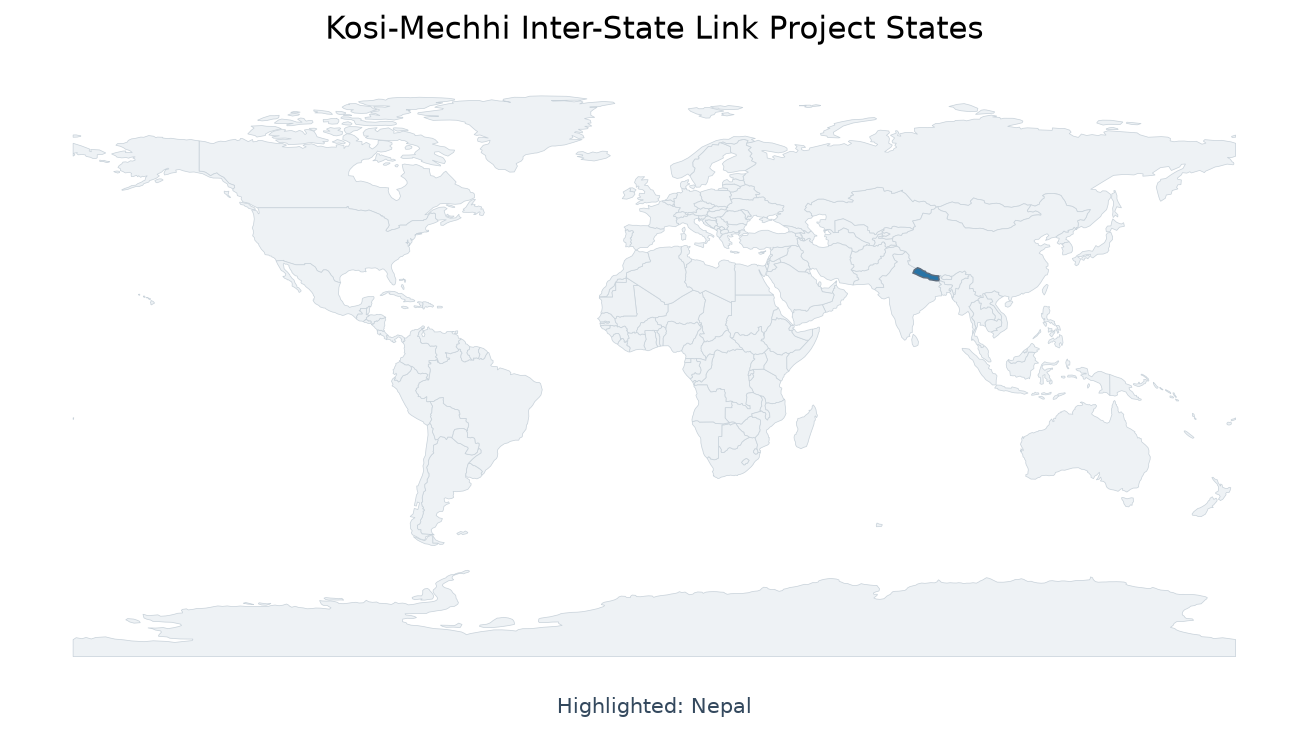
- The Kosi River, originating in Nepal, is a transboundary river that frequently causes devastating floods in Bihar, India, due to its high sediment load and erratic flow patterns.
- The Kosi-Mechhi Link Project is part of a broader strategy to harness the Kosi River’s water for irrigation, flood control, and hydroelectric power generation, aligning with the Pradhan Mantri Krishi Sinchayee Yojana (PMKSY).
- Historically, the Kosi has been referred to as the ‘Sorrow of Bihar’ due to recurrent floods that displace millions and damage agricultural lands, necessitating long-term structural solutions.
- The project is envisaged as an inter-state link to divert surplus waters from the Kosi to the Mechi River, thereby enhancing irrigation potential in drought-prone areas of Bihar.
- India and Nepal have a long-standing cooperation in water resource management, formalized through subsequent joint initiatives like the Joint Project Office (JPO-SKSKI) established in 2003.
- The project is also linked to the broader ‘Sapta Kosi Multi-Purpose Project’ and ‘Sun-Kosi-Kamala Diversion Multi-Purpose Project’, which aim to address flood control, irrigation, and hydroelectric generation in the region.
What is the Kosi-Mechhi Inter-State Link Project?
- The Kosi-Mechhi Inter-State Link Project is a proposed 76.20 km long canal system designed to transfer surplus waters from the Kosi River to the Mechi River, thereby addressing irrigation deficits in Bihar and mitigating flood risks.
- The project includes the reconstruction of the Eastern Kosi Main Canal, with a sanctioned cost of ₹2,639.80 crore, covering a stretch of 41.30 km, and is currently at 8.5% physical progress.
- Under the PMKSY-AIBP, the project has been allocated ₹3,652.56 crore in central assistance.
- A key component of the project is flood mitigation, as the Kosi River is prone to catastrophic flooding, particularly during the monsoon season, which has historically caused significant loss of life and property in Bihar.
- The project involves detailed hydrological, geological, and seismic studies, including Glacial Lake Outburst Flood (GLOF) assessments, to ensure structural integrity and environmental sustainability.
- The Kosi-Mechhi Link is part of a larger ecosystem of inter-state and transboundary water projects, including the Sapta Kosi Multi-Purpose Project and the Sun-Kosi-Kamala Diversion Project, which are under various stages of development.
Key Features
| Feature | Significance |
|---|---|
| Central Assistance (₹3,652.56 crore) | Provides fiscal support under PMKSY-AIBP for irrigation infrastructure development, reducing financial burden on states. |
| Total Project Cost (₹6,143.22 crore) | Covers remaining expenditure for the Koshi-Mechi inter-State link project, ensuring comprehensive funding for execution. |
| Completion Timeline (March 2029) | Ensures timely delivery of irrigation benefits, aligning with agricultural cycles and mitigating seasonal water scarcity. |
| Eastern Koshi Main Canal Reconstruction (₹2,639.80 crore) | Revitalises critical irrigation infrastructure, enhancing water conveyance efficiency and flood mitigation. |
| Progress (8.5% completion) | Indicates initial phase execution; highlights need for accelerated implementation to meet deadlines. |
Why it Matters
Economic
- Augments irrigation coverage in Bihar and adjoining regions, boosting agricultural productivity and farmer incomes.
- Reduces dependency on monsoon rainfall, stabilising crop yields and enhancing food security.
- Stimulates local economies through employment generation in construction and allied sectors.
Strategic/Geopolitical
- Strengthens India-Nepal cooperation on transboundary river management, fostering bilateral trust.
- Aligns with the 2003 Joint Project Office (JPO-SKSKI) framework for multi-purpose Koshi basin projects.
- Supports flood control measures, mitigating cross-border water-induced disasters.
Environmental
- Promotes sustainable water resource utilisation through inter-basin transfer, reducing water stress.
- Incorporates flood mitigation strategies, protecting vulnerable ecosystems and human settlements.
Administrative
- Demonstrates Centre-State coordination under PMKSY-AIBP, showcasing integrated water resource management.
- Highlights the role of joint committees in resolving cross-border water disputes.
Challenges
1. Cross-Border Water Governance
- Negotiations with Nepal on Koshi dam construction remain protracted, delaying project implementation.
- Absence of India-Nepal Joint Committee meetings in 2025-26 reflects diplomatic stagnation.
- Lack of a permanent Koshi-Gandak Basin Authority hampers integrated basin management.
UPSC Link: India-Nepal River Treaties
2. Implementation Bottlenecks
- Low progress (8.5%) risks missing March 2029 deadline, necessitating accelerated execution.
- Reconstruction of Eastern Koshi Main Canal faces logistical and terrain challenges.
- Delays in land acquisition and environmental clearances could escalate costs.
UPSC Link: Project Monitoring & Evaluation
3. Hydrological Risks
- GLOF (Glacial Lake Outburst Flood) studies highlight vulnerability to climate-induced disasters.
- Siltation and sedimentation in Koshi River threaten long-term project viability.
- Inter-state water-sharing disputes may arise over allocation priorities.
UPSC Link: River Basin Management
4. Financial Constraints
- Dependence on central assistance may not suffice for full project sustainability.
- Cost overruns due to inflation or unforeseen geotechnical conditions could strain budgets.
- Limited state-level funding capacity necessitates robust public-private partnerships.
UPSC Link: Public Expenditure Management
5. Technical Challenges
- Complex terrain and seismic activity in the Himalayan foothills pose engineering hurdles.
- Integration with existing irrigation networks requires precise hydraulic design.
- Real-time monitoring systems for water distribution need advanced technological deployment.
UPSC Link: Water Resource Engineering
Challenges — UPSC Perspective
| Issue | Concern |
|---|---|
| Diplomatic Delays | Protracted negotiations with Nepal on Koshi dam construction. |
| Progress Lag | Only 8.5% completion risks missing March 2029 deadline. |
| Climate Vulnerability | GLOF risks and sedimentation threaten project longevity. |
| Financial Dependence | Heavy reliance on central funds may constrain sustainability. |
| Inter-State Coordination | Potential disputes over water allocation between Bihar and other states. |
Government Initiatives — Must-Memorise for Prelims
- Pradhan Mantri Krishi Sinchayee Yojana – Accelerated Irrigation Benefits Programme (PMKSY-AIBP)
- Flood Management and Border Areas Programme (FMBAP)
Way Forward
- Accelerate construction timelines through enhanced project monitoring and resource allocation.
- Reinvigorate India-Nepal Joint Committee meetings to resolve cross-border water governance issues.
- Conduct detailed GLOF and seismic risk assessments for structural safety.
- Strengthen inter-state coordination mechanisms to prevent water-sharing disputes.
- Explore public-private partnerships for additional funding and technological expertise.
- Implement real-time water distribution monitoring systems for efficient irrigation management.
- Develop a permanent basin authority for integrated Koshi-Gandak water resource management.
UPSC Value Addition
Keywords for Mains Answer-Writing
Inter-State River Linking Projects (ILR) · Kosi-Mechi Link Project · PMKSY-AIBP · Flood management in Bihar · India-Nepal water diplomacy · Saptakosi Multipurpose Project · Sun-Kosi-Kamala Diversion Multipurpose Project · Glacial Lake Outburst Flood (GLOF) studies · Bihar-Nepal border flood mitigation · Central assistance for irrigation projects · Joint Project Office (JPO-SKSKI) · Bihar flood management funding · Hydrological surveys and seismic studies
Concept Flow
Transboundary River (Koshi) originates in Nepal → Flows through India (Bihar) → Causes floods and water scarcity → → Inter-State Link Project proposed to divert water to Mechi basin → → PMKSY-AIBP provides central funding for irrigation infrastructure → → Project execution faces diplomatic, technical, and financial challenges → → Completion aims to enhance agricultural productivity and flood control → → Sustainable outcomes depend on integrated basin management and climate resilience.
Prelims Practice Questions
Q1. Which of the following statements about the Kosi-Mechi Inter-State Link Project is correct?
- The project is funded entirely by the Government of Nepal.
- The project is expected to be completed by December 2028.
- The project has received central assistance of ₹3,652.56 crore under PMKSY-AIBP.
- The project includes the construction of a new dam across the Ganga River.
Answer: The project has received central assistance of ₹3,652.56 crore under PMKSY-AIBP. — The Kosi-Mechi Inter-State Link Project has been allocated ₹3,652.56 crore as central assistance under the Pradhan Mantri Krishi Sinchayee Yojana-Accelerated Irrigation Benefits Programme (PMKSY-AIBP). The project is not funded entirely by Nepal, nor is it expected to be completed by December 2028, and it does not involve construction of a dam across the Ganga River.
Q2. The Joint Project Office (JPO-SKSKI) was established in 2003 to prepare Detailed Project Reports (DPRs) for which of the following projects?
- Brahmaputra-Cauvery Link Project
- Saptakosi Multipurpose Project and Sun-Kosi-Kamala Diversion Multipurpose Project
- Indus Waters Treaty-related projects
- National River Linking Project Phase-I
Answer: Saptakosi Multipurpose Project and Sun-Kosi-Kamala Diversion Multipurpose Project — The Joint Project Office (JPO-SKSKI) was constituted in 2003 specifically to prepare Detailed Project Reports (DPRs) for the Saptakosi Multipurpose Project and the Sun-Kosi-Kamala Diversion Multipurpose Project, both of which are transboundary initiatives involving India and Nepal.
Q3. Which of the following studies has NOT been completed as part of the Detailed Project Reports (DPRs) for the Saptakosi and Sun-Kosi-Kamala projects?
- Topographical surveys
- Glacial Lake Outburst Flood (GLOF) studies
- Seismic studies
- Construction of new dams in Nepal
Answer: Construction of new dams in Nepal — The Detailed Project Reports (DPRs) for both the Saptakosi Multipurpose Project and the Sun-Kosi-Kamala Diversion Multipurpose Project have included topographical surveys, Glacial Lake Outburst Flood (GLOF) studies, and seismic studies. However, the construction of new dams in Nepal has not been completed as part of these DPRs.
Mains Practice Question
✍ Discuss the significance of the Kosi-Mechi Inter-State Link Project in the context of India’s river interlinking initiatives. Examine how this project addresses the challenges of flood management and irrigation in Bihar while also highlighting the role of India-Nepal water diplomacy in its implementation.
Approach: Begin by contextualising the Kosi-Mechi Inter-State Link Project within India’s broader Inter-State River Linking (ILR) initiative, emphasising its objectives of enhancing irrigation and mitigating floods in Bihar. Analyse the project’s components, including the reconstruction of the Eastern Kosi Main Canal and the estimated cost-sharing under PMKSY-AIBP. Critically evaluate the project’s potential to address Bihar’s recurring flood vulnerabilities, particularly in the Kosi-Gandak basin. Discuss the importance of India-Nepal cooperation in transboundary river management, referencing the Joint Project Office (JPO-SKSKI) and the ongoing negotiations for the Saptakosi and Sun-Kosi-Kamala projects. Conclude by assessing the project’s feasibility, challenges in implementation, and its broader implications for sustainable water resource management in the region.
Source: PIB (Press Information Bureau)
Generated by AanyaAi for educational purpose.

- Odisha Launches Shree Jagannath Darshan Yojana for Senior Citizens Pilgrimage - September 21, 2026
- ग्वालियर में एशिया के पहले दूरसंचार विनिर्माण क्षेत्र की आधारशिला: जानिए पूरा विवरण और महत्व - September 21, 2026
- Gwalior to host Asia’s 1st Telecom Manufacturing Zone: ₹5,500 Cr Investment & 18K Jobs - September 21, 2026

No Comments