


07 Aug SEBI Simplifies Market Intermediary Inspections: Key Reforms Explained
✎ SEBI’s reforms aim to modernize inspections, boosting market integrity and efficiency.
Relevance for UPSC & State PCS: Economy
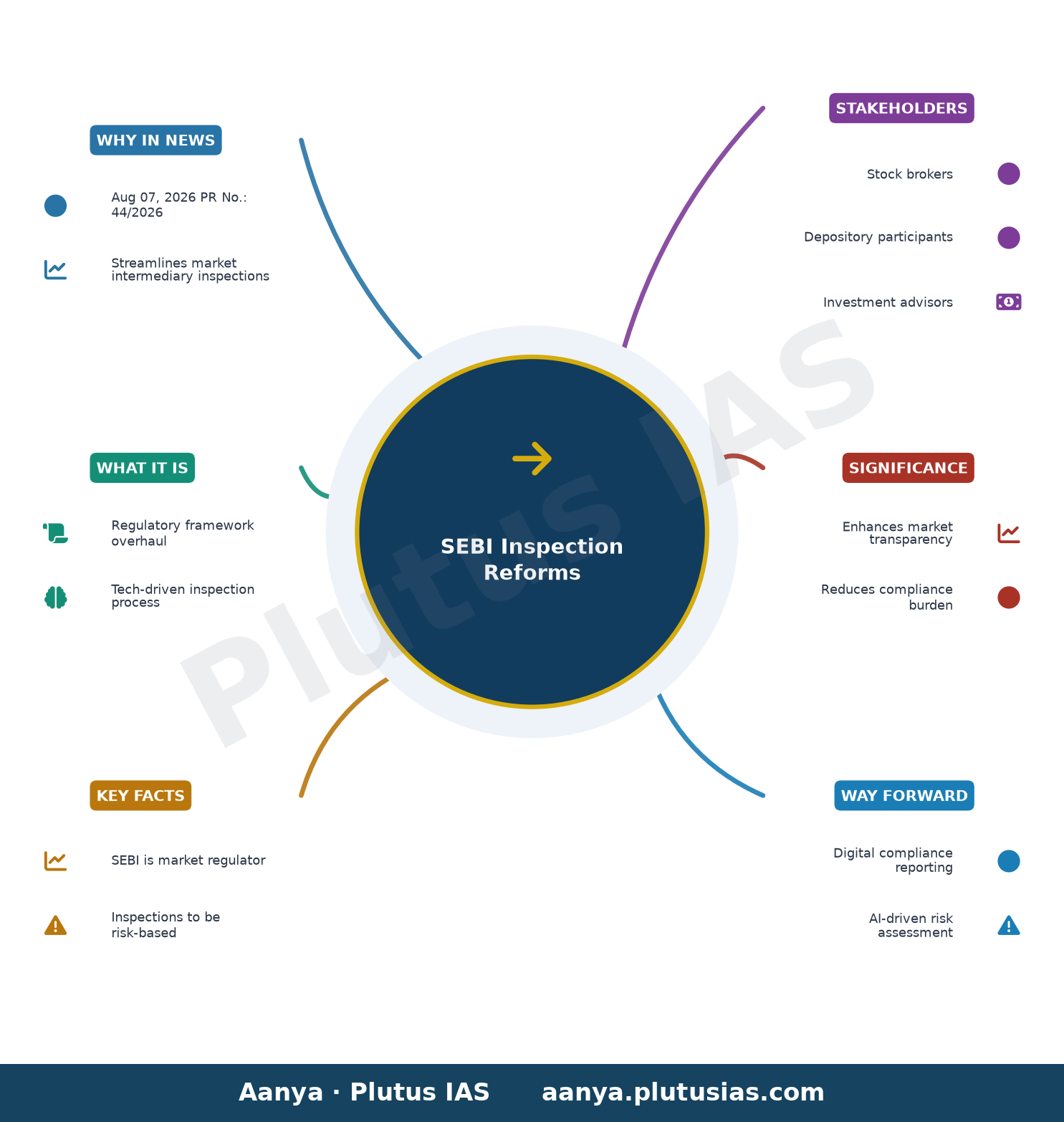
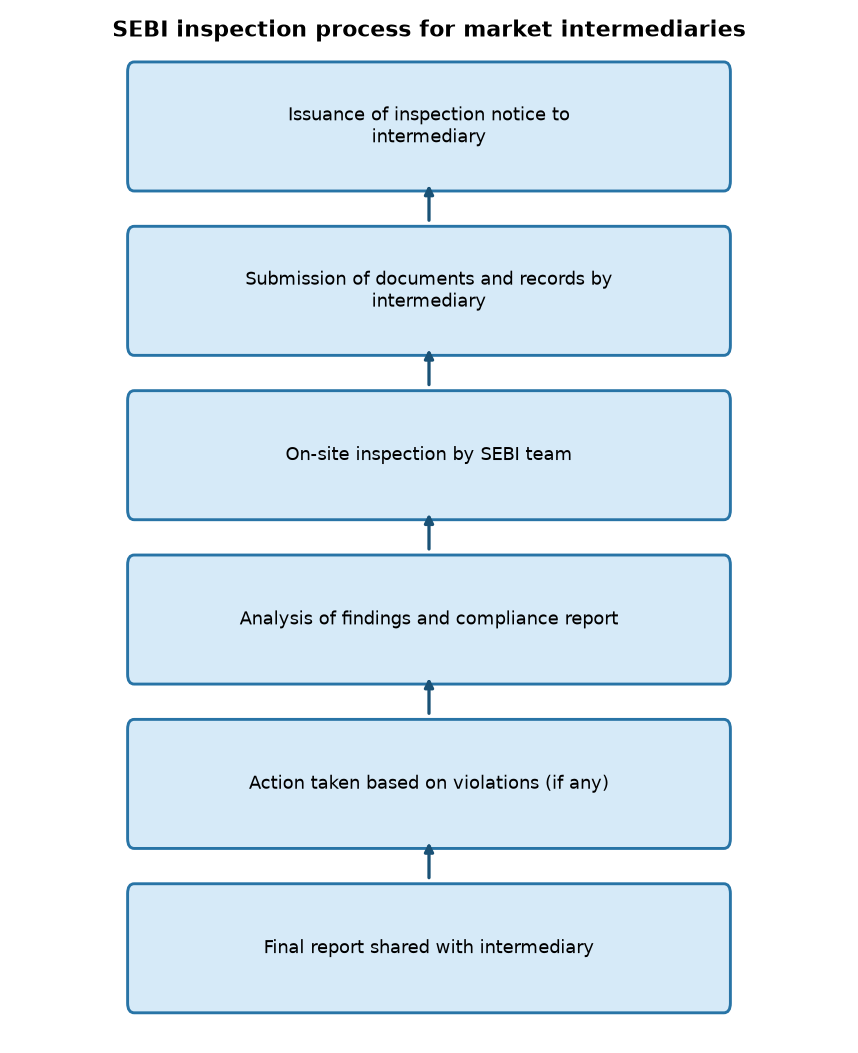
The Securities and Exchange Board of India (SEBI) has introduced a streamlined framework for the inspection of market intermediaries, including stockbrokers, depository participants, and investment advisors, to enhance regulatory efficiency and reduce compliance burdens. Effective from August 7, 2026, the new system replaces the traditional on-site inspections with a risk-based approach, leveraging technology-driven data analytics and automated tools to identify potential irregularities. This shift aims to minimize disruptions to business operations while ensuring robust oversight of market participants. The move aligns with SEBI’s broader strategy to modernize regulatory processes and foster a more transparent and accountable financial ecosystem.
For UPSC and State PCS aspirants, this development holds significant relevance as it reflects SEBI’s evolving regulatory priorities, which often feature in preliminary and mains examinations. The introduction of a risk-based inspection mechanism underscores the importance of technology in financial regulation, a theme that intersects with broader governance and economic policy discussions. Candidates should note how SEBI’s approach balances efficiency with accountability, a principle that may be applicable in other regulatory domains as well. Additionally, the focus on market intermediaries ties into the syllabus sections on financial markets, regulatory bodies, and corporate governance, making it a potential topic for essay or case study questions.
The streamlined inspection process also highlights SEBI’s commitment to reducing compliance costs for market participants without compromising regulatory rigor. By automating routine checks and prioritizing high-risk areas, SEBI aims to enhance investor protection while promoting ease of doing business. This balance between regulation and business facilitation is a critical concept for aspirants preparing for civil service examinations, where questions on economic reforms and regulatory frameworks are common. Understanding SEBI’s role in maintaining market integrity and its adaptive regulatory strategies can provide valuable insights for answering questions on governance and economic policies.
From a State PCS perspective, the SEBI’s move to modernize inspections could serve as a case study for how state-level regulatory bodies might adopt similar frameworks to improve efficiency in sectors like real estate, agriculture, or local financial services. Aspirants should consider the broader implications of such reforms, including their impact on small businesses, investor confidence, and economic growth. The ability to draw parallels between SEBI’s actions and state-level governance challenges can strengthen answers in papers focusing on public administration, economic development, or regulatory policies. This topic also encourages aspirants to stay updated on financial sector reforms, a key area in both UPSC and State PCS examinations.
Source: SEBI
Practice Questions
Q1. What recent change has SEBI implemented regarding the inspection of market intermediaries?
- SEBI has abolished all inspections of market intermediaries to reduce regulatory burden.
- SEBI has streamlined the inspection process to make it more efficient and transparent.
- SEBI has delegated inspection powers entirely to stock exchanges without oversight.
- SEBI has paused inspections until further notice due to market volatility.
Answer
SEBI has streamlined the inspection process to make it more efficient and transparent. — SEBI has streamlined the inspection of market intermediaries to enhance efficiency and transparency in regulatory oversight.
Q2. Which of the following is a likely objective behind SEBI’s move to streamline inspections?
- To reduce the number of market intermediaries operating in India.
- To minimize compliance costs and improve ease of doing business for intermediaries.
- To increase the frequency of inspections to ensure stricter compliance.
- To transfer inspection responsibilities to the Reserve Bank of India (RBI).
Answer
To minimize compliance costs and improve ease of doing business for intermediaries. — Streamlining inspections aims to reduce compliance burdens and improve the ease of doing business for market intermediaries while maintaining regulatory oversight.
Generated by AanyaAi for educational purpose.

- ग्रीनलैंड समझौता: अमेरिका को मिले अतिरिक्त रक्षा क्षेत्र, जानिए पूरा मामला - September 23, 2026
- US-Greenland Defence Deal: Strategic Implications for UPSC & State PCS - September 23, 2026
- ब्रिक्स कर प्रमुखों की बैठक: कर नियमों में बदलाव में भारत का जोर - September 23, 2026

No Comments