


07 Aug Lok Sabha Passes MSME Bill 2023: Key Features for UPSC Exam
✎ MSME Bill 2024 aims to reduce payment delays and disputes, boosting MSME growth and India's GDP contribution.
Relevance for UPSC & State PCS: Polity
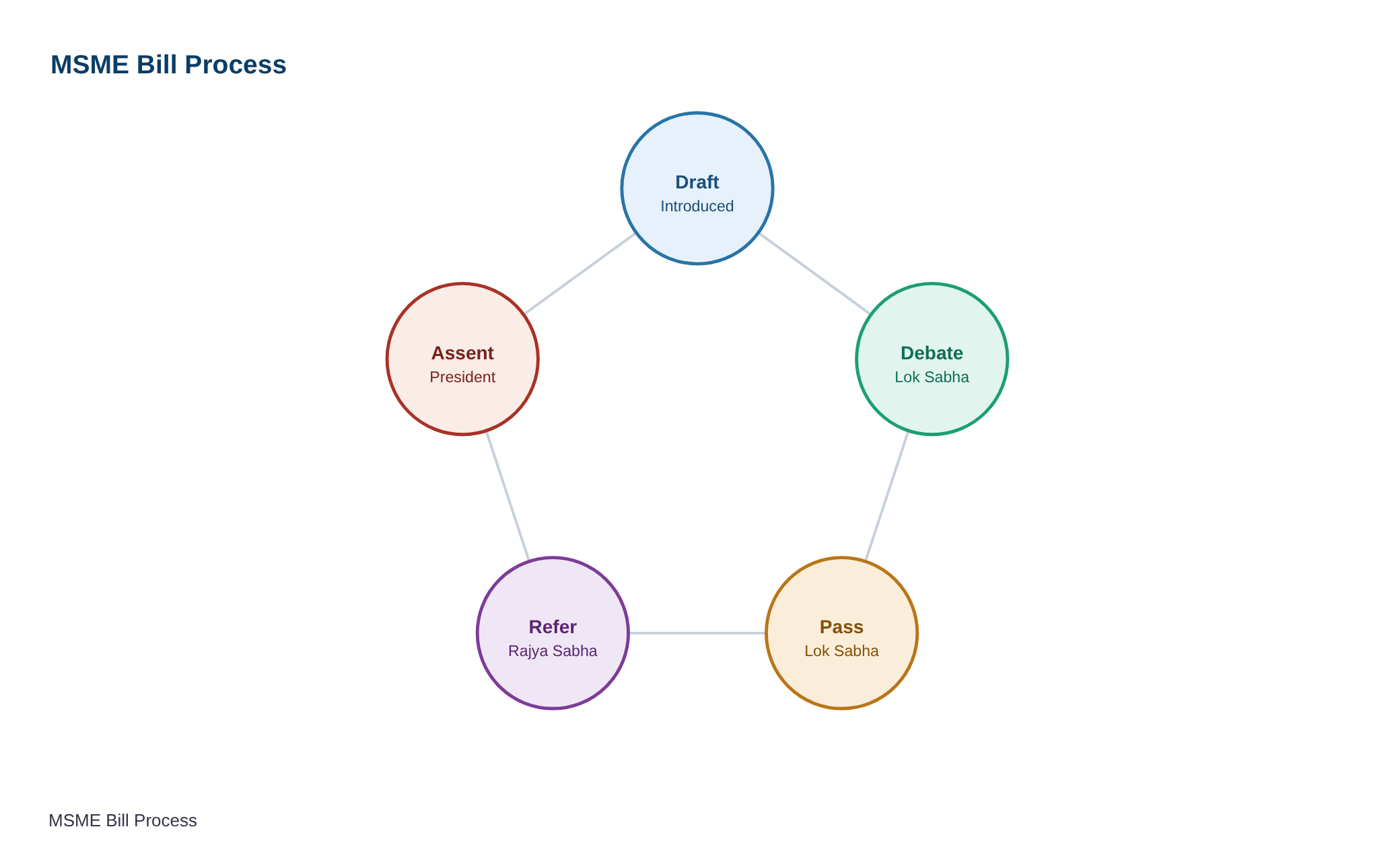
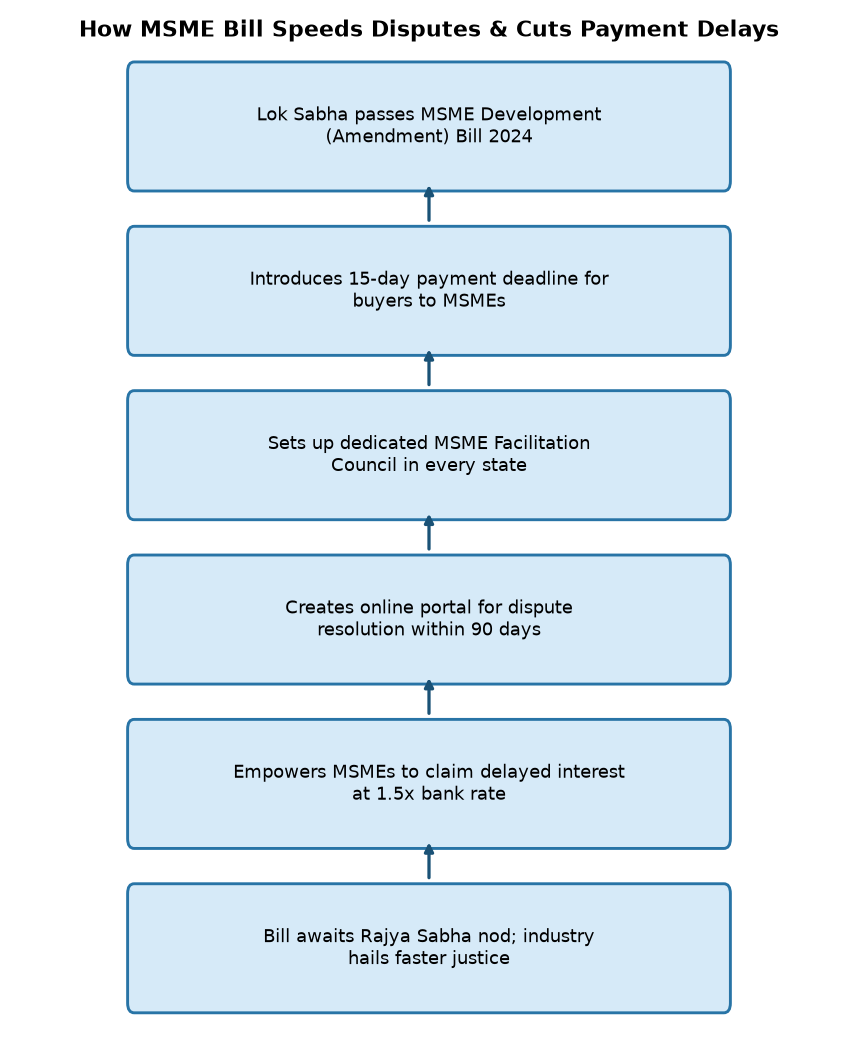
The Lok Sabha recently passed the Micro, Small and Medium Enterprises (MSME) Development (Amendment) Bill, 2024, aimed at addressing persistent challenges such as payment delays and prolonged dispute resolution within the MSME sector. The bill introduces key amendments to the existing MSME Act, 2006, including stricter timelines for settling payments from buyers to suppliers and provisions to expedite the resolution of disputes through dedicated mechanisms. This legislative move is significant as it seeks to enhance the financial liquidity and operational stability of MSMEs, which form the backbone of India’s industrial ecosystem. By ensuring timely payments, the bill aims to mitigate cash flow crises that often cripple small businesses, particularly those operating in supply chains of larger corporations or government projects.
For UPSC and State PCS aspirants, this development holds substantial relevance as it intersects with broader themes of economic governance, ease of doing business, and the role of statutory bodies in regulating industrial sectors. The bill’s emphasis on reducing payment delays aligns with the government’s broader push for ‘Atmanirbhar Bharat’ and the promotion of a self-reliant economy by strengthening smaller enterprises. Additionally, the focus on dispute resolution mechanisms reflects the evolving nature of legal frameworks to support business-friendly environments, a topic frequently examined in the polity and governance segments of the UPSC syllabus. The amendments also underscore the government’s commitment to addressing structural bottlenecks in the MSME sector, which is critical for employment generation and inclusive growth.
The bill’s provisions on dispute resolution are particularly noteworthy, as they propose the establishment of fast-track tribunals or dedicated courts to handle MSME-related grievances within specified timelines. This move is expected to reduce the burden on traditional judicial systems and provide quicker recourse to justice for small businesses. For aspirants, this highlights the importance of understanding how legislative interventions can complement judicial reforms to address systemic inefficiencies. The bill also reinforces the role of the MSME Ministry in monitoring compliance and enforcing these timelines, which could be a potential area of questioning in prelims or mains exams, especially under the ‘Statutory, Regulatory and Quasi-Judicial Bodies’ section of the polity syllabus.
From a State PCS perspective, the bill’s implementation will have direct implications for local MSMEs, state-level industrial policies, and the enforcement of business-friendly regulations. State governments, which often act as facilitators for MSME growth through subsidies, infrastructure support, and procurement policies, will need to align their frameworks with the new central legislation. Aspirants preparing for State PCS exams should focus on how such central reforms interact with state-level initiatives, as questions in these exams frequently test the interplay between union and state powers. The bill also serves as a case study for understanding the challenges of policy implementation, a recurring theme in governance questions, making it a valuable topic for both prelims and mains preparation.
Source: ndtv.com
Practice Questions
Q1. What is the primary objective of the MSME Bill recently passed by the Lok Sabha?
- To provide financial aid to MSMEs affected by natural disasters
- To tackle payment delays and expedite dispute resolution for MSMEs
- To increase the export quotas for MSMEs in international markets
- To mandate a minimum wage for all MSME employees
Answer
To tackle payment delays and expedite dispute resolution for MSMEs — The Lok Sabha passed the MSME Bill primarily to address payment delays faced by Micro, Small, and Medium Enterprises (MSMEs) and to speed up the resolution of disputes related to payments.
Q2. Which of the following issues is the MSME Bill aimed at resolving for small businesses?
- High interest rates on loans
- Delays in receiving payments from larger corporations or government entities
- Lack of skilled labor in the MSME sector
- Insufficient government subsidies for MSMEs
Answer
Delays in receiving payments from larger corporations or government entities — The MSME Bill focuses on resolving the issue of delayed payments to small businesses, which often face financial strain due to prolonged payment cycles from larger buyers or government agencies.
Generated by AanyaAi for educational purpose.


No Comments