


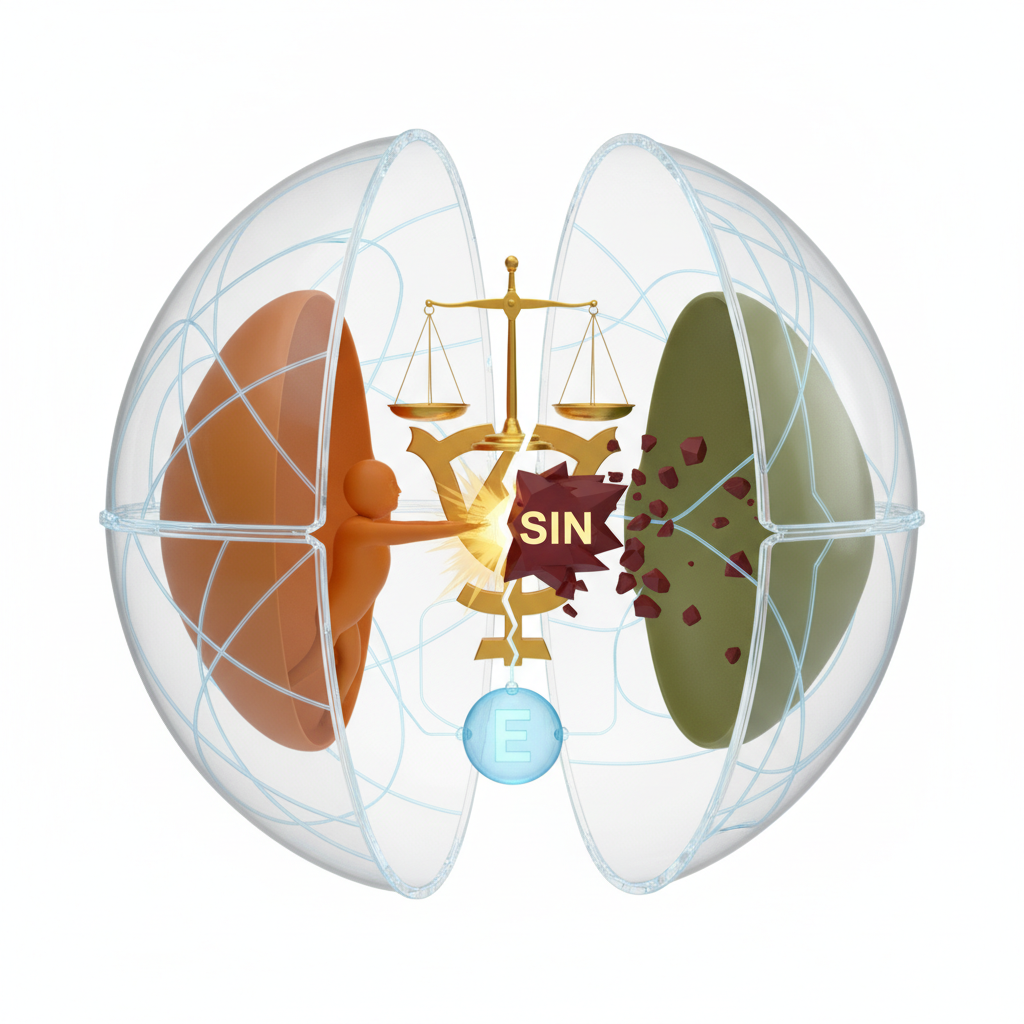
13 Aug Shiv Sena Split: SC Hears Anti-Defection Law Challenge on 18 Aug
Anti-Defection LawTenth ScheduleLegislative partyPolitical partyElection Commission✎ The Tenth Schedule of the Constitution aims to prevent defection by legislators but its application hinges on the distinction between a 'legislative party split' and an 'organisational split'—a question the Supreme Court is now…
Subject Relevance — Where This Topic Fits
- GS Paper II — Constitutional and Non-Constitutional Bodies (Role of the Supreme Court and Election Commission) | GS Paper III — Challenges to Internal Democracy in Political Parties
- Prelims: Tenth Schedule (Anti-Defection Law), Election Commission of India, Speaker’s role in disqualification, Judicial review of Speaker’s decisions, Political party split vs. merger, Constitutional provisions on party symbols
- Essay: Erosion of intra-party democracy in Indian politics: A constitutional perspective, Role of the judiciary in preserving the spirit of the Constitution
Quick Revision: The Tenth Schedule of the Constitution aims to prevent defection by legislators but its application hinges on the distinction between a ‘legislative party split’ and an ‘organisational split’—a question the Supreme Court is now adjudicating in the Shiv Sena dispute.
Why is this in the news?
The Supreme Court is currently hearing a critical constitutional dispute arising from the Shiv Sena split, where the interpretation of the Tenth Schedule (Anti-Defection Law) and the distinction between a ‘split’ in a legislative party and a ‘split’ in the political party itself are central to the adjudication. Senior Advocate Kapil Sibal, representing the Uddhav Thackeray faction, argued that the constitutional interpretation must not dilute the intent of the anti-defection law, which seeks to curb the ‘sin of defection’. The Court’s eventual ruling is expected to clarify the boundaries of legislative party splits versus organisational splits, thereby impacting future intra-party disputes and the role of constitutional bodies like the Election Commission in such matters.
Background
- The Shiv Sena, a regional political party in Maharashtra, has been embroiled in an internal dispute since 2022, leading to rival factions led by Uddhav Thackeray and Eknath Shinde.
- The Uddhav Thackeray faction challenged the ECI’s decision before the Supreme Court, arguing that the split was not merely a legislative party split but a division within the organisational structure of the party.
- The Tenth Schedule of the Constitution, inserted by the 52nd Amendment Act, 1985, and subsequently amended, provides for the disqualification of legislators on grounds of defection.
- The dispute raises fundamental questions about the interplay between the Tenth Schedule, the ECI’s powers under the Representation of the People Act, 1951, and the constitutional right of political parties to internal democracy.
What is the Tenth Schedule (Anti-Defection Law) and its relevance to the Shiv Sena dispute?
- The Tenth Schedule, popularly known as the Anti-Defection Law, was introduced to curb the practice of legislators switching parties for political or personal gains, thereby destabilising governments and undermining democratic processes.
- It applies to members of Parliament and state legislatures and provides for their disqualification if they voluntarily give up membership of their political party or vote contrary to the party whip, except in cases of a ‘merger’ of parties.
- The law does not explicitly define a ‘split’ in the organisational structure of a political party, leading to disputes such as the Shiv Sena case, where the distinction between a legislative party split and an organisational split is crucial.
- The Speaker or Chairman of the House is vested with the power to decide on disqualification matters under the Tenth Schedule, but such decisions are subject to judicial review by the Supreme Court, as established in landmark judgments like *Kihoto Hollohan v. Zachillhu* (1992).
- The Election Commission of India (ECI) plays a pivotal role in recognising splits or mergers of political parties, particularly in the context of allotting party symbols and names under the Symbols Order, 1968. The ECI’s decision in the Shiv Sena case has been contested on grounds of exceeding its constitutional mandate.
- The Supreme Court’s interpretation of the Tenth Schedule in this case will have far-reaching implications for the internal democracy of political parties, the autonomy of the ECI, and the balance of power between the judiciary, legislature, and executive.
- The case also underscores the need for a clearer legal framework to distinguish between legitimate intra-party dissent and defection, especially in the context of coalition politics and regional parties.
Key Features
| Feature | Significance |
|---|---|
| Supreme Court’s judicial review of Speaker’s decision | Ensures constitutional validity of decisions under the Tenth Schedule, preventing misuse of discretionary powers |
| Distinction between legislative party split and organisational split | Clarifies whether disqualification under anti-defection law applies or if the party’s internal division is genuine |
| Role of Election Commission in recognising political parties | Upholds the Commission’s constitutional authority under Article 324 to allocate symbols and recognise party status |
| Judicial interpretation of ‘defection’ under the Tenth Schedule | Reinforces the legal framework governing disqualification of legislators for anti-party activities |
| Separation of powers: Legislative vs. Judicial role | Examines the boundary between parliamentary sovereignty and judicial oversight in constitutional matters |
Why it Matters
Constitutional Governance
- Reinforces the supremacy of constitutional provisions over political expediency in matters of party splits and disqualifications
- Establishes judicial precedent for resolving intra-party disputes without undermining democratic principles
- Highlights the institutional balance between the Election Commission, Speaker, and Judiciary in electoral governance
Democratic Stability
- Prevents arbitrary disqualifications that could destabilise elected governments through engineered splits
- Ensures that legislative decisions are not influenced by post-facto political manipulations
- Upholds the integrity of electoral symbols and party identities as per constitutional provisions
Judicial Precedent
- Sets a legal benchmark for future cases involving anti-defection laws and party splits
- Clarifies the scope of judicial intervention in disputes arising from political party dynamics
- Reinforces the role of the Supreme Court as the final arbiter in constitutional interpretations
Challenges
1. Ambiguity in defining ‘split’ versus ‘defection’
- Lack of clear criteria to distinguish between legitimate organisational splits and engineered defections
- Risk of subjective interpretations by constitutional bodies (Speaker, Election Commission) leading to inconsistent outcomes
- Potential for prolonged judicial proceedings, delaying resolution of political crises
UPSC Link: GS-II: Anti-Defection Law (Tenth Schedule)
2. Institutional Coordination Gaps
- Overlap in roles between the Speaker, Election Commission, and Judiciary may lead to jurisdictional conflicts
- Delays in judicial pronouncements exacerbate political instability during ongoing disputes
- Need for standardised protocols to ensure timely and impartial resolution of intra-party conflicts
UPSC Link: GS-II: Constitutional Bodies (Articles 324, 179)
3. Political Weaponisation of Legal Provisions
- Possibility of political actors exploiting legal ambiguities to engineer splits for tactical advantages
- Risk of judicial decisions being perceived as politically motivated rather than constitutionally grounded
- Challenges in maintaining public trust in democratic institutions amid prolonged legal battles
UPSC Link: GS-II: Role of Judiciary in Governance
4. Constitutional Safeguards vs. Democratic Flexibility
- Balancing strict adherence to anti-defection laws with the need for democratic adaptability in party politics
- Ensuring that judicial interpretations do not stifle legitimate political dissent within parties
- Addressing concerns over excessive judicial activism in matters traditionally within the legislative domain
UPSC Link: GS-II: Basic Structure Doctrine
Challenges — UPSC Perspective
| Issue | Concern |
|---|---|
| Lack of objective criteria for ‘split’ vs ‘defection’ | Subjective interpretations may lead to inconsistent or politically motivated decisions |
| Delays in judicial resolution | Prolonged litigation exacerbates political instability and erodes public trust |
| Institutional turf wars | Overlap between Speaker, Election Commission, and Judiciary may cause jurisdictional conflicts |
| Risk of judicial overreach | Excessive judicial intervention may undermine parliamentary sovereignty |
| Political weaponisation of legal provisions | Parties may exploit ambiguities to engineer splits for tactical gains |
Way Forward
- Clarify the distinction between ‘organisational split’ and ‘legislative defection’ through judicial precedent to reduce ambiguity
- Establish a time-bound framework for judicial review of anti-defection disputes to prevent prolonged crises
- Strengthen institutional coordination protocols between the Speaker, Election Commission, and Judiciary to avoid jurisdictional conflicts
- Enhance transparency in the decision-making processes of constitutional bodies to build public trust
- Conduct legislative review of the Tenth Schedule to address ambiguities and align it with contemporary political realities
- Encourage political parties to adopt internal dispute resolution mechanisms to minimise reliance on external interventions
- Promote judicial training on constitutional governance to ensure consistent and impartial interpretations
UPSC Value Addition
Keywords for Mains Answer-Writing
Anti-Defection Law · Tenth Schedule · Supreme Court of India · Political party split · Legislative Assembly · Constitutional interpretation · Judicial review · Election Commission of India · Political accountability · Constitutional morality
Constitutional & Policy Linkages
- Article 324: Powers and functions of the Election Commission in recognising political parties and allocating symbols
- Tenth Schedule: Anti-defection provisions and grounds for disqualification of legislators
Concept Flow
Intra-party dispute arises → Legislative party split claimed → Speaker recognises one faction → Disqualification proceedings invoked → Election Commission allocates symbol to recognised faction → Judicial review sought → Supreme Court examines constitutional validity → Precedent set for future cases
Prelims Practice Questions
Q1. Consider the following statements regarding the Anti-Defection Law in India:
1. The Tenth Schedule to the Constitution was inserted by the 52nd Amendment Act, 1985.
2. A member of a political party shall be disqualified if they voluntarily give up their party membership.
3. The Speaker of the House is the final authority to decide on disqualification under the Anti-Defection Law.
4. The law applies only to members of the Lok Sabha and Rajya Sabha, and not to State Legislative Assemblies.
How many of the above statements are correct?
- Only one
- Only two
- Only three
- All
Answer: Only three — Statements 1, 2, and 3 are correct. Statement 4 is incorrect as the Anti-Defection Law applies to members of all legislative bodies, including State Legislative Assemblies.
Q2. Assertion (A): The Supreme Court of India has the power of judicial review over the decisions of the Election Commission of India.
Reason (R): The Constitution of India vests the Election Commission with the power to recognize political parties and allot symbols, which is beyond judicial scrutiny.
Options:
A. Both A and R are true, and R is the correct explanation of A.
B. Both A and R are true, but R is not the correct explanation of A.
C. A is true, but R is false.
D. A is false, but R is true.
- A
- B
- C
- D
Answer: C — The Supreme Court can review the decisions of the Election Commission under its power of judicial review. However, the reason provided is incorrect as the Election Commission’s decisions are subject to judicial scrutiny.
Q3. Match the following provisions of the Tenth Schedule with their correct descriptions:
Column I (Provision)
1. Paragraph 2(1)(a)
2. Paragraph 2(1)(b)
3. Paragraph 3
4. Paragraph 4
Column II (Description)
A. Disqualification on grounds of voluntarily giving up membership of a political party
B. Disqualification for voting or abstaining from voting contrary to party whip
C. Exceptions to disqualification in case of merger of political parties
D. Decision of the Chairman or Speaker regarding disqualification
Select the correct match:
1 2 3 4
A. A B C D
B. B A D C
C. A B D C
D. B A C D
- A
- B
- C
- D
Answer: D — 1-A (Paragraph 2(1)(a) pertains to voluntarily giving up party membership), 2-B (Paragraph 2(1)(b) pertains to voting contrary to party whip), 3-D (Paragraph 3 pertains to the decision of the Chairman or Speaker), 4-C (Paragraph 4 pertains to exceptions in case of merger).
Mains Practice Question
✍ The Anti-Defection Law (Tenth Schedule) was enacted to curb the menace of political defections in India. In the context of the recent Supreme Court hearing on the Shiv Sena split, critically examine the constitutional and legal challenges in distinguishing between a ‘split in the legislature party’ and a ‘split in the political party’. Also, analyse the role of the Election Commission and the judiciary in resolving such disputes. (15 Marks)
Approach: MODEL-ANSWER SKELETON:
1. **Introduction (2 Marks)**
– Brief background of the Anti-Defection Law (Tenth Schedule) and its objectives.
– Contextual reference to the Shiv Sena split case and the Supreme Court’s role in interpreting constitutional provisions.
2. **Legal Framework (3 Marks)**
– Key provisions of the Tenth Schedule (Paragraphs 2(1)(a), 2(1)(b), 3, and 4).
– Role of the Speaker/Chairman in deciding disqualification (Paragraph 3).
– Judicial review powers of the Supreme Court under Article 136 and 226.
3. **Distinguishing ‘Split in Legislature Party’ vs ‘Split in Political Party’ (4 Marks)**
– Legal ambiguity: Whether a split in the legislature party (MLAs/MPs) automatically constitutes a split in the political party.
– Precedents: Refer to the **Kihoto Hollohan v. Zachillhu** (1992) case and its interpretation of Paragraph 3.
– Recent judicial trends: Supreme Court’s observations in the Shiv Sena case regarding the need for a clear distinction.
4. **Role of the Election Commission (3 Marks)**
– Powers under Article 324 to recognize political parties and allot symbols (e.g., ECI’s decision in the Shiv Sena case recognizing the Shinde faction).
– Limits of ECI’s jurisdiction: Whether ECI can adjudicate on internal party disputes beyond symbol allocation.
– Judicial deference to ECI’s decisions (e.g., **S.A. Sampath Kumar v. ECI**, 1987).
5. **Judicial Role and Constitutional Morality (3 Marks)**
– Need for judicial intervention to uphold constitutional morality and prevent misuse of the Anti-Defection Law.
– Balancing separation of powers: Limits of judicial review over legislative decisions.
– Conclusion: The Supreme Court’s responsibility to provide clarity on the interpretation of the Tenth Schedule to prevent political instability.
Key cases to cite:
– Kihoto Hollohan v. Zachillhu (1992) 1 SCC 682
– Ravi S. Naik v. Union of India (1994) 2 SCC 710
– S.A. Sampath Kumar v. Election Commission of India (1987) 1 SCC 723
Source: amarujala.com
Generated by AanyaAi for educational purpose.

- मद्रास उच्च न्यायालय में ‘वेट्ट्री पयणम’ योजना को असंवैधानिक घोषित करने की मांग - October 4, 2026
- Gurugram’s groundwater extraction exceeds limit by 212%; HC seeks ban - October 4, 2026
- स्वतंत्रता सेनानी श्यामजी कृष्ण वर्मा की जन्म जयंती पर पीएम का श्रद्धांजलि - October 4, 2026

No Comments