


17 Aug Sebi’s New Portals: Key Tool for UPSC Polity & Governance Cybersecurity Prep
✎ SEBI’s Incident Reporting Portal and Cyber Suraksha Portal are designed to enhance cybersecurity resilience in India’s securities market by standardising incident reporting and fostering ecosystem-wide collaboration, while…
Subject Relevance — Where This Topic Fits
- GS Paper III — Science and Technology — Developments and their Applications and Effects in Everyday Life | GS Paper III — Security — Challenges to Internal Security through Cyber Threats
- Prelims: Cybersecurity Incident Reporting Portal, Cyber Suraksha Portal, Financial Stability Board (FSB), Quantum Resilience, Third-Party Risk Management, Post-Quantum Cryptography, Market Intermediaries, Sebi Cyber Defence Symposium
- Essay: The Role of Regulatory Frameworks in Safeguarding Digital Economies, Cybersecurity as a National Strategic Imperative
Quick Revision: SEBI’s Incident Reporting Portal and Cyber Suraksha Portal are designed to enhance cybersecurity resilience in India’s securities market by standardising incident reporting and fostering ecosystem-wide collaboration, while integrating quantum resilience and aligning with global financial stability frameworks.
Why is this in the news?
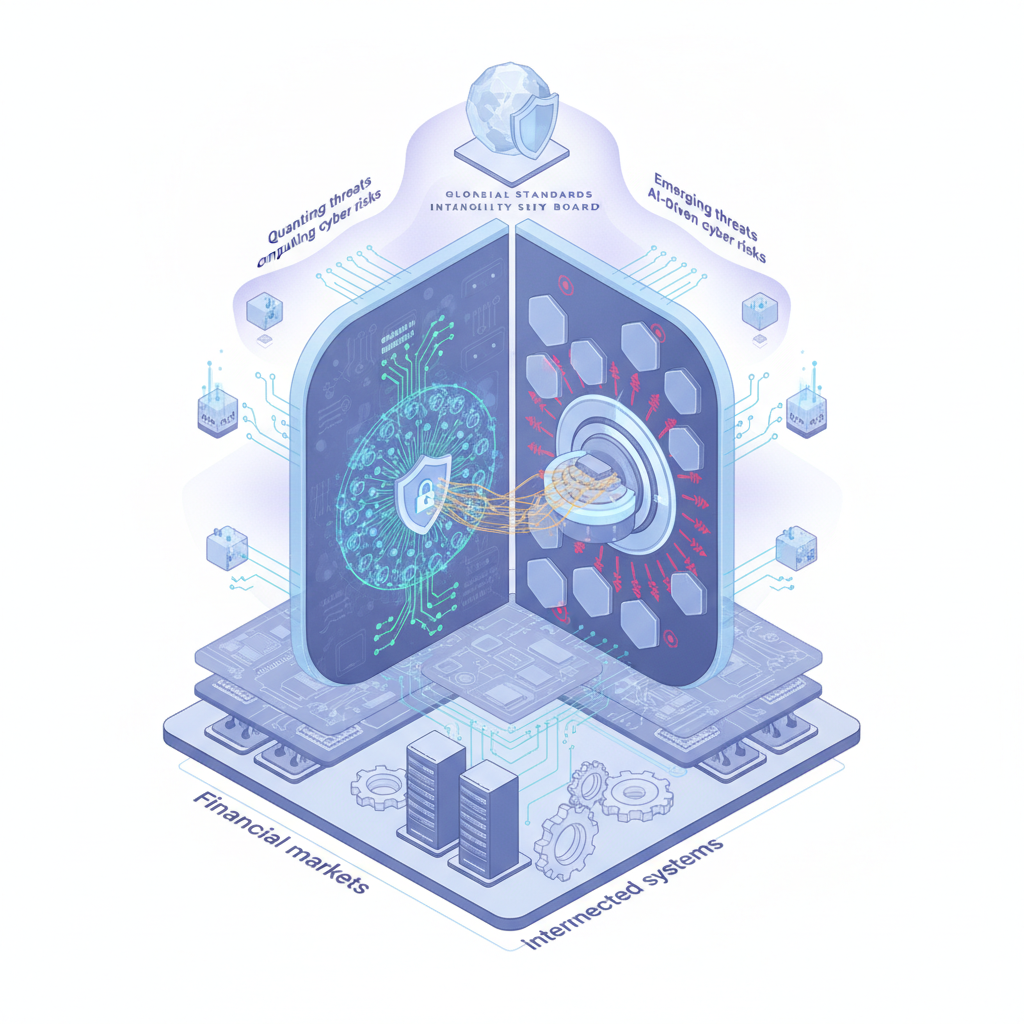
The Securities and Exchange Board of India (SEBI) has launched two dedicated portals—Incident Reporting Portal and Cyber Suraksha Portal—to strengthen cybersecurity incident reporting and information sharing across the securities market ecosystem. This initiative underscores the regulator’s evolving approach from individual organisation-level security to ecosystem-wide resilience, aligning with global standards and addressing emerging threats such as quantum computing and AI-driven cyber risks.
Background
- Cybersecurity has emerged as a critical risk factor for financial markets, with incidents at market intermediaries capable of cascading through interconnected systems, third-party dependencies, and technology platforms.
- The Financial Stability Board (FSB) has emphasised the need for harmonised cyber incident reporting frameworks to enhance global financial stability and systemic risk mitigation.
- SEBI’s initiative follows a broader trend of regulatory bodies worldwide adopting proactive measures to address cyber threats in financial ecosystems, including the EU’s Digital Operational Resilience Act (DORA) and the US SEC’s cybersecurity disclosure rules.
- India’s financial sector has witnessed a significant increase in cyber incidents, including phishing, ransomware, and supply-chain attacks, necessitating robust reporting and response mechanisms.
- The launch of these portals aligns with SEBI’s Cyber Defence Symposium, reflecting a shift from periodic compliance exercises to continuous, risk-driven vulnerability management.
- Quantum computing poses a long-term existential threat to current cryptographic standards, prompting regulators to integrate quantum resilience into cybersecurity strategies.
What are SEBI’s Incident Reporting Portal and Cyber Suraksha Portal?
- **Incident Reporting Portal**: A structured digital platform designed to streamline the reporting of cybersecurity incidents by market intermediaries. It ensures timely, standardised, and comprehensive incident disclosures, aligned with the Financial Stability Board’s (FSB) format for global consistency and comparability.
- **Cyber Suraksha Portal**: A centralised knowledge repository and communication hub for the securities market ecosystem. It facilitates the sharing of cybersecurity best practices, vulnerability warnings, policy measures, and incident insights, fostering collaborative resilience against cyber threats.
- **Objective**: To transition from a reactive, compliance-driven approach to a proactive, ecosystem-wide strategy that prioritises continuous risk assessment, vulnerability management, and incident response.
- **Key Features**: Structured incident reporting templates, real-time alerts, vulnerability databases, policy guidelines, and post-incident analysis tools to enhance situational awareness and response capabilities.
- **Target Audience**: Registered market intermediaries, including stockbrokers, depository participants, asset management companies, and other SEBI-regulated entities, as well as their third-party vendors and technology providers.
- **Global Alignment**: The portals are designed to comply with international standards, including the FSB’s cyber incident reporting guidelines, ensuring interoperability with global financial stability frameworks.
- **Quantum Resilience Integration**: The initiative incorporates post-quantum cryptography as a core pillar, recognising the need for migration from traditional encryption methods to quantum-resistant algorithms to future-proof financial systems.
- **Continuous Monitoring**: The portals enable real-time monitoring of cyber risks, allowing SEBI to assess systemic vulnerabilities and coordinate responses across the market ecosystem.
Key Features
| Feature | Significance |
|---|---|
| Incident Reporting Portal | Structures and standardises cybersecurity incident reporting by market intermediaries, ensuring compliance with the Financial Stability Board’s format for timely and consistent disclosures. |
| Cyber Suraksha Portal | Functions as a centralised knowledge-sharing platform for vulnerability warnings, policy measures, and incident insights across the securities market ecosystem. |
| Continuous Vulnerability Management | Shifts focus from periodic compliance exercises to a dynamic, risk-driven process that adapts to evolving software, cloud configurations, APIs, and third-party dependencies. |
| Quantum Resilience Strategy | Integrates post-quantum cryptography as a migration programme, addressing long-term threats posed by quantum computing to financial market infrastructure. |
| Cyber Defence Symposium | Serves as a platform for regulators and market participants to deliberate on systemic cyber resilience beyond individual institutional security. |
Why it Matters
Regulatory Governance
- Enhances the Securities and Exchange Board of India’s (SEBI) oversight of cybersecurity risks in financial markets by institutionalising structured reporting and centralised knowledge dissemination.
- Aligns India’s financial market cybersecurity framework with global standards, particularly those set by the Financial Stability Board (FSB).
- Promotes a systemic approach to cyber resilience, recognising interdependencies between market intermediaries, vendors, and technology platforms.
Market Stability
- Reduces systemic risks arising from cyber incidents by enabling rapid detection, assessment, and coordinated response across the securities market ecosystem.
- Minimises operational disruptions in capital markets by ensuring timely and accurate incident reporting, thereby protecting investor confidence.
- Facilitates proactive vulnerability management, reducing the likelihood of cascading failures due to unaddressed cyber threats.
Technological Preparedness
- Encourages adoption of advanced cybersecurity practices, including continuous vulnerability assessment and post-quantum cryptography, to counter evolving threats.
- Promotes the integration of artificial intelligence in both cyber defence and attack mitigation, necessitating robust governance frameworks for AI-driven security tools.
- Supports the development of resilient financial market infrastructure capable of withstanding sophisticated cyber-physical and quantum computing threats.
Institutional Collaboration
- Strengthens information-sharing mechanisms between SEBI, market intermediaries, and third-party technology providers to foster a collective defence posture.
- Encourages cross-sectoral coordination, including with cloud service providers, API developers, and software vendors, to address supply-chain vulnerabilities.
- Establishes a feedback loop for policy refinement based on real-time cyber incident data and emerging threat intelligence.
Challenges
1. Systemic Interconnectedness
- Cyber incidents at one institution can propagate rapidly through interconnected financial market infrastructure, necessitating a holistic resilience strategy.
- Third-party and vendor dependencies introduce blind spots in cybersecurity monitoring, requiring enhanced due diligence and contractual safeguards.
- The lack of standardised cybersecurity protocols across global financial institutions complicates cross-border incident response and recovery.
UPSC Link: GS3: Cybersecurity and Financial Stability
2. Evolving Threat Landscape
- The acceleration of cyber attacks through artificial intelligence and machine learning outpaces traditional defence mechanisms, demanding adaptive governance frameworks.
- Quantum computing poses existential risks to current encryption standards, requiring proactive migration to post-quantum cryptography.
- Sophisticated phishing, ransomware, and supply-chain attacks target financial institutions with increasing frequency and sophistication.
UPSC Link: GS3: Emerging Technologies and Security Challenges
3. Regulatory and Compliance Burden
- Market intermediaries face heightened compliance costs due to the need for continuous vulnerability management and real-time reporting obligations.
- The absence of harmonised cybersecurity regulations across jurisdictions creates regulatory arbitrage opportunities for malicious actors.
- Balancing innovation in financial technologies with robust cybersecurity safeguards remains a persistent challenge for regulators.
UPSC Link: GS3: Regulatory Frameworks for Technology
4. Human Capital and Skill Gaps
- A shortage of skilled cybersecurity professionals in the financial sector limits the effective implementation of advanced threat detection and response systems.
- Inadequate training and awareness among employees and stakeholders increases the risk of human error-driven cyber incidents.
- The rapid pace of technological change demands continuous upskilling of cybersecurity personnel to address emerging threats.
UPSC Link: GS3: Skill Development in Cybersecurity
5. Data Privacy and Sovereignty
- The centralisation of cybersecurity incident data raises concerns about data privacy, cross-border data flows, and compliance with evolving data protection laws.
- Ensuring the confidentiality and integrity of sensitive financial data while enabling effective incident reporting remains a critical governance challenge.
- The adoption of cloud-based cybersecurity solutions necessitates robust data localisation and sovereignty frameworks.
UPSC Link: GS2: Data Governance and Privacy
Challenges — UPSC Perspective
| Issue | Concern |
|---|---|
| Third-party dependencies | Increased attack surface due to interconnected financial market infrastructure. |
| Quantum computing | Threat to existing encryption standards, necessitating post-quantum cryptography migration. |
| AI-driven attacks | Rapid evolution of cyber threats outpacing traditional defence mechanisms. |
| Regulatory fragmentation | Lack of harmonised cybersecurity regulations across jurisdictions. |
| Skill shortages | Insufficient cybersecurity professionals to address evolving threats. |
| Data privacy | Balancing incident reporting with compliance with data protection laws. |
Way Forward
- Institutionalise continuous vulnerability assessment frameworks to replace periodic compliance exercises.
- Develop national guidelines for post-quantum cryptography migration in alignment with global standards.
- Enhance cross-sectoral collaboration between SEBI, RBI, and other financial regulators to address systemic cyber risks.
- Establish a dedicated cybersecurity workforce development programme to address skill gaps in the financial sector.
- Implement mandatory cybersecurity drills and tabletop exercises for market intermediaries to test incident response protocols.
- Strengthen data localisation and sovereignty frameworks to ensure compliance with privacy laws while enabling effective incident reporting.
- Promote public-private partnerships for threat intelligence sharing and joint cybersecurity research initiatives.
- Integrate AI governance frameworks into cybersecurity policies to mitigate risks associated with AI-driven attacks and defences.
UPSC Value Addition
Keywords for Mains Answer-Writing
Securities and Exchange Board of India (SEBI) · Cybersecurity Incident Reporting Portal · Cyber Suraksha Portal · Financial Stability Board (FSB) · Cyber Resilience in Financial Markets · Post-Quantum Cryptography · Cybersecurity Governance · Third-Party Risk Management in Financial Sector · Vulnerability Management in Regulated Entities · AI-Driven Cybersecurity Threats · Quantum Computing and Cybersecurity · Market Intermediaries Compliance · Cyber Incident Disclosure Framework · Systemic Risk in Digital Infrastructure · Regulatory Sandbox for Cybersecurity Innovations
Concept Flow
Cyber incidents in financial markets → Systemic risk propagation through interconnected institutions → Need for structured incident reporting → SEBI’s Incident Reporting Portal as a regulatory response. → Evolving cyber threats (AI, quantum computing) → Inadequacy of periodic compliance → Shift to continuous vulnerability management → Cyber Suraksha Portal as a knowledge-sharing hub. → Interdependence of market intermediaries → Cascading failures due to third-party vulnerabilities → Regulatory emphasis on ecosystem resilience → SEBI’s Cyber Defence Symposium as a collaborative platform. → Global financial stability standards (FSB) → Alignment of domestic frameworks → SEBI’s adoption of FSB reporting formats → Enhanced international cooperation. → Data privacy concerns → Centralisation of cybersecurity data → Governance challenges → Need for robust data protection frameworks.
Prelims Practice Questions
Q1. Consider the following statements regarding the Securities and Exchange Board of India (SEBI):
1. SEBI has recently launched the Incident Reporting Portal to streamline cybersecurity incident reporting.
2. The Cyber Suraksha Portal serves as a central hub for sharing cybersecurity knowledge and vulnerability warnings.
3. SEBI’s cybersecurity strategy includes a focus on quantum computing resilience.
How many of the above statements are correct?
- Only one
- Only two
- All three
- None
Answer: All three — Statements 1 and 2 are correct as per the report. Statement 3 is also correct, as SEBI’s cybersecurity strategy explicitly includes quantum resilience as a core pillar.
Q2. Assertion (A): The Financial Stability Board (FSB) prescribes a standardized format for cybersecurity incident reporting in financial markets.
Reason (R): Standardized reporting formats enhance interoperability and systemic risk assessment in global financial systems.
In the context of the above two statements, which one of the following is correct?
- Both A and R are true, and R is the correct explanation of A.
- Both A and R are true, but R is not the correct explanation of A.
- A is true, but R is false.
- A is false, but R is true.
Answer: Both A and R are true, but R is not the correct explanation of A. — The Incident Reporting Portal aligns with the FSB’s format, and standardized reporting is essential for systemic risk assessment in financial markets.
Q3. Match the following initiatives launched by SEBI with their primary objectives:
Column I (Initiative) | Column II (Objective)
———————-|————————
1. Incident Reporting Portal | A. Central hub for sharing cybersecurity knowledge and vulnerability warnings
2. Cyber Suraksha Portal | B. Structured and timely reporting of cybersecurity incidents
3. Post-Quantum Cryptography | C. Migration programme to address future threats from quantum computing
Select the correct match:
- 1-B, 2-A, 3-C
- 1-A, 2-B, 3-C
- 1-C, 2-A, 3-B
- 1-B, 2-C, 3-A
Answer: 1-B, 2-A, 3-C — The Incident Reporting Portal (1) aligns with structured reporting (B), the Cyber Suraksha Portal (2) serves as a central hub (A), and Post-Quantum Cryptography (3) is part of SEBI’s migration programme (C).
Mains Practice Question
✍ The Securities and Exchange Board of India (SEBI) has recently launched the Incident Reporting Portal and Cyber Suraksha Portal to strengthen cybersecurity governance in India’s financial markets. Critically examine the rationale behind these initiatives and their potential impact on systemic risk mitigation in the financial ecosystem. (15 Marks)
Approach: MODEL-ANSWER SKELETON:
1. **Rationale for SEBI’s Initiatives** (4 marks)
– **Structured Incident Reporting**: Aligns with Financial Stability Board (FSB) standards to ensure consistency, timeliness, and comparability of cybersecurity incidents across market intermediaries.
– **Centralized Knowledge Hub (Cyber Suraksha Portal)**: Facilitates real-time sharing of vulnerability warnings, policy measures, and incident insights, reducing duplication and enhancing collective resilience.
– **Shift from Compliance to Continuous Risk Management**: Emphasizes vulnerability management as a continuous process, addressing dynamic threats from AI-driven attacks, cloud configurations, and third-party dependencies.
– **Quantum Resilience**: Proactive inclusion of post-quantum cryptography as a migration programme, acknowledging long-term threats from quantum computing.
2. **Systemic Risk Mitigation** (5 marks)
– **Interconnectedness of Financial Markets**: Cyber incidents at one institution can propagate through vendors, technology platforms, and third parties, necessitating ecosystem-wide resilience (SEBI Chairman’s remarks).
– **Standardized Reporting Framework**: Reduces information asymmetry and enables regulators to assess systemic risks more effectively.
– **Centralized Knowledge Sharing**: Enhances situational awareness and rapid response capabilities across the securities market ecosystem.
– **Regulatory Oversight**: Strengthens SEBI’s role in monitoring and enforcing cybersecurity standards, aligning with global best practices (e.g., FSB’s cyber resilience expectations).
3. **Challenges and Limitations** (4 marks)
– **Implementation Burden**: Market intermediaries may face operational challenges in adopting continuous risk management processes.
– **Third-Party Risks**: Dependence on vendors and technology platforms introduces vulnerabilities that may not be fully mitigated by SEBI’s initiatives.
– **Quantum Computing Uncertainty**: The timeline and efficacy of post-quantum cryptography remain uncertain, requiring ongoing adaptation.
– **Data Privacy Concerns**: Centralized reporting may raise concerns about data confidentiality and potential misuse of sensitive information.
4. **Conclusion** (2 marks)
– SEBI’s initiatives represent a significant step toward enhancing cybersecurity governance in India’s financial markets. While systemic risk mitigation is improved, sustained efforts in capacity-building, inter-regulatory coordination (e.g., with CERT-In, RBI), and technological innovation are essential for long-term resilience.
Source: Business Standard
Generated by AanyaAi for educational purpose.

- मद्रास उच्च न्यायालय में ‘वेट्ट्री पयणम’ योजना को असंवैधानिक घोषित करने की मांग - October 4, 2026
- Gurugram’s groundwater extraction exceeds limit by 212%; HC seeks ban - October 4, 2026
- स्वतंत्रता सेनानी श्यामजी कृष्ण वर्मा की जन्म जयंती पर पीएम का श्रद्धांजलि - October 4, 2026

No Comments