


17 Aug Chamoli Tunnel Landslide: 2 Workers Still Missing, Rescue Ops On in Uttarakhand
✎ The Chamoli tunnel landslide underscores the critical need for adherence to NDMA guidelines and OSH norms in Himalayan infrastructure projects to mitigate geological risks and ensure worker safety.
Subject Relevance — Where This Topic Fits
- GS Paper III — Disaster Management | GS Paper III — Infrastructure: Energy, Roads and Railways | GS Paper III — Environmental Conservation and Climate Change | GS Paper III — Labour Welfare and Occupational Safety
- Prelims: Himalayan geology, landslide-prone zones, National Disaster Response Force (NDRF), State Disaster Response Force (SDRF), Tunnel Safety Regulations, Occupational Safety and Health (OSH) norms, THDC India Ltd., Pipalkoti-Vishnugad Hydroelectric Project
- Essay: Infrastructure development in ecologically fragile regions: Balancing progress and sustainability, The cost of human lives in development projects: Ethical imperatives in governance
Quick Revision: The Chamoli tunnel landslide underscores the critical need for adherence to NDMA guidelines and OSH norms in Himalayan infrastructure projects to mitigate geological risks and ensure worker safety.
Why is this in the news?
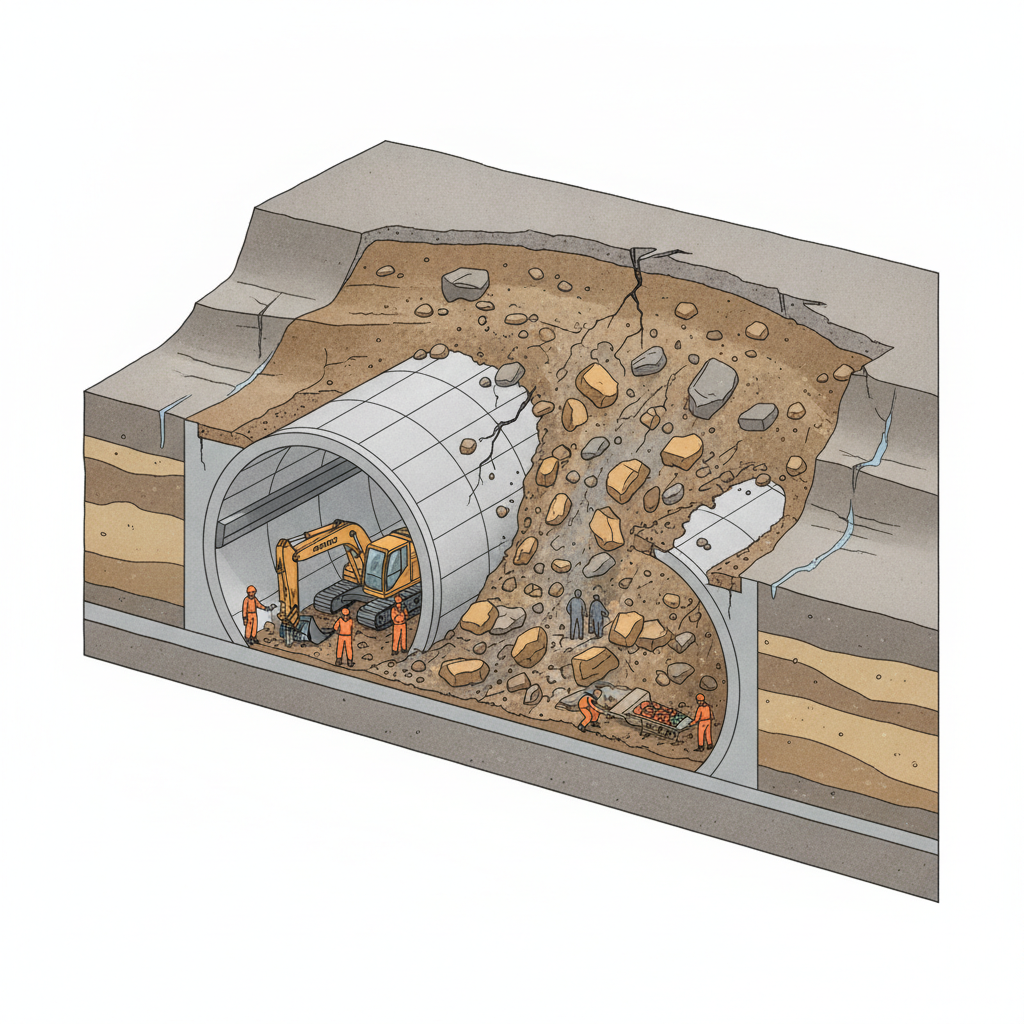
On 13 August 2026, a landslide in the tail-race tunnel of the Pipalkoti-Vishnugad Hydroelectric Project in Chamoli district, Uttarakhand, trapped 22 workers. As of 17 August 2026, 12 workers were rescued, eight bodies recovered, and two remain missing. The incident underscores systemic risks in Himalayan infrastructure projects, particularly in geologically unstable terrains, and raises questions about compliance with safety protocols, environmental impact assessments, and disaster preparedness in high-risk zones.
Background
- The Himalayas are part of the India-Nepal-China seismic belt, classified under seismic zones IV and V, making them highly susceptible to landslides, particularly during monsoon seasons.
- The Pipalkoti-Vishnugad Hydroelectric Project (520 MW), executed by THDC India Ltd., is a run-of-the-river scheme located in the Alaknanda basin, Uttarakhand, and falls under the National Mission for Clean Ganga (NMCG) initiatives.
- Uttarakhand has witnessed multiple infrastructure-related disasters, including the 2013 Kedarnath floods and the 2021 Rishiganga hydroelectric project collapse, highlighting recurring vulnerabilities in Himalayan development.
- The National Disaster Management Authority (NDMA) guidelines mandate rigorous geological surveys and risk assessments for infrastructure projects in ecologically sensitive zones, including tunnels.
- Occupational Safety and Health (OSH) norms, as per the Building and Other Construction Workers (Regulation of Employment and Conditions of Service) Act, 1996, mandate safety protocols for tunnel workers, including emergency evacuation plans.
- The incident occurred during the monsoon season, a period when landslide risks in the Himalayas are amplified due to heavy rainfall, soil saturation, and seismic activity.
What is the Chamoli Tunnel Landslide Incident?
- On 13 August 2026, a landslide struck the tail-race tunnel of the Pipalkoti-Vishnugad Hydroelectric Project in Chamoli, Uttarakhand, trapping 22 workers inside.
- Rescue operations, involving NDRF, SDRF, ITBP, and local authorities, were initiated immediately, with 12 workers rescued within 48 hours.
- Eight bodies were recovered by 17 August 2026, while two workers remain missing as of the latest reports.
- The tunnel, part of a 520 MW hydroelectric project, was under construction, and the landslide was attributed to geological instability in the region.
- Search and rescue efforts were hindered by waterlogging, debris accumulation, and structural damage within the tunnel, delaying access to the trapped workers.
- The incident has triggered demands for compensation and accountability from the project proponent, THDC India Ltd., by workers’ unions and local communities.
- The event highlights the need for stricter enforcement of geological risk assessments and safety protocols in Himalayan infrastructure projects.
- The disaster has also reignited debates on the environmental and social costs of large-scale hydroelectric projects in fragile ecosystems.
Key Features
| Feature | Significance |
|---|---|
| Geological vulnerability in Himalayan tunnel construction | Highlights the inherent risks of tunnelling in seismically active and geologically fragile Himalayan terrain, necessitating stringent pre-construction geological surveys and risk assessments. |
| Multi-agency search and rescue operation | Demonstrates the coordinated deployment of specialised forces (NDRF, SDRF, ITBP) and district administration in disaster response, underscoring the importance of inter-agency synergy in emergencies. |
| Compensation and welfare demands by labour unions | Reflects the socio-economic dimensions of industrial accidents, particularly the need for transparent compensation mechanisms and occupational safety standards for migrant workers. |
| Regulatory oversight of hydroelectric projects | Emphasises the role of statutory bodies (e.g., CEA, MoEFCC) in ensuring compliance with environmental and safety norms during infrastructure development. |
| Public-private partnership (PPP) in infrastructure | Illustrates the governance challenges in PPP models, including liability allocation, worker safety protocols, and accountability in case of accidents. |
Why it Matters
Economic
- Hydroelectric projects in the Himalayas are critical for India’s renewable energy targets, but their construction carries high geological and operational risks, necessitating robust risk mitigation strategies.
- Accidents in such projects can lead to financial losses for investors, delays in project timelines, and increased insurance premiums, impacting the overall economic viability of infrastructure development.
- The incident underscores the economic burden on migrant workers’ families, who often lack formal safety nets, highlighting the need for insurance and compensation frameworks.
Strategic
- The Himalayas are a geopolitically sensitive region; infrastructure projects here must balance developmental imperatives with environmental and safety considerations to avoid strategic setbacks.
- Disasters in such projects can strain diplomatic relations with neighbouring countries if transboundary rivers or ecosystems are affected, necessitating adherence to international environmental standards.
Environmental
- Tunnelling in fragile Himalayan ecosystems can trigger landslides, soil erosion, and water table disruptions, necessitating adherence to environmental impact assessment (EIA) norms and post-project monitoring.
- The incident raises questions about the long-term ecological sustainability of large-scale hydroelectric projects in ecologically sensitive zones.
Governance
- The accident exposes gaps in regulatory oversight, particularly in ensuring compliance with the Disaster Management Act, 2005, and the National Disaster Response Framework (NDRF).
- It highlights the need for a unified command structure during emergencies, integrating local administration, technical agencies, and private stakeholders for effective response.
Social
- The plight of migrant workers in such incidents underscores the need for formalisation of labour contracts, provision of safety equipment, and access to grievance redressal mechanisms.
- The demands for compensation reflect broader issues of labour rights and social security for informal sector workers in India’s infrastructure sector.
Challenges
1. Geological and Engineering Risks in Himalayan Tunnelling
- The Himalayas are prone to landslides, seismic activity, and unpredictable geological formations, making tunnelling inherently hazardous.
- Inadequate pre-construction geological surveys or underestimation of risks can lead to structural failures during excavation.
- Post-accident challenges include stabilising the tunnel, managing water ingress, and ensuring safe access for rescue operations.
UPSC Link: Geological hazards in the Himalayas (Geography, GS Paper 1)
2. Coordination and Logistics in Multi-Agency Disaster Response
- Effective disaster response requires seamless coordination between central forces (NDRF, ITBP), state agencies (SDRF), and local administration, which is often hindered by communication gaps.
- Logistical constraints, such as limited access to the site and hazardous conditions, can delay rescue operations.
- The presence of construction debris and water in the tunnel complicates search efforts, necessitating specialised equipment and expertise.
UPSC Link: Disaster Management Framework (Disaster Management, GS Paper 3)
3. Worker Safety and Labour Rights in Infrastructure Projects
- Migrant workers in infrastructure projects often lack formal contracts, safety training, and access to protective gear, increasing their vulnerability to accidents.
- The absence of a unified labour welfare framework for informal sector workers exacerbates their plight during and after disasters.
- Demands for compensation highlight the need for transparent insurance schemes and grievance redressal mechanisms for affected workers.
UPSC Link: Labour rights and social security (Indian Society, GS Paper 1)
4. Regulatory and Compliance Gaps in Infrastructure Development
- Delays in environmental clearances or inadequate adherence to safety norms (e.g., EIA 2006, National Building Code) can compromise project safety.
- Post-accident investigations often reveal lapses in regulatory oversight, necessitating stricter enforcement of safety protocols.
- The incident underscores the need for real-time monitoring and third-party audits of high-risk infrastructure projects.
UPSC Link: Environmental regulations and compliance (Environment, GS Paper 3)
5. Public-Private Partnership (PPP) Governance Challenges
- PPP models in infrastructure projects often suffer from ambiguous liability clauses, particularly in case of accidents or environmental damage.
- The lack of a clear accountability framework between private contractors and government agencies can delay compensation and rehabilitation efforts.
- The incident highlights the need for standardised contracts that prioritise worker safety and environmental sustainability.
UPSC Link: PPP models in infrastructure (Economic Development, GS Paper 3)
Challenges — UPSC Perspective
| Issue | Concern |
|---|---|
| Geological instability | High risk of landslides and structural failures in Himalayan tunnelling projects. |
| Regulatory oversight | Gaps in compliance with environmental and safety norms during construction. |
| Worker safety protocols | Inadequate safety measures and lack of formal contracts for migrant workers. |
| Multi-agency coordination | Challenges in synchronising response efforts among central, state, and local agencies. |
| Compensation mechanisms | Delays and disputes in providing adequate relief to affected workers and families. |
| Public-private accountability | Ambiguity in liability allocation between government agencies and private contractors. |
Government Initiatives — Must-Memorise for Prelims
- Environmental Impact Assessment (EIA) Notification, 2006
Way Forward
- Conduct a forensic geological audit of the tunnel site to identify root causes of the landslide and prevent future incidents.
- Strengthen pre-construction geological surveys and risk assessments for all Himalayan infrastructure projects, incorporating advanced technologies like LiDAR and remote sensing.
- Establish a unified command structure for disaster response, integrating NDRF, SDRF, ITBP, and local administration with clear SOPs for coordination.
- Mandate formal labour contracts, safety training, and insurance coverage for all workers in high-risk infrastructure projects, with strict penalties for non-compliance.
- Enhance transparency in compensation disbursement by setting up a dedicated grievance redressal mechanism for affected workers and families.
- Review and standardise PPP contracts to clarify liability clauses, ensuring accountability for private contractors in case of accidents or environmental damage.
- Promote the use of eco-friendly construction techniques and post-project monitoring to mitigate long-term ecological impacts in Himalayan regions.
UPSC Value Addition
Keywords for Mains Answer-Writing
Chamoli tunnel landslide · occupational safety and health · construction worker rights · National Disaster Response Force (NDRF) · State Disaster Response Force (SDRF) · Indo-Tibetan Border Police (ITBP) · THDC India Ltd · Uttarakhand disaster management · workplace safety regulations · labour welfare and compensation
Constitutional & Policy Linkages
- [‘Article 21: Right to Life and Personal Liberty (Protection from hazardous working conditions).’]
- [‘Article 24: Prohibition of employment of children in hazardous occupations (if child labour is involved).’]
- [‘Article 39(e): Directive Principle ensuring health and strength of workers are not abused.’]
- [‘Article 41: Right to public assistance in case of unemployment, old age, sickness, and disablement (compensation framework).’]
Concept Flow
Geological instability in Himalayan terrain → Inadequate pre-construction risk assessment → Tunnel construction without robust safety protocols → Sudden landslide during excavation → Collapse traps workers → Multi-agency rescue operation faces logistical and technical challenges → Delayed identification of missing workers → Demands for compensation and accountability from labour unions → Regulatory review of project compliance with safety and environmental norms.
Prelims Practice Questions
Q1. Consider the following statements regarding the National Disaster Response Force (NDRF):
1. NDRF is a specialized force under the National Disaster Management Authority (NDMA).
2. NDRF personnel are trained in disaster response operations including collapsed structure search and rescue.
3. NDRF is exclusively deployed for natural disasters and does not participate in man-made disaster operations.
4. NDRF has a dedicated air wing for rapid deployment during emergencies.
How many of the above statements are correct?
- Only one
- Only two
- Only three
- All four
Answer: Only three — Statements 1 and 2 are correct as NDRF operates under NDMA and is trained for collapsed structure search and rescue. Statement 3 is incorrect as NDRF also responds to man-made disasters. Statement 4 is incorrect as NDRF does not have a dedicated air wing.
Q2. Assertion (A): The Factories Act, 1948 mandates that every factory must have a safety officer if it employs more than 1,000 workers.
Reason (R): The Act aims to ensure occupational safety and health standards in factories to prevent accidents and protect workers.
Options:
A. Both A and R are true, and R is the correct explanation of A.
B. Both A and R are true, but R is not the correct explanation of A.
C. A is true, but R is false.
D. A is false, but R is true.
Answer: ? — Assertion (A) is false as the Factories Act, 1948 mandates a safety officer only if a factory employs more than 1,000 workers OR if the state government specifies a lower threshold. Reason (R) is true as the Act aims to ensure occupational safety and health standards.
Q3. Which of the following institutions is primarily responsible for providing financial assistance to the next of kin of workers who die in industrial accidents in India?
- National Human Rights Commission (NHRC)
- Employees’ State Insurance Corporation (ESIC)
- National Commission for Women (NCW)
- National Green Tribunal (NGT)
Answer: Employees’ State Insurance Corporation (ESIC) — The Employees’ State Insurance Corporation (ESIC) provides financial assistance to the next of kin of workers who die in industrial accidents under the Employees’ Compensation Act, 1923.
Mains Practice Question
✍ The Chamoli tunnel landslide incident highlights systemic gaps in occupational safety and disaster preparedness in India’s infrastructure projects. Critically examine the institutional and regulatory frameworks governing worker safety in construction projects. Also, analyse the role of disaster response agencies in mitigating such incidents. (15 Marks)
Approach: MODEL-ANSWER SKELETON:
1. **Institutional Framework for Worker Safety:**
– Factories Act, 1948: Applicability, safety officer provisions, and inspection mechanisms.
– Building and Other Construction Workers (Regulation of Employment and Conditions of Service) Act, 1996: Registration of workers, welfare boards, and compensation.
– National Policy on Safety, Health and Environment at Workplace, 2009: Framework for risk assessment and mitigation.
– Role of state labour departments and district authorities in enforcement.
2. **Regulatory Gaps and Challenges:**
– Fragmented enforcement across states and lack of uniform implementation.
– Inadequate training and awareness among workers and contractors.
– Weak monitoring of safety protocols in high-risk projects like tunnels and dams.
– Delayed disbursal of compensation to victims’ families (reference to Employees’ Compensation Act, 1923).
3. **Disaster Response Agencies and Preparedness:**
– Role of NDRF, SDRF, and ITBP in search and rescue operations (reference to Chamoli incident).
– Coordination mechanisms between central and state agencies.
– Challenges in accessing disaster sites due to terrain and infrastructure constraints.
– Need for pre-disaster risk mapping and community preparedness.
4. **Way Forward:**
– Strengthening multi-stakeholder audits and third-party inspections.
– Mandatory safety certifications for contractors and periodic training for workers.
– Integration of technology (drones, sensors) for real-time monitoring.
– Expedited compensation disbursal through digital platforms.
Source: amarujala.com
Generated by AanyaAi for educational purpose.

- मद्रास उच्च न्यायालय में ‘वेट्ट्री पयणम’ योजना को असंवैधानिक घोषित करने की मांग - October 4, 2026
- Gurugram’s groundwater extraction exceeds limit by 212%; HC seeks ban - October 4, 2026
- स्वतंत्रता सेनानी श्यामजी कृष्ण वर्मा की जन्म जयंती पर पीएम का श्रद्धांजलि - October 4, 2026

No Comments