


02 Sep INS Sudarshini reaches Barcelona under Lokayan 2026: Key UPSC insights
✎ Lokayan 2026 is India’s naval diplomacy campaign, and INS Sudarshini is a training vessel deployed for global port visits to enhance maritime cooperation and project India’s naval capabilities.
Subject Relevance — Where This Topic Fits
- GS Paper II — International Relations — India’s Maritime Diplomacy and Strategic Partnerships | GS Paper III — Security — Role of Indian Navy in Global Maritime Security
- Prelims: INS Sudarshini, Lokayan 2026, Indian Navy’s Training Vessel, Barcelona port call, Maritime diplomacy, Naval training exercises
- Essay: India’s Maritime Diplomacy: Bridging Tradition and Modernity, Soft Power and Strategic Outreach: The Role of Naval Diplomacy
Quick Revision: Lokayan 2026 is India’s naval diplomacy campaign, and INS Sudarshini is a training vessel deployed for global port visits to enhance maritime cooperation and project India’s naval capabilities.
Why is this in the news?
The arrival of INS Sudarshini, an Indian Navy training vessel, at Barcelona on 01 September 2026 under the Lokayan 2026 campaign underscores India’s sustained engagement in global maritime diplomacy. This port call, part of a broader naval outreach initiative, facilitates professional exchanges, cultural interactions, and public outreach, thereby enhancing India’s maritime profile and fostering international cooperation in maritime security and training.
Background
- The Indian Navy’s maritime diplomacy is anchored in the principle of ‘SAGAR’ (Security and Growth for All in the Region), which seeks to promote regional stability and cooperation through sustained naval engagement.
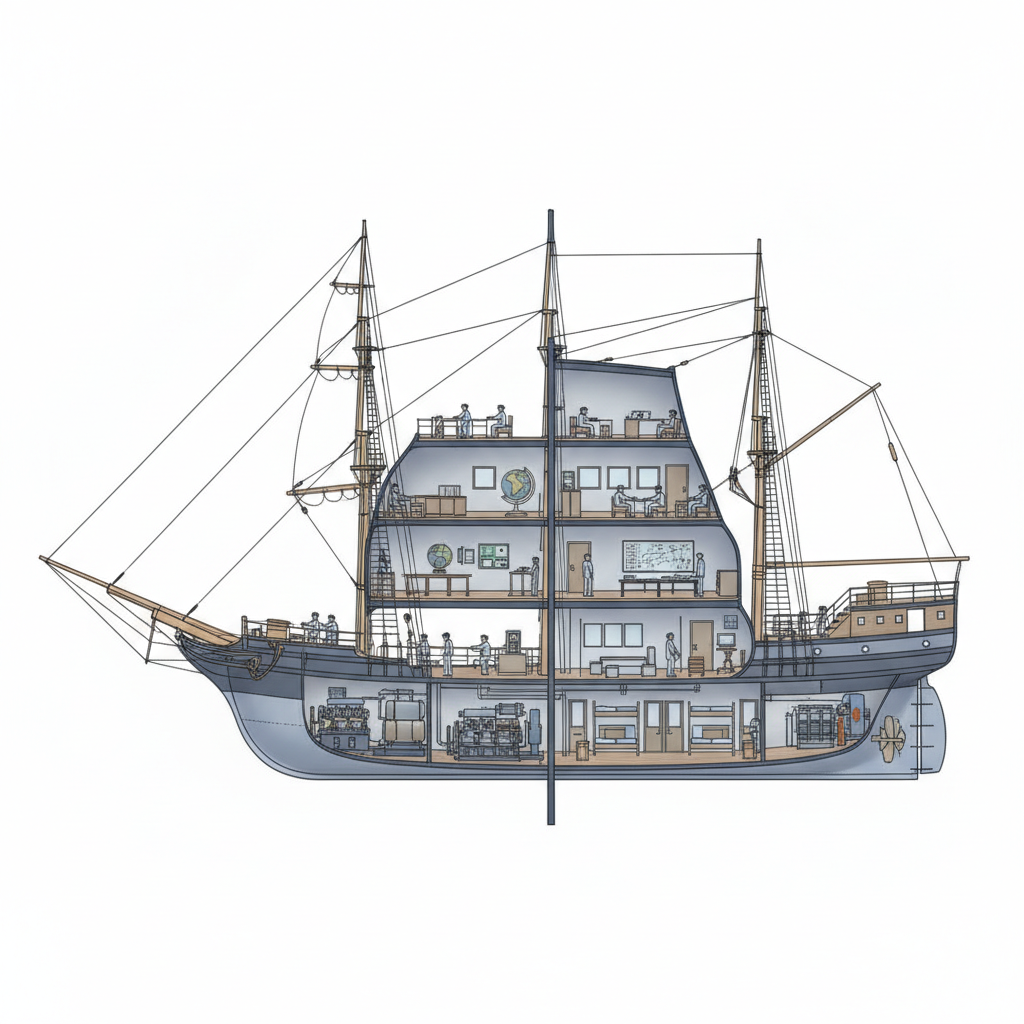
- INS Sudarshini, a sail training ship, serves as a floating classroom for naval cadets, imparting practical training in navigation, seamanship, and leadership while symbolizing India’s rich maritime heritage.
- Barcelona, Spain’s second-largest city and a major Mediterranean port, has historically been a hub for maritime trade and cultural exchange, making it a strategic location for naval diplomacy.
- The Indian Navy’s engagement in global maritime exercises and port visits aligns with its broader mandate to enhance interoperability, promote maritime security, and strengthen bilateral and multilateral partnerships.
What is Lokayan 2026 and INS Sudarshini?
- Lokayan 2026 is a global maritime campaign, designed to showcase India’s naval prowess, foster international cooperation, and promote maritime security through port visits, professional exchanges, and cultural diplomacy.
- INS Sudarshini is a sail training vessel of the Indian Navy, and is primarily used for training cadets in navigation, seamanship, and leadership, while also serving as a platform for diplomatic engagement.
- Port calls under Lokayan facilitate professional interactions with host navies, including joint exercises, workshops, and cultural exchanges, thereby enhancing mutual understanding and cooperation.
- The Barcelona port call includes public outreach programs, allowing visitors to experience India’s maritime heritage, naval traditions, and the operational capabilities of the Indian Navy.
- The campaign also underscores the Indian Navy’s commitment to capacity-building in maritime domains, including training, in collaboration with partner nations.
Key Features
| Feature | Significance |
|---|---|
| INS Sudarshini as a Training Vessel | Serves as a platform for professional maritime training, exposing cadets to global navigation practices and fostering operational readiness. |
| Lokayan 2026 Campaign | Represents India’s sustained commitment to maritime diplomacy, professional excellence, and global engagement in naval training and outreach. |
| Barcelona Port Call | Facilitates cultural and professional exchanges with Spain’s naval authorities and maritime stakeholders, enhancing bilateral maritime cooperation. |
| Open Ship Day (4 September 2026) | Provides public access to the vessel, promoting awareness of India’s maritime heritage and fostering people-to-people ties. |
| Professional Dialogue Programs | Enables knowledge-sharing on navigation skills and maritime best practices, reinforcing India’s role in global maritime training standards. |
Why it Matters
Strategic Diplomacy
- Demonstrates India’s proactive engagement in global maritime affairs through naval diplomacy, reinforcing its role as a responsible maritime power.
- Strengthens bilateral ties with Spain, a key European partner, through institutional exchanges and cultural outreach.
- Enhances India’s visibility in the Mediterranean and Atlantic regions, contributing to its strategic presence in critical maritime corridors.
Maritime Training & Capacity Building
- Exposes Indian naval cadets to international maritime environments, improving their operational adaptability and professional competence.
- Promotes cross-cultural learning and collaboration among naval trainees, fostering mutual understanding and shared maritime standards.
- Supports India’s long-term goal of developing a skilled maritime workforce aligned with global best practices.
Public Engagement & Soft Power
- Uses naval diplomacy as a tool for soft power projection, showcasing India’s maritime heritage and technological advancements to foreign audiences.
- Encourages public interest in maritime affairs, particularly among youth, by providing direct exposure to naval operations and traditions.
- Reinforces India’s image as a nation with a rich maritime history and a forward-looking naval strategy.
Operational Readiness & Global Standards
- Provides a platform for Indian naval personnel to benchmark their skills against international maritime practices.
- Facilitates the exchange of technical knowledge and operational insights, contributing to the modernization of India’s naval training infrastructure.
- Aligns with India’s broader objective of achieving self-reliance in maritime training and technology.
Challenges
1. Logistical Coordination for International Port Calls
- Ensuring seamless coordination with host nations for berthing, customs, and security protocols during port visits.
- Managing time constraints to maximize training and diplomatic engagements within limited port stay durations.
UPSC Link: GS Paper 3: Infrastructure – Ports
2. Sustaining Maritime Diplomacy in Distant Regions
- Maintaining consistent naval presence in regions like the Mediterranean and Atlantic, which require significant logistical support.
- Balancing operational commitments with diplomatic missions to avoid overstretching naval resources.
UPSC Link: GS Paper 2: International Relations
3. Cultural and Professional Adaptability
- Ensuring that naval personnel are culturally sensitized and professionally prepared for interactions with diverse international stakeholders.
- Addressing language barriers and differing operational standards during collaborative exercises.
UPSC Link: GS Paper 3: Skill Development
4. Public Awareness and Engagement
- Overcoming apathy or limited public interest in maritime affairs, which can hinder the effectiveness of soft power initiatives.
- Ensuring that open ship days and public engagements are accessible and impactful for diverse audiences.
UPSC Link: GS Paper 4: Ethics in Governance
Challenges — UPSC Perspective
| Issue | Concern |
|---|---|
| Port Visit Logistics | Coordination with foreign authorities for berthing, security, and customs clearance. |
| Training vs. Diplomatic Priorities | Balancing cadet training objectives with diplomatic and cultural exchange goals. |
| Resource Allocation | Ensuring adequate naval assets and personnel for sustained global maritime diplomacy. |
| Public Engagement Effectiveness | Maximizing outreach impact during limited public access periods. |
| Cultural Adaptability | Preparing naval personnel for diverse cultural and professional interactions abroad. |
Way Forward
- Enhance pre-deployment training for naval personnel to improve cultural and professional adaptability for international engagements.
- Strengthen bilateral maritime agreements with key partners like Spain to institutionalize joint training and exchange programs.
- Develop a long-term roadmap for the Lokayan campaign, aligning it with India’s broader maritime strategy and global naval commitments.
- Increase public outreach initiatives, including digital campaigns, to raise awareness about India’s maritime heritage and naval diplomacy.
- Invest in modernizing naval training infrastructure to align with evolving global maritime standards and technologies.
- Foster partnerships with maritime educational institutions to create exchange programs for naval cadets and professionals.
- Establish a feedback mechanism to assess the impact of port visits on training outcomes and diplomatic relations.
UPSC Value Addition
Keywords for Mains Answer-Writing
Lokayan 2026 maritime outreach campaign · INS Sudarshini · Indian Navy global maritime diplomacy · Naval training vessels · Barcelona port call · Maritime training and cultural diplomacy · India-Spain naval cooperation · Soft power projection through naval assets · Professional exchange programmes in maritime domain · India’s maritime heritage and oceanic missions
Concept Flow
India’s maritime diplomacy through the Lokayan 2026 campaign → Deployment of INS Sudarshini for global training and outreach → Port call in Barcelona for professional and cultural exchanges → Engagement with Spanish naval authorities and public outreach → Reinforcement of India’s strategic presence in the Mediterranean region.
Prelims Practice Questions
Q1. Consider the following statements regarding INS Sudarshini:
1. It is a naval training vessel of the Indian Navy.
2. It is currently participating in the Lokayan 2026 maritime outreach campaign.
3. It is scheduled to visit Barcelona, Spain, as part of this campaign.
4. It is primarily used for combat operations in high-seas.
How many of the above statements are correct?
- Only one
- Only two
- Only three
- All four
Answer: Only three — Statements 1, 2, and 3 are correct as INS Sudarshini is a naval training vessel participating in Lokayan 2026 and visiting Barcelona. Statement 4 is incorrect as it is not used for combat operations.
Q2. Which of the following is NOT a feature of the Lokayan maritime outreach campaign?
A. Professional exchange programmes with foreign naval forces
B. Cultural and maritime heritage exhibitions
C. Direct involvement in combat operations
D. Training and skill-sharing initiatives
- A
- B
- C
- D
Answer: C — The Lokayan campaign focuses on professional exchanges, cultural diplomacy, and training, not combat operations.
Q3. Assertion (A): The Lokayan 2026 campaign symbolises India’s commitment to global maritime excellence.
Reason (R): It includes professional training and cultural exchanges with foreign naval forces.
Options:
A. Both A and R are true, and R is the correct explanation of A.
B. Both A and R are true, but R is NOT the correct explanation of A.
C. A is true, but R is false.
D. A is false, but R is true.
- A
- B
- C
- D
Answer: A — Both Assertion (A) and Reason (R) are true. The campaign aims to showcase India’s maritime excellence through professional training and cultural exchanges, making R the correct explanation of A.
Mains Practice Question
✍ Discuss the significance of India’s maritime outreach campaigns such as Lokayan 2026 in the context of global naval diplomacy. (15 Marks)
Approach: MODEL-ANSWER SKELETON:
1. Define maritime diplomacy and its instruments (training vessels, port calls, joint exercises).
2. Explain the objectives of Lokayan 2026: professional exchange, cultural diplomacy, and soft power projection.
3. Analyse the role of INS Sudarshini as a naval training vessel in fostering international cooperation.
4. Discuss the strategic importance: enhancing India’s maritime presence, strengthening ties with partner nations, and projecting India as a responsible naval power.
5. Highlight recent trends in naval diplomacy (e.g., India’s Act East Policy, SAGAR initiative).
6. Conclude with the broader implications for India’s global maritime strategy and its alignment with national security and economic interests.
Source: PIB (Press Information Bureau)
Generated by AanyaAi for educational purpose.
Related guides on our sites
- Best PSIR optional coaching for upsc
- Best PSIR optional teacher for upsc
- Best teacher of PSIR optional for upsc
- Best PSIR optional coaching in delhi for UPSC

- दिल्ली विधेयक: व्यवसाय शुरू करने में होगी आसानी, एकल खिड़की प्रणाली लागू होगी - September 2, 2026
- Delhi Ease of Doing Business Bill 2026: Single-Window System for Licenses & Approvals - September 2, 2026
- गोल्लाला गुडी को राष्ट्रीय महत्व का स्थल घोषित, रामप्पा मंदिर के निकट - September 2, 2026

No Comments