


03 Sep HP High Court Relief to ASHA Workers in Panchayat Polls: Key UPSC Polity Insight
✎ ASHA workers, classified as voluntary workers under NHM, are not regular government employees; their eligibility to contest Panchayat elections hinges on the interpretation of 'office of profit' under Section 122(1)(g) of the…
Subject Relevance — Where This Topic Fits
- GS Paper II — Constitutional and Statutory Provisions | GS Paper II — Role of Judiciary | GS Paper III — Issues Relating to Development and Management of Social Sector/Services
- Prelims: Panchayati Raj System, ASHA Workers, Judicial Review, Constitutional Provisions for Panchayats, Eligibility Criteria for Panchayat Elections
- Essay: Judicial Activism and Governance, Role of Constitutional Courts in Upholding Rights of Marginalised Groups
Quick Revision: ASHA workers, classified as voluntary workers under NHM, are not regular government employees; their eligibility to contest Panchayat elections hinges on the interpretation of ‘office of profit’ under Section 122(1)(g) of the Panchayati Raj Act, 1994.
Why is this in the news?
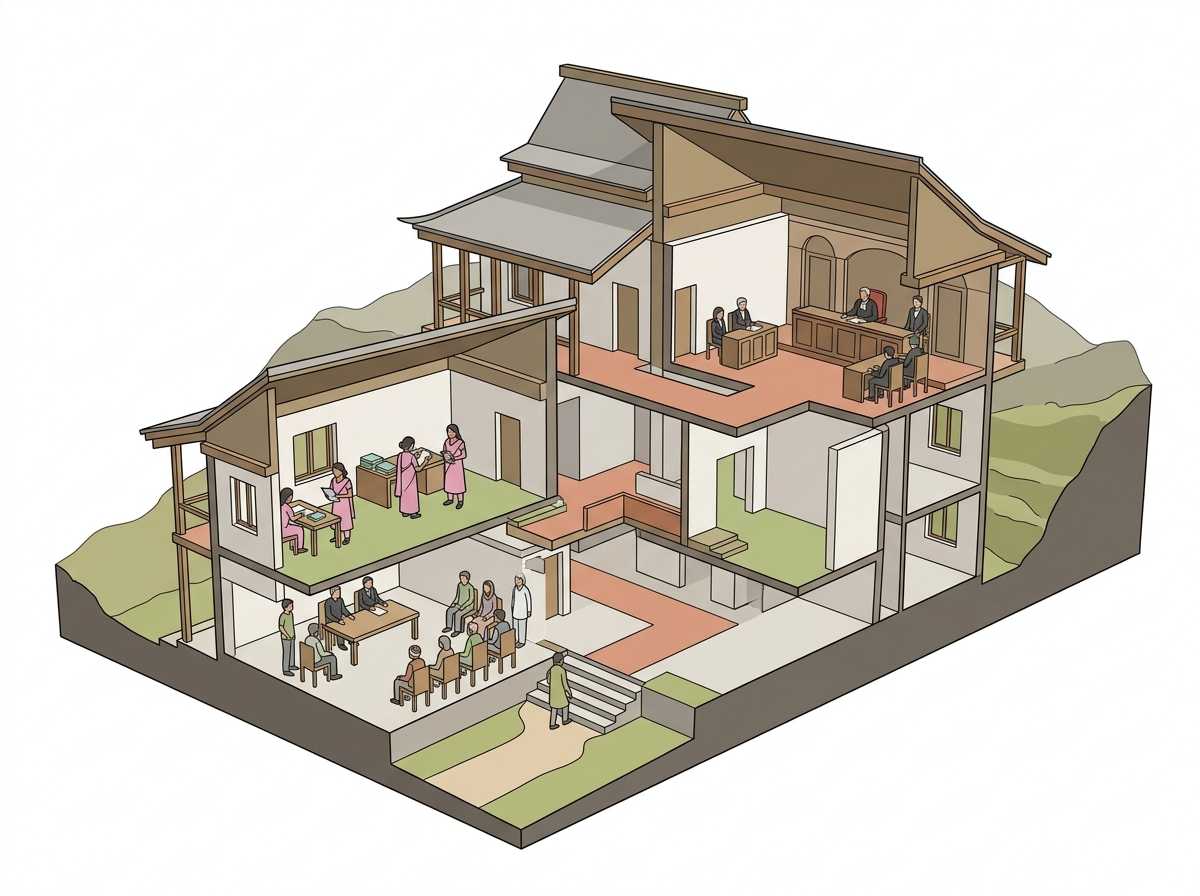
The Himachal Pradesh High Court recently granted interim relief to three ASHA workers who contested and won Panchayat elections despite a state government order declaring them ineligible. The court ruled that these workers could complete their five-year term, clarifying that the decision was based on their electoral victory and did not set a binding precedent for future cases. The ruling raises significant questions about the eligibility of ASHA workers under the Himachal Pradesh Panchayati Raj Act, 1994, and the interplay between statutory disqualifications and judicial interventions.
Background
- The Himachal Pradesh Panchayati Raj Act, 1994, governs the structure, powers, and functions of Panchayati Raj Institutions (PRIs) in the state, including eligibility criteria for contesting elections.
- ASHA (Accredited Social Health Activists) workers are community health volunteers under the National Health Mission (NHM), engaged on an honorarium basis and not as regular government employees.
- On 2 May 2026, the Himachal Pradesh government issued a clarification under Section 122(1)(g) of the Panchayati Raj Act, declaring ASHA workers ineligible to contest Panchayat elections on the ground that they hold a government position.
- The state government’s order was challenged in the High Court by seven ASHA workers, including Reena Devi, who argued that they were not government employees but voluntary workers under NHM.
- The High Court, in an interim order, stayed the state government’s disqualification, allowing the petitioners to contest the Panchayat elections.
- Three of the petitioners won the Panchayat elections, prompting the High Court to deliver the impugned judgment on their eligibility to complete their term.
What are ASHA Workers and Their Legal Status?
- ASHA workers are community health volunteers deployed under the National Rural Health Mission (NRHM) and later the National Health Mission (NHM) to act as a bridge between the community and public health systems.
- They are not regular government employees but are engaged on a fixed honorarium and are classified as ‘voluntary workers’ under the NHM framework.
- ASHA workers perform critical roles such as facilitating access to healthcare services, promoting health awareness, and supporting maternal and child health initiatives.
- The eligibility of ASHA workers to contest elections has been a subject of legal and administrative debate, particularly concerning their status under service laws and Panchayati Raj Acts.
- Section 122(1)(g) of the Himachal Pradesh Panchati Raj Act, 1994, disqualifies individuals holding ‘any office of profit under the government’ from contesting Panchayat elections.
- The interpretation of ‘office of profit’ has been contentious, as ASHA workers are not traditional government employees but are remunerated by the government for specific services.
- Judicial precedents, including those from the Supreme Court, have clarified that the term ‘office of profit’ must be interpreted in light of the nature of the appointment and the degree of control exercised by the government.
- The Himachal Pradesh High Court’s recent judgment underscores the need for clarity in statutory provisions to avoid conflicting interpretations and ensure equitable participation in local governance.
Key Features
| Feature | Significance |
|---|---|
| High Court’s Interim Relief | Suspended the disqualification of ASHA workers under HP Panchayati Raj Act, 1994, enabling them to contest and complete their term upon election victory. |
| Judicial Discretion in Electoral Disputes | Demonstrated judicial restraint by deferring final adjudication on eligibility criteria, focusing instead on the completion of the elected term. |
| Distinction Between Government Employees and Voluntary Workers | Highlighted the legal ambiguity in classifying ASHA workers under the National Health Mission as either government employees or voluntary workers for electoral purposes. |
| Temporal Jurisdiction of Courts | Emphasised that interim orders are context-specific and not to be treated as precedents for future cases. |
| Role of Self-Help Groups in Local Governance | Reinforced the participation of grassroots health workers in decentralised governance structures. |
Why it Matters
Legal and Constitutional
- Clarifies the interplay between interim judicial orders and electoral processes, ensuring that elected representatives are not prematurely disqualified pending final adjudication.
- Reinforces the principle of judicial restraint in electoral disputes to avoid disrupting democratic processes.
- Raises questions on the constitutional status of ASHA workers under Article 14 (Right to Equality) and Article 21 (Right to Livelihood) if their employment status affects electoral eligibility.
Governance and Policy
- Underscores the need for clarity in statutory definitions regarding the employment status of ASHA workers, who are critical to public health delivery systems.
- Highlights gaps in the HP Panchayati Raj Act, 1994, regarding the disqualification criteria for voluntary workers in local body elections.
- Demonstrates the role of judicial intervention in resolving governance ambiguities that impact grassroots democracy.
Social and Institutional
- Validates the participation of marginalised sections, such as ASHA workers, in local governance, enhancing democratic inclusivity.
- Raises awareness about the dual role of ASHA workers as both health service providers and potential public representatives, necessitating policy coherence.
- Reinforces the institutional trust in the judiciary as a neutral arbiter in electoral disputes.
Challenges
1. Ambiguity in Statutory Definitions
- The absence of a clear legal definition of ASHA workers’ employment status under the HP Panchayati Raj Act, 1994, creates ambiguity in their electoral eligibility.
- This ambiguity risks inconsistent application of disqualification norms across states, undermining the uniformity of electoral laws.
- The lack of a national framework for classifying such workers exacerbates inter-state disparities in governance.
UPSC Link: Polity: Local Governance – Panchayati Raj
2. Judicial Overreach vs. Judicial Restraint
- The High Court’s decision to defer final adjudication on eligibility criteria reflects judicial restraint but leaves unresolved legal ambiguities for future cases.
- Overreliance on interim orders to resolve complex legal questions may lead to prolonged uncertainty in electoral processes.
- Balancing judicial intervention with the sanctity of electoral outcomes remains a persistent challenge.
UPSC Link: Polity: Judiciary – Judicial Activism vs. Restraint
3. Policy Coherence for Grassroots Health Workers
- The case highlights the need for a coherent national policy on the employment status and rights of ASHA workers, who are integral to public health systems.
- Inconsistent policies across states may lead to inequities in service delivery and governance participation.
- The absence of a unified framework risks undermining the effectiveness of the National Health Mission.
UPSC Link: Governance: Public Health – ASHA Workers
4. Electoral Integrity and Judicial Intervention
- Judicial intervention in electoral disputes must ensure that interim orders do not disrupt the democratic process or create precedents that undermine electoral integrity.
- The case underscores the need for clear timelines and criteria for judicial intervention in electoral matters.
- Overlapping jurisdictions between courts and election commissions may lead to conflicting orders, necessitating institutional coordination.
UPSC Link: Polity: Election Commission – Role of Judiciary
5. Inclusivity in Local Governance
- While the decision promotes inclusivity by allowing elected ASHA workers to complete their term, it does not resolve the underlying issue of their eligibility to contest.
- Systemic barriers to participation by marginalised groups in local governance persist without clear statutory solutions.
- The case raises questions about the representational equity of local bodies if certain groups face disqualification risks.
UPSC Link: Polity: Panchayati Raj – Inclusivity
Challenges — UPSC Perspective
| Issue | Concern |
|---|---|
| Statutory Ambiguity | Lack of clear definitions in the HP Panchayati Raj Act, 1994, regarding the employment status of ASHA workers and its impact on electoral eligibility. |
| Judicial Restraint vs. Finality | Deferring final adjudication on eligibility criteria risks prolonged legal ambiguity, affecting future electoral disputes. |
| Policy Coherence | Inconsistent policies across states on the status of ASHA workers may lead to inequities in governance and service delivery. |
| Electoral Integrity | Interim judicial orders must balance the need for relief with the sanctity of electoral processes to avoid disruptions. |
| Representational Equity | Systemic barriers to participation by marginalised groups in local governance persist without clear statutory solutions. |
Way Forward
- The Himachal Pradesh government should initiate a legislative review of the HP Panchayati Raj Act, 1994, to clarify the eligibility criteria for voluntary workers in local body elections.
- The Union Ministry of Panchayati Raj should collaborate with state governments to develop a national framework for the classification and rights of ASHA workers in local governance.
- The Election Commission of India should issue guidelines to harmonise judicial interventions in electoral disputes, ensuring minimal disruption to democratic processes.
- Judicial training programmes should emphasise the balance between judicial restraint and the need for finality in electoral disputes to avoid prolonged ambiguities.
- State governments should conduct awareness campaigns to educate ASHA workers and other marginalised groups about their rights and eligibility in local body elections.
- The National Health Mission should integrate governance participation as a component of ASHA workers’ professional development to foster inclusivity.
- Future judicial decisions should avoid treating interim orders as precedents, ensuring that context-specific reliefs do not set unintended legal precedents.
UPSC Value Addition
Keywords for Mains Answer-Writing
Panchayati Raj System · Asha Workers · Constitutional Status of Local Governance · High Court Jurisdiction over Panchayat Elections · Eligibility Criteria for Panchayat Elections · Himachal Pradesh Panchayati Raj Act, 1994 · Interim Orders and Final Judgments · Judicial Review of Administrative Decisions · Voluntary Health Workers · Self-Help Groups and Local Governance
Constitutional & Policy Linkages
- Article 14 (Right to Equality) – Ensuring non-discriminatory application of electoral eligibility criteria.
- Article 21 (Right to Livelihood) – Protecting the employment rights of ASHA workers in the context of electoral participation.
Concept Flow
ASHA workers contest panchayat elections under interim judicial relief -> → State government issues disqualification order citing HP Panchayati Raj Act, 1994 -> → Workers challenge the order in High Court, arguing their voluntary status -> → High Court suspends disqualification order, allowing workers to contest -> → Workers win elections and seek relief to complete their term -> → High Court grants relief, deferring final adjudication on eligibility -> → Judicial decision highlights need for legislative clarity and policy coherence.
Prelims Practice Questions
Q1. Consider the following statements regarding the Panchayati Raj System in India:
1. The 73rd Constitutional Amendment Act, 1992, mandates the reservation of seats for women in Panchayati Raj institutions.
2. The eligibility criteria for contesting Panchayat elections are uniform across all states and are governed by the Panchayati Raj Act, 1994.
3. The High Court has the jurisdiction to stay administrative orders disqualifying candidates from contesting Panchayat elections.
How many of the above statements are correct?
- Only one
- Only two
- All
- None
Answer: All — Statement 1 is correct as the 73rd Amendment mandates 33% reservation for women. Statement 2 is incorrect because eligibility criteria vary by state legislation. Statement 3 is correct as courts can grant interim relief against disqualification orders.
Q2. Assertion (A): The Himachal Pradesh High Court, in its recent judgment, upheld the right of Asha workers to complete their term as Panchayat representatives after winning elections.
Reason (R): The court ruled that Asha workers are not government employees and thus not disqualified under the Himachal Pradesh Panchayati Raj Act, 1994.
In the context of the above statements, which of the following is correct?
- Both A and R are true, and R is the correct explanation of A.
- Both A and R are true, but R is not the correct explanation of A.
- A is true, but R is false.
- A is false, but R is true.
Answer: A is true, but R is false. — The assertion (A) is true as the court allowed Asha workers to complete their term. However, the reason (R) is not the correct explanation because the court did not conclusively decide on their eligibility but only allowed them to complete their term based on interim relief.
Q3. Match the following provisions of the Constitution of India with their respective Articles:
Column I (Provision) | Column II (Article)
— | —
1. Reservation of seats for women in Panchayats | A. Article 243D
2. Duration of Panchayats | B. Article 243E
3. Powers, authority, and responsibilities of Panchayats | C. Article 243G
4. Constitution of Finance Commission | D. Article 243I
Select the correct match:
- 1-A, 2-B, 3-C, 4-D
- 1-B, 2-A, 3-D, 4-C
- 1-C, 2-D, 3-A, 4-B
- 1-D, 2-C, 3-B, 4-A
Answer: 1-A, 2-B, 3-C, 4-D — The correct matches are: 1-A (Article 243D), 2-B (Article 243E), 3-C (Article 243G), and 4-D (Article 243I).
Mains Practice Question
✍ The recent judgment of the Himachal Pradesh High Court allowing Asha workers to complete their term as Panchayat representatives after winning elections raises critical questions about the eligibility criteria for Panchayat elections and the role of judicial intervention in administrative decisions. Critically examine the constitutional and legal framework governing the eligibility of voluntary health workers like Asha workers to contest Panchayat elections. Also, discuss the implications of judicial review in safeguarding democratic decentralisation under the 73rd Constitutional Amendment Act, 1992. (15 Marks)
Approach: MODEL-ANSWER SKELETON:
1. **Constitutional Framework**:
– Briefly outline the 73rd Constitutional Amendment Act, 1992, and its provisions for Panchayati Raj institutions (Articles 243A to 243O).
– Highlight the mandate for democratic decentralisation, reservation of seats (including for women under Article 243D), and the role of state legislatures in framing laws for Panchayats.
2. **Legal Framework for Eligibility**:
– Discuss the Himachal Pradesh Panchayati Raj Act, 1994, particularly Section 122(1)(g), which the state government invoked to disqualify Asha workers.
– Contrast this with the status of Asha workers as voluntary health workers under the National Health Mission (NHM), not regular government employees, and their eligibility under the Act.
– Reference the High Court’s interim order and the final judgment’s stance on not conclusively deciding eligibility but allowing completion of term.
3. **Judicial Review and Democratic Decentralisation**:
– Explain the role of judicial review in protecting democratic institutions from arbitrary administrative actions (Article 226 of the Constitution).
– Discuss how interim orders can act as safeguards against premature disqualification, ensuring that elected representatives complete their term unless disqualified by law.
– Critically analyse whether judicial intervention in such cases strengthens or undermines the autonomy of Panchayati Raj institutions.
4. **Implications and Way Forward**:
– Examine the need for clarity in eligibility criteria for voluntary workers in Panchayat elections to avoid legal ambiguities.
– Suggest measures such as uniform guidelines by the Election Commission of India or amendments to state Panchayati Raj Acts to address such issues.
– Conclude with a balanced view on the balance between administrative discretion and judicial safeguards in local governance.
Source: amarujala.com
Himachal Pradesh PCS (HPPSC (HAS)) — State PCS Practice
Prelims: Recently, the Himachal Pradesh High Court granted relief to ASHA workers who had won Panchayat elections by allowing them to complete their tenure. Under which constitutional provision did the High Court uphold their right to contest and serve in Panchayats despite holding ASHA worker positions?
- Article 243D (Reservation of seats for women)
- Article 243G (Powers, authority and responsibilities of Panchayats)
- Article 243M (Exclusion of areas and applicability of the Act)
- Article 243F (Disqualifications for membership)
Answer: Article 243D (Reservation of seats for women) — The High Court ruled that ASHA workers, who are elected to Panchayats, cannot be disqualified solely on the grounds of their ASHA worker status, as it does not fall under the disqualifications listed under Article 243F of the Constitution.
Mains: Discuss the legal and constitutional implications of the Himachal Pradesh High Court’s recent judgment granting relief to ASHA workers who won Panchayat elections. How does this judgment align with the principles of local self-governance enshrined in the 73rd Constitutional Amendment Act? Provide a critical analysis.
Generated by AanyaAi for educational purpose.
Related guides on our sites
- Best PSIR optional coaching for upsc
- Best PSIR optional teacher for upsc
- Best teacher of PSIR optional for upsc
- Best PSIR optional coaching in delhi for UPSC

- सिंहस्थ 2028: सब्जियों और फूलों की कमी रोकने की तैयारी, जानें पूरा प्लान - October 24, 2026
- India-UN Fund: A Model for South-South Cooperation in UPSC Exams - October 24, 2026
- उड़ीसा में चक्रवात खतरा: रेड अलर्ट, सरकार ने उठाए कदम - October 24, 2026

No Comments