


08 Sep UP CP Radhakrishnan lays foundation for ₹1,000 crore projects in Meghalaya
✎ The Vice-President’s laying of foundation stones for ₹1,000+ crore infrastructure projects in Meghalaya highlights the convergence of national schemes (PMGSY, NESIDS, PM-DevINE, JJM 2.0) with state-led sustainability initiatives…
Subject Relevance — Where This Topic Fits
- GS Paper II — Governance, Constitution and Polity (Role of Vice-President) | GS Paper III — Infrastructure Development and Budgetary Allocations
- Prelims: Vice-President of India, Pradhan Mantri Gram Sadak Yojana (PMGSY), National Urban Mission (AMRUT), National Health Mission (NHM), Northeast Special Infrastructure Development Scheme (NESIDS), Prime Minister’s Development Initiative for North East (PM-DevINE), Jal Jeevan Mission 2.0, Green Meghalaya Mission, Living Root Bridges of Meghalaya
- Essay: Inclusive Development: The Pathway to a Developed India by 2047, Balancing Economic Growth and Environmental Conservation in the Northeast
Quick Revision: The Vice-President’s laying of foundation stones for ₹1,000+ crore infrastructure projects in Meghalaya highlights the convergence of national schemes (PMGSY, NESIDS, PM-DevINE, JJM 2.0) with state-led sustainability initiatives like ‘Green Meghalaya’ to achieve inclusive development by 2047.
Why is this in the news?
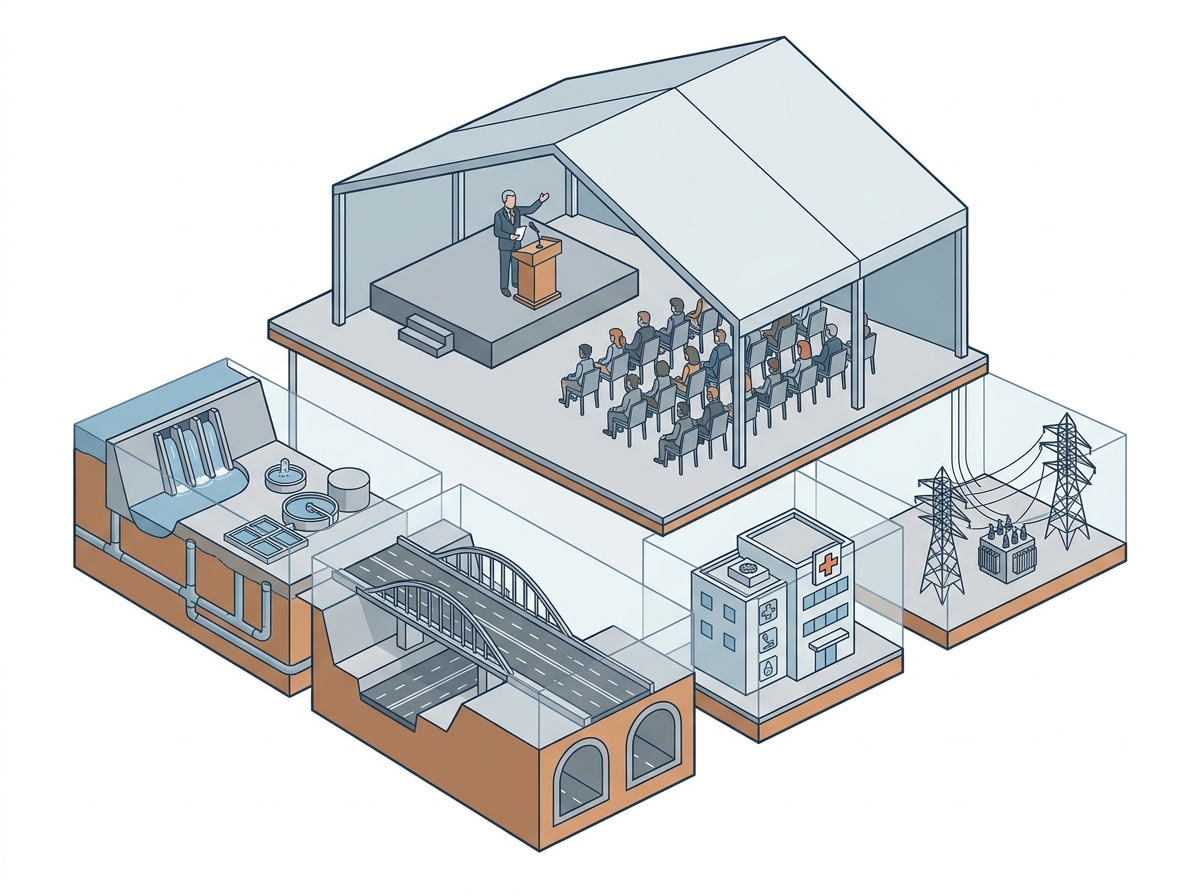
The Vice-President of India, Shri C.P. Radhakrishnan, participated in a public reception in Shillong, Meghalaya, on 7 September 2026, where he laid the foundation stones for infrastructure projects worth over ₹1,000 crore. The initiatives span water supply, connectivity, healthcare, and power infrastructure, aligning with the broader national vision of achieving a ‘Developed India’ by 2047. The event also highlighted Meghalaya’s unique socio-cultural and ecological heritage, emphasizing the need for sustainable and inclusive development.
Background
- The Vice-President’s visit to Meghalaya underscores the Union Government’s focus on the Northeastern region, a strategic and ecologically sensitive area.
- Meghalaya, known for its matrilineal society, rich biodiversity, and cultural heritage, faces challenges in infrastructure development due to its hilly terrain and dispersed settlements.
- The Pradhan Mantri Gram Sadak Yojana (PMGSY), launched in 2000, has been instrumental in improving rural connectivity in the Northeast, with over ₹47,000 crore spent in the region over the past decade.
- The Jal Jeevan Mission (JJM) aims to provide tap water connections to every rural household by 2024, with Meghalaya signing a Memorandum of Understanding (MoU) under JJM 2.0 for accelerated implementation.
- The Northeast Special Infrastructure Development Scheme (NESIDS) and PM-DevINE are central to addressing the region’s infrastructure gaps, including power, transport, and social sectors.
- Meghalaya’s initiatives like ‘Green Meghalaya’, ‘CM-Elevate’, and the ‘Homestay Programme’ reflect state-led efforts to balance economic growth with environmental sustainability.
Key Infrastructure Projects Laid by the Vice-President in Meghalaya
- Two road connectivity projects under NESIDS, designed to improve inter-district and intra-state mobility in Meghalaya’s hilly terrain.
- Establishment of a 30-bedded Ayush Centre at Shillong Civil Hospital to promote traditional Indian medicine systems (Ayurveda, Yoga, Unani, Siddha, and Homeopathy).
- A 132/33 kV substation at Mawkhanu under PM-DevINE, addressing power supply deficits in the region and supporting industrial and agricultural growth.
- Inauguration of a ₹31.05 crore maternity and child hospital in Nongstoin, funded under the National Health Mission (NHM), to strengthen maternal and child healthcare infrastructure.
- The cumulative investment of ₹1,042 crore across these projects is expected to enhance water supply, connectivity, healthcare, and power infrastructure in Meghalaya.
- The initiatives align with the ‘Developed India @2047’ vision, emphasizing inclusive growth, environmental sustainability, and the preservation of indigenous cultural practices.
Key Features
| Feature | Significance |
|---|---|
| Shillong Public Reception | Symbolises constitutional and democratic traditions of honouring high constitutional functionaries, reinforcing federal respect and state-citizen interface. |
| ₹1,010.95 Crore Projects Foundation Stones | Represents targeted capital infusion in critical infrastructure sectors: water supply, transport, health, and power, aligned with national development goals. |
| Nongstoin Obstetrics & Paediatric Hospital (₹31.05 Cr) | Strengthens maternal and child health services under National Health Mission, addressing regional healthcare disparities in remote districts. |
| New Shillong Water Supply Scheme Phase II (₹850.58 Cr) | Expands potable water coverage, directly impacting public health and urban resilience in a state with high rainfall variability. |
| Mawkhonu 132/33 kV Substation (PM-DevINE) | Enhances electricity access and grid stability, supporting industrial and residential demand growth in eastern Meghalaya. |
Why it Matters
Infrastructure Development
- The five projects collectively target the ‘last-mile’ gaps in Meghalaya’s infrastructure: potable water, rural connectivity, healthcare, and power distribution.
- The Shillong Water Supply Scheme Phase II (₹850.58 crore) is a flagship urban water project under the Urban Challenge Fund, addressing chronic shortages in the state capital.
- The 132/33 kV substation at Mawkhonu (PM-DevINE) will improve grid reliability, reducing load-shedding in districts like East Jaintia Hills.
- The two NESIDS-funded road projects enhance inter-district and international connectivity, crucial for trade and tourism in the Northeast.
Healthcare Augmentation
- The Nongstoin Obstetrics & Paediatric Hospital (₹31.05 crore) expands specialised maternal and child health services, addressing high infant and maternal mortality rates in rural Meghalaya.
- The 30-bed Ayush Centre at Shillong Civil Hospital integrates traditional medicine with modern healthcare, promoting holistic wellness under the National Health Mission.
Inclusive Development & Governance
- The projects reflect a participatory governance model, with state-led initiatives (e.g., Home Stay Programme, CM-Elevate, Green Meghalaya) complementing central schemes.
- The emphasis on ‘last-mile’ connectivity and service delivery aligns with the Sustainable Development Goals (SDG 9, 11) and the ‘Sabka Saath, Sabka Vikas’ ethos.
- The Vice-President’s remarks on pluralism and social cohesion underscore the constitutional principle of fraternity (Preamble) and the need for inclusive growth.
Cultural & Environmental Preservation
- The Vice-President highlighted Meghalaya’s living root bridges and matrilineal traditions, linking cultural heritage to sustainable development (SDG 11).
- The ‘Green Meghalaya’ initiative aligns with climate action (SDG 13) and the National Mission for a Green India, promoting afforestation and biodiversity conservation.
Northeast-Specific Development
- The projects are part of a broader Northeast development strategy, leveraging schemes like PMGSY (₹47,000 crore for 46,000 km rural roads) and NESIDS to bridge infrastructure deficits.
- The PM-DevINE scheme (dedicated to the Northeast) targets critical gaps in power, water, and connectivity, addressing historical underinvestment in the region.
Challenges
1. Geographical and Topographical Constraints
- Meghalaya’s hilly terrain and heavy rainfall exacerbate road construction and maintenance costs, requiring climate-resilient infrastructure design.
- Limited land availability in urban areas like Shillong complicates large-scale water supply and housing projects, necessitating innovative engineering solutions.
UPSC Link: Geography of North-East India
2. Healthcare Accessibility Gaps
- Rural districts face shortages of specialists, diagnostic facilities, and emergency transport, leading to delayed maternal and child healthcare.
- High out-of-pocket expenditure on healthcare in the Northeast, despite central schemes, necessitates stronger state-level subsidy mechanisms.
UPSC Link: Health Infrastructure in India
3. Water Security and Urbanisation Pressures
- Shillong’s growing population and seasonal water scarcity require integrated water management, including rainwater harvesting and decentralised treatment plants.
- Pollution of water sources (e.g., Umshyrpi River) threatens long-term water security, demanding stricter enforcement of the Water (Prevention and Control of Pollution) Act, 1974.
UPSC Link: Urban Water Management
4. Power Sector Challenges
- Meghalaya’s power deficit persists despite hydroelectric potential, due to transmission losses, inadequate storage, and seasonal variability in generation.
- High dependence on diesel generators in remote areas increases energy costs and carbon emissions, necessitating renewable energy integration.
UPSC Link: Renewable Energy in India
5. Socio-Cultural and Gender Dynamics
- While matrilineal traditions empower women in decision-making, socio-economic barriers persist in accessing education, healthcare, and formal employment.
- Inter-community tensions and land disputes in tribal areas can delay project implementation, requiring participatory planning and conflict resolution mechanisms.
UPSC Link: Tribal Development in North-East India
Challenges — UPSC Perspective
| Issue | Concern |
|---|---|
| Topographical Constraints | High construction costs and logistical challenges due to hilly terrain and heavy rainfall. |
| Healthcare Accessibility | Shortage of specialists and emergency services in rural districts, leading to high maternal and infant mortality. |
| Water Security | Seasonal scarcity and pollution of water sources threaten urban and rural water supply. |
| Power Sector Deficit | Persistent energy shortages despite hydroelectric potential, exacerbated by transmission losses and seasonal variability. |
| Socio-Cultural Barriers | Gender disparities and inter-community tensions may hinder inclusive development and project implementation. |
| Climate Vulnerability | Increased frequency of landslides and floods disrupts infrastructure and livelihoods, requiring climate adaptation measures. |
Government Initiatives — Must-Memorise for Prelims
- Pradhan Mantri Gram Sadak Yojana (PMGSY)
- National Health Mission (NHM)
- Urban Challenge Fund
- North East Special Infrastructure Development Scheme (NESIDS)
- Prime Minister’s Development Initiative for North East (PM-DevINE)
Way Forward
- Accelerate climate-resilient infrastructure design for hilly terrains, incorporating green technologies and disaster-proofing standards.
- Strengthen rural healthcare by expanding telemedicine, mobile clinics, and specialist outreach programmes under the National Health Mission.
- Implement integrated water management plans for Shillong, including decentralised treatment plants and rainwater harvesting systems.
- Enhance power sector efficiency through renewable energy integration, grid modernisation, and energy storage solutions.
- Promote participatory governance in tribal areas, ensuring community consent and conflict resolution mechanisms for project implementation.
- Leverage matrilineal traditions to empower women in local governance, education, and economic participation.
- Monitor project outcomes through real-time data dashboards, ensuring transparency and accountability in fund utilisation.
- Align state-level initiatives (e.g., Green Meghalaya, CM-Elevate) with national schemes to maximise synergy and avoid duplication.
UPSC Value Addition
Keywords for Mains Answer-Writing
Vice-President of India · Foundation stones for infrastructure projects · Meghalaya development initiatives · PM Gati Shakti Yojana · National Health Mission · Jal Jeevan Mission 2.0 · NESIDS scheme · PM-DevINE · Inclusive development · 2047 Vision for Developed India · Federal governance and Centre-State coordination · Sustainable infrastructure · Cultural preservation and environmental conservation
Constitutional & Policy Linkages
- Preamble – Fraternity and Inclusive Growth
- Article 371A – Special provisions for Nagaland (analogous context for tribal autonomy in Meghalaya)
- Article 47 – Duty of State to raise the level of nutrition and public health
Concept Flow
State-led development initiatives (e.g., Green Meghalaya) → Central schemes (PM-DevINE, NESIDS) → Infrastructure projects (roads, water, power, health) → Enhanced service delivery → Improved quality of life → Vice-President’s emphasis on pluralism and social cohesion → Constitutional principle of fraternity (Preamble) → Inclusive growth policies → Reduced regional disparities → Meghalaya’s matrilineal traditions → Women’s empowerment in governance → Targeted schemes for maternal and child health → Lowered maternal and infant mortality → Hilly terrain and heavy rainfall → High infrastructure costs → Need for climate-resilient design → Sustainable development (SDG 11, 13) → Urbanisation pressures in Shillong → Water scarcity and pollution → Integrated water management → Urban resilience and public health → Power sector deficit → Renewable energy integration → Grid modernisation → Energy security and reduced carbon emissions → Participatory governance models → Community consent and conflict resolution → Faster project implementation → Equitable development outcomes
Prelims Practice Questions
Q1. Consider the following statements regarding the National Health Mission (NHM):
1. NHM is a centrally sponsored scheme launched in 2005.
2. It subsumes the erstwhile National Rural Health Mission (NRHM) and National Urban Health Mission (NUHM).
3. The scheme is implemented by the Ministry of Health and Family Welfare.
4. The primary objective of NHM is to provide universal access to equitable, affordable and quality healthcare.
How many of the above statements are correct?
- Only one
- Only two
- Only three
- All
Answer: All — Statements 1, 2, 3, and 4 are all correct. NHM was launched in 2005 by merging NRHM and NUHM. It is implemented by the Ministry of Health and Family Welfare and aims for universal healthcare access.
Q2. Assertion (A): The Vice-President of India is the ex-officio Chairman of the Rajya Sabha.
Reason (R): The Constitution of India mandates that the Vice-President shall preside over the Rajya Sabha and ensure its functioning.
Options:
A. Both A and R are true, and R is the correct explanation of A.
B. Both A and R are true, but R is NOT the correct explanation of A.
C. A is true, but R is false.
D. A is false, but R is true.
Answer: ? — Assertion (A) is true as the Vice-President is the ex-officio Chairman of the Rajya Sabha. Reason (R) is also true and correctly explains (A) as the constitutional provision under Article 89(1) mandates this role.
Q3. Match the following schemes with their respective objectives:
Column I (Scheme)
A. PM Gati Shakti Yojana
B. Jal Jeevan Mission 2.0
C. NESIDS
D. PM-DevINE
Column II (Objective)
1. Providing last-mile connectivity to remote areas in the North-East
2. Holistic infrastructure development through multi-modal connectivity
3. Ensuring last-mile tap water connection to every rural household
4. Developing infrastructure in the North-East to boost economic growth
Options:
A – 2, B – 3, C – 1, D – 4
A – 1, B – 2, C – 3, D – 4
A – 3, B – 1, C – 4, D – 2
A – 4, B – 1, C – 2, D – 3
- A – 2, B – 3, C – 1, D – 4
- A – 1, B – 2, C – 3, D – 4
- A – 3, B – 1, C – 4, D – 2
- A – 4, B – 1, C – 2, D – 3
Answer: A – 2, B – 3, C – 1, D – 4 — PM Gati Shakti Yojana focuses on multi-modal connectivity (A-2). Jal Jeevan Mission 2.0 aims for tap water connections (B-3). NESIDS provides connectivity in the North-East (C-1). PM-DevINE develops infrastructure in the North-East (D-4).
Mains Practice Question
✍ The Vice-President of India, in his address at Shillong, underscored the imperative of inclusive development to realise the vision of a ‘Developed India by 2047’. In this context, critically examine the role of the Vice-President as an institution in India’s federal governance architecture. Also, analyse how the Centre-State coordination mechanisms, exemplified by schemes such as PM Gati Shakti Yojana and Jal Jeevan Mission 2.0, contribute to achieving the objectives of sustainable and equitable development. (15 Marks)
Approach: MODEL-ANSWER SKELETON:
1. **Role of the Vice-President as an institution (5 Marks)**
– Constitutional provisions: Article 63 (Vice-President as ex-officio Chairman of Rajya Sabha), Article 64 (functions as Chairman), and Article 89 (powers and duties).
– Institutional neutrality and continuity: Role in maintaining decorum, ensuring smooth functioning of the Rajya Sabha, and acting as a bridge between the Centre and States.
– Symbolic representation: Represents the unity of the nation and fosters inter-state harmony through visits and interactions (e.g., Shillong address).
– Limitations: No executive powers; role is largely ceremonial in the absence of Presidential vacancy.
2. **Centre-State coordination mechanisms (5 Marks)**
– **PM Gati Shakti Yojana**: Multi-modal connectivity framework integrating infrastructure planning (roads, railways, ports, airports) to reduce logistics costs and enhance economic integration. Role in addressing regional disparities.
– **Jal Jeevan Mission 2.0**: Focus on last-mile water connectivity, leveraging technology and community participation to ensure equitable access. Addresses the ‘last mile’ challenge in rural and remote areas.
– **NESIDS and PM-DevINE**: Targeted interventions in the North-East to address historical underdevelopment through infrastructure (roads, power) and economic growth.
– **Federal principles**: Article 263 (Inter-State Council), NITI Aayog’s role in cooperative federalism, and centrally sponsored schemes (CSS) that incentivise State participation.
3. **Challenges and way forward (5 Marks)**
– **Challenges**: Bureaucratic delays, inter-state disputes, funding gaps, and regional imbalances in resource allocation.
– **Way forward**: Strengthening institutional mechanisms (e.g., Inter-State Council), enhancing State-level capacity, leveraging technology (GIS mapping, PM Gati Shakti National Master Plan), and ensuring inclusive planning with local participation.
– **Conclusion**: The Vice-President’s role, combined with robust Centre-State coordination, is pivotal for achieving the 2047 vision, provided institutional reforms and resource allocation are aligned with equity and sustainability.
Source: PIB (Press Information Bureau)
Generated by AanyaAi for educational purpose.
Related guides on our sites
- Best PSIR optional coaching for upsc
- Best PSIR optional teacher for upsc
- Best teacher of PSIR optional for upsc
- Best PSIR optional coaching in delhi for UPSC

- वाराणसी में शुरू होगा 9वां राष्ट्रीय पोषण माह 2026: जानिए थीम, उद्देश्य और प्रमुख बदलाव - September 8, 2026
- UPSC Alert: National Nutrition Month 2026 Launch by Annpurna Devi in Varanasi - September 8, 2026
- स्वच्छ वायु सर्वेक्षण 2026: शीर्ष शहरों को पुरस्कृत, एनसीएपी के तहत सर्वश्रेष्ठ प्रबंधन पद्धतियां हुईं सार्वजनिक - September 8, 2026

No Comments