


09 Sep लंपी स्किन रोग (एलएसडी) रोकथाम: डीएएचडी के नवीनतम उपाय और टीकाकरण रणनीति
✎ Lumpy Skin Disease (LSD) is a vector-borne viral disease of cattle and buffaloes caused by Capripoxvirus, transmitted by arthropod vectors; control relies on vaccination, biosecurity, and vector management.
Subject Relevance — Where This Topic Fits
- GS Paper III — Science and Technology (Applications in Animal Husbandry and Public Health) | GS Paper III — Environment and Disaster Management (Zoonotic Diseases and Biosecurity)
- Prelims: Lumpy Skin Disease (LSD), Capripoxvirus, Arthropod vectors, Ring vaccination, Biosecurity measures, ICAR-NIHSAD, RDDL, CDDL, Animal Quarantine, Vector control, Zoonotic diseases, Animal Health Emergency
- Essay: The Interface of Public Health and Animal Welfare: Balancing Economic Security and Livelihoods in Zoonotic Disease Management, Technological Interventions in Agriculture: From Precision Farming to Disease Surveillance
Quick Revision: Lumpy Skin Disease (LSD) is a vector-borne viral disease of cattle and buffaloes caused by Capripoxvirus, transmitted by arthropod vectors; control relies on vaccination, biosecurity, and vector management.
Why is this in the news?
The Department of Animal Husbandry and Dairying (DAHD), Ministry of Fisheries, Animal Husbandry and Dairying, Government of India, has intensified surveillance, vaccination, and biosecurity measures to prevent and control Lumpy Skin Disease (LSD) in livestock. This proactive intervention follows the detection of sporadic cases in several states since July 2026 and aligns with the department’s ongoing strategy to mitigate the spread of the disease, which is transmitted primarily by arthropod vectors and caused by the Capripoxvirus.
Background
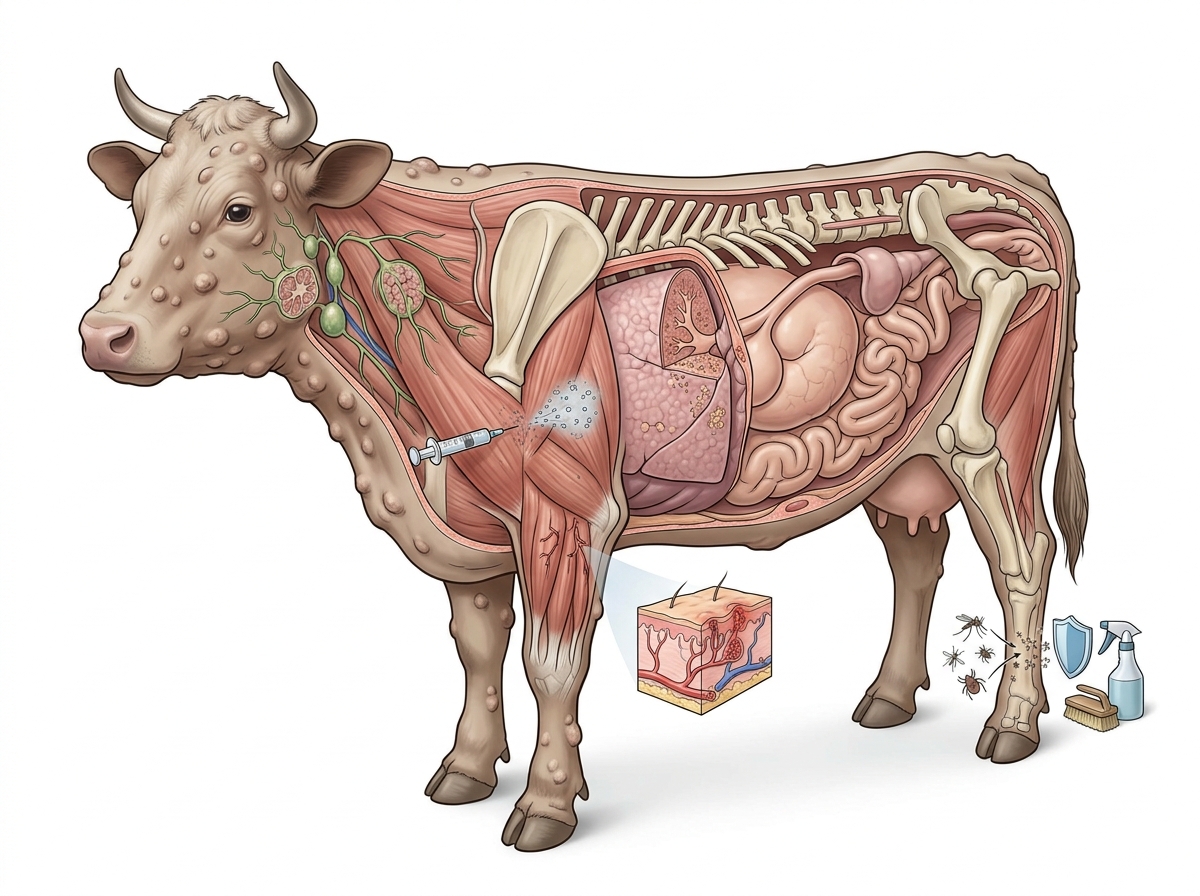
- Lumpy Skin Disease (LSD) is a viral disease affecting cattle and buffaloes, caused by the Capripoxvirus, a member of the Poxviridae family.
- The disease was first reported in India in September 2019 in West Bengal and Odisha, with subsequent sporadic outbreaks reported in various states.
- LSD is transmitted primarily through mechanical vectors such as biting flies, mosquitoes, and ticks, making it a vector-borne disease with significant implications for animal husbandry and rural livelihoods.
- The disease is characterized by fever, nodular skin lesions, and reduced milk production, though mortality rates are generally low.
- The Department of Animal Husbandry and Dairying (DAHD) has been implementing a multi-pronged strategy to control LSD, including vaccination drives, surveillance, and strengthening of veterinary infrastructure.
- The National Institute of High-Security Animal Diseases (NIHSAD), Bhopal, under ICAR, plays a pivotal role in diagnostic support and technical guidance for LSD control.
What is Lumpy Skin Disease (LSD)?
- LSD is a viral disease affecting cattle and buffaloes, caused by the Capripoxvirus, a DNA virus belonging to the genus Capripoxvirus.
- The disease is transmitted primarily through mechanical vectors such as biting flies, mosquitoes, and ticks.
- Clinical signs include high fever, nodular skin lesions (lumps) on the skin, mucous membranes, and internal organs, reduced milk yield, and temporary infertility in affected animals.
- Mortality rates are generally low (1-5%), but the disease causes significant economic losses due to reduced productivity, trade restrictions, and increased veterinary costs.
- LSD is not a zoonotic disease and does not pose a direct risk to human health, though it severely impacts livestock-dependent economies.
- Control measures include mass vaccination campaigns, vector control, quarantine of infected animals, and strengthening of veterinary surveillance and diagnostic capacities.
Key Features
| Feature | Significance |
|---|---|
| Enhanced Surveillance | Real-time monitoring of LSD outbreaks to enable rapid response and containment, reducing transmission risk across states. |
| Ring Vaccination Strategy | Targeted vaccination around infected zones to create immunity barriers and prevent spread to adjacent areas. |
| Biosecurity Measures | Implementation of disinfection, quarantine, and vector control to mitigate vector-borne transmission of the Capripoxvirus. |
| Laboratory Network Expansion | Strengthening of Regional Disease Diagnostic Laboratories (RDDLs) and Central Disease Diagnostic Laboratory (CDDL) for accurate LSD detection and testing. |
| Financial Assistance to States | Provision of funds for vaccination drives, infrastructure development, and capacity-building of veterinary personnel to ensure uniform preparedness. |
Why it Matters
Economic
- Prevention of LSD outbreaks safeguards livestock productivity, particularly in dairy and meat sectors, which are critical to rural livelihoods and national food security.
- Reduction in morbidity and mortality rates minimizes economic losses for farmers, ensuring stable income and agricultural output.
- Maintenance of export competitiveness for livestock products by preventing trade restrictions due to disease outbreaks.
Agricultural Productivity
- LSD primarily affects cattle and buffaloes, the backbone of India’s dairy and draught animal economy, thus its control directly impacts agricultural efficiency.
- Healthy livestock populations enhance soil fertility through manure and support crop production systems reliant on draught power.
Public Health
- While LSD is not zoonotic, its control reduces the burden on veterinary healthcare systems, allowing resources to be directed toward other pressing animal health challenges.
- Preventive measures such as vector control indirectly benefit human health by reducing the proliferation of disease-carrying arthropods.
Institutional Capacity
- Strengthening of veterinary infrastructure and personnel capacity through training and financial support enhances India’s ability to respond to future epizootics.
- Centralized coordination via DAHD ensures uniform implementation of disease control protocols, reducing regional disparities in preparedness.
Challenges
1. Vaccine Coverage Gaps
- Incomplete vaccination of young and unvaccinated animals due to logistical and awareness challenges, leaving pockets of susceptibility.
- Variability in state-level implementation of vaccination drives, leading to uneven protection across regions.
UPSC Link: GS3: Animal Husbandry
2. Vector-Borne Transmission
- Arthropod vectors (e.g., ticks, flies) facilitate rapid spread of LSD, complicating containment efforts in endemic and high-risk zones.
- Climatic factors such as monsoon patterns and temperature fluctuations influence vector proliferation, requiring adaptive control strategies.
UPSC Link: GS3: Environmental Factors in Disease Spread
3. Stray Animal Management
- Uncontrolled movement of stray and feral animals exacerbates LSD transmission, particularly in peri-urban and rural areas.
- Lack of standardized protocols for capturing, quarantining, and vaccinating stray animals hinders comprehensive disease control.
UPSC Link: GS2: Animal Welfare Policies
4. Laboratory Infrastructure Bottlenecks
- Limited diagnostic capacity in remote and under-resourced regions delays LSD confirmation and response times.
- Inadequate cold-chain facilities for vaccine storage in some states compromise vaccination efficacy.
UPSC Link: GS3: Public Health Infrastructure
5. Farmer Awareness and Compliance
- Low awareness among livestock owners regarding LSD symptoms, transmission, and preventive measures leads to delayed reporting and underutilization of control measures.
- Reluctance to report cases due to fear of trade restrictions or economic losses may result in underreporting.
UPSC Link: GS3: Agricultural Extension Services
Challenges — UPSC Perspective
| Issue | Concern |
|---|---|
| Incomplete Vaccination Coverage | Targeted animals (e.g., calves, unvaccinated cattle) remain vulnerable, creating reservoirs for LSD transmission. |
| Vector Proliferation | Monsoon and warm climates amplify vector populations, accelerating LSD spread in endemic regions. |
| Stray Animal Mobility | Unrestricted movement of stray animals facilitates inter-state transmission and complicates containment. |
| Diagnostic Delays | Limited laboratory capacity in rural areas delays LSD confirmation, delaying response interventions. |
| Farmer Non-Compliance | Low awareness and economic disincentives reduce reporting and adoption of preventive measures. |
Government Initiatives — Must-Memorise for Prelims
- Livestock Health and Disease Control (LHDC) Scheme
- National Animal Disease Control Programme (NADCP)
Way Forward
- Intensify ring vaccination campaigns in high-risk districts, prioritizing unvaccinated and young animals.
- Strengthen vector control measures through community engagement and integrated pest management in endemic zones.
- Expand laboratory networks by upgrading RDDLs and CDDLs to ensure rapid and accurate LSD diagnosis.
- Enhance farmer awareness via mass campaigns on LSD symptoms, reporting mechanisms, and preventive practices.
- Standardize stray animal management protocols across states, including vaccination drives and quarantine measures.
- Ensure equitable distribution of vaccines and financial assistance to states with limited resources.
- Monitor climatic patterns to predict vector proliferation and preemptively deploy control measures.
- Foster inter-state coordination through DAHD-led review meetings to address implementation gaps.
UPSC Value Addition
Keywords for Mains Answer-Writing
Lumpy Skin Disease (LSD) · Capripoxvirus · Zoonotic diseases · Vaccination policy for livestock · One Health approach · Animal husbandry governance · Vector-borne diseases · Biosecurity measures in livestock · ICAR-NIHSAD · Ring vaccination · Animal quarantine protocols · Vector control in veterinary epidemiology · National Animal Disease Control Programme (NADCP) · State-level disease surveillance · Veterinary infrastructure strengthening
Concept Flow
Capripoxvirus transmission via arthropod vectors → Outbreak in susceptible cattle/buffalo populations → Clinical manifestation (fever, skin nodules) → Morbidity and economic losses → DAHD-led surveillance and vaccination → Ring vaccination and biosecurity → Reduction in transmission and outbreak containment.
Prelims Practice Questions
Q1. Consider the following statements regarding Lumpy Skin Disease (LSD):
1. LSD is caused by a bacterial pathogen and primarily spreads through direct contact between animals.
2. The disease is transmitted primarily by arthropod vectors such as mosquitoes and ticks.
3. LSD has a high mortality rate in affected cattle and buffalo populations.
4. The disease was first reported in India in 2019.
How many of the above statements are correct?
- Only one
- Only two
- Only three
- All four
Answer: Only three — Statements 2 and 4 are correct. LSD is caused by Capripoxvirus and spreads via arthropod vectors; mortality is generally low. Statement 1 is incorrect (viral, not bacterial), and statement 3 is incorrect (mortality is typically low).
Q2. Assertion (A): The Department of Animal Husbandry and Dairying (DAHD) has strengthened surveillance and vaccination measures to control Lumpy Skin Disease (LSD) in India.
Reason (R): LSD is a zoonotic disease that can spread to humans through direct contact with infected animals.
- Both A and R are true, and R is the correct explanation of A
- Both A and R are true, but R is NOT the correct explanation of A
- A is true but R is false
- A is false but R is true
Answer: A is true but R is false — Assertion (A) is true as DAHD has intensified surveillance and vaccination. Reason (R) is false because LSD is not a zoonotic disease; it affects only cattle and buffaloes.
Q3. Match the following measures with their primary objective in controlling Lumpy Skin Disease (LSD):
Column I (Measures) | Column II (Objective)
———————————————|—————————————
1. Ring vaccination | A. Preventing spread via vectors
2. Quarantine of newly introduced animals | B. Mass immunization in outbreak zones
3. Vector control (insecticide spraying) | C. Isolating potentially infected animals
4. Disinfection of farm premises | D. Reducing transmission through fomites
- 1-B, 2-C, 3-A, 4-D
- 1-A, 2-B, 3-C, 4-D
- 1-D, 2-A, 3-B, 4-C
- 1-C, 2-D, 3-A, 4-B
Answer: 1-B, 2-C, 3-A, 4-D — 1-B (Ring vaccination targets outbreak zones), 2-C (Quarantine isolates animals), 3-A (Vector control targets arthropod spread), 4-D (Disinfection targets fomites).
Mains Practice Question
✍ The Department of Animal Husbandry and Dairying (DAHD) has intensified surveillance, vaccination, and biosecurity measures to control Lumpy Skin Disease (LSD) in India. Critically examine the efficacy of these measures in the context of India’s livestock sector governance. Also, analyse the role of veterinary infrastructure and inter-state coordination in ensuring disease containment. (15 Marks)
Approach: MODEL-ANSWER SKELETON:
1. **Introduction (2 Marks)**
– Brief definition of LSD: viral disease (Capripoxvirus), vector-borne (arthropods), low mortality but high morbidity.
– First reported in India in 2019; resurgence in 2026 (Uttar Pradesh, Rajasthan, etc.).
– DAHD’s proactive measures: surveillance, vaccination (36.18+ crore doses), ring vaccination, quarantine, vector control, disinfection.
2. **Efficacy of DAHD Measures (5 Marks)**
– **Vaccination Strategy**: Mass vaccination (36.18 crore doses) and ring vaccination in outbreak zones. Critique: Challenges in remote areas, cold chain maintenance, and vaccine hesitancy among farmers.
– **Surveillance Systems**: Real-time reporting via official channels; role of ICAR-NIHSAD and RDDLs/CDDLs. Critique: Gaps in reporting from marginalized regions, underreporting due to asymptomatic cases.
– **Biosecurity Measures**: Quarantine, disinfection, and movement restrictions. Critique: Enforcement challenges, porous borders, and lack of standardized protocols across states.
– **Vector Control**: Insecticide spraying and habitat management. Critique: Environmental concerns, resistance in vectors, and limited efficacy in monsoon seasons.
3. **Veterinary Infrastructure and Inter-State Coordination (5 Marks)**
– **Strengthening Infrastructure**: DAHD’s financial support for veterinary labs, training of personnel, and capacity-building. Cite examples: ICAR-NIHSAD’s technical guidance, state-level RDDLs.
– **Inter-State Coordination**: Role of review meetings (27 Aug 2026, 7 Sep 2026) and central expert teams. Critique: Federalism challenges, lack of uniform SOP adoption, and delayed response in some states.
– **One Health Approach**: Need for intersectoral coordination (DAHD, MoEFCC, local bodies) for vector control and habitat management.
4. **Way Forward and Conclusion (3 Marks)**
– **Short-term**: Strengthen cold chain logistics, farmer awareness campaigns, and rapid response teams.
– **Long-term**: Integrated disease surveillance system, genomic sequencing for strain tracking, and climate-resilient vector control strategies.
– **Conclusion**: DAHD’s measures are commendable but require sustained investment in veterinary infrastructure, inter-state cooperation, and community engagement for long-term success.
Source: PIB (Press Information Bureau)
Generated by AanyaAi for educational purpose.

- केरल सरकार ने बजट परियोजनाओं के समय पर क्रियान्वयन हेतु नया तंत्र अपनाया - September 9, 2026
- Kerala’s New Mechanism to Fast-Track Budget Projects: UPSC-State PCS Analysis - September 9, 2026
- यूपीएससी/पीसीएस परीक्षा: लंपी स्किन रोग से निपटने के लिए डीएएचडी के कदम, जानें पूरी रणनीति - September 9, 2026

No Comments