


09 Sep UPSC Alert: Deep-Sea Biodiversity Classification Program by CMLRE & ISA
✎ Deep-sea macrofaunal taxonomy is a critical tool for sustainable ocean governance, enabling accurate biodiversity assessment and informed policy-making under the UN Convention on the Law of the Sea and the International Seabed…
Subject Relevance — Where This Topic Fits
- GS Paper II — International Organisations (UN bodies) | GS Paper III — Environment, Conservation, and Sustainable Development
- Prelims: International Seabed Authority (ISA), Deep Ocean Mission, Marine Biodiversity, DNA Barcoding, UN Convention on the Law of the Sea (UNCLOS), IORA, Marine Scientific Research, UN Sustainable Development Goal 14
- Essay: Ocean governance and the role of international cooperation in sustainable development, The intersection of scientific advancement and environmental conservation in deep-sea ecosystems
Quick Revision: Deep-sea macrofaunal taxonomy is a critical tool for sustainable ocean governance, enabling accurate biodiversity assessment and informed policy-making under the UN Convention on the Law of the Sea and the International Seabed Authority’s regulatory framework.
Why is this in the news?
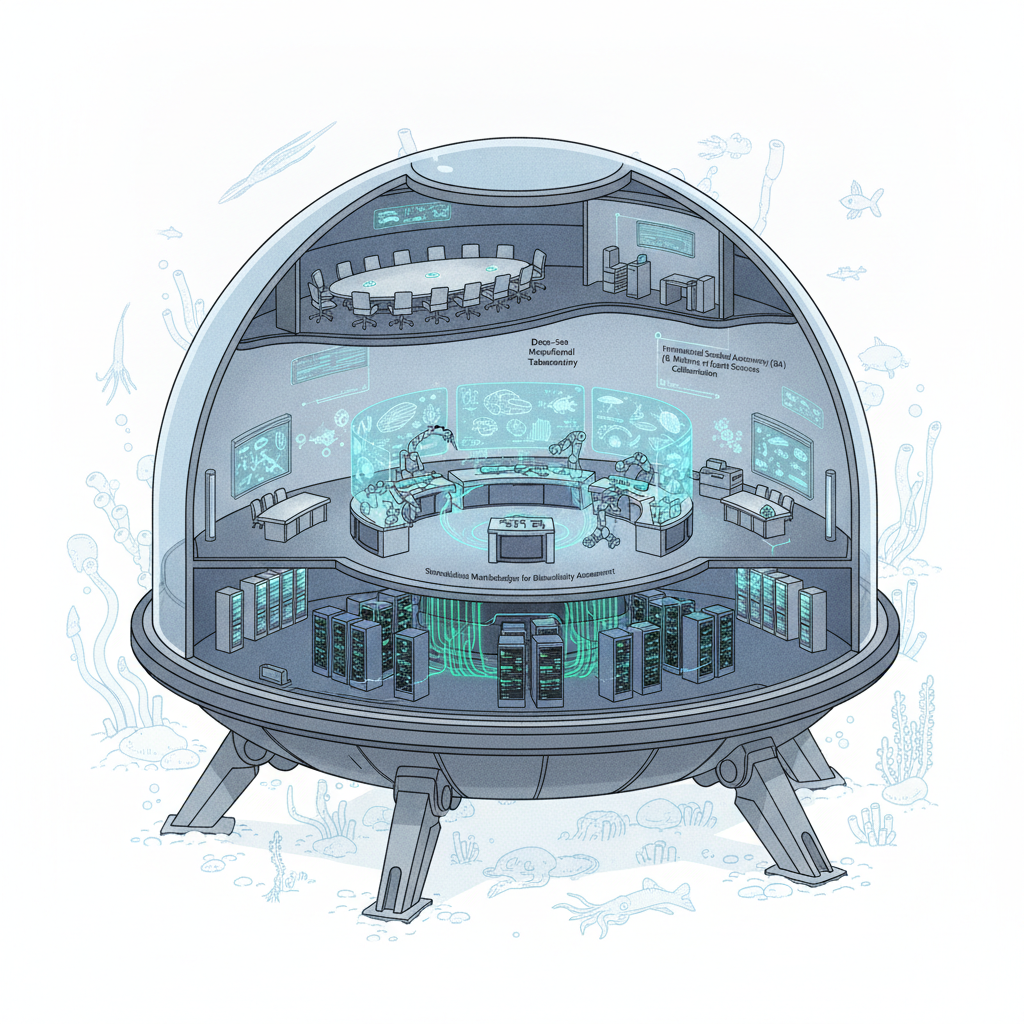
The Central Marine Living Resources and Ecology Centre (CMLRE), Kochi, under the Ministry of Earth Sciences, is hosting a five-day capacity-building programme on ‘Deep-Sea Macrofaunal Taxonomy: Standardised Methodologies for Biodiversity Assessment’ from 7 to 11 September 2026. This initiative, conducted under the International Seabed Authority’s (ISA) ‘Sustainable Seabed Knowledge Initiative (SSKI)’, underscores India’s growing leadership in deep-sea biodiversity research and the global imperative for standardised scientific approaches in marine governance.
Background
- The International Seabed Authority (ISA) is an autonomous organisation under the United Nations Convention on the Law of the Sea (UNCLOS) that regulates mineral-related activities in the deep seabed beyond national jurisdiction.
- The ISA’s Sustainable Seabed Knowledge Initiative (SSKI) aims to enhance scientific knowledge and capacity-building for sustainable deep-sea environmental management.
- India’s Deep Ocean Mission (DOM), launched in 2021, is a multi-ministerial programme focused on deep-sea exploration, biodiversity assessment, and resource utilisation.
- The Central Marine Living Resources and Ecology Centre (CMLRE), Kochi, is a premier institution under the Ministry of Earth Sciences, specialising in marine biodiversity research and taxonomy.
What is Deep-Sea Macrofaunal Taxonomy and Why Does It Matter?
- Deep-sea macrofauna refers to organisms larger than 0.5 mm that inhabit the deep ocean floor, including polychaetes, crustaceans, and molluscs, which play critical roles in marine ecosystem functioning.
- Taxonomy is the science of classifying organisms, essential for biodiversity assessment, conservation planning, and sustainable utilisation of marine resources.
- Standardised methodologies in taxonomy ensure reproducibility, comparability, and reliability of biodiversity data across regions and research institutions.
- The programme focuses on advanced techniques such as DNA barcoding, Scanning Electron Microscopy (SEM), and biodiversity data analysis to enhance taxonomic precision and efficiency.
- Deep-sea ecosystems are among the least explored on Earth, with high potential for undiscovered species and genetic resources that could have applications in medicine, biotechnology, and climate regulation.
- The ISA regulates deep-sea mining activities to prevent environmental degradation, making robust biodiversity data a prerequisite for informed decision-making.
- Capacity-building initiatives like this are vital for developing nations to participate effectively in global marine governance and contribute to the UN Sustainable Development Goal 14 (Life Below Water).
Key Features
| Feature | Significance |
|---|---|
| International Seabed Authority (ISA) Capacity Development Programme | Aligns with ISA’s mandate under UNCLOS to promote scientific knowledge and standardised methodologies for deep-sea biodiversity assessment, ensuring sustainable management of marine resources beyond national jurisdictions. |
| Five-day intensive training at CMLRE Kochi | Provides hands-on laboratory training in taxonomy, DNA barcoding, SEM, and biodiversity data analysis, equipping early-career researchers with advanced technical competencies. |
| Collaborative framework (ISA, MoES, IORA, MABIK) | Demonstrates multilateral cooperation in deep-sea research, leveraging global expertise and institutional resources to address shared challenges in marine biodiversity conservation. |
| Standardised methodologies for biodiversity assessment | Facilitates comparability of data across regions and institutions, critical for evidence-based policy-making and compliance with international environmental agreements. |
| Open-access biodiversity data publication workshop | Promotes transparency and reproducibility in marine research, aligning with FAIR (Findable, Accessible, Interoperable, Reusable) data principles for scientific integrity. |
Why it Matters
Scientific and Technological Advancement
- Enhances India’s leadership in deep-sea biodiversity research through hosting of an ISA-endorsed programme, reinforcing the country’s role in global marine science diplomacy.
- Advances taxonomic expertise in India via exposure to cutting-edge techniques such as DNA barcoding and SEM, addressing critical gaps in marine species identification.
- Strengthens India’s contributions to the Deep Ocean Mission (DOM) by integrating biodiversity assessment with technological innovation in marine exploration.
Environmental Governance and Policy
- Supports implementation of the UN Convention on the Law of the Sea (UNCLOS) and the 2030 Agenda for Sustainable Development, particularly SDG 14 (Life Below Water), through capacity building in marine biodiversity monitoring.
- Provides a scientific foundation for India’s engagement in ISA’s regulatory framework for deep-sea mining, ensuring environmental safeguards are informed by robust biodiversity data.
- Aligns with India’s commitments under the Convention on Biological Diversity (CBD) and the Nagoya Protocol on Access to Genetic Resources.
Regional Cooperation in the Indian Ocean Rim
- Fosters South-South collaboration among IORA member states, facilitating knowledge exchange and joint research initiatives in marine biodiversity conservation.
- Promotes harmonised methodologies for coastal and deep-sea biodiversity assessment across the Indian Ocean region, reducing disparities in scientific capacity.
- Encourages participation of early-career researchers from diverse geographies, building a shared knowledge base for regional marine policy.
Institutional Capacity Building
- Strengthens CMLRE Kochi’s role as a nodal centre for marine biodiversity research, enhancing its technical infrastructure and human resource capabilities.
- Bridges gaps between traditional taxonomy and modern molecular techniques, ensuring continuity and rigour in marine species classification.
- Establishes a network of collaborating institutions (NIO Goa, NIOT Chennai, MABIK Korea) for sustained interdisciplinary research in marine science.
Challenges
1. Standardisation of Taxonomic Practices
- Divergent methodologies across institutions and countries hinder comparability of biodiversity data, complicating regional and global assessments.
- Limited expertise in advanced techniques (e.g., DNA barcoding, metagenomics) in many participating countries, necessitating targeted capacity-building interventions.
- Need for harmonised protocols to integrate traditional knowledge with modern scientific approaches in marine taxonomy.
UPSC Link: GS-III: Environment & Biodiversity
2. Data Accessibility and Interoperability
- Marine biodiversity data is often siloed within institutions or nations, impeding collaborative research and policy formulation.
- Challenges in standardising data formats and metadata across international datasets, particularly for deep-sea ecosystems.
- Ensuring long-term preservation and accessibility of open-access data requires robust institutional frameworks and funding mechanisms.
UPSC Link: GS-III: Science & Technology
3. Technological and Infrastructure Gaps
- High costs and logistical constraints limit access to advanced equipment (e.g., SEM, next-generation sequencing) in many participating countries.
- Insufficient marine research vessels and sampling infrastructure for deep-sea exploration, particularly in the Indian Ocean region.
- Need for regional centres of excellence to provide sustained technical support and training beyond short-term programmes.
UPSC Link: GS-III: Economic Development
4. Policy and Regulatory Alignment
- Divergent national policies on marine biodiversity conservation and deep-sea mining may create conflicts or inconsistencies in regional governance.
- Ensuring that scientific outputs from such programmes are translated into actionable policies and regulatory frameworks at national and international levels.
- Balancing economic interests (e.g., deep-sea mining) with environmental conservation goals in policy-making processes.
UPSC Link: GS-II: International Relations
5. Human Resource Development
- Limited number of trained taxonomists and marine biologists in many countries, particularly in the Global South, constraining research output.
- Retention of trained personnel in scientific institutions due to career growth opportunities and funding constraints.
- Need for continuous professional development to keep pace with rapidly evolving technologies and methodologies in marine science.
UPSC Link: GS-III: Human Resource
Challenges — UPSC Perspective
| Issue | Concern |
|---|---|
| Divergent taxonomic methodologies | Hinders comparability of biodiversity data across regions and institutions. |
| Limited access to advanced equipment | Restricts participation of developing countries in cutting-edge marine research. |
| Data silos and lack of interoperability | Impedes collaborative research and evidence-based policy-making. |
| Insufficient marine research infrastructure | Constraints deep-sea exploration and sampling capabilities. |
| Policy-regulatory misalignment | Creates conflicts between economic exploitation and environmental conservation. |
| Human resource scarcity in taxonomy | Undermines the sustainability of marine biodiversity research networks. |
Way Forward
- Establish a regional centre of excellence in marine taxonomy at CMLRE Kochi to provide sustained training and technical support to IORA member states.
- Develop a unified protocol for marine biodiversity data collection, analysis, and reporting, aligned with international standards (e.g., OBIS, GBIF).
- Leverage the ISA’s Deep Seabed Knowledge Initiative (DSKI) to secure long-term funding for collaborative research and infrastructure development.
- Promote public-private partnerships to enhance access to advanced technologies (e.g., DNA sequencing, remote sensing) for participating institutions.
- Integrate traditional ecological knowledge with modern scientific methodologies to enrich marine biodiversity assessments and conservation strategies.
- Strengthen India’s engagement in ISA’s regulatory processes by contributing to environmental impact assessments for deep-sea mining activities.
- Facilitate exchange programmes between Indian and international marine research institutions to foster knowledge transfer and capacity building.
- Advocate for the inclusion of marine biodiversity conservation in national and regional climate action plans, linking SDG 14 with climate resilience.
UPSC Value Addition
Keywords for Mains Answer-Writing
Deep Ocean Mission · International Seabed Authority (ISA) · Sustainable Seabed Knowledge Initiative (SSKI) · Marine Biodiversity Assessment · Standardised Taxonomic Protocols · Deep-Sea Ecosystems · UNCLOS · Biological Classification · DNA Barcoding · Biodiversity Data Sharing · Coastal Ecosystem Monitoring · Marine Genetic Resources · Capacity Building in Marine Science · Deep-Sea Mineral Exploration · UN Convention on the Law of the Sea (UNCLOS) · Marine Taxonomy and Systematics
Concept Flow
Deep-sea biodiversity assessment → Requires standardised taxonomic methodologies → Enables comparability of data across regions → Supports evidence-based policy-making → Aligns with UNCLOS and SDG 14 → Facilitates sustainable management of marine resources beyond national jurisdictions. → Limited taxonomic expertise in developing countries → Capacity-building programmes (e.g., ISA-CMLRE initiative) → Training in advanced techniques (DNA barcoding, SEM) → Enhanced human resource capabilities → Strengthened regional cooperation in marine science. → Marine biodiversity data silos → Need for open-access repositories → Standardised data formats and metadata → Interoperability with global databases (e.g., OBIS) → Improved accessibility for research and policy. → Deep Ocean Mission (DOM) → Integration with biodiversity assessment → Technological innovation in marine exploration → Strengthened India’s leadership in deep-sea research → Contribution to ISA’s regulatory framework. → Regional disparities in marine research infrastructure → Collaborative programmes (e.g., IORA, ISA) → Shared resources and expertise → Reduced gaps in scientific capacity → Enhanced regional governance of marine ecosystems.
Prelims Practice Questions
Q1. Consider the following statements regarding the International Seabed Authority (ISA): 1. It is an autonomous organisation under the United Nations that regulates mineral-related activities in the deep seabed beyond national jurisdiction. 2. The ISA operates under the framework of the United Nations Convention on the Law of the Sea (UNCLOS). 3. The ISA is headquartered in Geneva, Switzerland. 4. The ISA’s mandate includes the protection of the marine environment from harmful effects of deep-seabed mining. How many of the above statements are correct?
- Only one
- Only two
- Only three
- All four
Answer: All four — Statements 1, 2, and 4 are correct. Statement 3 is incorrect as the ISA is headquartered in Kingston, Jamaica.
Q2. Assertion (A): The Deep Ocean Mission is an initiative of the Ministry of Earth Sciences, Government of India. Reason (R): The mission aims to explore and harness deep-sea mineral resources while ensuring ecological sustainability.
- Both A and R are true, and R is the correct explanation of A
- Both A and R are true, but R is not the correct explanation of A
- A is true, but R is false
- A is false, but R is true
Answer: Both A and R are true, but R is not the correct explanation of A — Both the assertion and reason are correct. The Deep Ocean Mission, launched by the Ministry of Earth Sciences, India, focuses on deep-sea exploration, resource utilisation, and ecological conservation, aligning with the goals stated in Reason (R).
Q3. Match the following initiatives with their respective organisations: Column I: A. Sustainable Seabed Knowledge Initiative (SSKI) B. Deep Ocean Mission C. Marine Biodiversity Assessment D. Biological Classification Programme Column II: 1. International Seabed Authority (ISA) 2. Ministry of Earth Sciences, India 3. Marine Biological Association of India (MBAI) 4. Centre for Marine Living Resources and Ecology (CMLRE)
Answer: ? —
Mains Practice Question
✍ Examine the significance of the International Seabed Authority’s Sustainable Seabed Knowledge Initiative (SSKI) in the context of deep-sea biodiversity conservation and resource governance. Also, discuss the role of India’s Deep Ocean Mission in advancing these objectives. (15 Marks)
Approach: MODEL-ANSWER SKELETON:
1. **Introduction (2 Marks)**
– Brief on the International Seabed Authority (ISA) and its mandate under UNCLOS.
– Define the Sustainable Seabed Knowledge Initiative (SSKI) and its objectives: standardisation of taxonomic protocols, capacity building, and ecological assessment.
2. **Role of SSKI in Deep-Sea Biodiversity Conservation (4 Marks)**
– **Standardisation of Taxonomic Protocols**: Importance of uniform methods for species identification (e.g., DNA barcoding, SEM microscopy) to ensure comparability of biodiversity data.
– **Capacity Building**: Training programmes like the one in Kochi (CMLRE) to equip researchers from member states (e.g., India, South Africa, Indonesia) with advanced techniques.
– **Ecological Assessment**: Role in monitoring deep-sea ecosystems to mitigate risks from mining activities.
– **Global Collaboration**: Highlight the participation of institutions like NIO, NIOT, and international partners (e.g., MABIK, IORA).
3. **India’s Deep Ocean Mission and its Contributions (5 Marks)**
– **Objectives**: Exploration of polymetallic nodules, hydrothermal vents, and biodiversity hotspots in the Indian Ocean.
– **Institutional Framework**: Role of CMLRE, NIO, and NIOT in taxonomic research, data collection, and policy support.
– **Technological Advancements**: Deployment of deep-sea vehicles (e.g., Samudrayaan mission) and AI-driven biodiversity analysis.
– **Policy Integration**: Alignment with UNCLOS and ISA regulations to ensure sustainable resource exploitation.
4. **Challenges and Way Forward (4 Marks)**
– **Challenges**: High costs of deep-sea research, limited access to technology, and balancing conservation with economic exploitation.
– **Way Forward**: Strengthening international partnerships, enhancing indigenous R&D, and integrating traditional knowledge with modern taxonomy.
– **Conclusion**: Reiterate the importance of SSKI and Deep Ocean Mission in achieving SDG 14 (Life Below Water) and India’s blue economy goals.
Source: PIB (Press Information Bureau)
Kerala PCS (Kerala PSC (KAS)) — State PCS Practice
Prelims: Which of the following initiatives is being jointly developed by the International Seabed Authority (ISA) and the Ministry of Earth Sciences (MoES) at the Centre for Marine Living Resources and Ecology (CMLRE) in Kochi?
- A. Deep Ocean Mission
- B. International Deep-Sea Research Programme
- C. Marine Biodiversity Conservation Project
- D. Deep-Sea Mining Exploration Project
Answer: A. Deep Ocean Mission — The Deep Ocean Mission is a multi-ministerial initiative led by the Ministry of Earth Sciences (MoES) in collaboration with the International Seabed Authority (ISA) for deep-sea exploration and sustainable utilization of marine resources.
Mains: Discuss the significance of the Centre for Marine Living Resources and Ecology (CMLRE), Kochi, in India’s deep-sea research and conservation efforts under the International Seabed Authority (ISA) partnership. Highlight its role in marine biodiversity assessment and sustainable exploitation of deep-sea resources.
Generated by AanyaAi for educational purpose.
Related guides on our sites
- Current affairs for upsc 2026
- How to prepare for GS paper 1 for UPSC CSE mains exam
- Best UPSC coaching for IFOS exam
- Best geography optional coaching

- पेट्रोलियम (संशोधन) विधेयक 2026: हितधारकों से सुझाव आमंत्रित - September 30, 2026
- UERC imposes 67 paise/unit surcharge on open access power in Uttarakhand - September 30, 2026
- एलपीयू हिंसा मामले में हाईकोर्ट ने सरकार से पूछा- अब तक क्या किया? - September 30, 2026

No Comments