


10 Sep Eravikulam National Park: Stronghold for Endangered Resplendent Shrub Frog
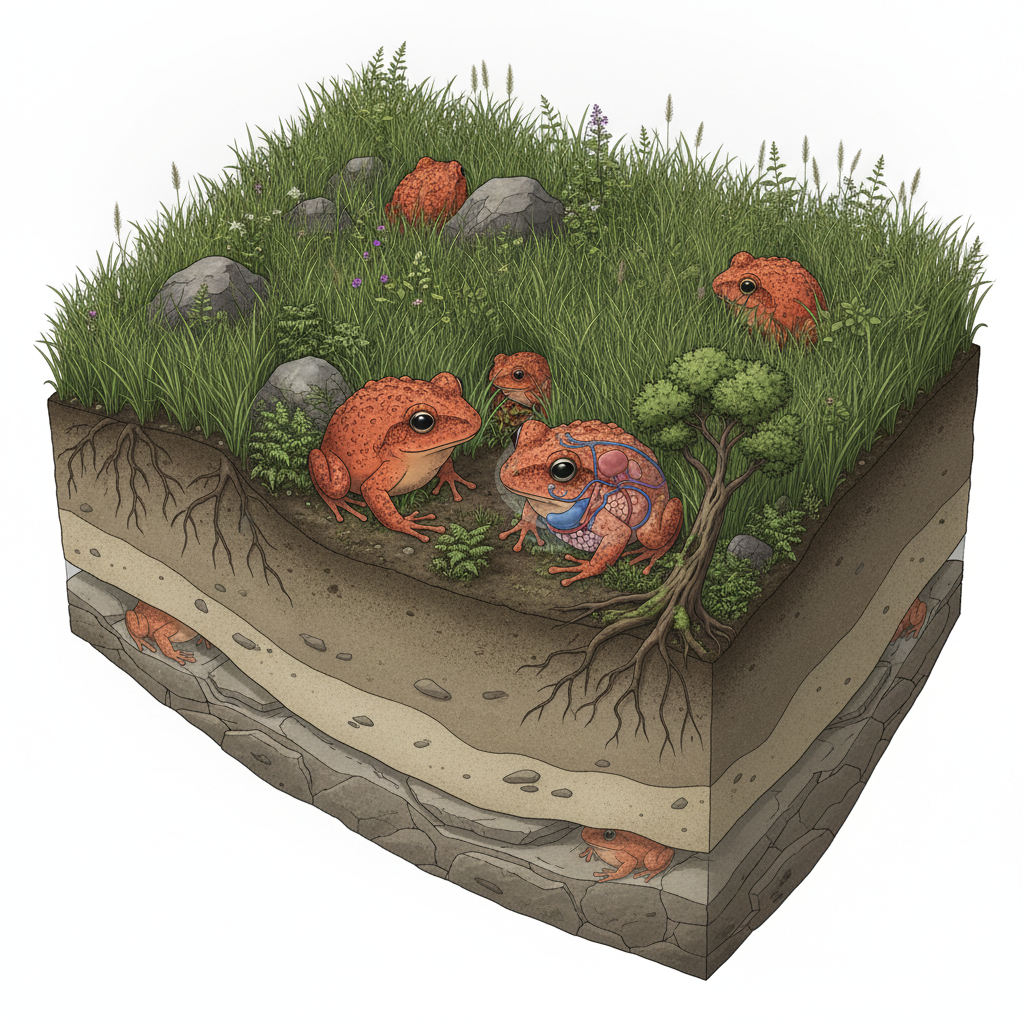
✎ The Resplendent Shrub Frog (Raorchestes resplendens) is an endangered, micro-endemic amphibian of the Western Ghats, critically dependent on high-altitude shola-grassland ecosystems in Eravikulam National Park, making its…
Subject Relevance — Where This Topic Fits
- GS Paper III — Environment and Biodiversity | GS Paper III — Conservation, Environmental Pollution and Degradation
- Prelims: Resplendent Shrub Frog, Eravikulam National Park, Western Ghats biodiversity hotspot, IUCN Red List categories, Anamudi Shola National Parks, Munnar Wildlife Division, Shola grassland ecosystems, Amphibian endemism in India
- Essay: The Role of Protected Areas in Biodiversity Conservation, Climate Change and Species Survival: The Case of High-Altitude Endemics
Quick Revision: The Resplendent Shrub Frog (Raorchestes resplendens) is an endangered, micro-endemic amphibian of the Western Ghats, critically dependent on high-altitude shola-grassland ecosystems in Eravikulam National Park, making its conservation a priority for biodiversity preservation in India.
Why is this in the news?
A recent comprehensive survey in the Munnar Wildlife Division has identified Eravikulam National Park as a critical habitat for the endangered Resplendent Shrub Frog (Raorchestes resplendens), a species endemic to the Munnar region and acutely vulnerable to climate change. The survey recorded over 1,938 encounters of the frog, underscoring the park’s role as the final survival stronghold for the species. This finding highlights the urgent need for habitat protection and ecological restoration in high-altitude grasslands, particularly in the context of global biodiversity loss and climate-induced habitat shifts.
Background
- The Resplendent Shrub Frog (Raorchestes resplendens) is a micro-endemic amphibian species restricted to the high-altitude grasslands and shola forests of the Munnar region in the Western Ghats, a globally recognized biodiversity hotspot.
- The species was first documented in 2010 near Anamudi Peak and later confirmed in the grasslands of Meesapulimala and Eravikulam National Park, where it thrives in cold, moist microhabitats.
- The Western Ghats, particularly the Munnar landscape, is a critical centre of amphibian endemism, hosting over 130 endemic species, many of which are confined to narrow altitudinal ranges.
- High-altitude amphibians, such as the Resplendent Shrub Frog, are particularly vulnerable to climate change due to their limited dispersal ability and dependence on stable, cool microclimates.
- Protected areas like Eravikulam National Park, designated under the Wildlife (Protection) Act, 1972, play a pivotal role in conserving such endemic species by providing undisturbed habitats.
- The survey was conducted across multiple protected areas in the Munnar Wildlife Division, including Eravikulam, Anamudi Shola, Pampadum Shola, and Mathikettan Shola National Parks, as well as Kurinjimala Sanctuary.
What is the Resplendent Shrub Frog and its ecological significance?
- The Resplendent Shrub Frog (Raorchestes resplendens) is a small, arboreal amphibian belonging to the family Rhacophoridae, characterized by its vibrant green coloration and reddish-brown dorsal markings.
- It is a micro-endemic species, found exclusively in the high-altitude grasslands and shola forests of the Munnar region in the Western Ghats, at elevations ranging from 2,000 to 2,600 metres.
- The species is listed as ‘Endangered’ on the IUCN Red List due to its extremely restricted range, small population size, and high vulnerability to habitat degradation and climate change.
- Unlike many amphibians that migrate to higher elevations in response to rising temperatures, the Resplendent Shrub Frog is already confined to the highest elevations, leaving it with no further altitudinal refuge.
- The frog’s survival is intricately linked to the health of shola-grassland ecosystems, which provide cool, moist microhabitats essential for its reproduction and survival.
- The species is nocturnal and primarily insectivorous, feeding on small arthropods such as flies, beetles, and spiders, which are abundant in its high-altitude habitat.
- The presence of a healthy population of the Resplendent Shrub Frog in Eravikulam National Park serves as a bioindicator of the ecological integrity of the region’s grassland ecosystems.
- Conservation efforts for the species must prioritize the protection of its habitat, including measures to mitigate climate change impacts, prevent habitat fragmentation, and control invasive species.
Key Features
| Feature | Significance |
|---|---|
| Endemism of Resplendent Shrub Frog | The species is restricted to the Munnar region, making its survival critically dependent on the conservation of high-altitude grasslands in Eravikulam National Park. |
| Population Density | A survey recorded over 1,938 encounters of the Resplendent Shrub Frog, indicating a healthy population and a viable habitat for the species. |
| Ecological Niche | The frog inhabits the highest elevations in the Western Ghats, where it thrives in cold-climate-adapted grassland ecosystems. |
| Biodiversity Hotspot | The survey documented 54 amphibian and 52 reptile species, including 51 endemic to the Western Ghats, underscoring the region’s ecological significance. |
| Eco-restoration Impact | Restoration projects in Shola National Parks have led to the recovery of native species, demonstrating the effectiveness of habitat rehabilitation. |
Why it Matters
Ecological
- Eravikulam National Park serves as a critical refuge for the endangered Resplendent Shrub Frog, highlighting its role in preserving biodiversity within the Western Ghats biodiversity hotspot.
- The park’s high-altitude grasslands support a unique assemblage of endemic and endangered species, reinforcing its status as a key conservation area.
- The survey’s findings validate the ecological importance of protected areas in mitigating biodiversity loss and maintaining ecosystem integrity.
- The presence of multiple endangered species, including the Resplendent Shrub Frog and Shola Night Frog, underscores the urgency of habitat conservation in the region.
Scientific
- The survey provides empirical evidence of the Resplendent Shrub Frog’s population stability, which is essential for reassessing its conservation status on the IUCN Red List.
- Documentation of 103 amphibian and reptile species, including 19 endangered and 10 vulnerable species, enhances understanding of the region’s herpetofaunal diversity.
- The study contributes to the broader scientific discourse on climate change impacts on high-altitude amphibians and the necessity of elevational range shifts.
Policy and Governance
- The success of eco-restoration projects in Shola National Parks demonstrates the efficacy of habitat management strategies in biodiversity conservation.
- The findings reinforce the need for integrated conservation approaches that prioritize high-altitude grasslands and endemic species in protected area management plans.
- The survey highlights the importance of long-term ecological monitoring in assessing the effectiveness of conservation interventions.
Challenges
1. Habitat Fragmentation and Loss
- High-altitude grasslands in the Western Ghats face threats from anthropogenic activities, including agriculture, infrastructure development, and climate change-induced habitat degradation.
- The Resplendent Shrub Frog’s restricted range makes it particularly vulnerable to habitat fragmentation, which can isolate populations and reduce genetic diversity.
- Encroachment into protected areas, such as Eravikulam National Park, poses a direct threat to the species’ survival and ecological integrity.
UPSC Link: GS3: Conservation, Environmental Pollution and Degradation
2. Climate Change Vulnerability
- The Resplendent Shrub Frog is acutely vulnerable to climate change, as rising temperatures may exceed its thermal tolerance limits, forcing it to inhabit even higher elevations with limited suitable habitat.
- The species’ inability to migrate further uphill due to geographical constraints increases its risk of extinction under climate change scenarios.
- Changes in precipitation patterns and microclimatic conditions could disrupt breeding cycles and reduce habitat suitability for the frog.
UPSC Link: GS3: Climate Change
3. Invasive Species and Disease
- Invasive plant species and pathogens introduced through human activities or natural dispersal may outcompete native flora or introduce diseases that threaten amphibian populations.
- The spread of chytrid fungus, a deadly amphibian pathogen, poses a significant risk to the Resplendent Shrub Frog and other species in the region.
- Monitoring and management of invasive species are critical to preventing ecological disruptions in protected areas.
UPSC Link: GS3: Conservation
4. Limited Public Awareness and Funding
- Conservation efforts for lesser-known species like the Resplendent Shrub Frog often receive limited public attention and funding compared to charismatic megafauna.
- Insufficient financial resources and technical expertise may hinder the implementation of targeted conservation programs for endemic and endangered species.
- Strengthening community engagement and participatory conservation models can enhance the effectiveness of habitat protection measures.
UPSC Link: GS3: Environmental Governance
Challenges — UPSC Perspective
| Issue | Concern |
|---|---|
| Habitat Fragmentation | Loss of high-altitude grasslands due to anthropogenic pressures reduces available habitat for the Resplendent Shrub Frog. |
| Climate Change | Rising temperatures and altered precipitation patterns threaten the species’ thermal and hydrological niche. |
| Invasive Species | Introduction of non-native flora or pathogens may disrupt ecological balance and spread diseases. |
| Limited Funding | Inadequate resources for conservation programs hinder targeted protection efforts for endemic species. |
| Policy Implementation Gaps | Weak enforcement of environmental laws and protected area management plans exacerbates habitat degradation. |
Way Forward
- Strengthen enforcement of the Wildlife (Protection) Act, 1972, and the Scheduled Tribes and Other Traditional Forest Dwellers (Recognition of Forest Rights) Act, 2006, to prevent habitat encroachment in Eravikulam National Park.
- Expand and intensify ecological monitoring programs to track population trends of the Resplendent Shrub Frog and other endemic species.
- Implement climate-resilient conservation strategies, including habitat corridors and microclimate management, to mitigate the impacts of climate change.
- Promote community-based conservation initiatives involving local stakeholders in habitat restoration and species monitoring.
- Enhance inter-agency coordination between the Ministry of Environment, Forest and Climate Change (MoEFCC), state forest departments, and research institutions for integrated conservation planning.
- Develop targeted eco-restoration projects for high-altitude grasslands, focusing on native species recovery and invasive species control.
- Increase public awareness campaigns to highlight the ecological significance of the Resplendent Shrub Frog and the broader biodiversity of the Western Ghats.
- Secure dedicated funding for research and conservation programs focused on lesser-known and endangered species in protected areas.
UPSC Value Addition
Keywords for Mains Answer-Writing
Biodiversity conservation · Western Ghats endemism · Protected Area Network in India · IUCN Red List categories · Amphibian population monitoring · Eco-restoration and species recovery · High-altitude grassland ecosystems · Munnar Wildlife Division · Eravikulam National Park significance · Climate change impacts on biodiversity
Concept Flow
Anthropogenic pressures (e.g., agriculture, infrastructure) → Habitat fragmentation in high-altitude grasslands → Decline in Resplendent Shrub Frog population → Climate change → Rising temperatures and altered precipitation → Thermal and hydrological niche disruption for the frog → Protected area establishment (Eravikulam National Park) → Habitat conservation and species recovery → Eco-restoration projects in Shola National Parks → Recovery of native species (e.g., Anamalai Spiny Lizard) → Validation of conservation strategies → Comprehensive biodiversity survey → Documentation of 54 amphibian and 52 reptile species → Identification of endangered species (e.g., Resplendent Shrub Frog) → Policy interventions (e.g., NBAP, WGEEP) → Strengthened enforcement of environmental laws → Enhanced habitat protection → Community engagement and participatory conservation → Sustainable management of protected areas → Long-term species survival
Prelims Practice Questions
Q1. Consider the following statements regarding the Resplendent Shrub Frog (Raorchestes resplendens):
1. It is endemic to the Munnar region in the Western Ghats.
2. It is classified as ‘Critically Endangered’ by the IUCN Red List.
3. The species is adapted to high-altitude grassland habitats.
4. The frog population has been recorded only in Eravikulam National Park.
How many of the above statements are correct?
- Only one
- Only two
- Only three
- All four
Answer: Only three — Statements 1 and 3 are correct. Statement 2 is incorrect as the species is classified as ‘Endangered’, not ‘Critically Endangered’. Statement 4 is incorrect as the species has been recorded in multiple locations including Anamudi, Meesapulimala, and Eravikulam National Park.
Q2. Assertion (A): High-altitude grasslands in the Western Ghats serve as critical habitats for endemic amphibian species.
Reason (R): These grasslands are particularly vulnerable to climate change due to their restricted geographical distribution and ecological sensitivity.
Options:
A. Both A and R are true, and R is the correct explanation of A.
B. Both A and R are true, but R is not the correct explanation of A.
C. A is true but R is false.
D. A is false but R is true.
Answer: ? — Both Assertion (A) and Reason (R) are true. The high-altitude grasslands of the Western Ghats are indeed critical habitats for endemic amphibians like the Resplendent Shrub Frog. Reason (R) correctly explains why these habitats are ecologically significant and vulnerable to climate change.
Q3. Which of the following National Parks is NOT part of the Munnar Wildlife Division as mentioned in the survey?
A. Eravikulam National Park
B. Anamudi Shola National Park
C. Silent Valley National Park
D. Pampadum Shola National Park
- A
- B
- C
- D
Answer: C — Silent Valley National Park is not part of the Munnar Wildlife Division. The survey specifically mentions Eravikulam, Anamudi Shola, Pampadum Shola, and Mathikettan Shola National Parks, along with Kurinjimala Sanctuary, as part of the Munnar Wildlife Division.
Mains Practice Question
✍ The Western Ghats, a biodiversity hotspot, host several endemic amphibian species that are highly vulnerable to environmental stressors. In this context, critically examine the role of protected areas in conserving such endemic species, with special reference to the Resplendent Shrub Frog (Raorchestes resplendens). Also, assess the significance of eco-restoration initiatives in mitigating biodiversity loss. (15 Marks)
Approach: MODEL-ANSWER SKELETON:
1. **Introduction (2 marks)**: Define biodiversity hotspots and endemism, highlighting the Western Ghats as a UNESCO World Heritage Site and one of the 36 global biodiversity hotspots. Mention the Resplendent Shrub Frog as an endemic species of the Munnar region.
2. **Role of Protected Areas (5 marks)**:
– Discuss the Protected Area Network (PAN) in India under the Wildlife (Protection) Act, 1972, including National Parks, Wildlife Sanctuaries, and Conservation Reserves.
– Explain the ecological significance of Eravikulam National Park as a habitat for the Resplendent Shrub Frog, citing the 2026 survey data (1,938 encounters).
– Highlight the legal and institutional framework: National Biodiversity Authority (NBA), State Biodiversity Boards, and the Western Ghats Ecology Expert Panel (WGEEP) recommendations.
– Reference the IUCN Red List categories and the species’ ‘Endangered’ status.
3. **Vulnerabilities and Challenges (4 marks)**:
– Climate change impacts: High-altitude species like the Resplendent Shrub Frog face habitat loss due to rising temperatures and shifting altitudinal ranges.
– Anthropogenic pressures: Tourism, invasive species, and land-use changes in the Western Ghats.
– Fragmentation of habitats and the need for ecological corridors.
4. **Eco-restoration Initiatives (3 marks)**:
– Define eco-restoration and its objectives in the context of grassland ecosystems.
– Cite the success of Shola National Park restoration projects, leading to the return of species like the Anamalai Spiny Lizard and Shola Night Frog.
– Discuss the role of community participation and scientific monitoring in restoration efforts.
5. **Conclusion (1 mark)**: Emphasize the need for integrated conservation strategies, combining legal protection, scientific research, and community engagement to safeguard endemic species and their habitats.
Source: The Hindu
Generated by AanyaAi for educational purpose.
Related guides on our sites
- Current affairs for upsc 2026
- How to prepare for GS paper 1 for UPSC CSE mains exam
- Best UPSC coaching for IFOS exam
- Best geography optional coaching

- Eravikulam National Park: Stronghold for Endangered Resplendent Shrub Frog - September 10, 2026
- केरल उच्च न्यायालय का बड़ा फैसला: विभागीय जांच में क्लीन चिट का मतलब अपराध मुक्ति नहीं - September 10, 2026
- Kerala HC: Clean chit in departmental inquiry not a bar for criminal trial - September 10, 2026

No Comments