


07 Nov Himalayan Glacier Melt & Climate Change: UPSC Analysis
✎ The accelerated melting of Himalayan glaciers, driven by global warming, poses significant environmental and economic challenges for India, necessitating enhanced monitoring, transboundary cooperation, and climate-resilient…
Subject Relevance — Where This Topic Fits
- GS Paper I — Geography of India and the World | GS Paper III — Environment and Disaster Management
- Prelims: Climate Change, Himalayan Glaciers, Glacial Lake Outburst Floods (GLOFs), COP31, Paris Agreement, Climate Resilience, Transboundary Rivers
- Essay: Climate change as a multiplier of natural disasters and its socio-economic consequences., Balancing developmental aspirations with ecological preservation in fragile ecosystems.
Quick Revision: The accelerated melting of Himalayan glaciers, driven by global warming, poses significant environmental and economic challenges for India, necessitating enhanced monitoring, transboundary cooperation, and climate-resilient development strategies.
Why is this in the news?
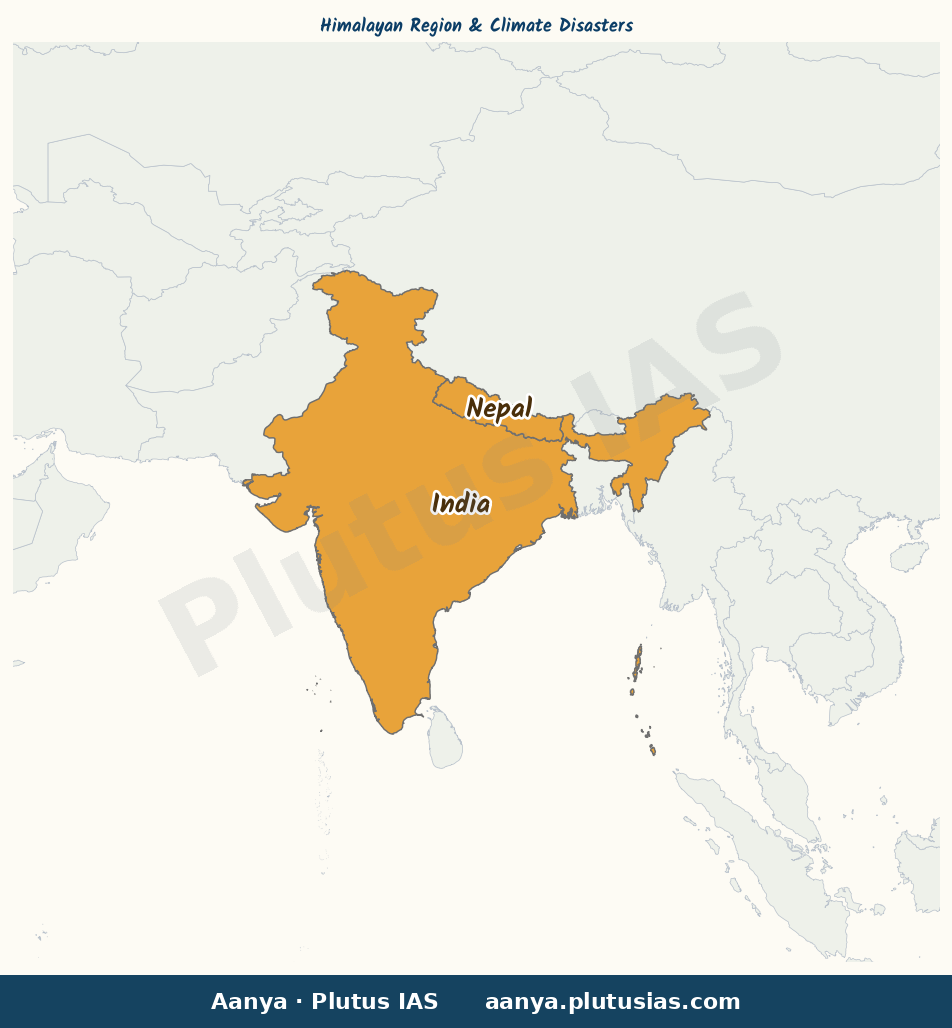
The upcoming COP31 summit in Türkiye, scheduled from November 9 to 20, 2026, is expected to intensify discussions on fossil fuels, deforestation, and disaster mitigation strategies. This renewed focus is particularly pertinent in light of recent catastrophic events in the Himalayan region, including Nepal, underscoring the escalating urgency of addressing climate change impacts and the vulnerability of ecologically sensitive areas.
Background
- Global temperatures are projected to rise significantly, potentially breaching the 1.5 degrees Celsius threshold, even if current climate pledges are honoured, leading to severe environmental consequences.
- The Himalayas, a critical ecosystem, are experiencing accelerated glacial mass loss, with rates 65% faster than a decade ago, contributing to increased risks of natural disasters.
- A scientific assessment identified 56 glacial lakes in the Himalayan region as ‘very high risk’ out of 189 high-risk lakes, highlighting the potential for Glacial Lake Outburst Floods (GLOFs).
- The Himalayan river systems (Indus, Ganga, Brahmaputra) are vital for India’s agriculture, industry, and livelihoods, with an estimated 21.5% of the country’s GDP dependent on this region.
- Despite the critical importance, only a small fraction (approximately 21 out of 40,000) of glaciers in the Himalaya-Karakoram region are currently being monitored, indicating a significant monitoring gap.
- The need for transboundary protocols for automatic data sharing on upstream events between India, China, and Nepal has been emphasised to enhance disaster preparedness and response.
Understanding Himalayan Vulnerability and Climate Change Impacts
- The Himalayas are a highly sensitive mountain range, exhibiting pronounced responses to global warming, including accelerated glacial retreat and permafrost degradation.
- Climate change acts as a ‘threat multiplier’ in the Himalayas, intensifying the frequency and severity of extreme weather events such as heavy monsoon rainfall, flash floods, and landslides.
- Glacial Lake Outburst Floods (GLOFs) are a significant hazard in the Himalayan region, occurring when moraine dams containing glacial lakes fail, releasing large volumes of water downstream.
- The economic implications for India are substantial, as the Himalayan ecosystem supports major river basins that are crucial for water security, food production, and hydropower generation.
- Vulnerable communities, particularly those in remote and marginalised areas, disproportionately bear the brunt of climate-induced disasters due to limited access to resilient infrastructure, early warning systems, and insurance.
- Developmental activities, such as the construction of extensive highway networks in ecologically fragile Himalayan regions, pose additional environmental risks, potentially exacerbating the impacts of climate change.
- International cooperation and transboundary data sharing mechanisms are imperative for effective disaster risk reduction and management in the shared Himalayan ecosystem.
- The Paris Agreement (COP21) aims to limit global warming to well below 2 degrees Celsius, preferably to 1.5 degrees Celsius, compared to pre-industrial levels, a target that current projections indicate may be challenging to achieve.
Key Features
| Feature | Significance |
|---|---|
| Himalayan Glaciers | Critical source for major river systems (Indus, Ganga, Brahmaputra), supporting agriculture, industry, and livelihoods downstream. |
| Glacial Lake Outburst Floods (GLOFs) | A significant natural hazard in the Himalayan region, exacerbated by glacial melt, posing risks to human settlements and infrastructure. |
| Ecologically Fragile Regions | Areas highly susceptible to environmental degradation from developmental activities, particularly in the Himalayas, due to their unique geological and ecological characteristics. |
| Climate Change as a Multiplier | Amplifies the frequency, intensity, and destructiveness of natural disasters globally, including heavy monsoon downpours and flash floods. |
Why it Matters
Environmental Significance
- The Himalayas are a vital ecosystem, influencing regional climate patterns and acting as a water tower for a large part of Asia.
- Glacial retreat and accelerated melting due to global warming threaten biodiversity, alter hydrological cycles, and increase the risk of natural disasters.
Economic Significance
- A substantial portion of India’s GDP (estimated at 21.5% or Rs 64.8 lakh crore) is directly dependent on the Himalayan ecosystem, primarily through agriculture and related industries.
- Disasters in the Himalayas can lead to significant economic losses, impacting infrastructure, livelihoods, and regional development.
Strategic Significance
- Cross-border hydrological events necessitate international cooperation, particularly with riparian nations like China and Nepal, for effective disaster mitigation and data sharing.
- The stability of the Himalayan ecosystem has implications for regional security and resource management, given its shared nature among several countries.
Challenges
1. Accelerated Glacial Retreat
- Himalayan glaciers are losing mass at an alarming rate, 65% faster than a decade ago, leading to increased glacial lake formation and potential GLOFs.
- This retreat impacts water availability in the long term for major river systems, affecting agriculture and livelihoods downstream.
UPSC Link: Geography: Physical Geography, Environment: Climate Change Impacts
2. Increased Frequency and Intensity of Natural Disasters
- Climate change amplifies the hydrological cycle, leading to more severe monsoon downpours and flash floods in the Himalayan region.
- Marginalised communities are disproportionately affected due to lack of resilient infrastructure, early warning systems, and safety nets.
UPSC Link: Disaster Management: Types of Disasters, Vulnerability
3. Inadequate Monitoring and Early Warning Systems
- Only a small fraction (21 out of an estimated 40,000) of glaciers in the Himalaya-Karakoram region are currently being monitored, hindering effective risk assessment.
- The absence of robust, real-time cross-border data sharing protocols with neighbouring countries like China and Nepal impedes timely disaster response.
UPSC Link: Disaster Management: Early Warning Systems, International Cooperation
4. Developmental Pressures in Fragile Ecosystems
- Infrastructure projects, such as highway construction for tourism, in ecologically sensitive Himalayan regions, pose environmental risks.
- Such development can exacerbate land instability, deforestation, and habitat loss, increasing vulnerability to natural hazards.
UPSC Link: Environment: Environmental Impact Assessment, Sustainable Development
Challenges — UPSC Perspective
| Issue | Concern |
|---|---|
| Glacial Mass Loss | Himalayan glaciers are melting at an accelerated rate, threatening long-term water security and increasing GLOF risks. |
| Glacial Lake Monitoring | Only a fraction of the estimated 40,000 glaciers are monitored, leaving many high-risk glacial lakes unassessed. |
| Cross-border Data Sharing | Lack of established protocols with neighbouring countries for automatic sharing of upstream hydrological data for downstream relevance. |
| Infrastructure Development | Construction of highways in ecologically fragile Himalayan regions poses environmental risks and increases vulnerability to disasters. |
| Climate Change Impacts | Amplification of natural disaster frequency and intensity, disproportionately affecting vulnerable communities. |
Way Forward
- Enhance the monitoring network for Himalayan glaciers and glacial lakes using advanced remote sensing and on-ground instrumentation to improve risk assessment and early warning capabilities.
- Develop and implement robust cross-border protocols for automatic data sharing on hydrological events with riparian nations like China and Nepal to facilitate timely disaster response.
- Integrate climate change adaptation and disaster risk reduction strategies into regional development plans for the Himalayas, ensuring environmental sustainability of infrastructure projects.
- Invest in resilient infrastructure and community-based early warning systems, particularly for vulnerable populations, to mitigate the impacts of climate-induced disasters.
- Promote scientific research and capacity building in glaciology, hydrology, and climate modeling to better understand the dynamics of Himalayan ecosystems and predict future changes.
- Strengthen international cooperation on climate change mitigation and adaptation, advocating for global adherence to climate goals to limit global temperature rise and protect fragile ecosystems like the Himalayas.
UPSC Value Addition
Keywords for Mains Answer-Writing
Himalayan ecosystem vulnerability · Climate change impacts · Glacial lake outburst floods (GLOFs) · Transboundary water governance · Disaster risk reduction (DRR) · Sustainable mountain development · Climate resilience infrastructure · Early warning systems · Paris Agreement goals · National Action Plan on Climate Change (NAPCC) · Environmental Impact Assessment (EIA) · Ecologically Sensitive Zones (ESZs)
Concept Flow
Global warming leads to accelerated glacial melt. → Accelerated glacial melt increases the formation and volume of glacial lakes. → Increased glacial lake volume raises the risk of Glacial Lake Outburst Floods (GLOFs). → GLOFs and intensified hydrological cycles cause severe downstream disasters. → Disasters impact livelihoods, infrastructure, and regional economies. → This necessitates enhanced monitoring, early warning, and cross-border cooperation.
Prelims Practice Questions
Q1. Consider the following statements regarding the Himalayan region and climate change:
1. The Himalayas are losing glacial mass at an accelerated rate, impacting major river systems like the Indus, Ganga, and Brahmaputra.
2. The United Nations Environment Programme (UNEP) report ‘Limiting Overshoot Spotlight’ indicates that global temperatures are likely to breach the 1.5 degree Celsius barrier soon.
3. India’s per capita emissions are significantly higher than the global average, contributing disproportionately to climate change.
How many of the above statements are correct?
- Only one
- Only two
- Only three
- None
Answer: Only two — Statement 1 is correct. The article states that Himalayan glaciers are losing mass 65% faster than a decade ago, impacting major river systems. Statement 2 is correct. The UNEP report ‘Limiting Overshoot Spotlight’ predicted the imminent breach of the 1.5 degree Celsius barrier. Statement 3 is incorrect. The article mentions that the government highlights India’s relatively low per capita emissions.
Q2. Which of the following international agreements primarily aims to limit global warming to well below 2 degrees Celsius, preferably to 1.5 degrees Celsius, compared to pre-industrial levels?
- Kyoto Protocol
- Montreal Protocol
- Paris Agreement
- Convention on Biological Diversity
Answer: Paris Agreement — The Paris Agreement, adopted in 2015, is a legally binding international treaty on climate change. Its primary goal is to limit global warming to well below 2 degrees Celsius, preferably to 1.5 degrees Celsius, compared to pre-industrial levels.
Mains Practice Question
✍ The Himalayan region, a vital ecological and economic asset for India, faces unprecedented challenges due to climate change, with significant implications for downstream populations. Examine the multifaceted impacts of climate change on the Indian Himalayas and discuss the strategies required for enhanced disaster mitigation and transboundary cooperation. (15 Marks)
Approach: Introduction: Briefly introduce the Himalayas’ significance and its vulnerability to climate change.
Multifaceted Impacts of Climate Change:
1. Glacial Retreat and GLOFs: Discuss accelerated melting of glaciers, formation of high-risk glacial lakes (e.g., 56 classified as ‘very high risk’), and increased frequency of Glacial Lake Outburst Floods (GLOFs).
2. Hydrological Cycle Alterations: Explain changes in monsoon patterns, increased intensity of rainfall, flash floods, and their impact on river systems (Indus, Ganga, Brahmaputra) and water security.
3. Ecological Fragility: Mention biodiversity loss, impact on unique Himalayan flora and fauna, and ecosystem services.
4. Socio-economic Consequences: Elaborate on threats to agriculture, livelihoods (e.g., 21.5% of India’s GDP dependent on Himalayas), infrastructure damage, and displacement of marginalized communities.
5. Infrastructure Development Risks: Critically analyse the environmental risks associated with large-scale infrastructure projects (e.g., highways) in ecologically sensitive zones.
Strategies for Enhanced Disaster Mitigation and Transboundary Cooperation:
1. Continuous Monitoring and Early Warning Systems: Emphasize the need for comprehensive monitoring of glaciers and glacial lakes (e.g., beyond 21 out of 40,000 glaciers), and robust early warning systems for GLOFs and other climate-induced disasters.
2. Climate-Resilient Infrastructure: Discuss the importance of adopting climate-proof construction standards for infrastructure development in mountainous regions.
3. Transboundary Protocols: Highlight the imperative for establishing joint protocols with neighbouring countries like China and Nepal for real-time data sharing on upstream events with downstream relevance, bypassing traditional diplomatic channels for urgent scientific data.
4. International Cooperation: Reference India’s role in global climate forums (e.g., COP31 discussions on fossil fuels and deforestation) and collaboration on disaster risk reduction strategies.
5. National Policies and Frameworks: Mention relevant Indian government initiatives like the National Action Plan on Climate Change (NAPCC), National Mission for Sustaining the Himalayan Ecosystem (NMSHE), and strengthening Environmental Impact Assessment (EIA) processes.
6. Community Engagement: Importance of involving local communities in disaster preparedness and mitigation efforts.
Conclusion: Summarize the urgency of integrated, scientific, and cooperative approaches to safeguard the Himalayan ecosystem and its dependent populations.
Source: orissapost.com
Generated by AanyaAi for educational purpose.
Related guides on our sites
- How to prepare for GS paper 1 for UPSC CSE mains exam
- Best UPSC coaching for IFOS exam
- Best geography optional coaching
- Best geography optional coaching

- Himalayan Glacier Melt & Climate Change: UPSC Analysis - November 7, 2026
- आरबीआई द्वारा 91, 182 और 364 दिनीय ट्रेजरी बिलों की नीलामी: प्रमुख तथ्य - November 7, 2026
- Shram Samvad: Capacity Building on Labour Codes in Ujjain - November 7, 2026

No Comments