


14 Sep FCI Silo Plant Visit by Union Minister Nimuben Bambhania: Key Highlights for UPSC
✎ Silo-based grain storage systems enhance PDS efficiency by integrating automation, real-time monitoring, and mechanised logistics to reduce post-harvest losses and improve grain quality management.
Subject Relevance — Where This Topic Fits
- GS Paper III — Agriculture and Food Processing Industry | GS Paper III — Infrastructure: Storage and Logistics
- Prelims: Food Corporation of India (FCI), Silo-based storage, Public Distribution System (PDS), Grain logistics, Warehousing development
- Essay: Role of technological interventions in strengthening India’s food security architecture
Quick Revision: Silo-based grain storage systems enhance PDS efficiency by integrating automation, real-time monitoring, and mechanised logistics to reduce post-harvest losses and improve grain quality management.
Why is this in the news?
The visit by the Union Minister of State for Consumer Affairs, Food and Public Distribution to the FCI Silo Plant in Vadodara’s Kayavarohan on 13 September 2026 underscores the government’s emphasis on modernising grain storage infrastructure through automation and silo-based systems. This initiative is part of broader efforts to enhance operational efficiency, reduce post-harvest losses, and strengthen the Public Distribution System (PDS) by leveraging advanced logistics and storage technologies.
Background
- The Food Corporation of India (FCI) is the nodal agency responsible for the procurement, storage, and distribution of food grains under the National Food Security Act (NFSA), 2013.
- India’s grain storage capacity has historically been constrained by traditional warehousing methods, leading to significant post-harvest losses and inefficiencies in logistics.
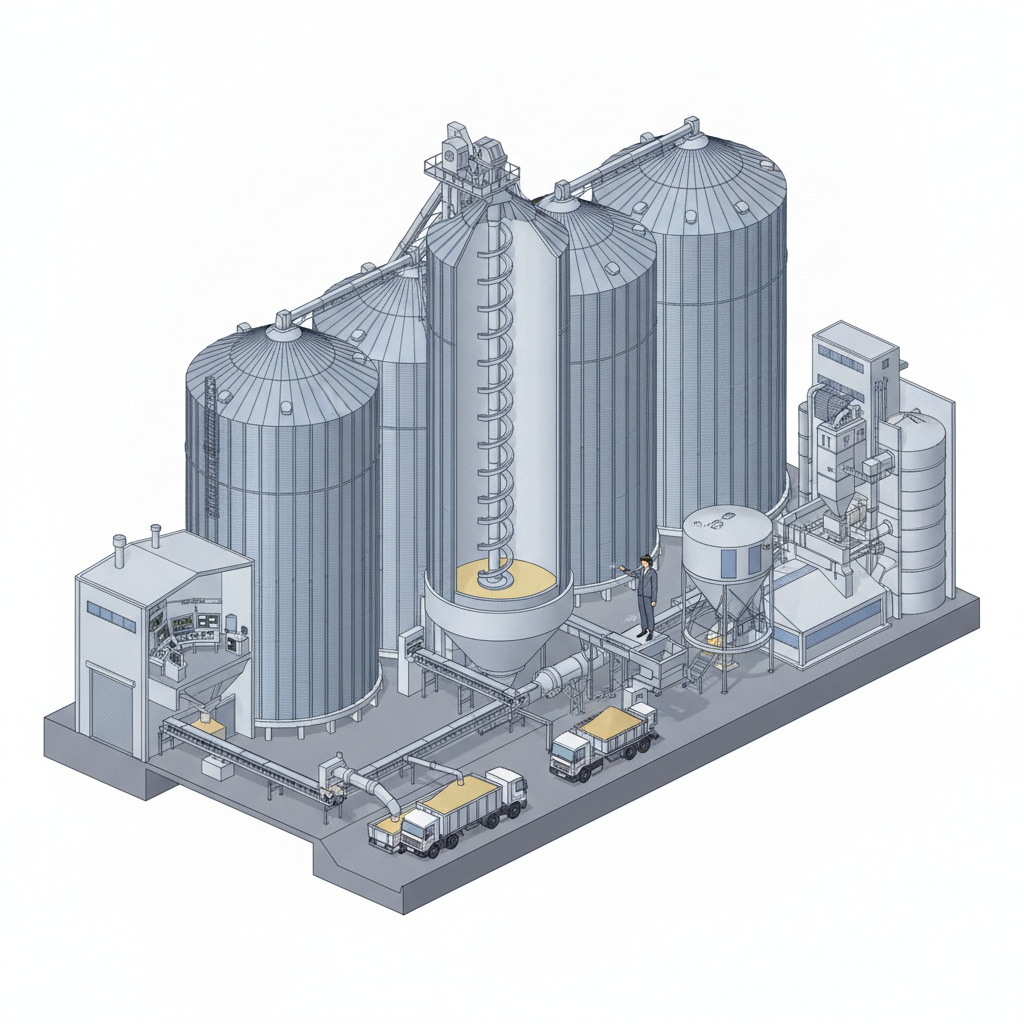
- Silo-based storage systems utilise vertical storage structures with automated handling, reducing human intervention, minimising spoilage, and enabling real-time monitoring of grain quality.
- The Vadodara Silo Plant is a key facility under FCI’s modernisation drive, integrating automation in grain handling, storage, and transportation to improve efficiency and accountability.
- The visit aligns with the broader policy thrust on digitalisation and automation in public sector undertakings to enhance governance and service delivery.
What is a Silo-Based Grain Storage System?
- A silo is a vertical, cylindrical storage structure designed to hold bulk quantities of grains, typically wheat and rice, in a controlled environment to prevent spoilage and pest infestation.
- Modern silos incorporate automation systems for grain intake, storage, monitoring, and dispatch, reducing manual labour and operational errors.
- Automated silos utilise sensors, IoT devices, and AI-driven analytics to monitor moisture levels, temperature, and grain quality in real time, ensuring optimal storage conditions.
- Silo-based storage significantly reduces the land footprint compared to traditional warehouses, as vertical storage maximises space utilisation.
- The system integrates with rail and road logistics, enabling faster turnaround of grain movement through mechanised loading and unloading facilities.
- The automation in silos enhances traceability, reduces leakages, and improves the reliability of food grain supply chains, particularly for PDS beneficiaries.
- Silo-based storage is also aligned with India’s commitment to achieving Sustainable Development Goal (SDG) 2 (Zero Hunger) by minimising food loss and waste.
Key Features
| Feature | Significance |
|---|---|
| Silo-based storage infrastructure | Enables bulk storage of foodgrains with reduced wastage compared to conventional warehouses, ensuring long-term food security. |
| Automated grain management systems | Minimises human intervention, enhances efficiency in handling, sorting, and monitoring foodgrain quality. |
| Modern laboratory facilities | Facilitates real-time testing of moisture content, aflatoxins, and other parameters to prevent spoilage and ensure compliance with quality standards. |
| Integrated wagon handling mechanisms | Streamlines the loading and unloading of foodgrains, reducing turnaround time and operational bottlenecks. |
| Centralised monitoring and control systems | Provides data-driven insights for inventory management, demand forecasting, and logistical optimisation. |
Why it Matters
Food Security & Public Distribution
- Ensures uninterrupted supply of foodgrains to the Public Distribution System (PDS) by maintaining buffer stocks and reducing post-harvest losses.
- Supports the National Food Security Act (NFSA), 2013, by guaranteeing timely availability of subsidised foodgrains to eligible beneficiaries.
- Enhances the operational efficiency of the Targeted Public Distribution System (TPDS) through improved storage and distribution networks.
Economic Efficiency
- Reduces economic losses from foodgrain wastage, which is estimated at 6-10% in traditional storage systems.
- Lowers operational costs through automation, reducing the need for manual labour and minimising pilferage.
- Optimises logistics by integrating storage with transportation, thereby reducing transit delays and associated costs.
Technological Advancement
- Promotes the adoption of modern storage technologies, aligning with the government’s push for digital and automated governance.
- Facilitates data-driven decision-making in grain procurement, storage, and distribution, enhancing transparency and accountability.
- Supports the development of a robust supply chain ecosystem, integrating IoT and AI for predictive maintenance and quality control.
Regional Development
- Strengthens agricultural supply chains in Gujarat, a key foodgrain surplus state, by improving storage and distribution infrastructure.
- Creates employment opportunities in allied sectors such as logistics, laboratory testing, and facility management.
- Enhances the competitiveness of local farmers by ensuring better price realisation through reduced post-harvest losses.
Challenges
1. Post-Harvest Losses
- India loses approximately 6-10% of its foodgrain production annually due to inadequate storage and handling infrastructure.
- Climate variability, pest infestations, and poor storage conditions exacerbate losses, particularly in high-moisture regions.
- High capital and operational costs of modern silo systems limit their adoption in smaller districts and rural areas.
UPSC Link: Economic Survey: Foodgrains losses
2. Logistical Bottlenecks
- Inadequate rail and road connectivity to silo locations delays grain transportation, increasing costs and reducing efficiency.
- Seasonal congestion at silo entry and exit points disrupts the smooth flow of foodgrains from procurement to distribution.
- Limited cold storage and processing facilities near silo hubs constrain value addition and market access for farmers.
UPSC Link: NITI Aayog: Logistics Efficiency
3. Technological Adoption Gaps
- Resistance to automation among traditional workforce due to lack of training and awareness about digital tools.
- High initial investment in IoT-enabled monitoring systems and AI-driven analytics poses a barrier for state agencies.
- Interoperability issues between legacy systems and modern silo management software hinder seamless data integration.
UPSC Link: Digital India: Automation in PDS
4. Policy and Governance Issues
- Fragmented ownership of storage infrastructure across FCI, state agencies, and private players leads to coordination challenges.
- Inconsistent enforcement of quality standards and monitoring protocols across silo facilities.
- Lack of a unified national database for real-time tracking of foodgrain stocks and movements.
UPSC Link: FCI: Governance and Reforms
Challenges — UPSC Perspective
| Issue | Concern |
|---|---|
| Inadequate storage capacity | Leads to overflow of foodgrains in peak procurement seasons, causing storage constraints and quality degradation. |
| High operational costs | Increases the financial burden on FCI and state agencies, limiting scalability of silo-based storage. |
| Climate-induced spoilage | High humidity and temperature fluctuations in certain regions accelerate foodgrain deterioration. |
| Skill gaps in workforce | Limited technical expertise among staff hampers the effective utilisation of automated systems. |
| Policy fragmentation | Divergent state-level policies on storage and distribution create inefficiencies in the national supply chain. |
Way Forward
- Accelerate the establishment of silo-based storage facilities in foodgrain surplus states to reduce post-harvest losses.
- Invest in capacity-building programmes to train FCI and state agency staff in automation, IoT, and data analytics.
- Develop a national digital platform for real-time monitoring of foodgrain stocks, quality parameters, and logistics.
- Enhance rail and road connectivity to silo hubs to streamline transportation and reduce transit delays.
- Promote public-private partnerships (PPPs) to leverage private sector expertise in modern storage technologies.
- Standardise quality control protocols across all silo facilities to ensure uniformity and compliance with safety standards.
- Integrate silo-based storage with agricultural value chains to enable better price realisation for farmers.
- Conduct periodic audits of silo facilities to assess operational efficiency and identify areas for technological upgradation.
UPSC Value Addition
Keywords for Mains Answer-Writing
Food Corporation of India (FCI) · Silo-based storage · Public Distribution System (PDS) · Agricultural marketing · Food security · Grain storage infrastructure · Automated grain management · Ministry of Consumer Affairs, Food and Public Distribution · Food subsidy · Buffer stock management · Warehousing reforms · Agricultural logistics · Storage losses · Foodgrain handling · National Food Security Act (NFSA) 2013 · Central Sector Schemes for food storage
Concept Flow
Procurement of foodgrains from farmers under MSP → Transportation to silo hubs → Automated storage and quality testing → Inventory management via centralised systems → Distribution to PDS outlets → Consumption by beneficiaries → Feedback loop for policy adjustments.
Prelims Practice Questions
Q1. Consider the following statements regarding the Food Corporation of India (FCI):
1. FCI is responsible for the procurement, storage, and distribution of food grains under the National Food Security Act (NFSA), 2013.
2. FCI operates only traditional godowns and does not use silo-based storage facilities.
3. FCI’s buffer stock is maintained to ensure food security and price stability in the country.
4. FCI’s operations are entirely funded by state governments without any central assistance.
How many of the above statements are correct?
- Only one
- Only two
- Only three
- All four
Answer: Only three — Statements 1 and 3 are correct as FCI is the nodal agency for PDS and maintains buffer stocks for food security. Statement 2 is incorrect because FCI uses both traditional godowns and modern silo-based storage. Statement 4 is incorrect as FCI’s operations are centrally funded by the Union government.
Q2. Assertion (A): The Food Corporation of India (FCI) primarily focuses on the procurement of food grains from farmers at Minimum Support Prices (MSP).
Reason (R): FCI’s procurement operations are guided by the National Food Security Act (NFSA), 2013, which mandates the procurement of food grains to ensure food security.
Options:
A. Both A and R are true, and R is the correct explanation of A.
B. Both A and R are true, but R is NOT the correct explanation of A.
C. A is true, but R is false.
D. A is false, but R is true.
Answer: ? — Assertion (A) is true as FCI procures food grains at MSP to support farmers and ensure food security. Reason (R) is also true and correctly explains the assertion, as NFSA 2013 provides the legal framework for FCI’s procurement and distribution operations.
Q3. Match the following pairs related to food grain storage and management in India:
Column I (Facility/Initiative) | Column II (Description)
1. Silo-based storage | A. Traditional storage structure for food grains
2. Minimum Support Price (MSP) | B. Government-determined price for procurement of food grains
3. Central Warehousing Corporation (CWC) | C. Modern automated storage system for food grains
4. Godowns | D. Public sector agency managing warehousing infrastructure
Options:
A. 1-C, 2-B, 3-D, 4-A
B. 1-A, 2-B, 3-C, 4-D
C. 1-D, 2-A, 3-B, 4-C
D. 1-B, 2-C, 3-A, 4-D
Answer: ? — Correct matching: 1-C (Silo-based storage is a modern automated system), 2-B (MSP is the government-determined procurement price), 3-D (CWC is the public sector agency for warehousing), 4-A (Godowns are traditional storage structures).
Mains Practice Question
✍ The Food Corporation of India (FCI) plays a pivotal role in India’s food security architecture through its silo-based storage and automated grain management systems. In this context, critically analyse the significance of FCI’s modern storage infrastructure in reducing post-harvest losses and ensuring efficient public distribution. Also, examine the challenges faced by FCI in maintaining such infrastructure and suggest measures to enhance its operational efficiency. (15 Marks)
Approach: MODEL-ANSWER SKELETON:
1. **Introduction (2 marks)**: Define FCI’s role under the National Food Security Act (NFSA), 2013, and its mandate for procurement, storage, and distribution of food grains.
2. **Significance of Silo-based Storage (4 marks)**:
– Reduction in post-harvest losses (quantitative data if available, e.g., traditional godowns vs. silos).
– Automation in grain handling (e.g., real-time monitoring, reduced human intervention).
– Integration with digital platforms (e.g., e-NAM, FCI’s IT systems).
– Buffer stock management for price stability and food security.
3. **Challenges (5 marks)**:
– High capital and maintenance costs of silo infrastructure.
– Logistical bottlenecks (e.g., railway wagon handling, storage capacity constraints).
– Inter-state coordination issues in procurement and distribution.
– Climate vulnerability (e.g., humidity, pests, and quality degradation risks).
– Policy and regulatory hurdles (e.g., land acquisition for silo construction).
4. **Measures for Enhancement (4 marks)**:
– Public-Private Partnership (PPP) models for infrastructure development.
– Leveraging technology (AI, IoT, blockchain for traceability).
– Strengthening railway logistics (dedicated freight corridors, modern wagon designs).
– Capacity building and training for FCI staff.
– Integration with state agencies for seamless PDS operations.
5. **Conclusion (1 mark)**: Summarise the need for modern storage infrastructure in India’s food security paradigm and the way forward.
Source: PIB (Press Information Bureau)
Gujarat PCS (GPSC) — State PCS Practice
Prelims: Which of the following initiatives was recently inaugurated by Union Minister of State for Women and Child Development, Smriti Irani, during her visit to the FCI Silo Plant in Vadodara’s Kayavarohan?
- A. Women Empowerment and Skill Development Center
- B. Integrated Food Processing Unit
- C. FCI Silo Plant’s Modernization and Expansion Project
- D. National Nutrition Mission (NNM) Awareness Campaign
Answer: C. FCI Silo Plant’s Modernization and Expansion Project — The visit by Union Minister of State for Women and Child Development, Smriti Irani (incorrectly named as Nirmuben Bambhania in the question), to the FCI Silo Plant in Vadodara focused on the modernization and expansion of the plant, aligning with Gujarat’s agricultural infrastructure development.
Mains: Discuss the significance of the FCI Silo Plant in Vadodara for Gujarat’s agricultural economy and food security. How does the modernization of such infrastructure contribute to the state’s goal of doubling farmers’ income? (250 words)
Generated by AanyaAi for educational purpose.
Related guides on our sites
- Current affairs for upsc 2026
- UPSC History optional
- Is history a good optional for upsc exam
- Best history optional teacher for UPSC

- बॉम्बे हाईकोर्ट ने गणेशोत्सव में ध्वनि एवं वायु प्रदूषण पर उठाई चिंता - September 22, 2026
- Bombay HC Raps Noise, Air Pollution During Ganeshotsav: Key UPSC Perspective - September 22, 2026
- जल जीवन मिशन 2.0: कुशल कार्यबल निर्माण के लिए पहली वर्चुअल सम्मेलन आयोजित - September 22, 2026

No Comments