


14 Sep DAHD Secretary Calls for Strengthening Poultry Infrastructure & Biosecurity in Mumbai
✎ The Central Poultry Development Organisation (Western Region), Mumbai, functions under DAHD to enhance poultry productivity through breed improvement, farmer training, and biosecurity measures, aligning with the National…
Subject Relevance — Where This Topic Fits
- GS Paper III — Agriculture, Animal Husbandry and Food Processing | GS Paper III — Science and Technology: Biotechnology and Genetic Resources
- Prelims: Central Poultry Development Organisation (CPDO), National Livestock Mission (NLM), Avian Influenza, Biosecurity Measures, Hatchery, Parent Stock, Feed Plant, Indigenous Poultry Breeds, Quarantine and Certification Service (AQCS)
- Essay: Sustainable agricultural practices and rural entrepreneurship, Role of technology in transforming traditional livestock sectors
Quick Revision: The Central Poultry Development Organisation (Western Region), Mumbai, functions under DAHD to enhance poultry productivity through breed improvement, farmer training, and biosecurity measures, aligning with the National Livestock Mission’s objectives.
Why is this in the news?
On 13 September 2026, the Secretary of the Department of Animal Husbandry and Dairying (DAHD), Government of India, Shri Naresh Pal Gangwar, conducted an official visit to the Central Poultry Development Organisation (Western Region), Mumbai. The visit underscored the government’s emphasis on modernising poultry infrastructure, enhancing biosecurity protocols, and strengthening farmer-centric training programmes under the National Livestock Mission (NLM) and allied schemes. The review highlighted operational capacities, indigenous breed conservation, and the integration of low-cost technologies to improve poultry productivity and sustainability.
Background
- The Central Poultry Development Organisations (CPDOs) are nodal agencies under the Department of Animal Husbandry and Dairying (DAHD), Ministry of Fisheries, Animal Husbandry and Dairying, established to promote scientific poultry farming in India.
- India is the world’s third-largest egg producer and fifth-largest poultry meat producer, with the poultry sector contributing significantly to rural livelihoods and food security.
- The National Livestock Mission (NLM), launched in 2014–15, aims to enhance livestock productivity through breed improvement, feed and fodder development, and entrepreneurship support, including poultry.
- Biosecurity in poultry farming is critical to prevent outbreaks of diseases such as Avian Influenza, which can devastate flocks and disrupt supply chains.
- The Western Region CPDO in Mumbai serves as a key hub for poultry development in Maharashtra, Gujarat, Goa, and parts of Madhya Pradesh, focusing on breed improvement, hatchery management, and farmer training.
- The Animal Quarantine and Certification Service (AQCS) plays a vital role in preventing the ingress of exotic animal diseases through regulated import of live animals and animal products.
What is the Central Poultry Development Organisation (CPDO)?
- The CPDOs are nodal agencies under the DAHD, functioning as technical and extension support centres for poultry development across India.
- They are mandated to improve poultry productivity through scientific breeding, hatchery management, and distribution of improved chicks to farmers.
- CPDOs operate regional hubs, with the Western Region CPDO located in Mumbai, catering to western and central India.
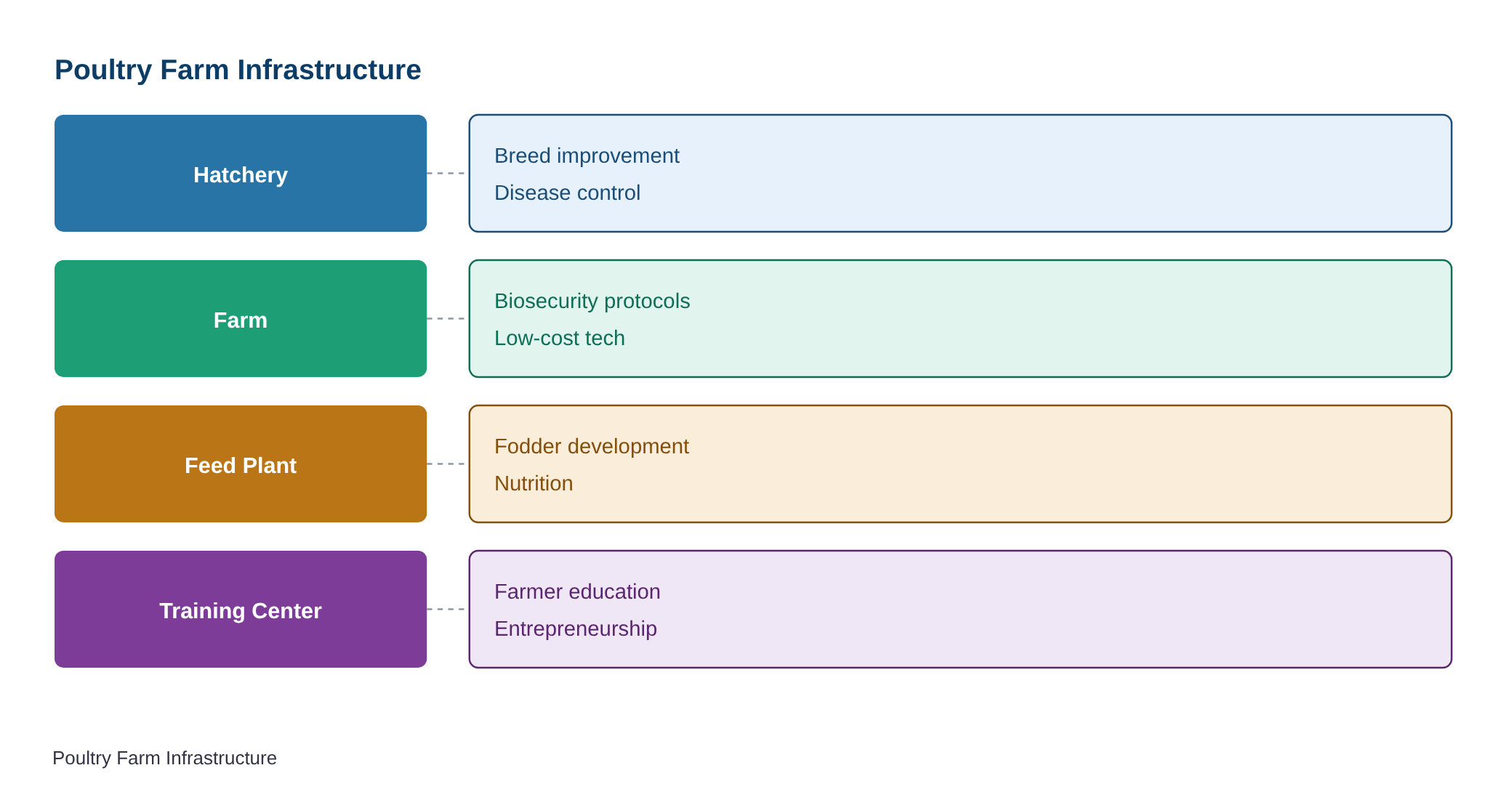
- Core functions include: (i) Breeding and conservation of indigenous poultry breeds; (ii) Establishment and management of hatcheries and brooder houses; (iii) Training of poultry farmers and entrepreneurs; (iv) Promotion of feed and fodder technologies; and (v) Biosecurity and disease control measures.
- The organisation collaborates with state agricultural universities, Krishi Vigyan Kendras (KVKs), and other stakeholders to disseminate best practices.
- CPDOs also facilitate the implementation of government schemes such as the National Livestock Mission (NLM) and the Sub-Mission on Livestock Development (SMLD).
- Modernisation efforts include upgrading infrastructure for hatcheries, feed plants, and training facilities to meet international biosecurity standards.
- The Western Region CPDO has been recognised for its role in promoting entrepreneurship among poultry farmers, particularly through low-cost farming techniques and indigenous breed utilisation.
Key Features
| Feature | Significance |
|---|---|
| Central Poultry Development Organisation (CPDO) – Western Region | A nodal agency under the Department of Animal Husbandry and Dairying (DAHD) for poultry development, research, and training in Western India, functioning as a knowledge and technology dissemination hub. |
| National Livestock Mission (NLM) | A centrally sponsored scheme aimed at enhancing livestock productivity, including poultry, through infrastructure development, technology adoption, and capacity building. |
| Hatchery and Brooder House Inspection | Critical for ensuring high-quality chick production, disease control, and genetic improvement in poultry breeding programmes. |
| Biosecurity Measures | Essential to prevent the ingress of avian diseases (e.g., Avian Influenza) and safeguard both commercial and backyard poultry sectors. |
| Farmer-Centric Training Programmes | Focus on skill development in low-cost poultry rearing, indigenous breed conservation, and entrepreneurship to enhance rural livelihoods. |
| Regional Language Training Material | Publication of poultry management books in Hindi and Marathi to improve accessibility and adoption of technical knowledge among farmers. |
Why it Matters
Economic Contribution of Poultry Sector
- Poultry farming is a significant component of India’s livestock economy, contributing substantially to agricultural GDP and rural employment, particularly in Western India.
- The sector provides affordable animal protein (eggs and meat) and supports food security, aligning with the government’s goal of doubling farmer incomes.
- Modernisation of poultry infrastructure can enhance export competitiveness, particularly for processed poultry products.
Strategic Importance of Biosecurity
- India’s poultry sector remains vulnerable to transboundary animal diseases, necessitating robust biosecurity protocols to prevent outbreaks.
- Strengthening biosecurity at hatcheries, farms, and feed plants mitigates the risk of zoonotic spillovers and economic losses.
- The Animal Quarantine and Certification Service (AQCS) plays a pivotal role in preventing the introduction of exotic pathogens through regulated imports.
Socio-Economic Upliftment
- Training programmes at CPDO empower rural youth, women, and smallholders with entrepreneurship skills, fostering inclusive growth.
- Promotion of indigenous poultry breeds (e.g., Aseel, Kadaknath) supports genetic diversity and cultural heritage while enhancing market differentiation.
- Low-cost poultry rearing models enable marginal farmers to diversify income sources with minimal capital investment.
Institutional Capacity Building
- The CPDO acts as a technical resource for state agencies, cooperatives, and private players, ensuring standardised poultry practices.
- Collaboration with veterinary colleges (e.g., Mumbai Veterinary College) bridges the gap between research and field application.
- Infrastructure upgrades (e.g., feed plants, training centres) enhance service delivery and operational efficiency.
Challenges
1. Disease Outbreaks and Biosecurity Gaps
- High-density poultry farming in Western India increases the risk of avian influenza and other epizootics, threatening both commercial and backyard sectors.
- Inadequate biosecurity measures in smallholder farms and unregulated live bird markets facilitate disease transmission.
- Weak enforcement of quarantine protocols at ports and borders undermines efforts to contain exotic pathogens.
UPSC Link: GS3: Animal Husbandry, Disease Control
2. Fragmented Supply Chain and Infrastructure Deficits
- Limited access to quality chicks, feed, and veterinary services in remote areas constrains productivity.
- Underdeveloped cold chain and processing facilities lead to post-harvest losses and reduced market reach.
- High input costs (feed, energy) squeeze profit margins for small-scale poultry farmers.
UPSC Link: GS3: Agriculture Infrastructure
3. Skill Gaps and Entrepreneurship Barriers
- Lack of formal training in modern poultry management practices hampers adoption of scientific techniques.
- Limited access to credit and market linkages discourages youth and women from entering poultry entrepreneurship.
- Regional disparities in training infrastructure exacerbate knowledge gaps between states.
UPSC Link: GS3: Rural Development, Skill Development
4. Genetic Erosion and Breed Conservation
- Commercial hybridisation has led to the decline of indigenous poultry breeds, reducing genetic diversity.
- Inadequate documentation and breeding programmes for native breeds threaten their survival.
- Market preference for high-yield commercial breeds discourages conservation efforts.
UPSC Link: GS3: Biodiversity Conservation
5. Climate Vulnerability and Sustainability Concerns
- Extreme weather events (e.g., heatwaves) reduce poultry productivity and increase mortality rates.
- Unsustainable feed sourcing (e.g., reliance on soybean and maize) raises environmental and economic concerns.
- Carbon footprint of large-scale poultry operations necessitates adoption of eco-friendly practices.
UPSC Link: GS3: Climate Change, Sustainable Agriculture
Challenges — UPSC Perspective
| Issue | Concern |
|---|---|
| Avian Influenza Outbreaks | Recurrent epizootics disrupt poultry trade, cause economic losses, and pose zoonotic risks. |
| Inadequate Biosecurity Protocols | Poor farm hygiene, unregulated live bird markets, and weak quarantine enforcement enable disease spread. |
| High Feed Costs | Dependence on imported feed ingredients (e.g., maize, soybean) inflates production costs and reduces profitability. |
| Limited Access to Quality Chicks | Shortage of certified hatcheries in rural areas constrains smallholder productivity. |
| Skill Deficits in Poultry Management | Lack of training in low-cost techniques and modern husbandry practices limits adoption. |
| Post-Harvest Losses | Inadequate cold storage and processing facilities lead to spoilage and reduced market value. |
Government Initiatives — Must-Memorise for Prelims
- National Livestock Mission (NLM)
Way Forward
- Strengthen biosecurity protocols at hatcheries, farms, and live bird markets through regular audits and farmer training programmes.
- Expand the network of CPDO-affiliated training centres to cover remote and underserved regions in Western India.
- Promote public-private partnerships (PPPs) for modernising poultry infrastructure, including feed plants and processing units.
- Integrate climate-resilient and low-cost poultry rearing techniques into existing training modules to enhance sustainability.
- Accelerate breed conservation programmes for indigenous poultry varieties through genetic resource centres and farmer cooperatives.
- Enhance market linkages for smallholders by facilitating access to credit, insurance, and e-commerce platforms for poultry products.
- Develop region-specific poultry management guides in local languages to improve knowledge dissemination.
- Collaborate with veterinary universities to conduct applied research on disease surveillance and vaccine development.
UPSC Value Addition
Keywords for Mains Answer-Writing
Poultry sector development · Central Poultry Development Organisation (CPDO) · Department of Animal Husbandry and Dairying (DAHD) · National Livestock Mission (NLM) · Biosecurity in poultry · Indigenous poultry breeds conservation · Low-cost poultry rearing · Poultry infrastructure modernisation · Veterinary education and training · Animal quarantine and certification services · Livestock entrepreneurship · Western Regional Centre of CPDO · Bio-security measures · Feed plant and hatchery management · Poultry entrepreneurship in India
Concept Flow
DAHD Secretary’s visit to CPDO (Western Region) → Review of poultry infrastructure and training programmes → Identification of gaps in biosecurity and genetic conservation → Recommendation for modernisation under NLM → Farmer training and entrepreneurship development → Enhanced market access and rural livelihoods → Strengthened food security and economic resilience.
Prelims Practice Questions
Q1. Consider the following statements about the Central Poultry Development Organisation (CPDO):
1. CPDO is an autonomous body under the Department of Animal Husbandry and Dairying (DAHD).
2. The Western Regional Centre of CPDO is located in Mumbai.
3. CPDO focuses exclusively on commercial broiler poultry breeds and does not engage in indigenous breed conservation.
4. CPDO provides training and technical support to poultry entrepreneurs.
How many of the above statements are correct?
- Only one
- Only two
- Only three
- All
Answer: Only three — Statements 1, 2, and 4 are correct. Statement 3 is incorrect because CPDO engages in both commercial and indigenous poultry breed conservation as part of its mandate.
Q2. Which of the following is NOT a function of the Animal Quarantine and Certification Service (AQCS) under the Department of Animal Husbandry and Dairying (DAHD)?
- Preventing the entry of animal diseases through imported livestock and animal products
- Issuing health certificates for export of live animals and animal products
- Regulating the import of poultry feed and feed additives
- Conducting regular surveillance of animal diseases in India
Answer: Conducting regular surveillance of animal diseases in India — The AQCS primarily focuses on preventing the entry of animal diseases through imported livestock and animal products, issuing health certificates, and conducting surveillance. Regulating the import of poultry feed and feed additives is not its direct function.
Q3. Assertion (A): The National Livestock Mission (NLM) aims to promote low-cost poultry rearing techniques.
Reason (R): Low-cost poultry rearing enhances the profitability of small and marginal farmers while ensuring food security.
In the context of the above statements, which of the following is correct?
- Both A and R are true, and R is the correct explanation of A
- Both A and R are true, but R is not the correct explanation of A
- A is true, but R is false
- A is false, but R is true
Answer: Both A and R are true, but R is not the correct explanation of A — The National Livestock Mission (NLM) indeed promotes low-cost poultry rearing techniques as part of its broader objective to enhance livestock productivity and profitability. The Reason (R) correctly explains the Assertion (A) by linking low-cost rearing to profitability and food security.
Mains Practice Question
✍ Examine the role of the Central Poultry Development Organisation (CPDO) in strengthening India’s poultry sector, with particular reference to infrastructure development, training, and biosecurity. Also, discuss the challenges faced by the poultry sector in India and suggest measures to enhance its sustainability and competitiveness. (15 Marks)
Approach: MODEL-ANSWER SKELETON:
1. **Introduction (2 Marks)**
– Brief overview of India’s poultry sector: its economic significance, growth trajectory, and contribution to food security and employment.
– Mention the role of DAHD and CPDO as institutional pillars in poultry development.
2. **Role of CPDO in Poultry Sector Development (6 Marks)**
– **Infrastructure Development**:
– CPDO’s mandate to establish and modernise hatcheries, brooder houses, feed plants, and parent stock facilities.
– Focus on regional centres (e.g., Western Regional Centre in Mumbai) and their role in technology dissemination.
– **Training and Capacity Building**:
– CPDO’s training programmes for poultry entrepreneurs, farmers, and veterinary professionals.
– Emphasis on regional language materials (e.g., Hindi and Marathi books on poultry management) and practical skill development.
– **Biosecurity and Indigenous Breed Conservation**:
– CPDO’s efforts in promoting biosecurity measures to prevent disease outbreaks (e.g., Avian Influenza).
– Conservation of indigenous poultry breeds and promotion of low-cost rearing techniques for small and marginal farmers.
3. **Challenges in India’s Poultry Sector (4 Marks)**
– **Biosecurity Risks**: Vulnerability to zoonotic diseases and the need for robust surveillance systems.
– **Infrastructure Gaps**: Inadequate cold chain facilities, feed shortages, and suboptimal hatchery management.
– **Market Access and Entrepreneurship**: Limited access to finance, market linkages, and training for small-scale poultry farmers.
– **Regulatory and Policy Hurdles**: Fragmented regulatory frameworks and delays in approvals for feed additives and veterinary drugs.
4. **Measures to Enhance Sustainability and Competitiveness (3 Marks)**
– **Public-Private Partnerships (PPPs)**: Collaborations with private sector for infrastructure development and technology adoption.
– **Skill Development and Education**: Integration of poultry science into veterinary and agricultural curricula; expansion of CPDO’s training programmes.
– **Policy Interventions**: Strengthening the National Livestock Mission (NLM) with targeted subsidies for biosecurity upgrades and feed plants.
– **Research and Innovation**: Investment in R&D for disease-resistant poultry breeds and cost-effective feed formulations.
5. **Conclusion (2 Marks)**
– Reiterate the critical role of CPDO and DAHD in transforming India’s poultry sector.
– Emphasise the need for a multi-stakeholder approach to address challenges and leverage opportunities for sustainable growth.
Source: PIB (Press Information Bureau)
Maharashtra PCS (MPSC) — State PCS Practice
Prelims: Which of the following initiatives was emphasized by the DAHD Secretary during his visit to Mumbai’s CPDO (Western Region) to strengthen the poultry sector in Maharashtra?
- A. Expansion of poultry export zones
- B. Strengthening of poultry infrastructure, training, and biosecurity measures
- C. Introduction of genetically modified poultry breeds
- D. Establishment of new poultry processing units in rural areas
Answer: B. Strengthening of poultry infrastructure, training, and biosecurity measures — The DAHD Secretary emphasized strengthening poultry infrastructure, training, and biosecurity measures during the visit to Mumbai’s CPDO (Western Region).
Mains: Discuss the significance of strengthening poultry infrastructure, training, and biosecurity measures in Maharashtra’s poultry sector. Suggest policy interventions to enhance the sector’s resilience against diseases and market fluctuations.
Generated by AanyaAi for educational purpose.
Related guides on our sites

- PM Modi Praises Youth-Led Nasha Mukt Yuva Abhiyan Momentum - September 27, 2026
- राजनाथ सिंह का बड़ा बयान: भारत किसी की ज़मीन कब्ज़ा नहीं करेगा, लेकिन सुरक्षा पर होगा कठोर - September 27, 2026
- Exercise Tarang Shakti 2026: India’s Mega Multi-Nation Air Power Showcase - September 27, 2026

No Comments