


15 Sep Karnataka CM to hold public meetings on Kasturirangan report: Key updates for UPSC
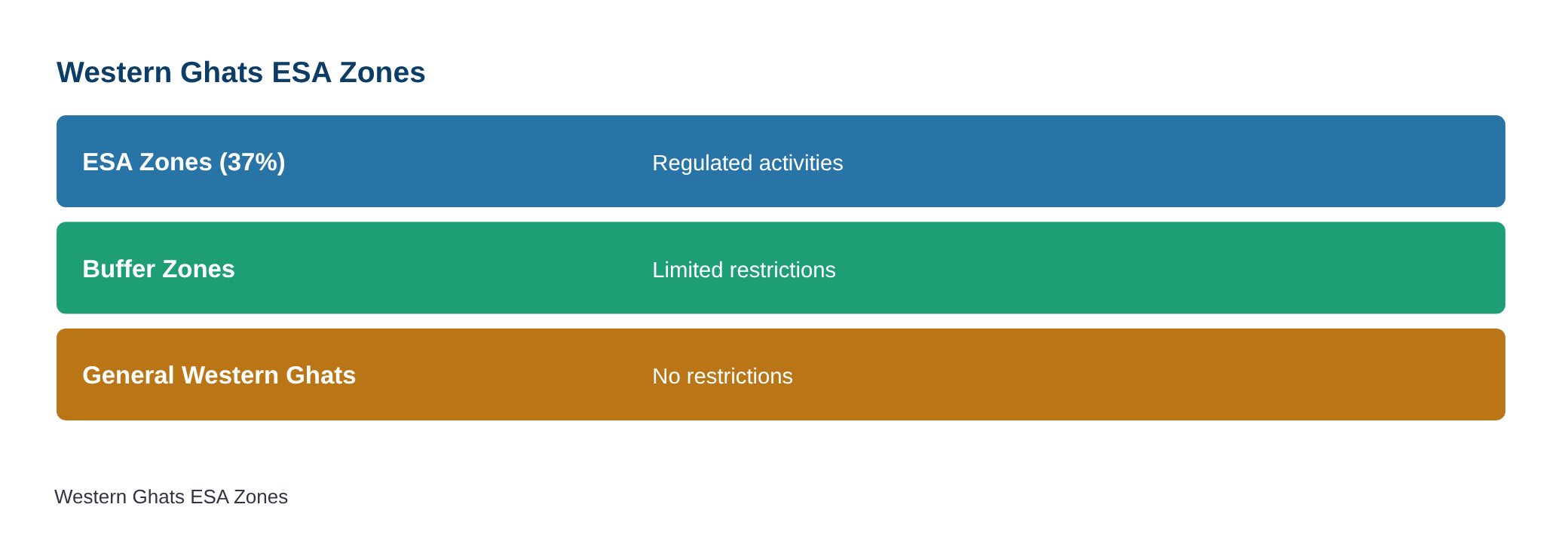
✎ The Kasturirangan Committee’s ESA notification for the Western Ghats, under the Environment (Protection) Act, 1986, proposes 37% of the region as ESAs, with Karnataka’s draft covering 20,668 sq.
Subject Relevance — Where This Topic Fits
- GS Paper II — Functions and Responsibilities of the Union and the States, Issues and Challenges Pertaining to the Federal Structure | GS Paper III — Conservation, Environmental Pollution and Degradation, Environmental Impact Assessment
- Prelims: Western Ghats Ecology Expert Panel (WGEEP), Kasturirangan Committee, Gadgil Committee, Ecologically Sensitive Areas (ESA), Environmental Impact Assessment (EIA) 2006, Forest Rights Act 2006, Schedule VI of the Constitution, Malnad region, Western Ghats, biodiversity hotspot, agroforestry, livelihood dependence
- Essay: Environmental governance and sustainable development: Balancing conservation with livelihood security, Federalism in India: Centre-State dynamics in environmental policy implementation
Quick Revision: The Kasturirangan Committee’s ESA notification for the Western Ghats, under the Environment (Protection) Act, 1986, proposes 37% of the region as ESAs, with Karnataka’s draft covering 20,668 sq. km across 10 districts, triggering protests over livelihood and agroforestry restrictions.
Why is this in the news?
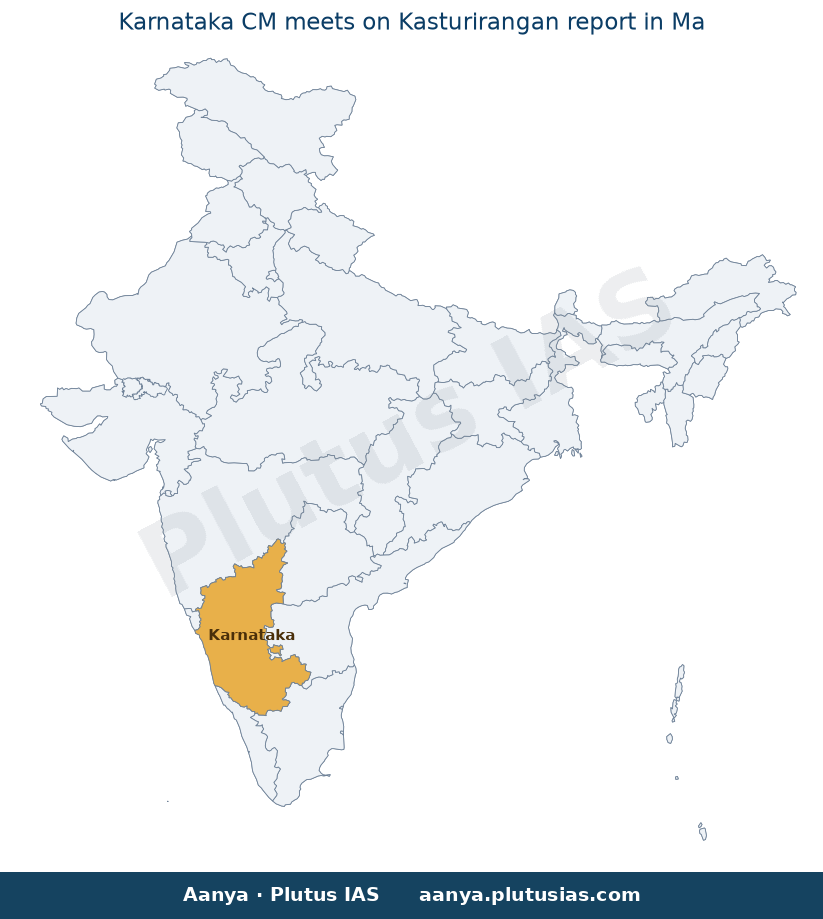
The Chief Minister of Karnataka, D.K. Shivakumar, is scheduled to hold public consultations in Udupi, Shivamogga, and Chikkamagaluru districts to gather stakeholder opinions on the Union Ministry of Environment, Forest and Climate Change’s seventh draft notification declaring parts of the Western Ghats as Ecologically Sensitive Areas (ESA) under the Kasturirangan Committee recommendations. This follows widespread protests in the Malnad and coastal regions, where residents fear livelihood disruptions due to restrictions on agriculture, housing, and economic activities. The consultations precede a three-day special legislative session to deliberate on the notification and its implications for the state.
Background
- The Western Ghats, a UNESCO World Heritage Site and one of the world’s eight biodiversity hotspots, spans six states including Karnataka, covering approximately 1,60,000 sq. km with dense forests, agroforestry systems, and high endemism.
- The Gadgil Committee (2011) and Kasturirangan Committee (2013) were constituted by the Union Ministry of Environment, Forest and Climate Change to recommend conservation measures for the Western Ghats, including the declaration of Ecologically Sensitive Areas (ESAs).
- The Kasturirangan Committee proposed a zonal approach, designating 37% of the Western Ghats as ESAs, where developmental activities would be regulated under the Environment (Protection) Act, 1986.
- The Union Ministry issued the seventh draft notification on July 28, 2026, proposing ESAs across 20,668 sq. km in Karnataka, covering 1,576 villages in 10 districts, including Shivamogga, Udupi, and Chikkamagaluru.
- Protests erupted in the Malnad and coastal regions, with residents and farmers expressing concerns over restrictions on agricultural practices, housing, and livelihoods, citing the notification’s potential to undermine traditional agroforestry systems and rural economies.
- The Karnataka government has announced a special legislative session from September 21–23, 2026, to discuss the notification and its socio-economic impacts, alongside the state’s drought situation.
What are Ecologically Sensitive Areas (ESAs) and the Kasturirangan Committee Report?
- Ecologically Sensitive Areas (ESAs) are regions identified for their rich biodiversity, ecological fragility, or cultural significance, where developmental activities are regulated to prevent environmental degradation under the Environment (Protection) Act, 1986.
- The Kasturirangan Committee, constituted in 2013, recommended a zonal approach to conservation in the Western Ghats, proposing that 37% of the region be designated as ESAs, with strict regulations on mining, industry, and large-scale construction.
- The committee’s recommendations were based on the Gadgil Committee’s earlier report (2011), which had proposed a more stringent 64% coverage of the Western Ghats as ESAs, leading to significant opposition from state governments and local communities.
- ESAs are notified under Section 3(2)(v) of the Environment (Protection) Act, 1986, empowering the Union Ministry of Environment, Forest and Climate Change to impose restrictions on activities such as deforestation, industrialisation, and infrastructure development.
- The notification process involves multiple drafts, public consultations, and inter-ministerial reviews before finalisation, as mandated by the EIA Notification, 2006, and the Forest Rights Act, 2006, which require recognition of forest-dependent communities’ rights.
- In Karnataka, the proposed ESA covers 20,668 sq. km across 10 districts, including human habitations and cultivated lands, raising concerns over livelihood impacts on farmers, agroforestry practitioners, and rural communities.
- The state government’s role in such notifications is advisory, as ESAs are declared by the Union government, but states can influence the process through consultations, legislative debates, and advocacy for local socio-economic considerations.
Key Features
| Feature | Significance |
|---|---|
| Kasturirangan Committee Report (2013) | Provides the foundational ecological assessment of the Western Ghats, recommending conservation measures and delineation of Ecologically Sensitive Areas (ESAs) to balance development and environmental sustainability. |
| Seventh Draft Notification (July 28, 2026) | Proposes to declare 20,668 sq. km across 10 districts in the Western Ghats as ESAs, triggering legal and administrative restrictions on land use, agriculture, and habitation. |
| State Government’s Public Consultation | Constitutes a participatory mechanism to gather local opinions on the draft notification, ensuring democratic deliberation before policy implementation. |
| Special Legislature Session (September 21–23, 2026) | Aims to deliberate on the draft notification and drought situation, providing a platform for legislative scrutiny and policy direction. |
| Protests in Malnad and Coastal Regions | Reflects public dissent over perceived livelihood threats, highlighting the socio-economic tensions between conservation and development priorities. |
Why it Matters
Environmental Conservation
- The Kasturirangan Committee’s report is a critical tool for safeguarding the Western Ghats, a globally recognized biodiversity hotspot and a key water source for peninsular India.
- Designating ESAs under the draft notification aligns with India’s commitments under international conventions like the Convention on Biological Diversity (CBD) and the Paris Agreement.
- Balances ecological imperatives with developmental needs, ensuring long-term sustainability of natural resources in the region.
Socio-Economic Impact
- The notification affects 1,576 villages and 484 villages in Shivamogga district alone, raising concerns over restrictions on agriculture, housing, and livelihoods.
- Local economies, particularly in agro-based and forest-dependent communities, face potential disruptions due to regulatory constraints.
- The protests underscore the need for inclusive policy-making that addresses the concerns of marginalized communities dependent on natural resources.
Governance and Policy Process
- The State Government’s initiative to hold public meetings demonstrates a commitment to participatory governance and transparency in policy implementation.
- The special legislature session provides an opportunity for legislative oversight and inter-departmental coordination on environmental and drought-related issues.
- Highlights the challenges of federalism, where central notifications intersect with state-level developmental priorities and local aspirations.
Legal and Administrative Framework
- The draft notification invokes provisions under the Environment Protection Act, 1986, and the Forest Rights Act, 2006, to regulate land use in ESAs.
- The process involves multiple stakeholders, including the Union Ministry of Environment, Forest and Climate Change, state governments, and local communities.
- Legal ambiguities and overlapping jurisdictions may lead to implementation challenges and potential litigation.
Challenges
1. Balancing Conservation and Development
- The draft notification’s restrictions on agriculture and housing may conflict with the developmental aspirations of local communities.
- Lack of clear compensation mechanisms for affected stakeholders could exacerbate socio-economic disparities.
- Need for a nuanced approach that integrates conservation goals with livelihood security and economic growth.
UPSC Link: GS-III: Environmental Conservation vs Development
2. Public Participation and Trust Deficit
- Protests indicate a trust deficit between policymakers and local communities, necessitating robust mechanisms for grievance redressal.
- Ensuring meaningful participation of all stakeholders, including marginalized groups, in the decision-making process is critical.
- Effective communication of the benefits of conservation policies is essential to mitigate opposition.
UPSC Link: GS-II: Governance and People’s Participation
3. Federalism and Policy Coordination
- Divergent priorities between the Union Government and state governments may lead to policy conflicts and implementation delays.
- Coordination between multiple agencies, including the Ministry of Environment and state departments, is essential for seamless execution.
- Legal ambiguities in the demarcation of ESAs could result in disputes and administrative bottlenecks.
UPSC Link: GS-II: Centre-State Relations
4. Climate Change and Drought Management
- The Western Ghats’ ecological health is closely linked to regional climate resilience and water security.
- The draft notification’s focus on conservation must be complemented by proactive drought management strategies to address livelihood concerns.
- Integrating climate adaptation measures into conservation policies is imperative for long-term sustainability.
UPSC Link: GS-III: Climate Change and Disaster Management
5. Legal and Judicial Challenges
- Potential litigation over the notification’s legality and implementation could delay policy execution.
- Judicial precedents, such as the Godavarman case (1996), may influence the interpretation of environmental regulations in the Western Ghats.
- Need for clarity on the scope of ESAs and the rights of local communities to avoid prolonged legal battles.
UPSC Link: GS-II: Judiciary and Environmental Jurisprudence
Challenges — UPSC Perspective
| Issue | Concern |
|---|---|
| Restrictions on Agriculture | Threatens livelihoods of farmers dependent on agro-based economies in the Western Ghats. |
| Housing and Land Use Regulations | May limit developmental activities and exacerbate housing shortages in rural areas. |
| Compensation Mechanisms | Absence of clear frameworks for compensating affected stakeholders may lead to socio-economic disruptions. |
| Policy Communication | Inadequate dissemination of the notification’s objectives and benefits fuels public misconceptions and protests. |
| Inter-Agency Coordination | Overlapping jurisdictions between central and state agencies may cause delays in implementation. |
| Climate Resilience | Conservation policies must be integrated with drought management strategies to address livelihood concerns. |
Way Forward
- Conduct structured public consultations in all affected districts to gather diverse perspectives and address local concerns.
- Develop a compensation and livelihood transition framework for communities impacted by the notification.
- Enhance inter-departmental coordination between the Union Ministry of Environment and state governments to streamline implementation.
- Integrate climate adaptation and drought management strategies into the conservation policy to balance ecological and developmental goals.
- Establish a grievance redressal mechanism to address disputes and ensure transparency in policy execution.
- Promote awareness campaigns to educate stakeholders on the benefits of conservation and the rationale behind the notification.
- Strengthen legal clarity on the demarcation of ESAs and the rights of local communities to minimize litigation risks.
- Explore pilot projects in select villages to demonstrate the feasibility of conservation-compatible livelihood models.
UPSC Value Addition
Keywords for Mains Answer-Writing
Western Ghats · Ecologically Sensitive Areas (ESA) · Kasturirangan Committee Report · Environmental governance · Forest Rights Act 2006 · Public consultation in environmental policy · Union Ministry of Environment, Forest and Climate Change · Western Ghats Ecology Expert Panel (WGEEP) · Sustainable development · Environmental impact assessment · Constitutional provisions for environmental protection · Fragile ecosystems · Local livelihoods and conservation · Draft notification under Environment Protection Act 1986
Constitutional & Policy Linkages
- [‘Article 21 Right to Livelihood’, ‘Balancing conservation with fundamental rights of affected communities.’]
- [‘Article 48A Directive Principles’, ‘State’s duty to protect and improve the environment.’]
- [‘Seventh Schedule Concurrent List’, ‘Division of powers between Union and States on environmental regulation.’]
Concept Flow
Kasturirangan Committee Report (2013) → Ecological assessment of Western Ghats → Seventh Draft Notification (July 28, 2026) → Proposal for 20,668 sq. km ESAs → Public protests over livelihood concerns → State Government’s public consultations → Special Legislature Session (September 21–23, 2026) → Policy deliberation and potential amendments → Implementation challenges and judicial scrutiny.
Prelims Practice Questions
Q1. Consider the following statements regarding the Kasturirangan Committee Report on Western Ghats:
1. The report was constituted by the Union Ministry of Environment, Forest and Climate Change.
2. It recommended declaring the entire Western Ghats as an Ecologically Sensitive Area (ESA).
3. The seventh draft notification under the Environment Protection Act, 1986, proposes to declare 20,668 sq. km across 10 districts as ESA.
4. The Western Ghats Ecology Expert Panel (WGEEP) was chaired by Madhav Gadgil.
How many of the above statements are correct?
- Only one
- Only two
- Only three
- All four
Answer: All four — Statements 1, 3, and 4 are correct. Statement 2 is incorrect as the report did not recommend declaring the entire Western Ghats as ESA but specific regions.
Q2. Assertion (A): The Environment Protection Act, 1986 empowers the Union government to declare Ecologically Sensitive Areas (ESAs) in consultation with state governments.
Reason (R): The Act provides for the regulation of industrial activities in notified ESAs to protect fragile ecosystems.
Options:
A. Both A and R are true, and R is the correct explanation of A.
B. Both A and R are true, but R is not the correct explanation of A.
C. A is true, but R is false.
D. A is false, but R is true.
Answer: ? — Both A and R are true. The Environment Protection Act, 1986, empowers the Union government to declare ESAs and regulate activities to protect fragile ecosystems. However, R is not the correct explanation of A as it does not fully capture the consultation process with state governments.
Q3. Match the following committees with their respective reports on Western Ghats:
Column I (Committee) Column II (Report)
A. Kasturirangan Committee 1. High-Level Working Group on Western Ghats
B. Madhav Gadgil 2. Report on Western Ghats Ecology Expert Panel (WGEEP)
C. O. P. Chaudhary 3. Report on the Western Ghats: A Life Line of Peninsular India
D. K. C. Sivaramakrishnan 4. Report on the Western Ghats and Climate Change
Options:
A – 2, B – 1, C – 4, D – 3
A – 1, B – 2, C – 3, D – 4
A – 2, B – 3, C – 1, D – 4
A – 3, B – 2, C – 4, D – 1
- A – 2, B – 1, C – 4, D – 3
- A – 1, B – 2, C – 3, D – 4
- A – 2, B – 3, C – 1, D – 4
- A – 3, B – 2, C – 4, D – 1
Answer: A – 2, B – 1, C – 4, D – 3 — A – 2 (Kasturirangan Committee submitted the report on Western Ghats Ecology Expert Panel (WGEEP)), B – 1 (Madhav Gadgil chaired the WGEEP), C – 4 (O. P. Chaudhary chaired the High-Level Working Group on Western Ghats), D – 3 (K. C. Sivaramakrishnan chaired the committee that submitted the report ‘Western Ghats: A Life Line of Peninsular India’).
Mains Practice Question
✍ The Union Ministry of Environment, Forest and Climate Change’s seventh draft notification proposing to declare parts of the Western Ghats as Ecologically Sensitive Areas (ESAs) has sparked significant public debate and protests. Critically examine the rationale behind such notifications, their legal and constitutional basis, and the challenges in balancing conservation with local livelihoods. Also, discuss the role of public consultation in environmental policymaking in this context. (15 Marks)
Approach: MODEL-ANSWER SKELETON:
1. **Rationale for ESA notifications**:
– Protection of fragile ecosystems and biodiversity hotspots in the Western Ghats.
– Prevention of unregulated developmental activities that threaten ecological balance.
– Alignment with India’s commitments under international conventions (e.g., Convention on Biological Diversity).
– Reference to the Kasturirangan Committee Report and its recommendations.
2. **Legal and constitutional basis**:
– **Environment Protection Act, 1986**: Empowers the Union government to declare ESAs and regulate activities.
– **Article 21 (Right to Life)**: Includes the right to a healthy environment (Subhash Kumar v. State of Bihar, 1991).
– **Article 48A**: Directive Principle of State Policy mandates protection and improvement of environment.
– **Seventh Schedule**: Concurrent List (Entry 17: Forests; Entry 19: Protection of wild animals and birds).
3. **Challenges in balancing conservation and livelihoods**:
– **Impact on local communities**: Restrictions on agricultural activities, housing, and livelihoods in notified areas.
– **Forest Rights Act, 2006**: Recognition of rights of forest-dwelling communities; potential conflicts with ESA restrictions.
– **Economic implications**: Loss of income sources for farmers, artisans, and small-scale industries.
– **Implementation gaps**: Lack of clear guidelines for compensation, rehabilitation, and alternative livelihoods.
4. **Role of public consultation in environmental policymaking**:
– **Constitutional and statutory provisions**: Public participation is mandated under the Environment Impact Assessment (EIA) Notification, 2006, and the Forest Rights Act, 2006.
– **Importance of local knowledge**: Indigenous and local communities possess critical ecological knowledge for sustainable management.
– **Challenges in implementation**: Limited awareness, inadequate representation, and top-down decision-making processes.
– **Judicial precedents**: Supreme Court’s emphasis on public participation in environmental matters (e.g., Vellore Citizens Welfare Forum v. Union of India, 1996).
5. **Way forward**:
– **Multi-stakeholder approach**: Involvement of local communities, experts, and policymakers in drafting notifications.
– **Grievance redressal mechanisms**: Establishment of forums for addressing concerns of affected communities.
– **Sustainable development models**: Promotion of eco-tourism, organic farming, and renewable energy in ESA regions.
– **Monitoring and evaluation**: Regular reviews of ESA notifications to assess ecological and socio-economic impacts.
Source: The Hindu
Karnataka PCS (KPSC) — State PCS Practice
Prelims: Which of the following districts is NOT included in Karnataka Chief Minister D.K. Shivakumar’s recent meetings regarding the Kasturirangan report?
- Udupi
- Shivamogga
- Chikkamagaluru
- Mysuru
Answer: Mysuru — The meetings were held in Udupi, Shivamogga, and Chikkamagaluru as part of discussions on the Kasturirangan report.
Mains: Analyze the significance of Karnataka Chief Minister D.K. Shivakumar’s meetings in Udupi, Shivamogga, and Chikkamagaluru regarding the Kasturirangan report. Discuss the potential implications for Karnataka’s environmental policies and local governance.
Generated by AanyaAi for educational purpose.
Related guides on our sites
- Current affairs for upsc 2026
- Best PSIR optional coaching for upsc
- Best economics optional coaching for upsc
- Best PSIR optional teacher for upsc

- Karnataka CM to hold public meetings on Kasturirangan report: Key updates for UPSC - September 15, 2026
- कर्नाटक ने कस्तूरीरंगन रिपोर्ट लागू करने का किया विरोध, मुख्यमंत्री करेंगे किसानों से मुलाकात - September 15, 2026
- Karnataka Opposes Kasturirangan Report: Farmers’ Protests & CM’s Shivamogga Visit - September 15, 2026

No Comments