


16 Sep DFPD’s Special Campaign 6: Key Focus Areas for UPSC & State PCS
✎ Special Campaign 6 of the Department of Food and Public Distribution (DFPD) aims to institutionalise cleanliness, efficiency, and optimal utilisation of government resources from 2 October to 31 October 2026, focusing on file…
Subject Relevance — Where This Topic Fits
- GS Paper II — Governance, Transparency and Accountability | GS Paper III — Government Budgeting and Financial Management
- Prelims: Special Campaign 6, Department of Food and Public Distribution (DFPD), E-waste management in government offices, Swachh Bharat Mission in administrative offices, Government record management, Space utilisation in government offices
- Essay: Administrative Reforms and Governance: The Role of Special Campaigns in Public Sector Efficiency, Sustainable Resource Management: Balancing Development and Environmental Stewardship in Government Operations
Quick Revision: Special Campaign 6 of the Department of Food and Public Distribution (DFPD) aims to institutionalise cleanliness, efficiency, and optimal utilisation of government resources from 2 October to 31 October 2026, focusing on file disposal, record management, space utilisation, e-waste management, and aesthetic upgradation of office complexes.
Why is this in the news?
The Department of Food and Public Distribution (DFPD), Ministry of Consumer Affairs, Food and Public Distribution, Government of India, is preparing to launch Special Campaign 6 from 2 October 2026 to 31 October 2026. This campaign builds on the outcomes of Special Campaign 5.0 (2025) and earlier editions, focusing on institutionalising cleanliness, disposal of pending matters, efficient record and space management, e-waste disposal, and aesthetic upgradation of office complexes. The initiative underscores the government’s commitment to administrative efficiency, transparency, and sustainable resource utilisation in public offices.
Background
- The Department of Food and Public Distribution (DFPD) is a key administrative unit under the Ministry of Consumer Affairs, Food and Public Distribution, responsible for the implementation of food security schemes such as the Public Distribution System (PDS), National Food Security Act (NFSA), and other welfare programmes.
- Special Campaigns are time-bound, mission-mode initiatives launched by the Government of India to promote cleanliness, efficiency, and optimal utilisation of government resources in offices. These campaigns are aligned with the broader objectives of the Swachh Bharat Mission.
- Special Campaign 1.0 to 4.0 were conducted between 2021 and 2024, focusing on cleanliness drives, disposal of pending files, record management, and space optimisation in government offices.
- Special Campaign 5.0, conducted from 2 October to 31 October 2025, achieved significant outcomes including disposal of 1,23,853 files, release of 49,830 sq. ft. of space, and generation of ₹1.67 crore in revenue through auction of scrap material.
- Post-Campaign 5.0, DFPD continued its efforts from November 2025 to August 2026, including disposal of old files, auction of scrap, and cleanliness drives, resulting in the release of 72,577 sq. ft. of space and revenue of ₹25.95 lakh.
- The campaigns are part of a broader government-wide initiative to reduce bureaucratic delays, improve record-keeping, and enhance the working environment in public offices.
What is Special Campaign 6?
- Special Campaign 6 is a time-bound, mission-mode initiative launched by the Department of Food and Public Distribution (DFPD) to institutionalise cleanliness, efficiency, and optimal utilisation of government resources in its offices and attached organisations.
- The campaign will be conducted from 2 October 2026 to 31 October 2026, aligning with the broader government-wide effort to promote cleanliness and efficiency in public administration.
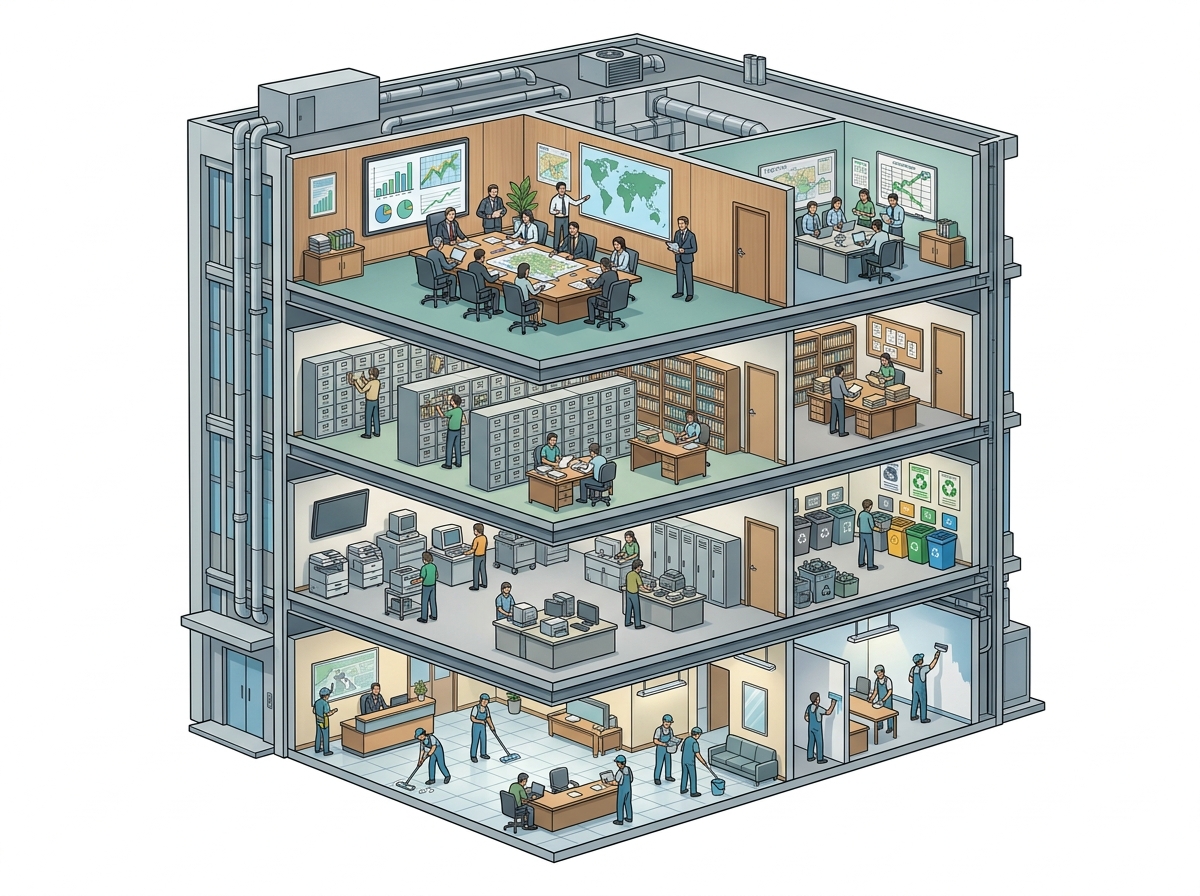
- Key focus areas include: (a) disposal of pending matters and files, (b) improved record management, (c) effective utilisation of office space, (d) e-waste management, and (e) aesthetic upgradation and overall cleanliness of office complexes.
- The campaign builds on the successes of Special Campaign 5.0 and earlier editions, which demonstrated measurable outcomes in terms of file disposal, space release, revenue generation, and cleanliness drives.
- E-waste management is a critical component, promoting environmentally sustainable practices in government offices.
- Space management initiatives aim to optimise the use of office premises, reduce clutter, and create a more conducive working environment for officials and stakeholders.
- The campaign also emphasises the institutionalisation of cleanliness practices, ensuring that the gains made during the campaign period are sustained beyond the designated timeframe.
- Special Campaign 6 is part of a larger government strategy to enhance transparency, accountability, and efficiency in public administration, aligning with the principles of good governance.
Key Features
| Feature | Significance |
|---|---|
| Institutionalisation of Cleanliness | Ensures sustained adherence to hygiene norms in government offices, reducing health risks and improving work environment quality. |
| Disposal of Pending Cases | Accelerates administrative efficiency by reducing backlog, enhancing responsiveness to citizen grievances and policy implementation. |
| Record Management | Digitisation and disposal of obsolete records improve data accessibility, reduce storage costs, and mitigate security risks. |
| Space Management | Optimal utilisation of office space reduces operational costs, enhances functional efficiency, and supports hybrid work models. |
| E-Waste Disposal | Ensures environmentally responsible handling of electronic waste, aligning with India’s e-waste management rules and circular economy goals. |
| Aesthetic Upgradation of Office Complexes | Fosters a professional work environment, boosts employee morale, and projects a positive image of public institutions. |
Why it Matters
Administrative Efficiency
- Reduces bureaucratic delays by systematically addressing pending cases and obsolete records, aligning with the principles of Good Governance under Article 14 of the Constitution.
- Enhances inter-departmental coordination by streamlining record-keeping and space utilisation, critical for multi-stakeholder public distribution systems.
- Promotes a culture of accountability and transparency in public administration, as mandated under the Right to Information Act, 2005.
Economic Impact
- Generates revenue through disposal of scrap and e-waste, as evidenced in Special Campaign 5.0 (₹1.67 crore in 2025).
- Reduces operational costs by optimising physical and digital infrastructure, contributing to fiscal prudence in government expenditure.
- Supports the Digital India initiative by encouraging digitisation of records, reducing reliance on physical storage.
Environmental Sustainability
- Ensures compliance with the E-Waste (Management) Rules, 2022, by mandating environmentally sound disposal of electronic waste.
- Promotes circular economy principles through recycling and reuse of materials, reducing landfill burden.
- Aligns with India’s commitments under the Paris Agreement and Sustainable Development Goals (SDG 12: Responsible Consumption and Production).
Institutional Capacity Building
- Strengthens institutional memory by curating and preserving essential records while discarding redundant data.
- Enhances employee productivity and job satisfaction by improving workplace aesthetics and hygiene standards.
- Fosters a culture of continuous improvement in public service delivery, as envisaged in the National Programme for Civil Services Capacity Building (NPCSCB) – Mission Karmayogi.
Challenges
1. Resistance to Change in Bureaucratic Culture
- Entrenched habits of manual record-keeping and reluctance to adopt digital systems may hinder full implementation of record management reforms.
- Requires sustained leadership commitment and capacity-building initiatives to overcome institutional inertia.
UPSC Link: GS2: Role of Civil Services in Policy Implementation
2. Logistical and Financial Constraints
- Limited budgets for aesthetic upgradation and e-waste disposal may restrict the scope of Special Campaign 6 in certain offices.
- Coordination challenges between central and state agencies for space optimisation and waste management.
UPSC Link: GS3: Resource Mobilisation for Public Welfare
3. Data Security and Privacy Risks
- Improper disposal of obsolete records may expose sensitive citizen data to breaches, violating the Personal Data Protection Bill (2023).
- Requires strict adherence to data retention policies and secure digital archiving frameworks.
UPSC Link: GS3: Cybersecurity and Data Governance
4. Monitoring and Evaluation Gaps
- Ensuring consistent participation across all departmental units, including field offices and regional centres.
- Developing robust metrics to measure the long-term impact of cleanliness and efficiency drives on service delivery.
UPSC Link: GS4: Ethics in Governance and Public Accountability
5. Technological Divide
- Offices in remote or under-resourced regions may lack access to digital tools for record management and e-waste tracking.
- Requires targeted capacity-building programmes and infrastructure support.
UPSC Link: GS2: Inclusive Growth and Digital Divide
Challenges — UPSC Perspective
| Issue | Concern |
|---|---|
| Manual Record-Keeping | Slows down administrative processes and increases storage costs. |
| Space Underutilisation | Leads to unnecessary expenditure on maintenance and limits functional expansion. |
| E-Waste Accumulation | Poses environmental hazards and legal non-compliance risks. |
| Employee Resistance | Undermines the adoption of new systems and cultural shifts. |
| Inter-Departmental Coordination | Delays implementation due to fragmented governance structures. |
| Data Security Risks | Exposes sensitive information to unauthorised access or misuse. |
Way Forward
- Constitute cross-functional teams at the departmental and regional levels to oversee Special Campaign 6, ensuring uniform implementation.
- Leverage Mission Karmayogi’s capacity-building modules to train officers in digital record management and e-waste handling protocols.
- Develop a real-time dashboard to track progress on pending cases, record disposal, and space utilisation, ensuring transparency.
- Partner with certified e-waste recyclers under the E-Waste (Management) Rules, 2022, to ensure compliant disposal.
- Integrate aesthetic upgradation with the Swachh Bharat Mission 2.0 to align with national cleanliness goals.
- Conduct pre- and post-campaign audits to measure efficiency gains and identify areas for continuous improvement.
- Promote inter-ministerial best practices through knowledge-sharing platforms, fostering a culture of collaborative governance.
- Establish a grievance redressal mechanism for employees and citizens to report lapses in implementation.
UPSC Value Addition
Keywords for Mains Answer-Writing
Special Campaign 6 · Department of Food and Public Distribution (DFPD) · Government of India cleanliness drives · public office efficiency · pending file disposal · record management reforms · space utilisation in government offices · e-waste management · office aesthetics and beautification · Government of India cleanliness drives · administrative reforms · institutionalisation of cleanliness · government resource optimisation · Ministry of Consumer Affairs, Food and Public Distribution · Swachh Bharat Mission · Good Governance Index · Government of India cleanliness drives · administrative efficiency · public office management · government accountability
Constitutional & Policy Linkages
- Article 14 (Right to Equality) – Ensuring non-discriminatory and efficient public service delivery.
- Article 21 (Right to Life and Personal Liberty) – Upholding dignified work conditions and environmental safety.
- Article 41 (Directive Principles of State Policy) – Promoting welfare measures for public servants and citizens.
- Article 51A (Fundamental Duties) – Duty to preserve public property and uphold cleanliness.
Concept Flow
Initiation of Special Campaign 6 (2 Oct – 31 Oct 2026) → Focus on cleanliness, record disposal, and space optimisation. → Implementation of record digitisation and e-waste management protocols → Reduction in pending cases and environmental footprint. → Optimisation of office space → Cost savings and improved functional efficiency. → Aesthetic upgradation of office complexes → Enhanced employee morale and institutional image. → Monitoring and evaluation → Identification of gaps and mid-course corrections. → Long-term institutionalisation → Embedding cleanliness and efficiency as core administrative values.
Prelims Practice Questions
Q1. Consider the following statements regarding the Special Campaign 6 launched by the Department of Food and Public Distribution (DFPD):
1. The campaign will be conducted from 2 October 2026 to 31 October 2026.
2. The campaign focuses exclusively on the disposal of e-waste and beautification of office premises.
3. The campaign aims to institutionalise cleanliness and improve record management in government offices.
4. The campaign is the first such initiative by the DFPD and has no prior iterations.
How many of the above statements are correct?
- Only one
- Only two
- Only three
- All
Answer: Only three — Statements 1 and 3 are correct. Statement 2 is incorrect as the campaign covers multiple objectives including cleanliness, pending file disposal, record management, space utilisation, and e-waste disposal. Statement 4 is incorrect as the DFPD has conducted Special Campaigns 1.0 to 5.0 from 2021 to 2025.
Q2. Assertion (A): The Special Campaign 6 of the Department of Food and Public Distribution (DFPD) is designed to enhance administrative efficiency through cleanliness and record management reforms.
Reason (R): The campaign seeks to institutionalise cleanliness and dispose of pending files, thereby reducing bureaucratic delays and improving governance outcomes.
In the context of the above two statements, which of the following is correct?
- Both A and R are true, and R is the correct explanation of A
- Both A and R are true, but R is NOT the correct explanation of A
- A is true but R is false
- A is false but R is true
Answer: Both A and R are true, and R is the correct explanation of A — Both Assertion (A) and Reason (R) are true, and Reason (R) correctly explains Assertion (A). The campaign’s objectives include cleanliness, pending file disposal, and record management reforms to enhance administrative efficiency.
Q3. Match the following objectives of Special Campaign 6 with their respective focus areas:
Column I (Objective) | Column II (Focus Area)
1. Pending file disposal | A. Institutionalising cleanliness
2. Record management | B. Disposal of e-waste
3. Space utilisation | C. Efficient use of office space
4. E-waste management | D. Systematic disposal of old records
Select the correct match:
- 1-D, 2-A, 3-B, 4-C
- 1-A, 2-D, 3-C, 4-B
- 1-B, 2-C, 3-D, 4-A
- 1-C, 2-A, 3-B, 4-D
Answer: 1-A, 2-D, 3-C, 4-B — The correct matches are: 1. Pending file disposal (D. Systematic disposal of old records), 2. Record management (A. Institutionalising cleanliness), 3. Space utilisation (C. Efficient use of office space), 4. E-waste management (B. Disposal of e-waste).
Mains Practice Question
✍ The Government of India’s Special Campaign 6, launched by the Department of Food and Public Distribution (DFPD), represents a continuation of the institutionalisation of cleanliness and administrative efficiency in public offices. Critically examine the significance of such campaigns in the context of India’s broader governance reforms. Also, analyse the challenges in sustaining the gains achieved through these campaigns in the long term. (15 Marks)
Approach: MODEL-ANSWER SKELETON:
1. **Introduction (2 Marks)**: Define Special Campaign 6 and its objectives (cleanliness, pending file disposal, record management, space utilisation, e-waste disposal, and beautification). Contextualise within the broader framework of governance reforms in India, such as the Swachh Bharat Mission, Good Governance Index, and the Government of India’s focus on administrative efficiency.
2. **Significance of Special Campaigns (5 Marks)**:
– **Institutionalisation of Cleanliness**: Link to Article 51A(g) of the Constitution (Fundamental Duties) and the Swachh Bharat Mission. Discuss how such campaigns institutionalise cleanliness as a governance norm rather than a one-time activity.
– **Administrative Efficiency**: Reference the Second Administrative Reforms Commission (2005-2009) recommendations on reducing bureaucratic delays and improving public office management. Highlight the role of such campaigns in reducing pendency and improving record management.
– **Resource Optimisation**: Discuss the economic and administrative benefits of efficient space utilisation and e-waste management, citing examples from the DFPD’s Special Campaign 5.0 (e.g., 49,830 sq ft space freed, ₹1.67 crore revenue generated).
– **Public Perception and Trust**: Explain how clean and efficient government offices enhance public trust in institutions, citing studies or reports on citizen satisfaction with government services.
3. **Challenges in Sustaining Gains (5 Marks)**:
– **Cultural Resistance**: Discuss the challenges in changing long-standing bureaucratic practices and attitudes towards cleanliness and efficiency. Reference Max Weber’s theory of bureaucracy and the need for cultural change.
– **Institutional Constraints**: Highlight issues such as lack of adequate funding, shortage of manpower, and inadequate training for staff to sustain the reforms.
– **Monitoring and Accountability**: Discuss the need for robust monitoring mechanisms (e.g., real-time dashboards, third-party audits) to ensure accountability and prevent backsliding. Reference the role of the Department of Administrative Reforms and Public Grievances (DARPG).
– **Political and Bureaucratic Will**: Emphasise the importance of sustained political and bureaucratic commitment to avoid campaigns becoming mere symbolic exercises.
4. **Conclusion (3 Marks)**: Summarise the critical role of Special Campaign 6 in advancing governance reforms. Propose measures to ensure long-term sustainability, such as integrating these reforms into the annual performance appraisal system of government officials, leveraging technology for real-time monitoring, and fostering a culture of continuous improvement. Conclude with a balanced view on the potential of such campaigns to transform India’s governance landscape.
Source: PIB (Press Information Bureau)
Generated by AanyaAi for educational purpose.
Related guides on our sites
- Best PSIR optional coaching for upsc
- Best PSIR optional teacher for upsc
- Best teacher of PSIR optional for upsc
- Best PSIR optional coaching in delhi for UPSC

- DFPD’s Special Campaign 6: Key Focus Areas for UPSC & State PCS - September 16, 2026
- विश्व ओजोन दिवस 2026: भारत ने लॉन्च किए नेट जीरो पोर्टल और एनएपीसीसी डैशबोर्ड - September 16, 2026
- मिजोरम में खेल, युवा एवं विकास: रक्षा खड़से की समीक्षा बैठकों के प्रमुख बिंदु - September 16, 2026

No Comments