


16 Sep Subhadra Yojana 2nd Anniversary: Key Facts for UPSC & State PCS
✎ The Subhadra Yojana is a direct benefit transfer scheme in Odisha providing financial assistance to women aged 21–60 via the JAM trinity.
Subject Relevance — Where This Topic Fits
- GS Paper II — Governance, Welfare Schemes for Vulnerable Sections | GS Paper III — Government Budgeting and Financial Inclusion
- Prelims: Direct Benefit Transfer (DBT), Women Empowerment, Fiscal Inclusion, State Welfare Schemes, Seva Sankalp Abhiyan
- Essay: Role of State-led welfare schemes in achieving inclusive growth, Women empowerment as a catalyst for socio-economic transformation
Quick Revision: The Subhadra Yojana is a direct benefit transfer scheme in Odisha providing financial assistance to women aged 21–60 via the JAM trinity.
Why is this in the news?
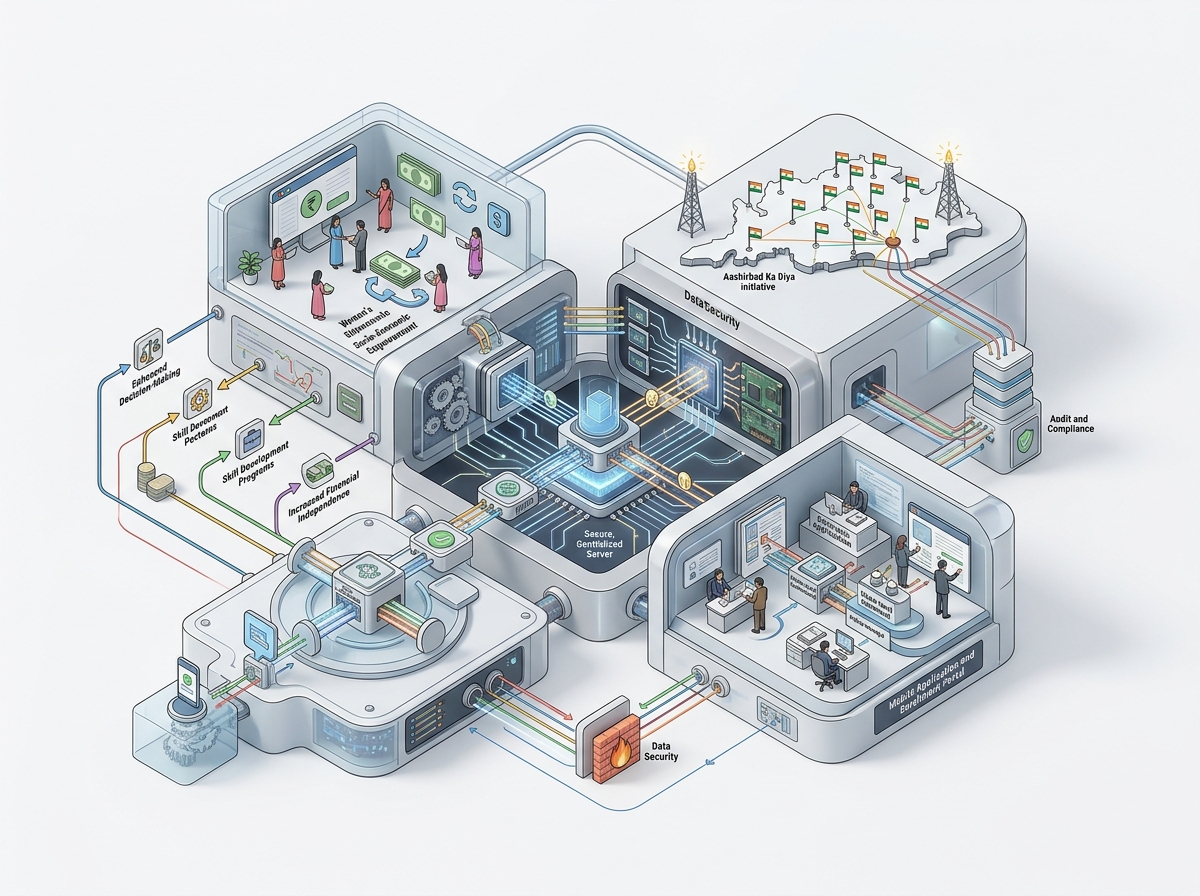
The Subhadra Yojana, Odisha’s flagship women-centric direct benefit transfer (DBT) scheme, is set to mark its second anniversary on September 17, 2026. The state government has announced statewide celebrations, including programmes at 338 locations, to highlight achievements, encourage new enrolments, and reinforce community participation through symbolic gestures such as the ‘Aashirbad Ka Diya’ initiative. This milestone provides an opportunity to examine the scheme’s governance architecture, eligibility criteria, implementation challenges, and its broader implications for women’s socio-economic empowerment in Odisha.
Background
- Launched on September 17, 2024, the Subhadra Yojana is a direct benefit transfer (DBT) scheme introduced by the Government of Odisha aimed at enhancing financial inclusion and economic independence among women.
- The scheme is part of a broader state-led welfare strategy under the ‘Seva Sankalp Abhiyan’, a month-long campaign focused on service delivery and citizen engagement.
- Odisha has historically prioritised women-centric welfare initiatives, including the ‘Mamata Scheme’ (2011) and ‘Ama Yojana’ (2018), reflecting a long-standing commitment to gender-inclusive development.
- The scheme aligns with the national agenda of women’s empowerment as outlined in constitutional provisions such as Articles 15(3) and 39(a), which mandate state action to promote equality and socio-economic justice.
- The DBT mechanism under Subhadra Yojana leverages the JAM (Jan Dhan-Aadhaar-Mobile) trinity to ensure efficient, leak-proof, and transparent delivery of benefits.
- The scheme’s design incorporates feedback from women self-help groups (SHGs) and local governance bodies, reflecting participatory governance principles.
What is the Subhadra Yojana?
- A direct benefit transfer (DBT) scheme launched by the Government of Odisha to provide financial assistance to women aged 21–60 years, aimed at fostering economic independence and social security.
- Eligibility is determined based on residency in Odisha, with women aged 21–60 years as of April 1 eligible to apply. New applicants include women who have recently turned 21 and meet the criteria.
- The scheme utilises the Subhadra portal for online applications, grievance redressal, and beneficiary tracking, enhancing transparency and accessibility.
UPSC Value Addition
Keywords for Mains Answer-Writing
Subhadra Yojana · women empowerment schemes · direct benefit transfer · fiscal federalism · gender budgeting · welfare delivery mechanisms · State-sponsored social security · Seva Sankalp Abhiyan · financial inclusion of women · Odisha governance model · conditional cash transfers · women’s self-help groups · social sector expenditure · public policy evaluation
Prelims Practice Questions
Q1. Consider the following statements regarding the Subhadra Yojana:
1. It is a women-centric welfare scheme launched by the Government of Odisha.
2. The scheme provides direct cash transfers to eligible women beneficiaries aged 21 to 60 years.
3. Applications for the scheme were invited through an online portal from April 1 to April 30, 2026.
4. The scheme is implemented under the aegis of the National Rural Livelihood Mission (NRLM).
How many of the above statements are correct?
- Only one
- Only two
- Only three
- All four
Answer: Only three — Statements 1, 2, and 3 are correct. Statement 4 is incorrect as the Subhadra Yojana is a state-sponsored scheme and not implemented under NRLM.
Q2. Assertion (A): The Subhadra Yojana includes a provision for lighting lamps by beneficiaries as part of its anniversary celebrations.
Reason (R): The scheme aims to promote cultural integration and community participation among women beneficiaries.
In the context of the above two statements, which one of the following is correct?
- Both A and R are true, and R is the correct explanation of A.
- Both A and R are true, but R is not the correct explanation of A.
- A is true, but R is false.
- A is false, but R is true.
Answer: A is true, but R is false. — Assertion (A) is true as the scheme includes the ‘Aashirbad Ka Diya’ programme involving lighting lamps. Reason (R) is also true but does not directly explain the assertion, as the programme is more about symbolic participation than cultural integration.
Q3. Which of the following is NOT a feature of the Subhadra Yojana?
A. Direct Benefit Transfer (DBT) mechanism
B. Age eligibility criteria of 21 to 60 years
C. Implementation through Self-Help Groups (SHGs)
D. Monthly cash transfers to all women irrespective of income
- A
- B
- C
- D
Answer: D — The Subhadra Yojana does not explicitly mandate implementation through Self-Help Groups (SHGs). The other options (A, B, and D) are features associated with the scheme.
Mains Practice Question
✍ The Subhadra Yojana represents a significant intervention in India’s social sector landscape, particularly in advancing women’s economic empowerment through direct cash transfers. Critically examine the design features of the Subhadra Yojana and evaluate its potential to address gender disparities in financial inclusion and economic participation. Also, discuss the challenges in the effective delivery of such welfare schemes in a federal polity like India. (15 Marks)
Approach: MODEL-ANSWER SKELETON:
1. **Introduction**: Define the Subhadra Yojana, its launch date (September 17, 2024), and its objective as a women-centric welfare scheme in Odisha.
2. **Design Features**:
– Target beneficiaries: Women aged 21–60 years.
– Direct Benefit Transfer (DBT) mechanism for cash transfers.
– Eligibility criteria and application process (online portal, April 2026).
– Integration with Seva Sankalp Abhiyan for community engagement.
– Symbolic participation (e.g., lighting lamps) to foster social cohesion.
3. **Potential to Address Gender Disparities**:
– Financial inclusion: How DBT can empower women economically.
– Economic participation: Link to labour force participation and decision-making.
– Gender budgeting: Role in ensuring equitable resource allocation.
4. **Challenges in Delivery**:
– Identification of beneficiaries: Ensuring accuracy and avoiding exclusion errors.
– Last-mile delivery: Challenges in rural and remote areas.
– Coordination between state and central schemes (e.g., overlap with PM-KISAN or Ujjwala Yojana).
– Fiscal federalism: Role of state autonomy vs. central oversight in welfare delivery.
5. **Comparative Perspective**:
– Contrast with national schemes like PM-KISAN or Ujjwala Yojana in terms of design and impact.
6. **Conclusion**: Summarise the scheme’s strengths and limitations, and suggest measures for improvement (e.g., strengthening grievance redressal, leveraging technology for monitoring).
Key references: NITI Aayog’s reports on women’s empowerment, RBI’s financial inclusion index, and studies on DBT efficacy in India.
Source: orissapost.com
Generated by AanyaAi for educational purpose.
Related guides on our sites
- Best PSIR optional coaching for upsc
- Best PSIR optional teacher for upsc
- Best teacher of PSIR optional for upsc
- Best PSIR optional coaching in delhi for UPSC

- ईरान ने होर्मुज जलडमरूमध्य में तेल टैंकर पर हमला बोला: जानिए पूरा घटनाक्रम - September 18, 2026
- Iran Strikes Togo-Flagged Oil Tanker in Strait of Hormuz: UPSC Geography Analysis - September 18, 2026
- उपराष्ट्रपति ने हैदराबाद मुक्ति दिवस पर राष्ट्र निर्माण की याद दिलाई, जानिए क्यों है खास - September 18, 2026

No Comments