


17 Sep NHRC Takes Suo Motu Cognizance of Two Workers’ Deaths in Muzaffarpur Septic Tank
✎ The NHRC’s suo motu cognisance in the Muzaffarpur septic tank deaths underscores the state’s constitutional obligation under Article 21 to ensure a safe working environment, and the need for strict enforcement of the Prohibition…
Subject Relevance — Where This Topic Fits
- GS Paper II — Governance, Constitution, Polity, Social Justice and International Relations | GS Paper III — Environment, Occupational Safety, Labour Rights and Disaster Management
- Prelims: Manual Scavenging (Prohibition) Act, 2013, National Human Rights Commission (NHRC), Occupational Safety, Health and Working Conditions Code, 2020, Prohibition of Employment as Manual Scavengers and their Rehabilitation Act, 2013, Factories Act, 1948, Constitution of India — Article 21 (Right to Life and Personal Liberty), Constitution of India — Article 41 (Directive Principles of State Policy)
- Essay: The ethical imperative of state accountability in protecting vulnerable labour, Balancing economic development with the right to a safe working environment
Quick Revision: The NHRC’s suo motu cognisance in the Muzaffarpur septic tank deaths underscores the state’s constitutional obligation under Article 21 to ensure a safe working environment, and the need for strict enforcement of the Prohibition of Employment as Manual Scavengers and their Rehabilitation Act, 2013, and the Occupational Safety, Health and Working Conditions Code, 2020.
Why is this in the news?
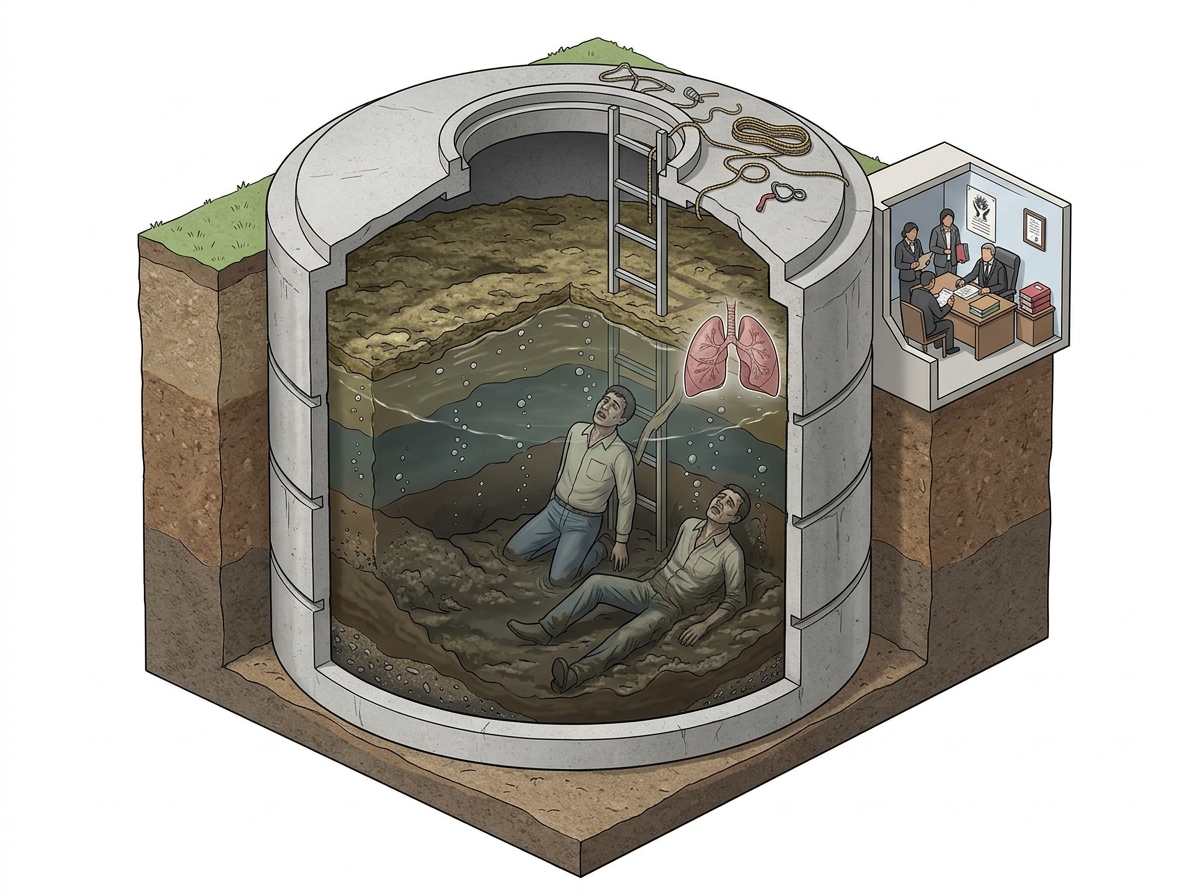
The National Human Rights Commission (NHRC), India, took suo motu cognisance of the reported deaths of two workers due to asphyxiation in a septic tank in Muzaffarpur, Bihar, on 14 September 2026. The incident raises serious questions regarding the violation of fundamental rights, occupational safety norms, and the implementation of laws prohibiting manual scavenging. The NHRC has issued notices to the Bihar Chief Secretary, District Magistrate of Muzaffarpur, and Senior Superintendent of Police, seeking a detailed report within two weeks, including the status of investigation and compensation, if any, provided to the families of the deceased.
Background
- Manual scavenging remains a persistent socio-legal challenge in India despite legislative prohibitions, with an estimated 60,000 manual scavengers still engaged in hazardous cleaning of septic tanks and sewers, primarily in the informal sector.
- The Prohibition of Employment as Manual Scavengers and their Rehabilitation Act, 2013, criminalises the employment of manual scavengers and mandates the use of mechanised cleaning equipment, with penalties up to ₹5 lakh and imprisonment up to five years.
- The Occupational Safety, Health and Working Conditions Code, 2020, consolidates and strengthens safety provisions for workers in hazardous occupations, including those engaged in sanitation work, by mandating risk assessments, safety training, and the provision of personal protective equipment (PPE).
- The Factories Act, 1948, and state-specific regulations govern working conditions in factories and establishments, including safety measures for workers exposed to hazardous environments such as septic tanks and sewers.
- Article 21 of the Constitution of India guarantees the right to life and personal liberty, which has been interpreted by the Supreme Court to include the right to a safe and dignified working environment, particularly for workers in hazardous occupations.
- The National Human Rights Commission (NHRC) is a statutory body established under the Protection of Human Rights Act, 1993, with the mandate to investigate violations of human rights and recommend remedial measures, including compensation and policy reforms.
What is the National Human Rights Commission (NHRC), India?
- The NHRC is a statutory autonomous body established under the Protection of Human Rights Act, 1993, to promote and protect human rights in India, as defined in the Constitution and international covenants.
- The Commission is vested with the power to inquire into complaints of human rights violations either through suo motu cognisance or on receipt of petitions, and to recommend appropriate relief, compensation, and policy reforms to the concerned authorities.
- The NHRC’s jurisdiction extends to matters relating to the violation of human rights by public servants or failure of the state to prevent such violations, including those arising from occupational hazards, caste-based discrimination, and denial of dignity in employment.
- The Commission is headed by a Chairperson who has been a Chief Justice of India, and includes members with expertise in human rights, law, and administration, ensuring a multi-disciplinary approach to its functioning.
- The NHRC operates through State Human Rights Commissions (SHRCs) and has the authority to summon witnesses, examine documents, and direct the payment of interim or final compensation to victims or their families.
- The Commission’s recommendations are advisory in nature but carry significant moral and institutional weight, often influencing legislative and administrative reforms in the domain of human rights protection.
- The NHRC’s role is complementary to the judicial system, operating within the framework of constitutional and statutory provisions to ensure accountability and redressal for human rights violations.
Key Features
| Feature | Significance |
|---|---|
| Automatic Suo Motu Cognisance by NHRC | Demonstrates NHRC’s proactive role in safeguarding human rights by initiating suo motu action based on credible media reports, ensuring timely intervention in potential violations. |
| Issuance of Notices to State Authorities | Highlights the constitutional mechanism of holding state functionaries accountable through directives to the Chief Secretary, District Magistrate, and Senior Superintendent of Police for compliance and reporting within a stipulated timeframe. |
| Focus on Safety Protocol Violations | Emphasises the critical importance of adherence to occupational safety norms, particularly in hazardous work environments such as septic tank cleaning, where non-compliance can lead to fatal accidents. |
| Provision for Compensation Details in Report | Mandates inclusion of compensation details, if any, provided to the kin of the deceased, reflecting NHRC’s concern for victim rehabilitation and justice delivery. |
| Temporal Urgency (Two-Week Deadline) | Illustrates the procedural efficiency of NHRC in ensuring expeditious inquiry and redressal, thereby upholding the principles of natural justice and timely resolution. |
Why it Matters
Legal and Institutional
- Reinforces the statutory mandate of NHRC under the Protection of Human Rights Act, 1993, to investigate and recommend action in cases of human rights violations.
- Serves as a deterrent against negligence in enforcing safety regulations, particularly in sectors employing informal labour, by leveraging institutional oversight.
- Highlights the role of quasi-judicial bodies in bridging gaps in governance where statutory agencies may face delays or resource constraints.
Social and Humanitarian
- Underscores the vulnerability of unskilled and informal labourers, who often lack access to protective gear or awareness of occupational hazards, necessitating systemic safeguards.
- Raises awareness about the ethical imperative of ensuring dignified working conditions, particularly in high-risk sectors such as sanitation and construction.
- Promotes accountability in cases of preventable fatalities, ensuring that the rights to life and dignity (Article 21) are not compromised due to systemic failures.
Policy and Governance
- Acts as a catalyst for policy review and strengthening of safety protocols, including the implementation of the Prohibition of Employment as Manual Scavengers and their Rehabilitation Act, 2013.
- Encourages inter-departmental coordination between labour, health, and local governance authorities to address gaps in enforcement and monitoring.
- Provides a framework for integrating human rights impact assessments in policy formulation, particularly for schemes targeting informal labour welfare.
Judicial and Constitutional
- Reaffirms the principle of judicial review and oversight over executive actions, ensuring that state authorities remain accountable to constitutional and statutory obligations.
- Illustrates the application of the doctrine of ‘procedure established by law’ (Article 21) in ensuring that deprivation of life occurs only through lawful and safe processes.
- Demonstrates the role of independent institutions like NHRC in upholding the separation of powers and preventing executive overreach or negligence.
Challenges
1. Enforcement of Occupational Safety Norms
- Prevalence of unsafe work practices in informal sectors due to lack of awareness, financial constraints, or employer negligence.
- Inadequate implementation of the Factories Act, 1948, and the Building and Other Construction Workers (Regulation of Employment and Conditions of Service) Act, 1996, in unorganised sectors.
- Limited capacity of state labour departments to conduct regular inspections and enforce compliance in remote or rural areas.
UPSC Link: GS2: Labour laws and welfare schemes
2. Accountability in Informal Labour Markets
- Absence of formal employment contracts and lack of registration of workers under social security schemes (e.g., ESIC, PMSBY) complicates liability attribution in case of accidents.
- Reluctance of employers to adhere to safety protocols due to cost considerations, particularly in small-scale enterprises.
- Delayed or inadequate compensation to victims’ families due to bureaucratic hurdles or lack of legal recourse for informal workers.
UPSC Link: GS1: Issues relating to poverty and developmental challenges
3. Institutional Coordination and Data Gaps
- Fragmented governance structure where multiple agencies (labour, health, local bodies) share responsibility but lack synchronised action.
- Underreporting of accidents in informal sectors due to absence of mandatory reporting mechanisms or fear of retribution by employers.
- Insufficient data on occupational hazards and fatalities in sectors like sanitation, leading to reactive rather than preventive policy responses.
UPSC Link: GS2: Government policies and interventions for development
4. Public Awareness and Behavioural Challenges
- Low awareness among workers about their rights and available legal protections, perpetuating exploitative labour practices.
- Cultural acceptance of hazardous work as a means of livelihood, particularly in socio-economically marginalised communities.
- Lack of training programmes on safety protocols for informal workers, despite government initiatives like the Skill India Mission.
UPSC Link: GS4: Ethics and human interface in governance
Challenges — UPSC Perspective
| Issue | Concern |
|---|---|
| Lack of Formal Employment Contracts | Complicates liability attribution and access to social security benefits for victims’ families. |
| Underreporting of Accidents | Leads to underestimation of occupational hazards and delayed policy interventions. |
| Weak Enforcement of Safety Laws | Results in recurring fatalities due to non-compliance with statutory norms. |
| Limited Institutional Capacity | Hinders effective monitoring and prosecution of violations in informal sectors. |
| Cultural and Socio-Economic Factors | Perpetuates acceptance of hazardous work conditions among vulnerable populations. |
| Gaps in Inter-Agency Coordination | Causes delays in redressal and rehabilitation of victims due to fragmented governance. |
Way Forward
- Strengthen enforcement of the Prohibition of Employment as Manual Scavengers and their Rehabilitation Act, 2013, through regular inspections and penalties for non-compliance.
- Expand coverage of social security schemes (e.g., PMSBY, ESIC) to include informal sector workers, ensuring timely compensation in case of accidents.
- Launch nationwide awareness campaigns targeting informal labourers on occupational safety, rights, and legal recourse mechanisms.
- Mandate compulsory safety training and certification for workers in high-risk sectors, in collaboration with industry associations and NGOs.
- Enhance data collection on occupational fatalities through mandatory reporting by employers and integration with national databases like the National Crime Records Bureau.
- Establish fast-track grievance redressal mechanisms under NHRC and state human rights commissions for prompt intervention in cases of rights violations.
- Promote public-private partnerships to provide affordable safety equipment and protective gear to informal sector workers.
- Conduct periodic reviews of labour laws to address gaps in coverage and enforcement, particularly for unorganised sectors.
UPSC Value Addition
Keywords for Mains Answer-Writing
National Human Rights Commission (NHRC) · Human rights violations · Occupational safety · Sewage and septic tank workers · Right to life (Article 21) · Procedural safeguards for labour · Statutory notice by NHRC · Constitutional remedies for human rights · Judicial activism in human rights · Workplace safety regulations · Compensation for victims’ families · Institutional accountability · Media-triggered suo motu cognisance
Constitutional & Policy Linkages
- Article 21 (Right to Life and Personal Liberty) – Ensures protection against hazardous working conditions leading to death.
- Article 41 (Right to Work and Public Assistance) – Mandates state intervention to secure livelihoods and safety for workers.
- Article 42 (Provision for Just and Humane Conditions of Work) – Directs the state to ensure safe and dignified working environments.
Concept Flow
Incident of fatality in septic tank cleaning due to alleged violation of safety protocols → Media report highlights potential human rights violation → NHRC takes suo motu cognisance based on credible information → Issuance of notices to state authorities for detailed report within two weeks → State authorities conduct investigation and submit findings to NHRC → NHRC evaluates report, recommends corrective measures, and ensures compensation to victims’ families if applicable → Implementation of systemic reforms to prevent recurrence of such incidents
Prelims Practice Questions
Q1. Consider the following statements regarding the National Human Rights Commission (NHRC), India:
1. NHRC is a constitutional body established under Article 338 of the Constitution of India.
2. NHRC can take suo motu cognisance of human rights violations.
3. NHRC has the power to enforce its recommendations through judicial proceedings.
4. NHRC can investigate cases of human rights violations by private individuals as well as the state.
How many of the above statements are correct?
- Only one
- Only two
- Only three
- All
Answer: Only three — Statements 2 and 4 are correct. NHRC is a statutory body established under the Protection of Human Rights Act, 1993 (not a constitutional body under Article 338). NHRC can take suo motu cognisance and investigate violations by both state and non-state actors. However, it lacks the power to enforce its recommendations through judicial proceedings.
Q2. Assertion (A): The National Human Rights Commission (NHRC) can issue notices to state authorities to submit reports on alleged human rights violations.
Reason (R): NHRC derives its authority from the Protection of Human Rights Act, 1993, which empowers it to inquire into complaints and take suo motu cognisance of violations.
Code:
- Both A and R are true, and R is the correct explanation of A
- Both A and R are true, but R is not the correct explanation of A
- A is true, but R is false
- A is false, but R is true
Answer: Both A and R are true, and R is the correct explanation of A — Both the Assertion and Reason are correct. The Protection of Human Rights Act, 1993 empowers NHRC to inquire into complaints and take suo motu cognisance, including issuing notices to state authorities for detailed reports.
Q3. Match the following bodies with their respective functions:
Column I (Body) | Column II (Function)
1. National Human Rights Commission (NHRC) | A. Investigates human rights violations by armed forces
2. National Commission for Scheduled Castes (NCSC) | B. Monitors implementation of constitutional safeguards for SCs
3. National Commission for Scheduled Tribes (NCST) | C. Inquires into complaints of human rights violations
4. Armed Forces Special Powers Act (AFSPA) | D. Grants special powers to armed forces in disturbed areas
Select the correct match:
- 1-C, 2-B, 3-A, 4-D
- 1-A, 2-B, 3-C, 4-D
- 1-B, 2-C, 3-D, 4-A
- 1-C, 2-D, 3-B, 4-A
Answer: 1-C, 2-B, 3-A, 4-D — The correct matches are: NHRC (1-C) investigates human rights violations; NCSC (2-B) monitors constitutional safeguards for SCs; NCST (3-A) investigates violations against STs; AFSPA (4-D) grants special powers to armed forces in disturbed areas.
Mains Practice Question
✍ The National Human Rights Commission (NHRC) has taken suo motu cognisance of the tragic deaths of two septic tank workers in Muzaffarpur, Bihar, and issued notices to the state authorities for a detailed report. Critically examine the role of NHRC in safeguarding the right to life (Article 21) of informal sector workers in India. Also, analyse the challenges faced by NHRC in ensuring effective implementation of its recommendations. (15 Marks)
Approach: MODEL-ANSWER SKELETON:
1. **Introduction (2 marks)**
– Context: NHRC’s suo motu cognisance in the Muzaffarpur case (septic tank deaths as a violation of Article 21).
– Statutory basis: NHRC established under Protection of Human Rights Act, 1993; suo motu power under Section 12(c).
– Relevance: Right to life (Article 21) includes the right to a safe working environment.
2. **NHRC’s Role in Safeguarding Article 21 (5 marks)**
– **Institutional Mechanism**: NHRC’s functions under Section 12 (inquiry, monitoring, recommendations, and awareness).
– **Judicial Activism**: Landmark cases (e.g., PUCL v. Union of India, 2011) where NHRC intervened in labour rights and occupational safety.
– **Collaborative Approach**: Coordination with state commissions, civil society, and media (as seen in the Muzaffarpur case).
– **Constitutional Safeguards**: Link to Directive Principles (Article 42, 43) and ILO conventions (e.g., Convention 155 on Occupational Safety).
3. **Challenges in Implementation (5 marks)**
– **Lack of Enforcement Powers**: NHRC’s recommendations are advisory; no binding authority (contrast with judicial review).
– **Resource Constraints**: Limited staff, financial constraints, and delays in investigations.
– **State Resistance**: Bureaucratic delays or reluctance to implement recommendations (e.g., in labour-intensive states).
– **Jurisdictional Gaps**: NHRC cannot investigate cases under AFSPA or private entities without state complicity.
– **Cultural and Social Barriers**: Stigma against informal workers (e.g., manual scavengers, septic tank cleaners) hinders reporting.
4. **Way Forward (3 marks)**
– **Strengthening NHRC**: Granting limited judicial powers (e.g., contempt jurisdiction) or empowering state commissions.
– **Policy Interventions**: Enforcing the Prohibition of Employment as Manual Scavengers and their Rehabilitation Act, 2013, and the Occupational Safety, Health and Working Conditions Code, 2020.
– **Multi-Stakeholder Approach**: Involving trade unions, NGOs, and international bodies (e.g., ILO) for monitoring.
– **Public Awareness**: Campaigns to educate workers about their rights and grievance redressal mechanisms.
**Balanced View**: Acknowledge NHRC’s proactive role in highlighting systemic failures while critiquing its structural limitations in ensuring accountability.
Source: PIB (Press Information Bureau)
Bihar PCS (BPSC) — State PCS Practice
Prelims: With reference to the recent incident in Muzaffarpur, Bihar, where two workers died due to a septic tank collapse, which constitutional body took suo motu cognizance of the matter?
- A. National Human Rights Commission (NHRC)
- B. National Commission for Scheduled Castes (NCSC)
- C. National Commission for Women (NCW)
- D. National Green Tribunal (NGT)
Answer: A. National Human Rights Commission (NHRC) — The NHRC took suo motu cognizance of the incident involving the death of two workers in a septic tank in Muzaffarpur, Bihar, highlighting the issue of manual scavenging and labor safety.
Mains: Discuss the socio-economic and legal implications of manual scavenging in Bihar, with special reference to recent incidents in Muzaffarpur. Suggest measures to ensure the safety and dignity of workers engaged in such hazardous occupations. [‘Definition and historical context of manual scavenging in Bihar’, ‘Legal framework: Prohibition of Employment as Manual Scavengers and their Rehabilitation Act, 2013’, ‘Recent incidents in Muzaffarpur and their causes (e.g., lack of enforcement, awareness, or safety measures)’, ‘Socio-economic factors: caste-based occupation, poverty, and lack of alternative livelihoods’, ‘Role of state agencies (e.g., NHRC, district administration) in addressing the issue’, ‘Suggested measures: stricter enforcement, mechanization, rehabilitation schemes, and awareness campaigns’, ‘Bihar-specific initiatives or gaps in implementation’]
Generated by AanyaAi for educational purpose.

- मुजफ्फरपुर सेप्टिक टैंक दुर्घटना: एनएचआरसी ने लिया स्वतः संज्ञान, दो सप्ताह में रिपोर्ट मांगी - September 17, 2026
- NHRC Takes Suo Motu Cognizance of Two Workers’ Deaths in Muzaffarpur Septic Tank - September 17, 2026
- गुजरात में श्रम कानून अनुपालन कार्यक्रम: पीडीएसएसएस-जीएनएलयू पहल का उद्घाटन समारोह संपन्न - September 17, 2026

No Comments