


17 Sep Civil Aviation Ministry’s Progress Under SCDPM 5.0: Key Achievements for UPSC
✎ SCDPM 5.0 is a government-wide campaign to reduce pendency, digitise grievance redressal, and create clutter-free workspaces, with a focus on citizen-centric governance and operational efficiency.
Subject Relevance — Where This Topic Fits
- GS Paper II — Governance, Transparency and Accountability | GS Paper III — Infrastructure: Air Transport
- Prelims: Special Campaign for Disposal of Pending Matters (SCDPM) 5.0, E-Governance portals (AirSewa, CPGRAMS), Passenger Assistance Control Room (PACR), Swachh Bharat Mission 2.0, Digital India, E-waste management
- Essay: Good Governance as a Catalyst for National Development, Technology and Transparency in Public Service Delivery
Quick Revision: SCDPM 5.0 is a government-wide campaign to reduce pendency, digitise grievance redressal, and create clutter-free workspaces, with a focus on citizen-centric governance and operational efficiency.
Why is this in the news?
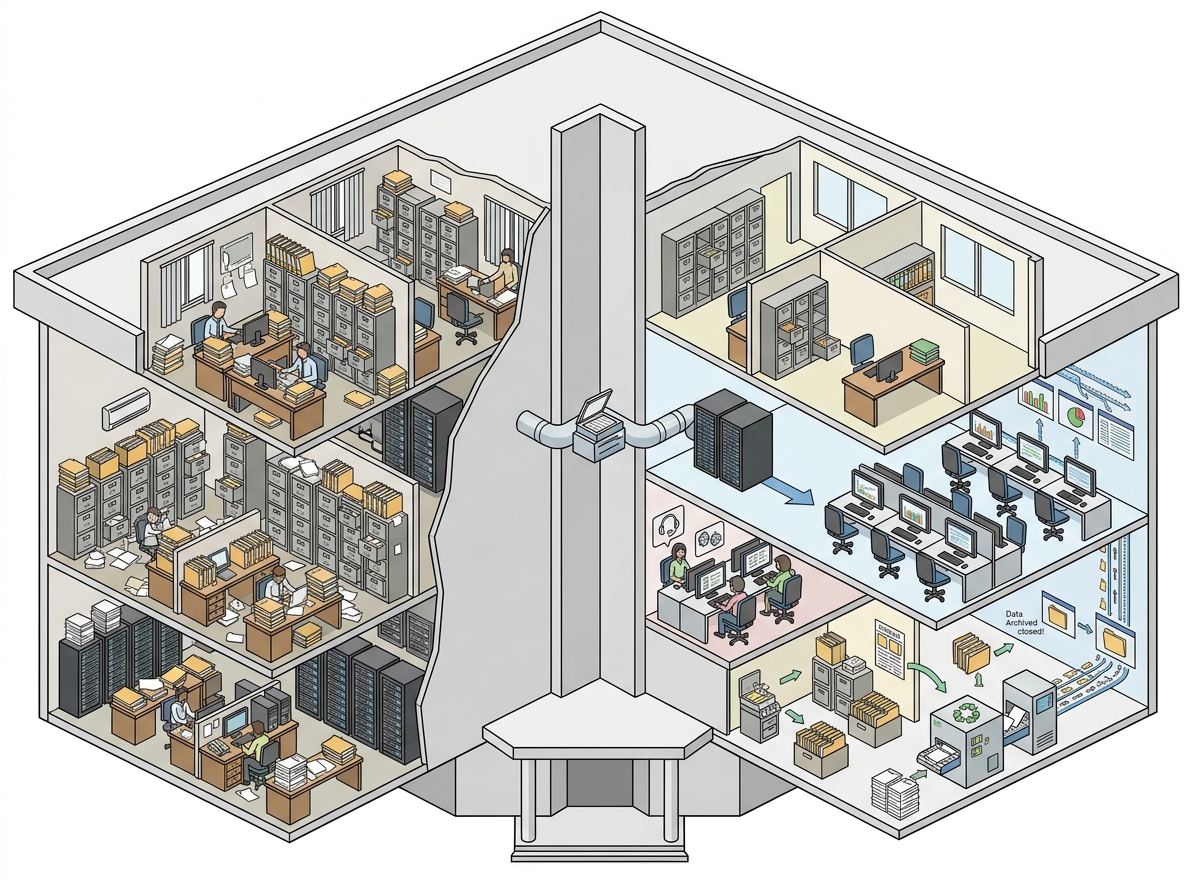
The Ministry of Civil Aviation has achieved significant operational milestones under Special Campaign 5.0 (SCDPM 5.0) from 1 November 2025 to 31 August 2026, focusing on the disposal of pending files, digitalisation of grievance redressal, and creation of clutter-free workspaces. The campaign, aligned with the government’s ‘Citizen-First’ governance approach, has resulted in the closure of over 570 e-files, disposal of 1,628 physical files, and a 99% grievance redressal rate, thereby enhancing service delivery in the aviation sector.
Background
- The Special Campaign for Disposal of Pending Matters (SCDPM) is a government-wide initiative launched to reduce pendency in government offices through systematic review, digitisation, and disposal of physical and e-files.
- SCDPM 5.0 builds on the success of previous phases, emphasising ‘Swachhata’ (cleanliness) as a lifestyle, operational efficiency, and citizen-centric governance.
- The Ministry of Civil Aviation, as a key infrastructure ministry, plays a pivotal role in ensuring seamless air travel, which is critical for economic connectivity and tourism.
- Digital governance tools such as AirSewa and CPGRAMS have been leveraged to streamline grievance redressal and enhance transparency in public service delivery.
- The establishment of the Passenger Assistance Control Room (PACR) on 10 December 2025 marked a proactive step towards real-time monitoring of aviation operations and expedited resolution of passenger grievances.
- E-waste management and disposal of redundant files are integral to creating sustainable and clutter-free work environments in government offices.
What is Special Campaign 5.0 (SCDPM 5.0)?
- Special Campaign 5.0 is a government-wide time-bound initiative aimed at reducing pendency of files and improving operational efficiency through systematic review, digitisation, and disposal of physical and e-files.
- Under SCDPM 5.0, government ministries and departments are required to conduct intensive drives for the disposal of pending matters, including inter-ministerial references, public grievances, and redundant files.
- The campaign emphasises the adoption of digital tools such as CPGRAMS (Centralised Public Grievance Redressal and Monitoring System) and sector-specific portals like AirSewa for efficient grievance redressal.
- SCDPM 5.0 also focuses on creating clutter-free and sustainable work environments by disposing of e-waste, redundant files, and obsolete materials, thereby freeing up office space and generating revenue from scrap disposal.
- The campaign is monitored centrally by the Department of Administrative Reforms and Public Grievances (DARPG) to ensure uniformity and accountability across ministries.
- Key performance indicators under SCDPM 5.0 include the percentage of files reviewed and disposed, grievance redressal rates, and revenue generated from scrap disposal.
- The initiative is designed to institutionalise best practices in governance, ensuring that citizens receive timely and efficient services while reducing bureaucratic delays.
Key Features
| Feature | Significance |
|---|---|
| Swachhata Abhiyan 5.0 Participation | Demonstrates institutional commitment to cleanliness and efficiency in governance through structured campaigns. |
| Digital File Review via AirSewa & CPGRAMS Portals | Enhances transparency and accountability by enabling real-time monitoring of citizen grievances and administrative actions. |
| Passenger Assistance Control Room (PACR) | Institutionalises a citizen-first approach by providing a dedicated mechanism for real-time monitoring and resolution of passenger complaints. |
| Disposal of Physical & E-files | Reduces bureaucratic clutter, optimises office space utilisation, and streamlines administrative processes. |
| Revenue Generation from Scrap Disposal | Transforms waste management into a resource-efficient practice, contributing to fiscal prudence. |
| Inter-Ministerial & Inter-Governmental Coordination | Strengthens cooperative federalism by resolving cross-departmental and cross-governmental references promptly. |
Why it Matters
Governance & Administrative Efficiency
- Institutionalises the ‘Citizen-First’ governance paradigm through structured digital and physical file management systems.
- Enhances operational efficiency by reducing pendency and improving response times to public grievances.
- Promotes a culture of accountability and transparency in public administration.
- Demonstrates the integration of Swachh Bharat Mission principles into institutional workflows beyond sanitation.
Economic & Resource Optimisation
- Liberates approximately 18,308 sq. ft. of office space through decluttering, enabling better utilisation of resources.
- Generates revenue of ₹41,20,582 from scrap disposal, aligning waste management with fiscal prudence.
- Reduces administrative overheads by streamlining file handling and reducing physical storage requirements.
Citizen-Centric Service Delivery
- Achieves a 99% grievance redressal rate, reflecting high responsiveness to public concerns.
- Leverages digital portals (AirSewa, CPGRAMS) to ensure accessibility and transparency in complaint resolution.
- Institutes real-time monitoring mechanisms to address passenger grievances promptly.
Institutional Capacity Building
- Strengthens inter-ministerial and inter-governmental coordination, fostering cooperative federalism.
- Encourages the adoption of digital governance tools to modernise administrative processes.
- Promotes a proactive approach to problem-solving through structured campaigns and reviews.
Challenges
1. Digital Divide & Accessibility Gaps
- Ensuring universal access to digital grievance redressal portals across diverse socio-economic groups remains a challenge.
- Upskilling of administrative staff to handle digital tools effectively is critical for sustained impact.
UPSC Link: GS-II: Governance, e-governance
2. Sustainability of Swachhata Initiatives
- Maintaining momentum in cleanliness and decluttering efforts beyond campaign periods requires institutional culture change.
- Balancing rapid disposal of files with due process and record-keeping standards is essential.
UPSC Link: GS-II: Governance, Public Administration
3. Inter-Ministerial Coordination Bottlenecks
- Delays in resolving inter-ministerial references can undermine the effectiveness of cross-departmental initiatives.
- Standardising communication protocols across ministries is necessary for seamless coordination.
UPSC Link: GS-II: Governance, Cooperative Federalism
4. Resource Constraints in Implementation
- Limited staff capacity and infrastructure constraints may hinder the scalability of similar initiatives in other ministries.
- Allocating dedicated resources for digital transformation and cleanliness drives is a persistent challenge.
UPSC Link: GS-II: Governance, Public Policy
5. Public Awareness & Participation
- Ensuring citizen awareness of digital grievance redressal mechanisms is crucial for their effective utilisation.
- Encouraging public participation in cleanliness drives requires sustained awareness campaigns.
UPSC Link: GS-II: Governance, Citizen Engagement
Challenges — UPSC Perspective
| Issue | Concern |
|---|---|
| Digital Literacy | Low digital literacy among certain sections of the public may limit the reach and effectiveness of digital grievance redressal systems. |
| Bureaucratic Inertia | Resistance to change within administrative hierarchies can impede the adoption of new processes and technologies. |
| Data Security & Privacy | Ensuring the confidentiality and integrity of citizen data in digital systems is a critical concern. |
| Resource Allocation | Insufficient allocation of funds and manpower for sustained implementation of cleanliness and digital initiatives. |
| Monitoring & Evaluation | Lack of robust mechanisms to track long-term outcomes and ensure accountability in governance reforms. |
| Stakeholder Engagement | Inadequate involvement of non-governmental stakeholders in cleanliness and governance initiatives. |
Government Initiatives — Must-Memorise for Prelims
- Swachh Bharat Mission (SBM) 2.0
- Digital India Initiative
- CPGRAMS (Centralised Public Grievance Redress and Monitoring System)
- AirSewa Portal
Way Forward
- Institutionalise regular digital audits of grievance redressal portals to ensure sustained responsiveness and transparency.
- Expand capacity-building programmes for administrative staff to enhance digital literacy and efficiency.
- Strengthen inter-ministerial coordination by establishing standardised protocols for cross-departmental references.
- Develop a nationwide benchmarking framework for cleanliness and decluttering initiatives in government offices.
- Promote public-private partnerships to enhance the reach and effectiveness of citizen-centric digital services.
- Establish a dedicated grievance redressal cell within the Ministry of Civil Aviation to monitor long-term trends and outcomes.
- Integrate AI-driven analytics into grievance redressal systems to identify systemic issues and improve response times.
- Encourage replication of successful models in other ministries to foster a culture of efficiency and accountability across governance.
UPSC Value Addition
Keywords for Mains Answer-Writing
Special Campaign for Disposal of Pending Matters (SCDPM) 5.0 · Ministry of Civil Aviation · E-governance portals (AirSewa, CPGRAMS) · Passenger Assistance Control Room · Citizen-first governance · Real-time monitoring of aviation operations · Digital file review and disposal · Waste management and revenue generation · Public grievance redressal mechanisms · Inter-ministerial coordination
Concept Flow
Citizen Grievances → Digital Portals (AirSewa, CPGRAMS) → Real-Time Monitoring (PACR) → Swift Redressal → Improved Governance → Swachhata Abhiyan 5.0 → Physical & E-File Review → Decluttering → Space Optimisation → Resource Efficiency → Inter-Ministerial References → Cross-Departmental Coordination → Prompt Resolution → Cooperative Federalism → Revenue from Scrap Disposal → Fiscal Prudence → Sustainable Waste Management → Circular Economy → High Grievance Redressal Rate → Citizen Satisfaction → Trust in Governance → Enhanced Public Participation
Prelims Practice Questions
Q1. Consider the following statements regarding the Special Campaign for Disposal of Pending Matters (SCDPM) 5.0:
1. It was launched by the Ministry of Civil Aviation on 1 November 2025.
2. The campaign focuses solely on physical file disposal and does not include e-files.
3. The campaign aims to achieve a 99% grievance redressal rate for public complaints.
4. The disposal of scrap under the campaign generated revenue of approximately ₹41.2 lakh.
How many of the above statements are correct?
- Only one
- Only two
- Only three
- All four
Answer: Only three — Statements 1 and 3 are correct. Statement 2 is incorrect as the campaign includes both physical and e-files. Statement 4 is incorrect as the revenue generated was ₹41,20,582 (₹41.2 lakh), not ₹41.2 lakh.
Q2. Assertion (A): The Ministry of Civil Aviation established a Passenger Assistance Control Room to monitor aviation operations in real-time.
Reason (R): The establishment of the Control Room was aimed at institutionalising the ‘citizen-first’ governance approach.
Options:
A. Both A and R are true, and R is the correct explanation of A.
B. Both A and R are true, but R is not the correct explanation of A.
C. A is true, but R is false.
D. A is false, but R is true.
Answer: ? — Both the Assertion (A) and Reason (R) are true. The Control Room was indeed established to monitor aviation operations in real-time, and this initiative was part of institutionalising the ‘citizen-first’ governance approach.
Q3. Match the following initiatives launched by the Ministry of Civil Aviation with their respective objectives:
Column I
1. AirSewa Portal
2. CPGRAMS Portal
3. Passenger Assistance Control Room
4. Special Campaign for Disposal of Pending Matters (SCDPM) 5.0
Column II
A. Digital platform for public grievance redressal
B. Real-time monitoring of aviation operations and passenger assistance
C. Disposal of pending physical and e-files
D. Digital platform for filing and tracking grievances related to government services
Options:
1-A, 2-D, 3-B, 4-C
1-D, 2-A, 3-B, 4-C
1-B, 2-A, 3-D, 4-C
1-A, 2-B, 3-D, 4-C
Answer: ? — AirSewa Portal (1) is a digital platform for public grievance redressal (A). CPGRAMS Portal (2) is a digital platform for filing and tracking grievances related to government services (D). Passenger Assistance Control Room (3) is for real-time monitoring of aviation operations and passenger assistance (B). SCDPM 5.0 (4) focuses on the disposal of pending physical and e-files (C).
Mains Practice Question
✍ The Ministry of Civil Aviation’s participation in the Special Campaign for Disposal of Pending Matters (SCDPM) 5.0 exemplifies the institutionalisation of ‘citizen-first’ governance in India. Critically examine the significance of such campaigns in enhancing public service delivery and administrative efficiency. Also, analyse the challenges that may impede their long-term success. (15 Marks)
Approach: MODEL-ANSWER SKELETON:
1. **Introduction (2 Marks)**
– Define SCDPM 5.0 and its objectives as a governance tool.
– Contextualise the ‘citizen-first’ approach in India’s administrative reforms.
2. **Significance of SCDPM 5.0 (5 Marks)**
– **Enhancing Public Service Delivery**:
– Real-time monitoring of aviation operations and grievance redressal mechanisms (e.g., Passenger Assistance Control Room, AirSewa, CPGRAMS).
– Quantitative outcomes: 99% grievance redressal rate, disposal of 8,129 files (6,803 physical + 1,316 e-files), and revenue generation from scrap disposal (₹41,20,582).
– Reduction in pendency and improved transparency.
– **Administrative Efficiency**:
– Digitalisation of file management and inter-ministerial coordination (e.g., disposal of 41 MP references, 20 PMO references).
– Waste management and space optimisation (18,308 sq. ft. space freed).
– Institutionalisation of best practices in governance.
3. **Challenges to Long-term Success (5 Marks)**
– **Sustainability**:
– Over-reliance on campaign-mode interventions rather than systemic reforms.
– Risk of relapse into bureaucratic inertia post-campaign.
– **Resource Constraints**:
– Limited digital infrastructure in tier-2/tier-3 regions.
– Human resource capacity gaps in implementing digital tools.
– **Accountability Mechanisms**:
– Ensuring continuous monitoring and feedback loops beyond the campaign period.
– Addressing inter-departmental silos and coordination gaps.
– **Citizen Engagement**:
– Ensuring awareness and accessibility of digital platforms (e.g., AirSewa, CPGRAMS) among diverse user groups.
– Addressing digital divide and language barriers.
4. **Comparative Perspective (3 Marks)**
– Contrast with similar initiatives (e.g., Mission Karmayogi, e-office initiatives).
– Lessons from global best practices in administrative reforms (e.g., Singapore’s e-government model).
5. **Conclusion (2 Marks)**
– Summarise the transformative potential of SCDPM 5.0.
– Emphasise the need for integrating campaign-mode successes into permanent institutional frameworks to ensure enduring impact.
Source: PIB (Press Information Bureau)
Generated by AanyaAi for educational purpose.
Related guides on our sites
- Best PSIR optional coaching for upsc
- Best PSIR optional teacher for upsc
- Best teacher of PSIR optional for upsc
- Best PSIR optional coaching in delhi for UPSC

- Civil Aviation Ministry’s Progress Under SCDPM 5.0: Key Achievements for UPSC - September 17, 2026
- स्वामित्व योजना: मध्यप्रदेश में 50 लाख संपत्तियों की मुफ्त रजिस्ट्री शुरू, जानिए पूरा विवरण - September 17, 2026
- MP Swamitva Yojana: Free Property Registration for 50L Rural Properties - September 17, 2026

No Comments