


17 Sep Social Justice Dept Launches ‘Swachhata Hi Seva’ Campaign 2026 for UPSC & PCS
✎ The ‘Swachhata Hi Seva’ Campaign 2026 institutionalises citizen-led sanitation by mandating 100 hours of annual voluntary cleanliness work, aligning with the Swachh Bharat Mission and constitutional duties under Articles 48A and…
Subject Relevance — Where This Topic Fits
- GS Paper II — Governance, Transparency and Accountability | GS Paper III — Environment and Sustainable Development
- Prelims: Swachh Bharat Mission (SBM) 2.0, Department of Social Justice and Empowerment, Ministry of Social Justice and Empowerment, Sanitation as Fundamental Duty (Article 51A(g)), Voluntary Labour for Public Good (Article 48A)
- Essay: The Role of Institutional Commitment in Public Service Delivery, Citizen Participation as the Cornerstone of National Development
Quick Revision: The ‘Swachhata Hi Seva’ Campaign 2026 institutionalises citizen-led sanitation by mandating 100 hours of annual voluntary cleanliness work, aligning with the Swachh Bharat Mission and constitutional duties under Articles 48A and 51A(g).
Why is this in the news?
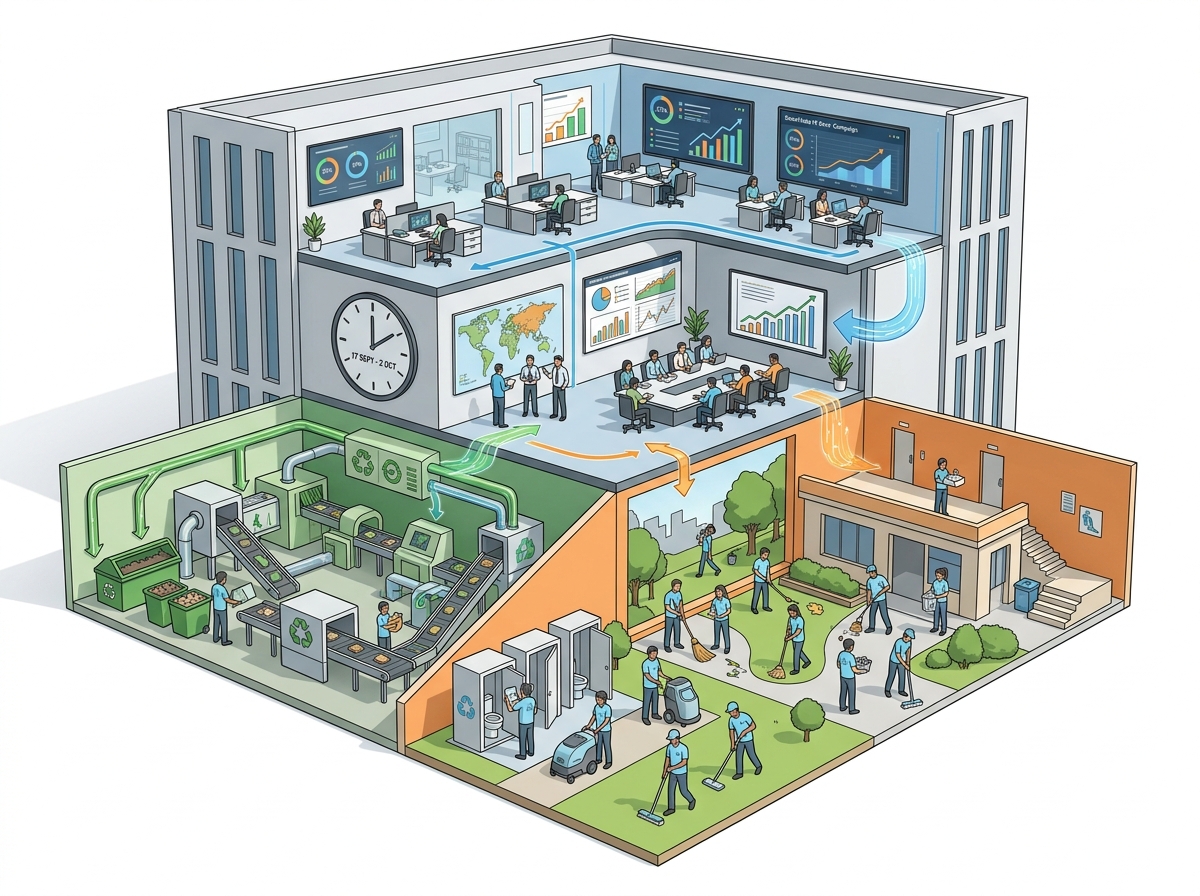
The Department of Social Justice and Empowerment, under the Ministry of Social Justice and Empowerment, launched the ‘Swachhata Hi Seva’ Campaign 2026 on 17 September 2026, marking a renewed institutional commitment to sanitation and public participation. The campaign, concluding on 2 October 2026, seeks to institutionalise voluntary cleanliness drives within the department and its affiliated organisations, aligning with the broader objectives of the Swachh Bharat Mission (SBM) and the constitutional duty to protect and improve the natural environment.
Background
- The Swachh Bharat Mission (SBM) was launched by the Government of India on 2 October 2014, with the objective of eliminating open defecation, improving solid waste management, and promoting behavioural change towards sanitation.
- SBM 2.0, launched in 2020, focuses on sustainability, solid waste management, and plastic waste reduction, with a target to make India ODF+ (Open Defecation Free Plus) and ODF++ (Open Defecation Free Plus Plus) by 2024-25.
- The Ministry of Social Justice and Empowerment is mandated to promote social justice, empowerment of marginalised communities, and inclusive development, with sanitation being a key cross-cutting theme.
- The Department of Social Justice and Empowerment oversees institutions such as the National Safai Karamcharis Finance and Development Corporation (NSKFDC) and the National Institute for Empowerment of Persons with Multiple Disabilities (NIEPMD), which are directly involved in sanitation and hygiene initiatives.
- Article 48A of the Constitution of India directs the State to endeavour to protect and improve the environment and to safeguard the forests and wildlife of the country.
- Article 51A(g) imposes a Fundamental Duty on every citizen to protect and improve the natural environment including forests, lakes, rivers, and wildlife, and to have compassion for living creatures.
What is the ‘Swachhata Hi Seva’ Campaign 2026?
- The ‘Swachhata Hi Seva’ Campaign 2026 is a nationwide initiative led by the Department of Social Justice and Empowerment to promote sanitation and hygiene through voluntary participation.
- The campaign is scheduled from 17 September 2026 to 2 October 2026, coinciding with the birth anniversary of Mahatma Gandhi, symbolising his ideals of cleanliness and service.
- Participants, including officers and employees of the department and its affiliated organisations, take a public oath to dedicate 100 hours annually (approximately two hours per week) to voluntary cleanliness activities.
- The oath also includes a commitment to refrain from littering, discourage others from littering, and initiate cleanliness drives in personal spaces, neighbourhoods, villages, and workplaces.
- The campaign emphasises the role of individual effort and community participation in achieving a clean environment, aligning with constitutional duties and national priorities.
- The Department of Social Justice and Empowerment has directed all affiliated organisations to organise similar oath-taking ceremonies and cleanliness drives to ensure broad-based participation.
- The campaign underscores the importance of institutional leadership in driving behavioural change, with the Secretary of the Department administering the oath to all ranks of officers and employees.
Key Features
| Feature | Significance |
|---|---|
| Campaign Duration: 17 September 2026 – 2 October 2026 | Aligns with Gandhi Jayanti, reinforcing national commitment to sanitation and symbolic continuity with Gandhian ideals of cleanliness. |
| Voluntary Commitment: 100 hours/year (2 hours/week) of sanitation work | Institutionalises grassroots participation in Swachh Bharat Mission by mandating measurable individual contribution. |
| Oath-taking Ceremony by Secretary and officials | Demonstrates administrative leadership and accountability in public service delivery. |
| Mandatory participation across subordinate organisations | Ensures uniform implementation within the Department of Social Justice and Empowerment’s ecosystem. |
| Community Outreach Pledge: Spread awareness in neighbourhoods and villages | Extends campaign impact beyond government offices to local governance and social fabric. |
Why it Matters
Public Health and Sanitation
- Reduces vector-borne diseases by promoting waste segregation and litter-free environments, particularly in marginalised communities served by the Department.
- Supports the Swachh Bharat Mission 2.0 target of ODF+ and ODF++ status through grassroots behavioural change.
Institutional Governance
- Models inter-departmental coordination by integrating sanitation commitments within a sectoral ministry, demonstrating administrative synergy.
- Enhances public sector ethos by embedding civic responsibility in official duties, aligning with Article 51A(g) of the Constitution.
Social Justice and Inclusion
- Prioritises sanitation access in communities historically underserved, addressing equity gaps in public health infrastructure.
- Encourages volunteerism among officials, fostering a culture of service delivery beyond statutory obligations.
National Symbolism and Unity
- Reinforces the Gandhian principle of ‘cleanliness is next to godliness’ as a unifying national ethos.
- Demonstrates India’s commitment to Sustainable Development Goal 6 (Clean Water and Sanitation) through targeted action.
Challenges
1. Behavioural Resistance to Change
- Deep-rooted cultural habits of littering and open defecation persist despite policy interventions.
- Requires sustained awareness campaigns to shift public attitudes toward sanitation.
UPSC Link: GS-II Governance
2. Resource Allocation for Sustained Participation
- Voluntary commitments of 100 hours/year demand balancing official duties with civic responsibilities.
- Ensuring equitable distribution of sanitation infrastructure across rural and urban areas remains a challenge.
UPSC Link: GS-III Environment
3. Monitoring and Verification of Impact
- Measuring individual contributions to sanitation (e.g., hours spent) lacks standardised tracking mechanisms.
- Need for third-party audits to validate claims of behavioural change and infrastructure improvements.
UPSC Link: GS-II Governance
4. Inter-departmental Coordination Gaps
- Sanitation initiatives often operate in silos, with limited convergence between ministries (e.g., Housing, Rural Development).
- Requires formalised frameworks for data sharing and joint monitoring across government agencies.
UPSC Link: GS-II Governance
Challenges — UPSC Perspective
| Issue | Concern |
|---|---|
| Lack of Behavioural Incentives | Absence of tangible rewards or penalties may reduce long-term participation. |
| Infrastructure Deficits in Rural Areas | Limited access to waste collection systems undermines individual efforts. |
| Low Awareness in Marginalised Groups | Scheduled Castes, Scheduled Tribes, and Persons with Disabilities face barriers in accessing sanitation resources. |
| Seasonal Migration and Urban Slums | Transient populations complicate sustained sanitation practices. |
| Data Fragmentation Across Agencies | Overlapping mandates hinder unified progress tracking. |
Way Forward
- Establish a digital portal for officials to log voluntary sanitation hours, ensuring transparency and accountability.
- Integrate sanitation commitments into annual performance appraisals for government employees to institutionalise accountability.
- Partner with NGOs and local self-governments to design context-specific awareness programmes for rural and tribal areas.
- Launch a pilot ‘Sanitation Champions’ initiative to recognise top contributors, fostering competitive participation.
- Conduct bi-annual audits of sanitation infrastructure in high-priority districts to align with Swachh Bharat Mission targets.
- Develop multilingual IEC (Information, Education, Communication) materials to cater to linguistic diversity.
- Collaborate with educational institutions to embed sanitation awareness in curricula, targeting youth as change agents.
UPSC Value Addition
Keywords for Mains Answer-Writing
Swachh Bharat Mission 2.0 · Swachhata Hi Seva 2026 · voluntary cleanliness activities · Ministry of Social Justice and Empowerment · public participation in sanitation · Mahatma Gandhi’s birth anniversary · 100 hours annual voluntary service · institutional commitment to cleanliness · departmental cleanliness campaigns · sustainable sanitation practices
Concept Flow
Initiation of ‘Swachhata Hi Seva’ 2026 → Symbolic leadership through oath-taking by senior officials. → Voluntary commitment to 100 hours/year sanitation work → Institutionalises individual civic responsibility. → Mandatory participation across subordinate organisations → Ensures departmental-wide implementation. → Community outreach and awareness campaigns → Extends impact to local governance and social fabric. → Monitoring and verification mechanisms → Tracks behavioural change and infrastructure improvements. → Sustained participation and policy convergence → Contributes to Swachh Bharat Mission 2.0 targets.
Prelims Practice Questions
Q1. Consider the following statements regarding the ‘Swachhata Hi Seva 2026’ campaign:
1. The campaign is launched by the Ministry of Social Justice and Empowerment.
2. Participants commit to dedicating 100 hours annually to voluntary cleanliness activities.
3. The campaign culminates on 2nd October 2026.
4. The campaign is exclusively for government employees and does not encourage community participation.
How many of the above statements are correct?
- Only one
- Only two
- Only three
- All four
Answer: Only three — Statements 1, 2, and 3 are correct. Statement 4 is incorrect as the campaign encourages participation from all stakeholders, including the community.
Q2. Assertion (A): The ‘Swachhata Hi Seva 2026’ campaign aligns with the objectives of the Swachh Bharat Mission 2.0.
Reason (R): Both initiatives emphasize public participation and voluntary cleanliness activities as key drivers for achieving a clean India.
In the context of the above two statements, which one of the following is correct?
- Both A and R are true, and R is the correct explanation of A.
- Both A and R are true, but R is not the correct explanation of A.
- A is true, but R is false.
- A is false, but R is true.
Answer: Both A and R are true, and R is the correct explanation of A. — Both A and R are true, and R correctly explains A as the campaign is designed to reinforce the goals of Swachh Bharat Mission 2.0 through voluntary participation.
Q3. Match the following initiatives with their respective ministries/departments:
Column I (Initiative) | Column II (Ministry/Department)
— | —
1. Swachh Bharat Mission 2.0 | A. Ministry of Housing and Urban Affairs
2. Swachhata Hi Seva 2026 | B. Ministry of Social Justice and Empowerment
3. Jal Jeevan Mission | C. Ministry of Jal Shakti
4. Ayushman Bharat | D. Ministry of Health and Family Welfare
Select the correct match:
- 1-A, 2-B, 3-C, 4-D
- 1-B, 2-A, 3-C, 4-D
- 1-A, 2-D, 3-B, 4-C
- 1-C, 2-B, 3-A, 4-D
Answer: 1-A, 2-B, 3-C, 4-D — 1-A (Swachh Bharat Mission 2.0 is under the Ministry of Housing and Urban Affairs), 2-B (Swachhata Hi Seva 2026 is under the Ministry of Social Justice and Empowerment), 3-C (Jal Jeevan Mission is under the Ministry of Jal Shakti), 4-D (Ayushman Bharat is under the Ministry of Health and Family Welfare).
Mains Practice Question
✍ Critically examine the role of institutional commitment in achieving sustainable sanitation outcomes in India. In your answer, discuss the significance of the ‘Swachhata Hi Seva 2026’ campaign in reinforcing public participation and institutional accountability. (15 Marks)
Approach: MODEL-ANSWER SKELETON:
1. **Introduction (2 marks)**: Define sustainable sanitation and its importance in public health and environmental sustainability. Mention the Swachh Bharat Mission 2.0 as India’s flagship initiative.
2. **Institutional Commitment (4 marks)**:
– Discuss the constitutional and statutory framework (e.g., Article 21, 47, and the National Rural Sanitation Strategy).
– Highlight the role of ministries/departments (e.g., Ministry of Housing and Urban Affairs, Ministry of Social Justice and Empowerment) in policy formulation and implementation.
– Explain how institutional commitment ensures resource allocation, monitoring, and accountability.
3. **Public Participation (4 marks)**:
– Discuss the importance of community engagement in sanitation (e.g., Jan Andolan, Mahatma Gandhi’s emphasis on cleanliness).
– Explain the ‘Swachhata Hi Seva 2026’ campaign: its objectives, voluntary participation (100 hours annually), and culmination on 2nd October 2026.
– Link the campaign to the broader Swachh Bharat Mission 2.0 and its focus on behavior change.
4. **Challenges and Way Forward (3 marks)**:
– Identify challenges: behavioral inertia, lack of awareness, resource constraints.
– Suggest measures: strengthening local governance (Panchayati Raj Institutions), leveraging technology (Swachh Bharat Mission mobile app), and incentivizing participation.
5. **Conclusion (2 marks)**: Summarize the interplay between institutional commitment and public participation, emphasizing the need for sustained efforts beyond symbolic campaigns.
Source: PIB (Press Information Bureau)
Generated by AanyaAi for educational purpose.
Related guides on our sites
- Best PSIR optional coaching for upsc
- Best sociology optional coaching for upsc
- Which is best sociology optional coaching for upsc
- Best PSIR optional teacher for upsc

- स्वच्छता ही सेवा अभियान 2026: सामाजिक न्याय विभाग की बड़ी पहल, जानिए क्या है लक्ष्य - September 17, 2026
- Social Justice Dept Launches ‘Swachhata Hi Seva’ Campaign 2026 for UPSC & PCS - September 17, 2026
- प्रधानमंत्री मोदी ने पश्चिम बंगाल में अन्नपूर्णा योजना की चौथी किस्त जारी की - September 17, 2026

No Comments