


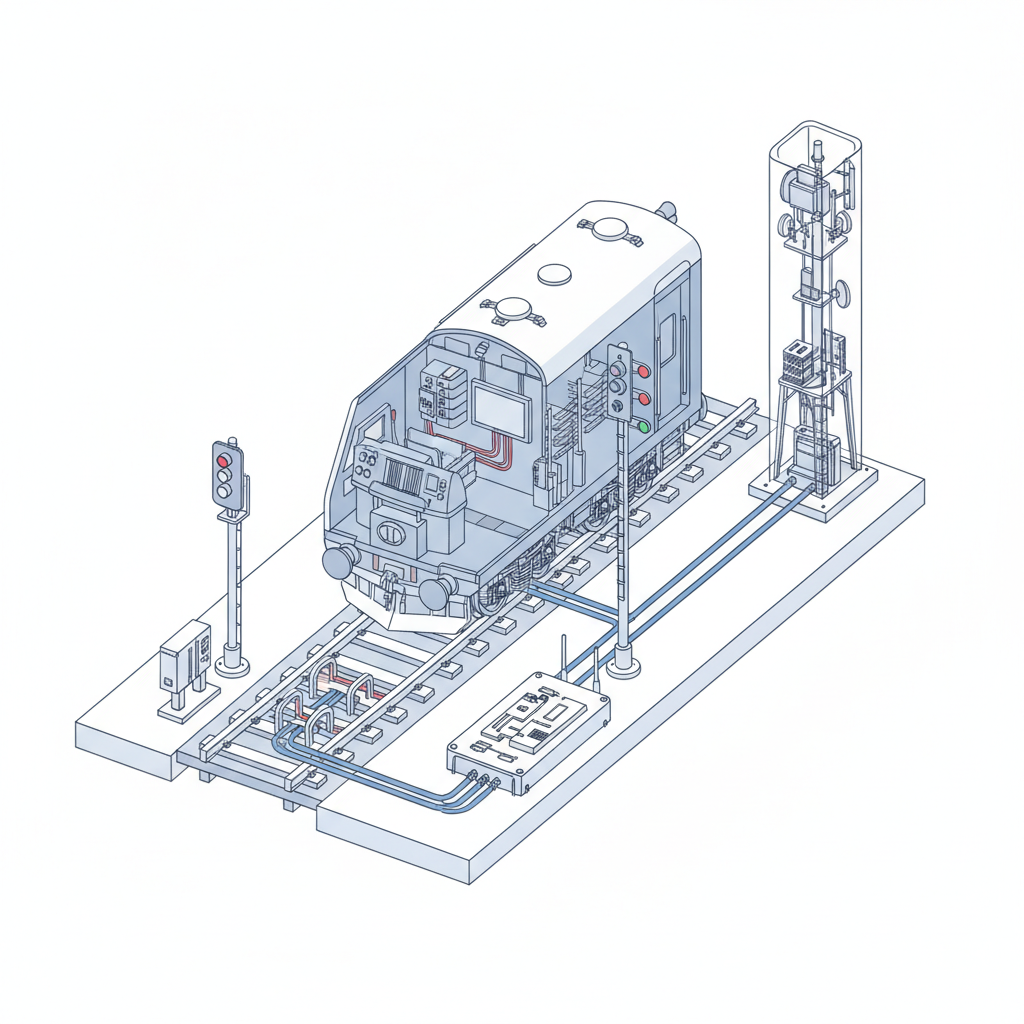
19 Sep UPSC Alert: ₹252 Crore Approved for Kavach 4.0 in Lucknow Division
✎ Kavach 4.0 is India’s indigenous Automatic Train Protection system that prevents Signal Passing at Danger (SPAD) by integrating real-time monitoring, automatic braking, and fail-safe mechanisms to enhance railway safety and…
Subject Relevance — Where This Topic Fits
- GS Paper III — Science and Technology (Indigenous Technologies, Railway Infrastructure)
- Prelims: Automatic Train Protection (ATP), Kavach 4.0, Signal Passing at Danger (SPAD), Railway Safety, Indigenous Technology
- Essay: Technological self-reliance in public infrastructure: The case of Kavach for Indian Railways
Quick Revision: Kavach 4.0 is India’s indigenous Automatic Train Protection system that prevents Signal Passing at Danger (SPAD) by integrating real-time monitoring, automatic braking, and fail-safe mechanisms to enhance railway safety and operational reliability.
Why is this in the news?
The Press Information Bureau (PIB) announced on 19 September 2026 that Indian Railways has approved the installation of Kavach 4.0, an indigenous Automated Train Protection (ATP) system, across 607.7 route-kilometres in the Lucknow Division of North Eastern Railway at a total cost of ₹252 crore. This initiative marks a significant expansion of an ongoing national programme to modernise railway safety infrastructure, reduce human error, and enhance operational reliability through indigenous technological solutions.
Background
- The Indian Railways operates one of the world’s largest railway networks, carrying over 23 million passengers daily and transporting 3 million tonnes of freight, necessitating robust safety protocols.
- Historically, railway safety in India has relied on manual signalling and human vigilance, which, despite stringent protocols, remain vulnerable to errors such as Signal Passing at Danger (SPAD).
- The concept of Automated Train Protection (ATP) systems was formalised in India through the Railway Safety Review Committee (2012) and subsequent recommendations by the Kakodkar Committee (2012) and Bibek Debroy Committee (2015), emphasising the need for indigenous solutions.
- Kavach was developed under the ‘Make in India’ initiative by the Research Designs and Standards Organisation (RDSO) in collaboration with Indian industry partners, aligning with the Atmanirbhar Bharat mission.
- The system has undergone progressive upgrades from Kavach 1.0 to Kavach 4.0, incorporating feedback from field trials and technological advancements.
- This deployment in the Lucknow Division follows phased rollouts in other critical corridors, including the Delhi-Mumbai and Howrah-Chennai routes, as part of the Indian Railways’ Vision 2030 for a zero-accident railway network.
What is Kavach 4.0?
- Kavach is an indigenous Automatic Train Protection (ATP) system developed by the Research Designs and Standards Organisation (RDSO), Ministry of Railways, in partnership with Indian industry.
- It is designed to prevent Signal Passing at Danger (SPAD) by continuously monitoring track occupancy, signal aspects, and train speed, automatically applying brakes if a potential collision is detected.
- The system integrates with the existing railway signalling and telecommunication infrastructure, including Radio Frequency Identification (RFID) tags, Global Positioning System (GPS), and axle counters, to ensure real-time monitoring.
- The system operates on a fail-safe principle, meaning that any malfunction defaults to a safe state (e.g., applying brakes), thereby minimising the risk of accidents.
- The deployment in the Lucknow Division covers 607.7 route-kilometres, including multiple stations, junctions, and sections with high passenger and freight traffic density.
- The total outlay of ₹252 crore includes installation, testing, training of staff, and integration with existing railway management systems, ensuring a holistic safety upgrade.
Key Features
| Feature | Significance |
|---|---|
| Automatic Train Protection (ATP) System | Enables real-time monitoring of train operations to prevent collisions and overspeeding through automated braking. |
| Indigenous Development (‘कवच 4.0’) | Demonstrates India’s technological self-reliance in critical railway safety infrastructure, reducing dependence on foreign systems. |
| Signal Passing at Danger (SPAD) Prevention | Directly mitigates the risk of SPAD incidents, a leading cause of railway accidents, by enforcing strict compliance with signal indications. |
| Cost-Effective Deployment (₹252 crore for 607.7 km) | Optimises resource allocation by targeting high-risk stretches with proven safety gaps, ensuring maximum safety per unit expenditure. |
| Integration with Existing Infrastructure | Compatibility with legacy railway systems ensures seamless adoption without requiring extensive overhauls of existing signalling or track networks. |
Why it Matters
Operational Safety
- Reduces the probability of high-impact railway accidents by preventing SPAD and overspeeding incidents through automated intervention.
- Enhances passenger and freight train reliability by ensuring predictable and controlled braking responses in critical scenarios.
- Aligns with global best practices in railway safety, such as the European Train Control System (ETCS), while leveraging indigenous innovation.
Technological Sovereignty
- Strengthens India’s position as a leader in railway safety technology, with ‘कवच 4.0’ being a fully indigenous ATP solution.
- Reduces vulnerability to supply chain disruptions or geopolitical constraints in critical safety infrastructure.
- Encourages domestic R&D and manufacturing, fostering a self-sustaining ecosystem for advanced railway technologies.
Economic Efficiency
- Lowers long-term operational costs by reducing accident-related delays, damages, and compensation claims.
- Optimises fuel consumption through precise speed control, contributing to energy efficiency in rail operations.
- Supports the ‘Make in India’ initiative by prioritising domestic procurement and technology development.
Strategic Infrastructure
- Bolsters the safety of high-density rail corridors, particularly in the North-Eastern and Northern regions, where accident risks are historically higher.
- Enhances the operational resilience of the railway network, ensuring continuity during adverse weather or high-traffic conditions.
- Supports India’s broader logistics and connectivity goals by improving the reliability of freight and passenger services.
Challenges
1. Technological Integration with Legacy Systems
- Compatibility issues may arise when integrating ‘कवच 4.0’ with older signalling and trackside equipment, requiring phased retrofitting.
- Potential delays in deployment due to the need for extensive testing and validation across diverse railway environments.
UPSC Link: Science & Tech: Indigenous tech adoption
2. High Initial Capital Expenditure
- The ₹252 crore outlay for 607.7 km represents a significant upfront investment, which may strain limited railway budgets.
- Requires prioritisation of high-risk stretches to ensure optimal utilisation of funds without compromising safety standards.
UPSC Link: Economy: Public expenditure management
3. Skilled Manpower and Training
- Deployment and maintenance of ‘कवच 4.0’ require specialised technical expertise, which may be in short supply within the railway workforce.
- Ongoing training programmes are essential to ensure that staff can operate, troubleshoot, and maintain the system effectively.
UPSC Link: Human Resource: Skill development
4. Regulatory and Compliance Hurdles
- Adherence to safety standards and certifications (e.g., ISO, CENELEC) may introduce bureaucratic delays in approvals and deployments.
- Coordination between multiple stakeholders—Railway Board, Ministry of Railways, and state authorities—can slow down implementation.
UPSC Link: Governance: Regulatory frameworks
5. Public Awareness and Acceptance
- Passenger and freight operators may initially resist the adoption of automated systems due to unfamiliarity or perceived disruption to existing workflows.
- Proactive communication and demonstration of the system’s benefits are necessary to build trust among stakeholders.
UPSC Link: Society: Public participation
Challenges — UPSC Perspective
| Issue | Concern |
|---|---|
| Retrofitting Complexity | Integration with older railway infrastructure may require costly and time-consuming modifications. |
| Budgetary Constraints | High initial costs may divert funds from other critical railway safety or developmental projects. |
| Workforce Upskilling | Insufficient training infrastructure could delay deployment and reduce system efficacy. |
| Inter-Agency Coordination | Delays in approvals or clearances from multiple regulatory bodies may hinder timely implementation. |
| Public Perception | Lack of awareness about the benefits of ‘कवच 4.0’ may lead to resistance from operators or passengers. |
Way Forward
- Conduct a phased rollout of ‘कवच 4.0’ in high-risk stretches, prioritising corridors with historically high SPAD incidents.
- Establish dedicated training programmes for railway staff to ensure seamless adoption and maintenance of the system.
- Strengthen public-private partnerships to accelerate R&D and deployment of indigenous railway safety technologies.
- Enhance inter-ministerial coordination to streamline regulatory approvals and reduce bureaucratic bottlenecks.
- Invest in pilot projects to demonstrate the system’s efficacy before scaling up deployment across the network.
- Develop a robust monitoring and evaluation framework to assess the impact of ‘कवच 4.0’ on accident reduction and operational efficiency.
- Promote awareness campaigns to educate passengers and freight operators about the safety benefits of automated train protection.
- Integrate ‘कवच 4.0’ with broader digital railway initiatives, such as the Real-Time Train Information System (RTIS), for enhanced situational awareness.
UPSC Value Addition
Keywords for Mains Answer-Writing
Kavach 4.0 · Automatic Train Protection (ATP) system · Signalling and interlocking · Railway safety infrastructure · Indigenous technology in railways · Signal Passing at Danger (SPAD) · Indian Railways modernization · Safety of rail operations · Railway signalling systems · Public sector undertakings in defence and railways
Concept Flow
Identification of safety gaps in railway operations → Development of indigenous ATP system (‘कवच 4.0’) → Phased deployment in high-risk corridors → Integration with existing signalling infrastructure → Automated braking and SPAD prevention → Reduction in railway accidents → Enhanced passenger and freight safety → Strengthening of India’s technological sovereignty in critical infrastructure.
Prelims Practice Questions
Q1. Consider the following statements about Kavach 4.0: 1. It is an indigenous Automatic Train Protection (ATP) system developed by Indian Railways. 2. Kavach 4.0 prevents Signal Passing at Danger (SPAD) incidents. 3. It automatically applies brakes when required to ensure safe train operations. 4. Kavach 4.0 is a foreign-origin technology adapted for Indian Railways. How many of the above statements are correct?
- Only one
- Only two
- Only three
- All four
Answer: Only three — Statements 1, 2, and 3 are correct as Kavach 4.0 is an indigenous ATP system designed to prevent SPAD and apply brakes automatically. Statement 4 is incorrect as Kavach is a domestically developed technology.
Q2. Assertion (A): Kavach 4.0 is an indigenous Automatic Train Protection (ATP) system designed to enhance railway safety. Reason (R): It prevents Signal Passing at Danger (SPAD) and applies brakes automatically when required.
- Both A and R are true, and R is the correct explanation of A
- Both A and R are true, but R is not the correct explanation of A
- A is true, but R is false
- A is false, but R is true
Answer: Both A and R are true, and R is the correct explanation of A — Both the assertion and reason are correct, and the reason accurately explains the assertion as Kavach 4.0 is indeed designed to prevent SPAD and apply brakes automatically.
Q3. Match the following columns related to railway safety systems: Column I (System) Column II (Description) 1. Kavach 4.0 A. Indigenous Automatic Train Protection (ATP) system 2. Anti-Collision Device (ACD) B. Prevents collisions between trains 3. Train Protection and Warning System (TPWS) C. Automatic braking system to prevent SPAD 4. European Train Control System (ETCS) D. European-origin ATP system
- 1-A, 2-B, 3-C, 4-D; 1-B, 2-A, 3-D, 4-C; 1-C, 2-D, 3-A, 4-B; 1-D, 2-C, 3-B, 4-A
- answer
- explain
- format
Answer: 1-A, 2-B, 3-C, 4-D; 1-B, 2-A, 3-D, 4-C; 1-C, 2-D, 3-A, 4-B; 1-D, 2-C, 3-B, 4-A —
Mains Practice Question
✍ Critically examine the significance of the indigenous Kavach 4.0 Automatic Train Protection (ATP) system in enhancing railway safety in India. Also, discuss the challenges in its widespread adoption across the Indian Railways network. (15 Marks)
Approach: MODEL-ANSWER SKELETON:
1. Introduction: Define Kavach 4.0 as an indigenous ATP system and its core objective of enhancing railway safety by preventing Signal Passing at Danger (SPAD) and enabling automatic braking.
2. Significance:
a. Indigenous Technology: Highlight its development by Indian entities (e.g., Research Designs and Standards Organisation, Indian Railways) under the ‘Make in India’ initiative, reducing dependence on foreign systems.
b. Safety Enhancement: Explain its role in preventing SPAD, a critical cause of rail accidents, and ensuring fail-safe operations through real-time monitoring.
c. Modernisation of Signalling Infrastructure: Link to the broader goal of modernising railway signalling and interlocking systems to improve operational efficiency and reliability.
d. Cost-Effectiveness: Compare with imported systems (e.g., ETCS) to underscore its economic viability for large-scale deployment.
3. Challenges in Widespread Adoption:
a. Infrastructure Compatibility: Discuss the need for retrofitting existing signalling systems and the associated costs and logistical challenges.
b. Interoperability: Address the integration of Kavach 4.0 with diverse rolling stock and signalling systems across different railway zones.
c. Human Factors: Examine the role of railway staff training and the cultural shift required for seamless adoption of automated safety systems.
d. Scalability: Highlight the resource-intensive nature of deploying Kavach 4.0 across 68,000+ route km of Indian Railways, including funding and timeline constraints.
4. Comparative Perspective: Briefly compare Kavach 4.0 with other ATP systems globally (e.g., TPWS in the UK, ETCS in Europe) to contextualise its technological and operational advantages.
5. Conclusion: Summarise the transformative potential of Kavach 4.0 in reducing rail accidents and improving passenger safety while acknowledging the systemic challenges that must be addressed for its full-scale implementation.
Source: PIB (Press Information Bureau)
Uttar Pradesh PCS (UPPSC) — State PCS Practice
Prelims: Under the ‘Kavach 4.0’ initiative, the Uttar Pradesh government has approved a budget of ₹252 crore for the installation of indigenous automatic train protection system in which division of the Indian Railways?
- A. Lucknow Division
- B. Varanasi Division
- C. Agra Division
- D. Gorakhpur Division
Answer: A. Lucknow Division — The ₹252 crore allocation under ‘Kavach 4.0’ is specifically approved for the Lucknow Division of Indian Railways, covering 607.7 route kilometers in Uttar Pradesh.
Mains: Discuss the significance of the ‘Kavach 4.0’ initiative for the Indian Railways in Uttar Pradesh, highlighting its role in enhancing passenger safety, reducing accidents, and improving operational efficiency in the state’s rail network. Also, analyze the potential socio-economic impact of this indigenous automatic train protection system on Uttar Pradesh’s economy and connectivity.
Generated by AanyaAi for educational purpose.
Related guides on our sites
- Current affairs for upsc 2026
- How to prepare for GS paper 1 for UPSC CSE mains exam
- Best UPSC coaching for IFOS exam
- Best mentorship programme for upsc

- NAMASTE Scheme: Enhancing Sanitation Workers’ Livelihoods & Safety - November 14, 2026
- एमएसएमई का विशेष अभियान 6.0: स्वच्छता और लंबित मामलों का निपटारा - November 14, 2026
- Sea Vigil-26: Coastal Defence Drills Off Visakhapatnam - November 14, 2026

No Comments