


20 Sep NASA highlights ISRO partnership for future space missions in UPSC focus
✎ The India–United States space collaboration, exemplified by the NISAR mission and India’s participation in the Artemis Accords, represents a strategic partnership in Earth observation, planetary science, and human spaceflight…
Subject Relevance — Where This Topic Fits
- GS Paper II — International Relations: Bilateral and Multilateral groupings and agreements involving India | GS Paper III — Science and Technology: Developments in space technology, indigenisation of technology and Indian contributions in science
- Prelims: Artemis Accords, NISAR mission, ISRO–NASA collaborations, Human spaceflight programme, International Space Station, Synthetic Aperture Radar (SAR), Artemis programme
- Essay: The role of international collaboration in advancing scientific frontiers and sustainable development, Space exploration as a catalyst for technological innovation and geopolitical cooperation
Quick Revision: The India–United States space collaboration, exemplified by the NISAR mission and India’s participation in the Artemis Accords, represents a strategic partnership in Earth observation, planetary science, and human spaceflight, with implications for climate science, disaster management, and sustainable exploration.
Why is this in the news?
The remarks by Mr. Amit Kshatriya, NASA’s Associate Administrator and Chief Engineer, highlight the expanding scope of India–United States collaboration in space science and human spaceflight, particularly the NISAR mission and India’s participation in the Artemis Accords. These developments underscore the strategic importance of bilateral space partnerships in addressing global challenges such as climate change, disaster management, and sustainable exploration of outer space.
Background
- The India–United States space partnership has evolved since the early 2000s, marked by the signing of the Framework Agreement on Cooperation in the Peaceful Uses of Outer Space in 2005.
- ISRO’s successful Mars Orbiter Mission (Mangalyaan) in 2014 demonstrated India’s growing capabilities in planetary exploration and deep-space missions.
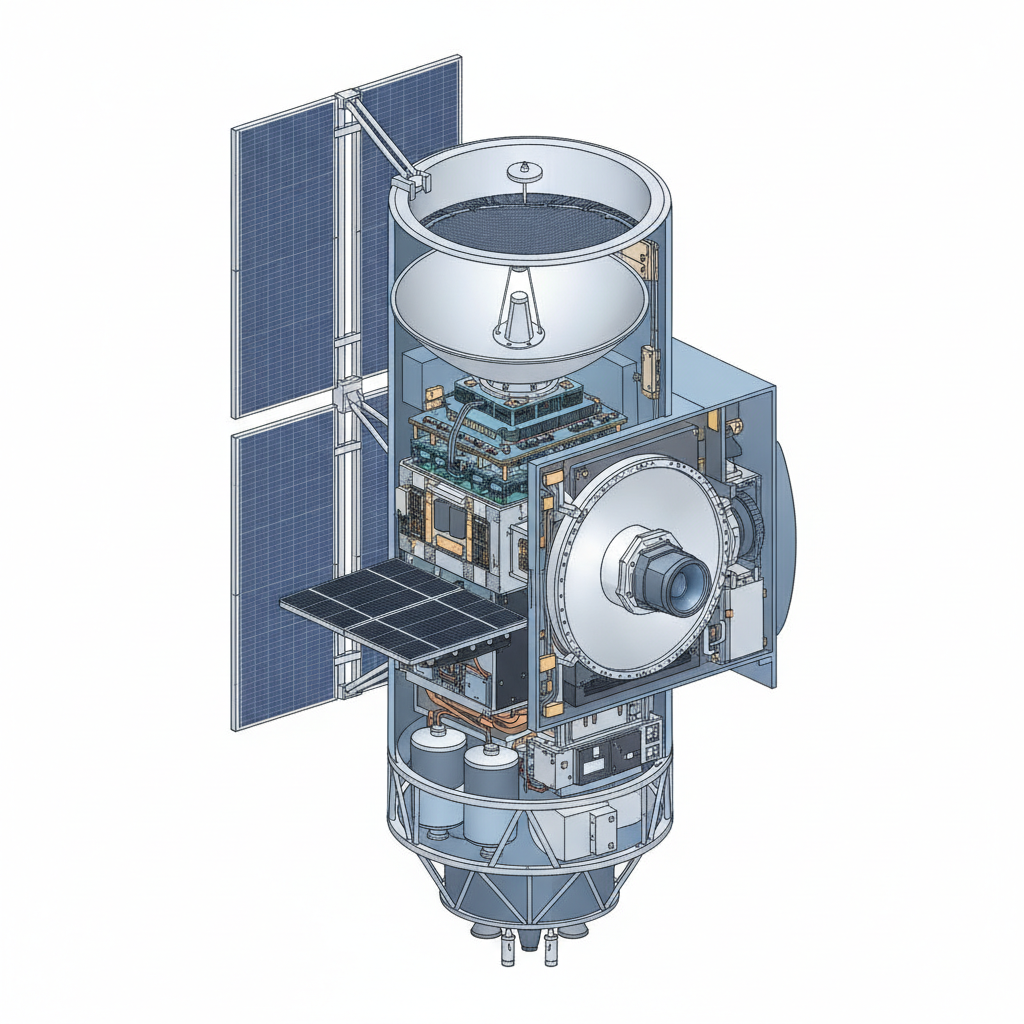
- The NISAR (NASA-ISRO Synthetic Aperture Radar) mission, launched in July 2025, represents a landmark collaboration in Earth observation, utilising dual-frequency SAR to monitor Earth’s surface changes with unprecedented precision.
- India’s participation in the Artemis Accords aligns with global efforts to establish norms for sustainable and peaceful exploration of the Moon and beyond.
What is the India–United States Space Collaboration?
- The India–United States space collaboration is a bilateral partnership between ISRO and NASA, formalised through agreements such as the 2005 Framework Agreement and the 2023 Artemis Accords.
- The collaboration spans Earth science missions, planetary exploration, and human spaceflight, with a focus on shared technological development and data exchange.
- NISAR (NASA-ISRO Synthetic Aperture Radar) is a joint Earth observation mission launched in July 2025, designed to monitor Earth’s land, ice, water, and vegetation with high-resolution radar imaging.
- The Artemis Accords are a set of non-binding principles guiding civil space exploration, emphasising transparency, interoperability, and sustainable practices. India became a signatory in 2023.
- The partnership leverages complementary strengths: ISRO’s cost-effective launch capabilities and NASA’s advanced scientific instrumentation and deep-space expertise.
- The collaboration aligns with global efforts to address climate change, disaster management, and sustainable exploration of outer space through shared data and technology.
- Joint endeavours foster technological innovation, capacity building, and mutual learning, reinforcing the role of space science in national and global development.
Key Features
| Feature | Significance |
|---|---|
| NASA-ISRO Synthetic Aperture Radar (NISAR) | A joint Earth-observation satellite mission launched in July 2025 to monitor global environmental changes in land, ice, water, and vegetation, enhancing climate science and disaster management capabilities. |
| Artemis Accords | A set of non-binding international principles for responsible civil space exploration, signed by India in 2025, aligning with global norms for sustainable and collaborative space activities. |
| Human Spaceflight Collaboration | Joint endeavours such as Axiom Mission 4 (Ax-4), where Group Captain Shubhanshu Shukla became the first Indian to visit the International Space Station, fostering bilateral expertise in crewed missions. |
| Scientific Exchange Programs | Regular sharing of technical lessons and best practices between NASA and ISRO, particularly in mission design, engineering, and operational standards for space exploration. |
| International Space Station (ISS) Participation | India’s engagement with the ISS through private missions like Ax-4, demonstrating growing indigenous capabilities in human spaceflight and international cooperation. |
Why it Matters
Scientific Advancement
- NISAR’s dual-frequency SAR payload will provide high-resolution, all-weather Earth observation data, critical for climate change studies, agricultural monitoring, and disaster response.
- Collaboration in human spaceflight enhances India’s Gaganyaan programme, contributing to long-term self-reliance in crewed missions.
- Joint missions like Ax-4 validate ISRO’s human-rated systems and strengthen India’s position in the global space economy.
Geopolitical and Strategic
- India’s participation in the Artemis Accords reinforces its commitment to peaceful, transparent, and sustainable space exploration, aligning with global governance frameworks.
- Bilateral space cooperation with NASA positions India as a key partner in the Indo-Pacific and global space sectors, complementing its strategic partnerships with other nations.
- Shared technological advancements in satellite communication and remote sensing support India’s national security objectives, including border monitoring and maritime domain awareness.
Economic and Industrial
- Joint missions stimulate the Indian space industry, fostering innovation in aerospace manufacturing, satellite services, and downstream applications like GIS and navigation.
- Collaborative projects like NISAR create opportunities for Indian startups and MSMEs to participate in the global space supply chain.
- Cost-sharing in large-scale missions reduces financial burden on individual agencies, enabling sustained investment in research and development.
Institutional Capacity Building
- NASA’s technical mentorship accelerates ISRO’s proficiency in mission planning, risk assessment, and operational protocols for complex space missions.
- Exchange programmes for Indian scientists and engineers enhance technical expertise in areas such as life support systems, thermal protection, and in-orbit servicing.
- Standardisation of protocols under Artemis Accords promotes interoperability with international partners, facilitating future joint ventures.
Challenges
1. Technology Transfer and IPR Constraints
- Restrictions on sharing critical technologies due to national security concerns may limit the depth of collaboration in sensitive areas like propulsion systems.
- Intellectual property rights (IPR) frameworks for joint missions require clear delineation to prevent disputes over proprietary technologies and data ownership.
UPSC Link: GS-III: Space Technology (Science and Tech syllabus)
2. Regulatory and Compliance Divergences
- Differences in export control laws (e.g., ITAR in the US vs. India’s regulatory framework) can complicate procurement and integration of components for joint missions.
- Variations in safety and certification standards for human spaceflight may necessitate harmonisation efforts to ensure mission reliability.
UPSC Link: GS-II: International Treaties and Agreements
3. Funding and Resource Allocation
- Sustained budgetary commitments from both agencies are essential to avoid delays in mission timelines or scope reductions due to fiscal constraints.
- Balancing bilateral projects with domestic priorities (e.g., Gaganyaan, Chandrayaan) requires careful resource allocation to prevent overcommitment.
UPSC Link: GS-III: Government Budgeting and Resource Management
4. Data Sovereignty and Security
- Ensuring secure handling of high-resolution Earth observation data, particularly for sensitive regions, requires robust cybersecurity measures and data-sharing agreements.
- Concerns over data localisation and access rights may arise, necessitating transparent frameworks to balance scientific collaboration with national security.
UPSC Link: GS-III: Cybersecurity and Data Governance
5. Human Capital Development
- India’s limited pool of trained astronauts and mission specialists poses a challenge for scaling human spaceflight collaborations beyond short-term missions.
- Long-term retention of skilled personnel in ISRO and affiliated institutions requires competitive compensation and career progression pathways.
UPSC Link: GS-III: Human Resource Development in Science and Tech
Challenges — UPSC Perspective
| Issue | Concern |
|---|---|
| Technology Transfer Restrictions | National security concerns may limit the sharing of sensitive technologies, constraining joint mission capabilities. |
| Export Control Laws | Divergent regulatory frameworks (e.g., ITAR vs. India’s norms) can delay procurement and integration of mission-critical components. |
| Budgetary Constraints | Fluctuations in funding allocations for NASA or ISRO may lead to delays or reductions in the scope of collaborative projects. |
| Data Security Risks | High-resolution Earth observation data requires stringent cybersecurity measures to prevent unauthorised access or misuse. |
| Human Capital Shortage | Limited pool of trained astronauts and mission specialists in India may hinder the scaling of human spaceflight collaborations. |
Way Forward
- Establish a dedicated bilateral task force under the India-US Space Cooperation MoU to streamline project approvals, funding, and technology transfer processes.
- Develop a joint certification framework for human spaceflight missions to harmonise safety standards and operational protocols between NASA and ISRO.
- Expand exchange programmes for Indian scientists and engineers to undergo training at NASA facilities, focusing on critical areas like life support systems and in-orbit servicing.
- Formulate clear intellectual property rights (IPR) guidelines for joint missions to delineate ownership of technologies, data, and innovations arising from collaboration.
- Enhance cybersecurity protocols for Earth observation data, including encryption standards and access controls, to mitigate risks of data breaches or misuse.
- Increase budgetary allocations for collaborative missions, ensuring stable funding streams to prevent delays in mission timelines or scope reductions.
- Promote public-private partnerships to leverage India’s growing space start-up ecosystem for cost-effective component manufacturing and innovation in joint projects.
UPSC Value Addition
Keywords for Mains Answer-Writing
ISRO-NASA collaboration · NISAR mission · Artemis Accords · International space cooperation · Space exploration norms · Earth observation satellites · Human spaceflight programmes · India-US strategic partnership in space · Space policy and governance · Scientific diplomacy in space technology
Concept Flow
India signs the Artemis Accords → Aligns with global norms for responsible space exploration and commits to peaceful, transparent collaboration. → NASA and ISRO formalise joint missions (e.g., NISAR, Ax-4) → Leverages complementary strengths in Earth observation and human spaceflight. → Technical and operational expertise is shared → Accelerates ISRO’s proficiency in mission design, risk assessment, and crewed space missions. → Joint missions achieve scientific and strategic milestones → Enhances India’s global standing in space technology and reinforces Indo-US strategic partnership. → Challenges emerge (e.g., technology transfer, data security) → Requires regulatory harmonisation and institutional reforms to sustain collaboration. → Way forward involves policy frameworks and capacity building → Ensures long-term sustainability of bilateral space cooperation.
Prelims Practice Questions
Q1. Consider the following statements regarding the NASA-ISRO collaboration on the NISAR mission:
1. NISAR is a joint Earth-sensing orbiter launched in July 2025.
2. Its primary objective is to measure changes in Earth’s land, ice, water, and vegetation.
3. NISAR is designed exclusively for human spaceflight missions.
4. The mission is a result of a bilateral agreement between NASA and ISRO.
How many of the above statements are correct?
- Only one
- Only two
- Only three
- All four
Answer: Only three — Statements 1, 2, and 4 are correct. Statement 3 is incorrect as NISAR is an Earth-sensing orbiter, not a human spaceflight mission.
Q2. Assertion (A): The Artemis Accords are a set of legally binding principles governing civil space exploration.
Reason (R): The Accords were signed by over 70 nations, including India, to ensure peaceful and cooperative exploration of outer space.
In the context of the above statements, which of the following is correct?
- Both A and R are true, and R is the correct explanation of A.
- Both A and R are true, but R is not the correct explanation of A.
- A is true, but R is false.
- A is false, but R is true.
Answer: ? — Assertion (A) is false because the Artemis Accords are non-legally binding principles. Reason (R) is true as the Accords were signed by over 70 nations, including India, to promote peaceful and cooperative space exploration.
Q3. Match the following collaborations between space agencies with their respective objectives:
Column I (Collaboration) Column II (Objective)
A. NISAR mission 1. Human spaceflight programme
B. Artemis Accords 2. Earth observation and climate monitoring
C. International Space Station (ISS) 3. Principles for peaceful exploration of outer space
D. Gaganyaan programme 4. Joint research and development in space technology
Choose the correct match:
- A-2, B-3, C-4, D-1
- A-1, B-2, C-3, D-4
- A-4, B-1, C-2, D-3
- A-3, B-4, C-1, D-2
Answer: A-2, B-3, C-4, D-1 — Correct matches: A-2 (NISAR mission for Earth observation), B-3 (Artemis Accords for peaceful exploration), C-4 (ISS for joint research), D-1 (Gaganyaan programme for human spaceflight).
Mains Practice Question
✍ Critically examine the significance of international cooperation in space exploration, with particular reference to the NASA-ISRO partnership and the Artemis Accords. Also assess the implications of such collaborations for India’s strategic interests in space technology. (15 Marks)
Approach: MODEL-ANSWER SKELETON:
1. **Introduction (2 Marks)**: Define international cooperation in space exploration and highlight its importance in the contemporary geopolitical context.
2. **NASA-ISRO Partnership (5 Marks)**:
– Discuss the NISAR mission: joint objectives, technical capabilities, and scientific outcomes.
– Highlight the significance of human spaceflight collaborations (e.g., Gaganyaan, ISS participation).
– Reference Amit Kshatriya’s remarks on shared values and democratic norms in space exploration.
3. **Artemis Accords (4 Marks)**:
– Explain the Accords: non-legally binding nature, principles of peaceful exploration, and transparency.
– Discuss India’s participation and its strategic implications (e.g., access to lunar missions, technology transfer).
– Compare with other international frameworks (e.g., Outer Space Treaty, COPUOS).
4. **Strategic Implications for India (4 Marks)**:
– Assess how collaborations enhance India’s space capabilities (e.g., satellite technology, human spaceflight).
– Evaluate the role of space diplomacy in India’s foreign policy (e.g., partnerships with the US, EU, and other nations).
– Discuss challenges: technological dependence, data sovereignty, and geopolitical alignments.
5. **Conclusion (1 Mark)**: Summarize the importance of international cooperation in advancing space exploration and India’s role in shaping global space governance.
Source: orissapost.com
Generated by AanyaAi for educational purpose.
Related guides on our sites
- Current affairs for upsc 2026
- How to prepare for GS paper 1 for UPSC CSE mains exam
- Best UPSC coaching for IFOS exam
- Best mentorship programme for upsc

- नासा-इसरो सहयोग: अंतरिक्ष अनुसंधान में नया मोड़, जानिए क्या है अगला कदम? - September 20, 2026
- NASA highlights ISRO partnership for future space missions in UPSC focus - September 20, 2026
- सीजी सरकार की श्रीरामलला दर्शन योजना: धमतरी के 2,176 श्रद्धालुओं को मिला अयोध्या दर्शन का अवसर - September 20, 2026

No Comments