


22 Sep Tamil Nadu Expands Breakfast Scheme to Classes 6-8: 15.30 Lakh Students Benefit
✎ The Perunthalaivar Kamaraj Breakfast Scheme is a state-led nutrition intervention in Tamil Nadu that provides daily breakfast to 15.30 lakh additional students in Classes 6–8, integrating public health, education, and women’s…
Subject Relevance — Where This Topic Fits
- GS Paper II — Governance, Welfare Schemes for Vulnerable Sections | GS Paper III — Human Development, Public Health
- Prelims: Mid-Day Meal Scheme, Nutrition Security, Women Self-Help Groups, Public Distribution System, Constitutional Provisions on Child Rights (Article 21A, 45)
Quick Revision: The Perunthalaivar Kamaraj Breakfast Scheme is a state-led nutrition intervention in Tamil Nadu that provides daily breakfast to 15.30 lakh additional students in Classes 6–8, integrating public health, education, and women’s empowerment through decentralised, SHG-managed kitchens.
Why is this in the news?
On 22 September 2026, the Tamil Nadu government announced the expansion of the ‘Perunthalaivar Kamaraj Breakfast Scheme’ to include students in Classes 6 to 8, thereby extending nutritional benefits to an additional 15.30 lakh children. This policy intervention underscores the state’s commitment to child welfare, nutrition security, and educational equity within the framework of India’s broader Right to Food discourse.
Background
- The ‘Perunthalaivar Kamaraj Breakfast Scheme’ was originally launched in 2022 for students in Classes 1 to 5 in government and government-aided schools across Tamil Nadu.
- The scheme is named after K. Kamaraj, former Chief Minister of Tamil Nadu, who pioneered mid-day meals in the state during the 1960s, laying the foundation for India’s Mid-Day Meal Scheme (MDMS) under the National Programme of Nutritional Support to Primary Education.
- Tamil Nadu has historically prioritised child nutrition as a public health strategy, aligning with the National Nutrition Mission (Poshan Abhiyaan) and Sustainable Development Goal 2 (Zero Hunger).
- The scheme is implemented through decentralised kitchens managed by Women Self-Help Groups (SHGs), ensuring local participation and employment generation.
- The expansion coincides with the state’s broader ‘Nutrition-Smart School’ initiative, which integrates health, hygiene, and dietary diversity in school curricula.
What is the Perunthalaivar Kamaraj Breakfast Scheme?
- The scheme provides a daily nutritious breakfast to students in government and government-aided schools, aimed at addressing hunger, improving concentration, and enhancing cognitive development.
- Breakfast menus include locally sourced, culturally appropriate foods such as upma, pongal, and khichdi, with bi-weekly millet-based options to promote dietary diversity and climate-resilient agriculture.
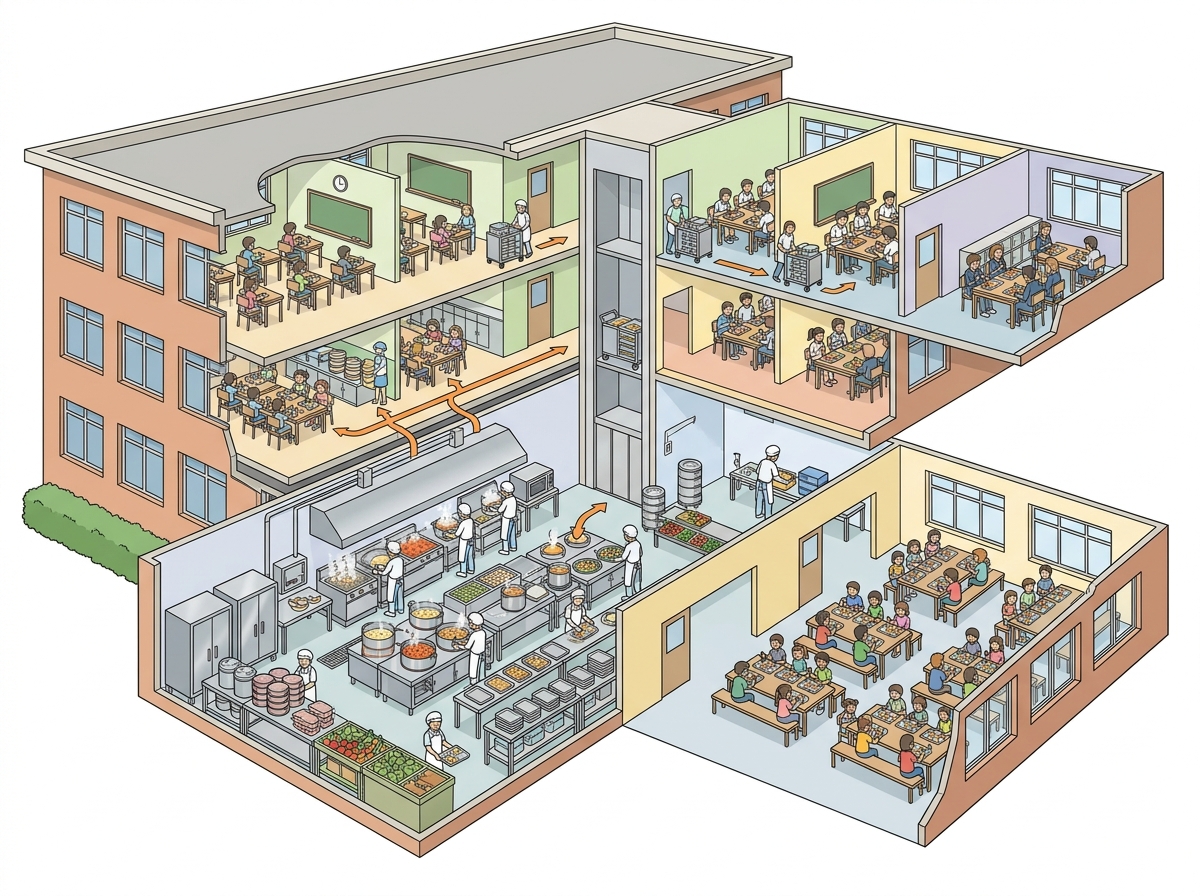
- Implementation is decentralised: the Greater Chennai Corporation operates integrated kitchens for urban schools, while the Tamil Nadu Women’s Development Corporation manages rural and peri-urban schools via SHGs.
- The scheme is grounded in the National Food Security Act (2013), which recognises the right to adequate food as a component of the right to life under Article 21 of the Constitution.
- It complements the Mid-Day Meal Scheme (MDMS), which covers lunch, by ensuring a second meal for school-going children, thereby reducing malnutrition and anaemia among adolescents.
- The scheme aligns with the National Education Policy (NEP) 2020, which emphasises holistic development, health, and well-being in school education.
- Monitoring mechanisms include real-time attendance tracking, mid-day meal registers, and periodic health check-ups to assess nutritional outcomes.
- The scheme’s expansion to Classes 6–8 reflects a shift from early-childhood nutrition to adolescent nutrition, addressing the ‘hidden hunger’ prevalent in this age group.
Key Features
| Feature | Significance |
|---|---|
| Expansion to Classes 6–8 | Extends nutritional coverage to older primary-age children, aligning with adolescent health and cognitive development needs. |
| Coverage of 15.30 lakh additional students | Increases beneficiary base from ~3.14 lakh to ~18.44 lakh, ensuring broader equity in school feeding programmes. |
| Integrated kitchen infrastructure | Uses existing municipal and SHG networks to ensure scalability, hygiene, and local employment generation. |
| Nutritional diversity (millet inclusion) | Promotes dietary diversification and supports national millet promotion policies (e.g., ‘Shree Anna’ initiative). |
| Additional budgetary allocation (₹217.63 crore) | Demonstrates fiscal commitment to human capital development and aligns with SDG 2 (Zero Hunger). |
Why it Matters
Nutritional Impact
- Addresses early-morning hunger, improving concentration, attendance, and academic performance among adolescent learners.
- Reduces micronutrient deficiencies (iron, iodine, vitamin A) prevalent in Tamil Nadu’s school-going population.
- Complements mid-day meal scheme by focusing on breakfast, thus covering two critical meal windows.
Economic Dimensions
- Leverages local SHGs for food preparation, enhancing rural employment and women’s economic participation.
- Reduces healthcare costs by preventing nutrition-related diseases (e.g., anaemia, stunting) in school-age children.
- Stimulates demand for local agricultural produce, particularly millets, supporting farmer incomes.
Educational Outcomes
- Strengthens foundational learning by improving cognitive function and classroom engagement.
- Encourages school retention, particularly for girls and marginalised groups, by reducing hunger-driven absenteeism.
- Supports Tamil Nadu’s ‘Illam Thedi Kalvi’ initiative by ensuring sustained school participation.
Policy Coherence
- Aligns with National Education Policy (NEP) 2020’s emphasis on holistic school health and nutrition.
- Reflects state-level implementation of the Right to Education (RTE) Act’s provisions on child well-being.
- Complements centrally sponsored schemes like POSHAN Abhiyaan and PM-POSHAN.
Challenges
1. Implementation Logistics
- Ensuring uniform quality and hygiene across 15,454 schools with diverse kitchen capacities.
- Managing supply chain for perishable items (e.g., milk, vegetables) in rural and remote areas.
- Balancing cost efficiency with nutritional standards in large-scale procurement.
UPSC Link: GS-II: Social Sector Schemes
2. Nutritional Adequacy
- Meeting varied dietary needs of adolescent boys and girls (e.g., protein, iron requirements).
- Avoiding over-reliance on calorie-dense, nutrient-poor foods in meal planning.
- Ensuring cultural acceptability of millet-based meals to prevent wastage.
UPSC Link: GS-II: Health & Nutrition
3. Monitoring and Accountability
- Tracking real-time attendance and nutritional outcomes to assess programme impact.
- Preventing leakage or diversion of funds/resources through robust auditing mechanisms.
- Addressing grievances of parents/teachers regarding meal quality or distribution delays.
UPSC Link: GS-II: Governance
4. Equity and Inclusion
- Ensuring non-discriminatory access for children with disabilities or special dietary needs.
- Preventing exclusion of migrant or out-of-school children in programme coverage.
- Addressing gender disparities in meal consumption patterns (e.g., girls skipping breakfast).
UPSC Link: GS-II: Social Justice
5. Fiscal Sustainability
- Balancing expansion with long-term budgetary commitments amid competing priorities.
- Exploring public-private partnerships to reduce per-meal costs without compromising quality.
- Mitigating inflationary pressures on food prices affecting programme affordability.
UPSC Link: GS-III: Economic Development
Challenges — UPSC Perspective
| Issue | Concern |
|---|---|
| Kitchen Infrastructure Gaps | Inadequate storage, cooking space, or refrigeration in rural schools. |
| Seasonal Food Availability | Fluctuations in supply of fresh produce (e.g., vegetables, dairy) during monsoons. |
| Cultural Preferences | Low acceptance of millet-based meals among urban or affluent school populations. |
| Data Disparities | Lack of disaggregated data on nutritional status by caste, gender, or disability. |
| Stakeholder Coordination | Delays in inter-departmental approvals (e.g., education, women & child development). |
Government Initiatives — Must-Memorise for Prelims
- Perunthalaivar Kamaraj Breakfast Scheme
- PM-POSHAN (Mid-Day Meal Scheme)
- POSHAN Abhiyaan
- Illam Thedi Kalvi (Tamil Nadu)
Way Forward
- Conduct baseline nutritional assessments of Classes 6–8 students to tailor meal plans.
- Expand training programmes for SHG members on hygiene, nutrition, and cost-effective cooking.
- Pilot digital monitoring systems (e.g., biometric attendance, meal feedback apps) in select districts.
- Collaborate with agricultural universities to source locally adapted millet varieties.
- Establish a grievance redressal mechanism with real-time tracking of complaints.
- Integrate breakfast scheme data with health department records for longitudinal impact studies.
- Explore convergence with Ayushman Bharat’s school health programme for comprehensive care.
- Publish quarterly progress reports with disaggregated data to ensure transparency.
UPSC Value Addition
Keywords for Mains Answer-Writing
Nutrition Security · Breakfast Scheme · Mid-Day Meal Scheme · Right to Food · Public Health Nutrition · School Education · State Welfare Schemes · Integrated Child Development Services · Food Security Act · Child Health Indicators · Government-Funded Nutrition Programmes · Tamil Nadu Social Welfare Policies
Constitutional & Policy Linkages
- Article 45 (DPSP: Free and Compulsory Education)
- Article 21A (Right to Education)
- Article 47 (DPSP: Nutrition and Public Health)
Concept Flow
State-level policy decision → Expansion of beneficiary base → Budgetary allocation → Infrastructure deployment → Meal procurement → SHG-led preparation → School-level distribution → Student consumption → Nutritional and educational outcomes → Long-term human capital development.
Prelims Practice Questions
Q1. Consider the following statements regarding the ‘Perunthalaivar Kamaraj Breakfast Scheme’ recently expanded in Tamil Nadu:
1. The scheme was originally launched for classes 1 to 5 in government schools.
2. The scheme now includes students from classes 6 to 8, benefiting approximately 15.30 lakh additional children.
3. The scheme mandates the inclusion of millet-based breakfast options twice a week.
4. The scheme is implemented exclusively through private contractors to ensure efficiency.
How many of the above statements are correct?
- Only one
- Only two
- Only three
- All four
Answer: Only three — Statements 1, 2, and 3 are correct. Statement 4 is incorrect as the scheme is implemented through integrated kitchens and self-help groups, not private contractors.
Q2. Assertion (A): The expansion of the breakfast scheme in Tamil Nadu aligns with the objectives of the National Food Security Act, 2013.
Reason (R): The scheme aims to address nutritional deficiencies among school-going children by providing fortified meals.
In the context of the above two statements, which one of the following is correct?
- Both A and R are true, and R is the correct explanation of A.
- Both A and R are true, but R is not the correct explanation of A.
- A is true but R is false.
- A is false but R is true.
Answer: A is true but R is false. — Both A and R are true. However, while the scheme aligns with the objectives of the NFSA, 2013, the primary focus is on providing nutritious breakfast rather than fortified meals specifically.
Q3. Match the following pairs related to Tamil Nadu’s nutrition schemes:
Column I (Scheme) | Column II (Coverage)
— | —
A. Mid-Day Meal Scheme | 1. Classes 1 to 12 in government schools
B. Perunthalaivar Kamaraj Breakfast Scheme | 2. Classes 1 to 5 in government schools
C. Integrated Child Development Services (ICDS) | 3. Children aged 0-6 years and pregnant/lactating mothers
D. Tamil Nadu Nutrition Scheme | 4. All school-going children in Tamil Nadu
Select the correct match:
- A-1, B-2, C-3, D-4
- A-2, B-1, C-3, D-4
- A-1, B-2, C-4, D-3
- A-4, B-2, C-3, D-1
Answer: A-1, B-2, C-3, D-4 — A-1 (Mid-Day Meal Scheme covers classes 1 to 12), B-2 (Breakfast Scheme originally covered classes 1 to 5), C-3 (ICDS covers children aged 0-6 years and pregnant/lactating mothers), D-4 (Tamil Nadu Nutrition Scheme covers all school-going children).
Mains Practice Question
✍ The expansion of the ‘Perunthalaivar Kamaraj Breakfast Scheme’ in Tamil Nadu to include classes 6 to 8 marks a significant stride in addressing child malnutrition and enhancing educational outcomes. Critically examine the scheme’s alignment with India’s broader nutritional security framework and its potential socio-economic impacts. (15 Marks)
Approach: MODEL-ANSWER SKELETON:
1. **Introduction**: Define nutritional security and its linkage to the Right to Food (Article 21, Supreme Court judgments in PUCL v. Union of India, 2001).
2. **Scheme Overview**:
– Original scope (classes 1–5) and expansion (classes 6–8).
– Target beneficiaries: 15.30 lakh additional children.
– Budgetary allocation: ₹217.63 crore (total ₹724 crore).
– Implementation: Integrated kitchens, self-help groups, and millet inclusion (twice weekly).
3. **Alignment with National Framework**:
– National Food Security Act (NFSA), 2013: Entitlements under Targeted Public Distribution System (TPDS) and school feeding programmes.
– Mid-Day Meal Scheme (MDMS): Complementarity and gaps addressed by the breakfast scheme (timing, nutritional focus).
– Sustainable Development Goals (SDG 2: Zero Hunger; SDG 4: Quality Education).
4. **Nutritional and Educational Impact**:
– Evidence from studies (e.g., Poshan Tracker data, NFHS-5) on child malnutrition in Tamil Nadu.
– Link to school attendance, cognitive development, and long-term human capital formation.
– Role of millets: Nutritional benefits (high fiber, micronutrients) and climate resilience.
5. **Socio-Economic Dimensions**:
– Gender equity: Addressing adolescent girls’ nutritional needs.
– Economic multiplier effects: Employment generation via self-help groups.
– Decentralized governance: Role of local bodies (e.g., Greater Chennai Corporation, Municipal Administration Directorate).
6. **Challenges and Critiques**:
– Implementation bottlenecks: Logistics, quality control, and monitoring.
– Fiscal sustainability: Long-term budgetary commitments.
– Inter-state disparities: Comparison with other states’ nutrition schemes (e.g., Odisha’s ‘Aahar Yojana’).
7. **Conclusion**:
– Scheme as a model for other states.
– Need for robust monitoring (e.g., third-party audits) and data-driven policy adjustments.
– Broader lesson for India’s nutritional security architecture.
Source: amarujala.com
Tamil Nadu PCS (TNPSC) — State PCS Practice
Prelims: As per recent Tamil Nadu government initiatives, the ‘Breakfast Scheme’ for school students has been expanded to cover an additional beneficiary count. What is the total number of students now benefiting from this scheme?
- 12.80 lakh
- 15.30 lakh
- 18.50 lakh
- 20.00 lakh
Answer: 15.30 lakh — The scheme has been expanded to cover 15.30 lakh students, as announced by the Tamil Nadu government.
Mains: Discuss the significance of the Tamil Nadu government’s decision to expand the ‘Breakfast Scheme’ for school children in Classes 6 to 8, highlighting its potential impact on nutrition, education, and social equity in the state.
Generated by AanyaAi for educational purpose.
Related guides on our sites
- Current affairs for upsc 2026
- Best PSIR optional coaching for upsc
- Best PSIR optional teacher for upsc
- Best teacher of PSIR optional for upsc

- Tamil Nadu Expands Breakfast Scheme to Classes 6-8: 15.30 Lakh Students Benefit - September 22, 2026
- राज्यसभा उपचुनाव उत्तराखंड: 16 अक्तूबर को मतदान, जानें पूरा कार्यक्रम और महत्व - September 22, 2026
- राज्यसभा उपचुनाव उत्तराखंड: 16 अक्टूबर को मतदान, जानें प्रक्रिया और महत्व - September 22, 2026

No Comments