


23 Sep Madras HC Rejects AIADMK Plea Against Mekedatu Resolution Amendment
✎ The Inter-State River Water Disputes Act, 1956, empowers the Central Government to constitute tribunals under Section 4 to resolve disputes over inter-State rivers, while legislative resolutions passed by State Assemblies serve…
Subject Relevance — Where This Topic Fits
- GS Paper II — Polity and Governance (Inter-State Relations) | GS Paper III — Environment and Disaster Management (Water Resources)
- Prelims: Inter-State Water Disputes Act, 1956, Article 262 of the Constitution, Cauvery Water Disputes Tribunal, Legislative Assembly proceedings, Judicial review of legislative resolutions
- Essay: Federalism and cooperative governance in India, Judicial intervention in legislative processes: Balancing accountability and autonomy
Quick Revision: The Inter-State River Water Disputes Act, 1956, empowers the Central Government to constitute tribunals under Section 4 to resolve disputes over inter-State rivers, while legislative resolutions passed by State Assemblies serve as formal expressions of position in such disputes.
Why is this in the news?
The Madras High Court’s dismissal of the AIADMK whip’s petition challenging the amendment to Tamil Nadu’s resolution on the Mekedatu dam underscores the judicial scrutiny of legislative processes in inter-State disputes. This case highlights the constitutional framework governing inter-State river water disputes, the procedural validity of legislative resolutions, and the role of the judiciary in ensuring adherence to due process in matters of governance.
Background
- The Cauvery river, a transboundary water resource, has been the subject of prolonged inter-State disputes between Tamil Nadu and Karnataka, dating back to the 19th century.
- The Inter-State River Water Disputes Act, 1956, provides the legal framework for resolving such disputes through the establishment of tribunals under Section 4.
- The Cauvery Water Disputes Tribunal, constituted in 1990, delivered its final award in 2007, which was subsequently modified by the Supreme Court in 2018, delineating the share of water for Tamil Nadu, Karnataka, Kerala, and Puducherry.
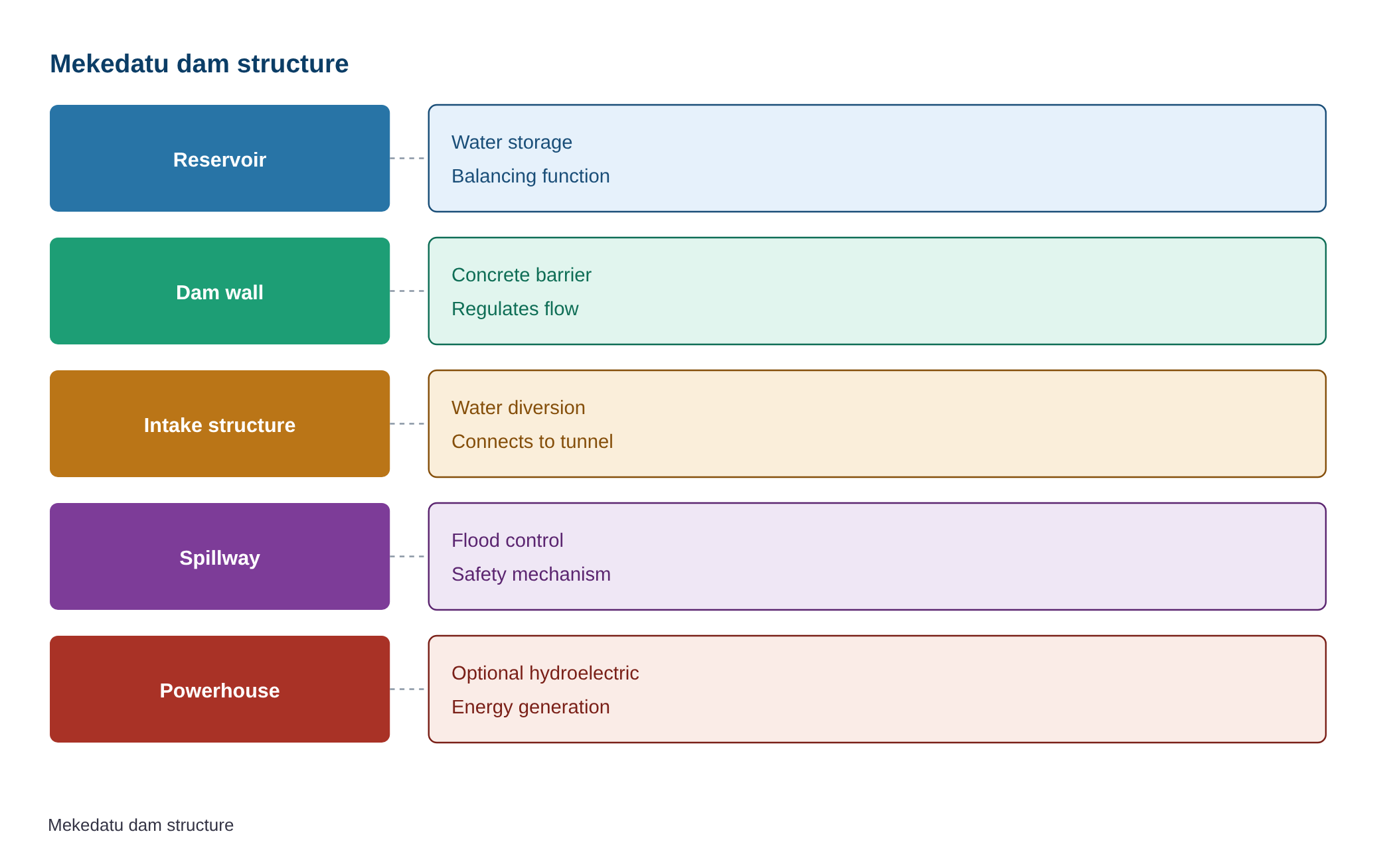
- Karnataka’s proposal to construct a balancing reservoir at Mekedatu, near the Tamil Nadu-Karnataka border, has reignited tensions, with Tamil Nadu opposing the project on grounds of potential water diversion and environmental impact.
- The Tamil Nadu Legislative Assembly, on June 19, 2026, passed a resolution opposing the Mekedatu project, which was subsequently amended to include a demand for the constitution of a tribunal under the 1956 Act.
- The AIADMK whip challenged the amendment, alleging procedural impropriety and lack of debate, prompting the Madras High Court to examine the validity of the legislative process.
What is the Mekedatu Dispute and the Role of Legislative Resolutions?
- The Mekedatu project proposed by Karnataka involves the construction of a balancing reservoir across the Cauvery river, aimed at addressing drinking water needs and irrigation requirements in Bengaluru and surrounding areas.
- Tamil Nadu has opposed the project, citing concerns over reduced water flow downstream, violation of the Cauvery Water Disputes Tribunal’s award, and potential environmental degradation.
- Legislative resolutions passed by State Assemblies in inter-State disputes serve as formal expressions of opposition or support, which are communicated to the Central Government for consideration in dispute resolution mechanisms.
- The Inter-State River Water Disputes Act, 1956, empowers the Central Government to constitute tribunals for resolving disputes over the use, distribution, or control of inter-State rivers, as per Section 4.
- The role of the Speaker in State Legislatures is pivotal in ensuring adherence to parliamentary procedures, including the proper introduction, debate, and voting on amendments to resolutions.
- Judicial review of legislative resolutions is constrained by the principle of separation of powers; courts typically intervene only in cases of procedural impropriety or constitutional violations, not on the merits of the resolution itself.
- The Madras High Court’s ruling reaffirms that the judiciary respects the autonomy of State Legislatures in expressing their stance on inter-State disputes, provided the legislative process is constitutionally valid.
Key Features
| Feature | Significance |
|---|---|
| Amendment to Assembly Resolution | Demonstrates the procedural validity of legislative amendments in State Assemblies, particularly when unanimously adopted. |
| Video Evidence of Proceedings | Highlights the judiciary’s reliance on authenticated records to ascertain legislative intent and procedural correctness. |
| Role of Speaker in Voting | Reinforces the constitutional authority of the Speaker to authenticate and certify legislative decisions. |
| Inter-State River Water Disputes | Underlines the constitutional framework governing disputes between States over shared water resources. |
| Judicial Review of Legislative Process | Shows the limits of judicial intervention in legislative procedures unless constitutional or procedural violations are established. |
Why it Matters
Legal and Procedural
- The judgment reaffirms the primacy of legislative procedures in State Assemblies, particularly the role of amendments and unanimous voting.
- It establishes that the judiciary will not interfere with legislative decisions unless there is a clear violation of constitutional or procedural norms.
- The use of video evidence from Assembly proceedings underscores the importance of transparency and documentation in legislative processes.
Federalism and Inter-State Relations
- The case highlights the constitutional framework for resolving inter-State water disputes, governed by the Inter-State River Water Disputes Act, 1956.
- It demonstrates the collaborative yet adversarial nature of Centre-State and inter-State relations in matters of resource allocation.
- The resolution reflects Tamil Nadu’s constitutional right to oppose projects that may impact its water rights under Article 262 of the Constitution.
Judicial Role in Governance
- The judgment clarifies the boundaries of judicial review in legislative matters, emphasizing restraint unless fundamental rights or constitutional provisions are violated.
- It reinforces the principle that courts will not substitute their judgment for the legislative process unless procedural improprieties are proven.
- The case serves as a precedent for future disputes involving legislative amendments and inter-State conflicts.
Water Resource Management
- The Mekedatu project exemplifies the challenges in managing transboundary river basins, requiring equitable and sustainable solutions.
- It underscores the need for institutional mechanisms like tribunals under the Inter-State River Water Disputes Act to resolve disputes.
- The case highlights the role of State Assemblies in articulating and advocating regional interests in water resource governance.
Challenges
1. Inter-State Water Disputes
- Protracted delays in resolving disputes due to the adversarial nature of inter-State negotiations.
- Lack of a permanent mechanism for equitable water sharing, leading to recurring conflicts.
- Political and regional sensitivities complicating consensus-building.
- Jurisdictional overlaps between State and Central governments in water resource management.
UPSC Link: GS Paper 2: Federalism, Inter-State Relations
2. Legislative Procedural Integrity
- Ensuring transparency and accountability in legislative amendments, particularly in sensitive matters.
- Balancing the need for swift decision-making with thorough debate and consensus-building.
- Preventing procedural improprieties in the conduct of Assembly proceedings.
UPSC Link: GS Paper 2: Parliament and State Legislatures
3. Judicial Review vs. Legislative Autonomy
- Defining the limits of judicial intervention in legislative processes to avoid overreach.
- Balancing the need for judicial oversight with respect for legislative autonomy.
- Ensuring that judicial review does not undermine the democratic legitimacy of legislative decisions.
UPSC Link: GS Paper 2: Judiciary and Judicial Review
4. Resource Allocation and Equity
- Achieving equitable distribution of shared resources like water among States with competing demands.
- Balancing developmental needs with environmental sustainability in water resource projects.
- Addressing the rights and interests of downstream States in transboundary river basins.
UPSC Link: GS Paper 2: Federalism and Resource Allocation
5. Institutional Mechanisms for Dispute Resolution
- Strengthening the efficacy of tribunals under the Inter-State River Water Disputes Act to deliver timely and binding decisions.
- Exploring alternative dispute resolution mechanisms to reduce adversarial litigation.
- Enhancing the role of the Centre in facilitating consensus between disputing States.
UPSC Link: GS Paper 2: Dispute Resolution Mechanisms
Challenges — UPSC Perspective
| Issue | Concern |
|---|---|
| Delay in Tribunal Constitutions | Prolonged disputes due to delays in setting up tribunals under the Inter-State River Water Disputes Act. |
| Political Polarisation | Regional and political differences complicating consensus-building in inter-State water disputes. |
| Procedural Ambiguities | Lack of clarity in legislative procedures for amendments and voting in State Assemblies. |
| Judicial Overreach | Risk of courts substituting their judgment for legislative or executive decisions in disputes. |
| Environmental vs. Developmental Trade-offs | Balancing the need for water projects with ecological sustainability and downstream impacts. |
| Centre-State Coordination | Challenges in ensuring effective coordination between States and the Central government in water resource management. |
Way Forward
- Strengthen institutional mechanisms under the Inter-State River Water Disputes Act to ensure timely and binding resolutions.
- Encourage States to adopt alternative dispute resolution methods, such as mediation or negotiation, to reduce adversarial litigation.
- Enhance transparency in legislative procedures by mandating detailed documentation and public access to Assembly proceedings.
- Promote capacity-building among States to improve water resource management and equitable distribution practices.
- Clarify procedural guidelines for legislative amendments in State Assemblies to ensure consistency and fairness.
- Foster Centre-State collaboration to address systemic issues in inter-State water disputes and resource allocation.
- Invest in research and data-driven approaches to assess the impact of water projects on downstream States and ecosystems.
UPSC Value Addition
Keywords for Mains Answer-Writing
Inter-State Water Disputes Act, 1956 · Cauvery River water dispute · Mekedatu Project · Tamil Nadu Legislative Assembly · Madras High Court jurisdiction · Parliamentary resolution process · Speaker’s role in legislative proceedings · Inter-State River Water Disputes Tribunal · Judicial review of legislative resolutions · Federalism in water governance · Article 262 of the Constitution · Constitutional provisions for inter-State disputes · Judicial scrutiny of Assembly proceedings · Procedural fairness in legislative amendments · Federal disputes resolution mechanisms
Constitutional & Policy Linkages
- Article 262: Adjudication of disputes relating to inter-State rivers and river valleys.
Concept Flow
Tamil Nadu Legislative Assembly passes resolution opposing Karnataka’s Mekedatu project → Amendment proposed to include demand for tribunal constitution under Inter-State River Water Disputes Act → Amendment unanimously adopted by Assembly after debate and voting → AIADMK whip challenges validity of amendment in Madras High Court → High Court dismisses petition, upholds procedural validity of amendment → Judgment reaffirms legislative autonomy and judicial restraint in reviewing legislative processes → Resolution communicated to Centre, initiating inter-State dispute resolution process
Prelims Practice Questions
Q1. Consider the following statements regarding the Inter-State River Water Disputes Act, 1956:
1. It empowers the Central Government to constitute a tribunal for resolving disputes between States over river waters.
2. The tribunal’s award is binding on the States concerned and has the same force as an order of the Supreme Court.
3. The Act mandates that the tribunal must be constituted within one year of the dispute being referred to the Central Government.
4. The tribunal’s proceedings are conducted in camera to maintain confidentiality.
How many of the above statements are correct?
- Only one
- Only two
- Only three
- All
Answer: Only three — Statements 1 and 2 are correct. Statement 3 is incorrect as the Act does not specify a time limit for tribunal constitution. Statement 4 is incorrect as the tribunal’s proceedings are not conducted in camera.
Q2. Assertion (A): The Speaker of a State Legislative Assembly has the authority to permit amendments to a resolution before putting it to vote.
Reason (R): The Speaker’s decision in this regard is final and cannot be challenged in a court of law under any circumstances.
Options:
A. Both A and R are true, and R is the correct explanation of A.
B. Both A and R are true, but R is not the correct explanation of A.
C. A is true, but R is false.
D. A is false, but R is true.
Answer: ? — Assertion (A) is true as the Speaker can permit amendments to a resolution. Reason (R) is false as the Speaker’s decision can be subject to judicial review under specific circumstances.
Q3. Match the following provisions with their respective constitutional or statutory contexts:
Column I (Provision)
A. Article 262 of the Constitution
B. Inter-State River Water Disputes Act, 1956
C. Article 174 of the Constitution
D. Article 212 of the Constitution
Column II (Context)
1. Provides for the establishment of tribunals to adjudicate inter-State water disputes.
2. Deals with the powers and privileges of the State Legislatures.
3. Empowers the Parliament to make laws for the adjudication of disputes relating to waters of inter-State rivers.
4. Prohibits courts from interfering in the proceedings of the Legislature.
- A-3, B-1, C-2, D-4
- A-1, B-3, C-4, D-2
- A-2, B-4, C-1, D-3
- A-4, B-2, C-3, D-1
Answer: A-3, B-1, C-2, D-4 — Correct match: A-3 (Article 262 empowers Parliament to legislate on inter-State water disputes), B-1 (Inter-State River Water Disputes Act, 1956 provides for tribunals), C-2 (Article 174 deals with State Legislature sessions), D-4 (Article 212 prohibits judicial interference in legislative proceedings).
Mains Practice Question
✍ The Madras High Court’s dismissal of the AIADMK whip’s petition challenging the amendment to the Tamil Nadu Legislative Assembly’s resolution on the Mekedatu dam underscores the principle of legislative supremacy and the limits of judicial intervention in parliamentary proceedings. Critically analyse the constitutional and legal framework governing the resolution of inter-State water disputes in India, with particular reference to the role of State Legislatures, the Speaker, and the judiciary. Also, evaluate the implications of such judicial scrutiny for federalism and cooperative governance in water resource management. (15 Marks)
Approach: MODEL-ANSWER SKELETON:
1. **Constitutional Framework for Inter-State Water Disputes (2 Marks)**
– Article 262 of the Constitution: Exclusion of jurisdiction of courts, Parliament’s power to legislate.
– Inter-State River Water Disputes Act, 1956: Provisions for tribunal constitution, binding awards, and enforcement.
2. **Role of State Legislatures and Speaker (3 Marks)**
– Legislative supremacy: Resolutions as expressions of legislative intent.
– Speaker’s discretion: Permissibility of amendments and procedural fairness (Article 174, 178).
– Judicial deference: Limits of judicial review under Article 212 (prohibition of interference in legislative proceedings).
3. **Judicial Review and its Boundaries (4 Marks)**
– Scope of judicial scrutiny: Procedural fairness vs. substantive correctness.
– Landmark judgments: *State of Rajasthan v. Union of India* (1977) on legislative supremacy; *Kihoto Hollohan v. Zachillhu* (1992) on Speaker’s powers.
– Recent trends: Courts balancing federalism with judicial oversight in inter-State disputes.
4. **Federalism and Cooperative Governance (3 Marks)**
– Challenges in water governance: Competing claims, ecological concerns, and equity.
– Mechanisms for cooperation: River Boards, tribunals, and inter-State agreements.
– Role of the Centre: Facilitating dialogue and enforcing tribunal awards.
5. **Implications of Judicial Scrutiny (3 Marks)**
– Strengthening federalism: Ensuring procedural fairness without undermining legislative autonomy.
– Risks of judicial overreach: Potential for politicisation of disputes.
– Way forward: Strengthening institutional mechanisms for dispute resolution and cooperative federalism.
Source: The Hindu
Tamil Nadu PCS (TNPSC) — State PCS Practice
Prelims: Which of the following statements is correct regarding the Madras High Court’s ruling on the AIADMK whip’s case against the amendment to the Mekedatu resolution passed by the Tamil Nadu Assembly?
- The Madras High Court dismissed the case, upholding the amendment to the Mekedatu resolution as legally valid.
- The Madras High Court directed the Tamil Nadu government to withdraw the Mekedatu resolution entirely.
- The Madras High Court ruled in favor of the AIADMK whip, declaring the amendment unconstitutional.
- The Madras High Court referred the case to the Supreme Court for further adjudication.
Answer: The Madras High Court dismissed the case, upholding the amendment to the Mekedatu resolution as legally valid. — The Madras High Court dismissed the AIADMK whip’s case, thereby upholding the amendment to the Mekedatu resolution passed by the Tamil Nadu Assembly.
Mains: Examine the legal and constitutional implications of the Madras High Court’s dismissal of the AIADMK whip’s case against the amendment to the Mekedatu resolution. Discuss the role of state legislative assemblies in passing such resolutions and the judicial review mechanism in this context.
Generated by AanyaAi for educational purpose.
Related guides on our sites
- Anthropology VS PSIR
- Best PSIR optional coaching
- Best PSIR optional coaching online
- Best PSIR optional teacher

- Madras HC Rejects AIADMK Plea Against Mekedatu Resolution Amendment - September 23, 2026
- कर्नाटक में उद्योग-आधारित पाठ्यक्रम तैयार करेगा विशेष समिति: मुख्यमंत्री - September 23, 2026
- Karnataka to Form Industry-Aligned Curriculum Committee: CM’s Vision for Tech Education - September 23, 2026

No Comments