


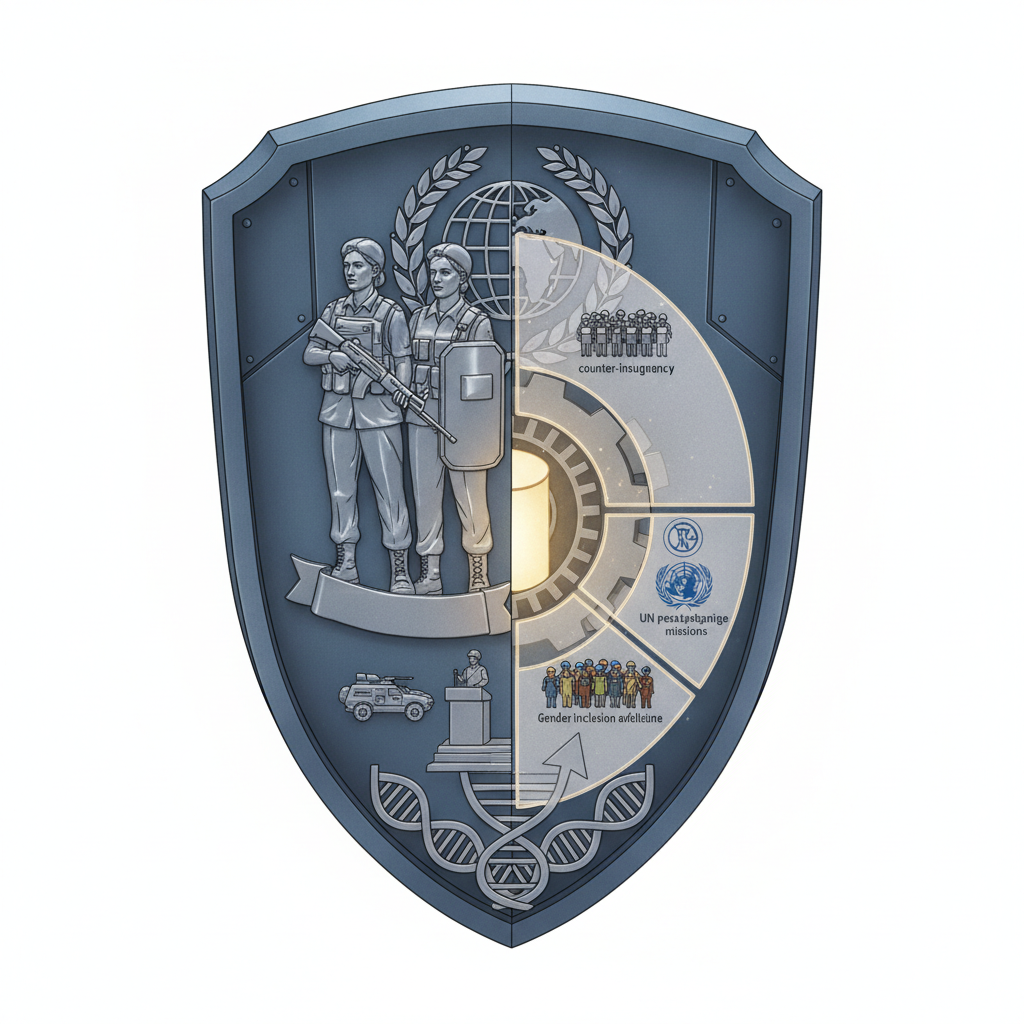
25 Sep CRPF Women Battalion: 40 Years of Historic Service in UN Missions & Security Ops
✎ The CRPF’s 88th Women’s Combat Battalion, established in 1986, is the world’s first all-women armed police battalion, exemplifying India’s commitment to gender inclusion in national security and UN peacekeeping.
Subject Relevance — Where This Topic Fits
- GS Paper III — Security: Role of Central Armed Police Forces (CAPFs), Gender Inclusion in Security Institutions | GS Paper II — International Relations: India’s Participation in UN Peacekeeping Missions
- Prelims: CRPF, All-Women Battalions, UN Peacekeeping Missions, CAPFs, Gender Inclusion in Security Forces, 88th Women’s Battalion
- Essay: Women in Uniform: Breaking Barriers and Redefining National Security, India’s Soft Power through UN Peacekeeping: A Legacy of Professionalism and Inclusion
Quick Revision: The CRPF’s 88th Women’s Combat Battalion, established in 1986, is the world’s first all-women armed police battalion, exemplifying India’s commitment to gender inclusion in national security and UN peacekeeping.
Why is this in the news?
The Central Reserve Police Force (CRPF) commemorated the 40th anniversary of the formation of its 88th Women’s Combat Battalion, established in 1986 as the world’s first all-women armed police battalion within paramilitary forces. This milestone underscores the enduring operational contributions of women personnel in counter-insurgency, riot control, VIP security, anti-Naxal operations, and United Nations peacekeeping missions, reflecting institutional commitment to gender inclusion and professional excellence in national security.
Background
- The 88th Women’s Combat Battalion, raised in 1986, was a pioneering initiative to integrate women into combat roles within paramilitary forces, aligning with global trends in gender mainstreaming in security institutions.
- Women personnel in CRPF have progressively expanded their operational footprint from internal security duties to participation in UN peacekeeping missions, including deployments in conflict zones such as Liberia, Congo, and South Sudan.
- The CRPF’s gender inclusion policy has evolved through institutional reforms, including the establishment of dedicated women’s battalions, training infrastructure, and welfare schemes to support female personnel.
- The 40-year milestone highlights the force’s sustained emphasis on operational readiness, professional development, and institutional recognition of women’s contributions in high-risk security environments.
What is the CRPF’s Women Combat Battalion?
- The 88th Women’s Combat Battalion of the CRPF, established in 1986, is the world’s first all-women armed police battalion within paramilitary forces, marking a historic step in gender integration in security institutions.
- Women personnel in CRPF are trained in combat roles, including counter-insurgency, riot control, VIP security, and jungle warfare, enabling them to undertake frontline operational duties alongside male counterparts.
- The battalion’s formation was a strategic response to the evolving security challenges in India, particularly in regions affected by insurgency and civil unrest, where women’s presence enhanced community engagement and operational effectiveness.
- CRPF’s women battalions have been deployed in diverse operational theatres, including Jammu and Kashmir, the Northeast, and Left-Wing Extremism-affected areas, demonstrating their adaptability and resilience in high-risk environments.
- The force has also contributed to UN peacekeeping missions, with women personnel serving in roles such as peacekeepers, medical staff, and logistics officers, reinforcing India’s commitment to global peace and security.
- Institutional mechanisms such as the CRPF Family Welfare Association and dedicated training academies have been established to support the professional growth, welfare, and career progression of women personnel.
- The 40-year milestone reflects the CRPF’s sustained investment in gender inclusion, operational excellence, and institutional recognition of women’s contributions to national security and peacekeeping.
- The force’s progressive policies include provisions for maternity leave, childcare support, and gender-sensitive infrastructure, ensuring a conducive environment for women to serve in uniformed roles.
Key Features
| Feature | Significance |
|---|---|
| Establishment of 88th Women’s Battalion (1986) | First all-women armed police battalion in India and globally among paramilitary forces, marking a paradigm shift in gender integration in security institutions. |
| Operational Deployment in UN Missions | Demonstrates India’s commitment to global peacekeeping and enhances the credibility of Indian peacekeepers in international security frameworks. |
| Multi-domain Operational Roles | Participation in counter-terrorism, riot control, VIP security, and counter-Naxal operations, showcasing versatility in internal security management. |
| Institutional Recognition and Awards | Annual ceremonies honouring women veterans and serving personnel, reinforcing institutional respect for gender-inclusive service models. |
| Family Welfare Initiatives by CRPF | Support systems for personnel deployed in sensitive areas and UN missions, addressing welfare concerns in high-risk operational environments. |
Why it Matters
Institutional and Governance
- Institutionalises gender parity in paramilitary forces, setting a precedent for other security agencies to follow in recruitment, training, and deployment policies.
- Enhances operational diversity by integrating women into combat and leadership roles, improving adaptability in complex security scenarios.
- Strengthens India’s soft power in global governance through sustained contributions to UN peacekeeping missions, reinforcing diplomatic and strategic influence.
Strategic Security
- Demonstrates operational excellence in counter-insurgency and counter-terrorism, particularly in Left-Wing Extremism-affected regions, where women personnel have proven effective in community engagement and intelligence gathering.
- Improves law-and-order management through gender-sensitive crowd control and VIP protection protocols, reducing escalation risks in sensitive operations.
Societal and Cultural
- Challenges traditional gender norms in security institutions, encouraging broader societal acceptance of women in non-traditional roles.
- Acts as a role model for young women aspirants in civil services, particularly in the Indian Police Service and Central Armed Police Forces.
Challenges
1. Operational Readiness in Extreme Terrains
- Maintaining peak physical and mental performance of women personnel in high-altitude, jungle, and desert operations where logistical support is constrained.
- Ensuring gender-specific medical and hygiene facilities in forward-deployed units, especially in UN missions with limited infrastructure.
UPSC Link: GS III: Security challenges
2. Gender-Specific Safety Concerns
- Mitigating risks of sexual harassment and gender-based violence in male-dominated operational environments through robust grievance redressal mechanisms.
- Balancing operational demands with family welfare needs, particularly for personnel deployed in prolonged UN missions or counter-insurgency operations.
UPSC Link: GS I: Social empowerment
3. Training and Skill Upgradation
- Continuous updating of combat and leadership training modules to align with evolving threats, including cyber-enabled warfare and hybrid security challenges.
- Addressing the gap in specialized technical training (e.g., explosive ordnance disposal, cyber security) for women personnel to enhance operational versatility.
UPSC Link: GS III: Internal security
4. Institutional Inertia and Resistance
- Overcoming cultural biases within security establishments that may impede full integration of women in combat roles or senior leadership positions.
- Ensuring equitable career progression pathways for women personnel, including promotions and postings in strategic roles.
UPSC Link: GS II: Governance
Challenges — UPSC Perspective
| Issue | Concern |
|---|---|
| Logistical Constraints in UN Missions | Limited access to gender-specific amenities and healthcare in remote peacekeeping locations. |
| Cultural Stereotypes in Security Forces | Persistent biases affecting acceptance of women in combat leadership roles. |
| Family Separation Stress | Prolonged deployments leading to psychological strain on personnel and their families. |
| Skill Diversification Gaps | Insufficient training in emerging security domains like cyber warfare and drone operations. |
| Posting and Promotion Parity | Underrepresentation of women in senior operational and strategic positions within the force. |
Way Forward
- Expand gender-inclusive training curricula to include advanced combat simulations, leadership drills, and technical skill modules for women personnel.
- Strengthen institutional mechanisms for addressing gender-based grievances, including anonymous reporting systems and dedicated counselling cells.
- Enhance logistical support for UN missions, ensuring equitable access to medical facilities, hygiene products, and family communication tools.
- Promote research on gender-specific operational effectiveness to refine deployment strategies in counter-insurgency and peacekeeping environments.
- Establish mentorship programmes pairing senior women officers with junior personnel to foster career growth and institutional belonging.
- Develop a transparent promotion policy with clear benchmarks for women personnel, ensuring parity in career progression pathways.
- Collaborate with international peacekeeping bodies to standardise gender-responsive training and deployment protocols for women peacekeepers.
UPSC Value Addition
Keywords for Mains Answer-Writing
CRPF · women in uniformed forces · 88th Women’s Battalion · UN peacekeeping missions · gender integration in security institutions · internal security architecture · Central Reserve Police Force · women combat roles · operational excellence in paramilitary forces · institutional inclusivity in defence services
Constitutional & Policy Linkages
- [‘Article 14: Equality before law’, ‘Ensures non-discriminatory recruitment and service conditions for women in paramilitary forces.’]
- [‘Article 15(3): Special provisions for women’, ‘Permits affirmative action in training and deployment to address historical gender gaps.’]
- [‘Article 16: Equality of opportunity in public employment’, ‘Guarantees fair access to promotions and postings for women personnel.’]
Concept Flow
1986: Establishment of India’s first all-women combat battalion → → Operational deployment in internal security (counter-terrorism, Naxal operations) → → Expansion into UN peacekeeping missions (2000s onwards) → → Institutional recognition through awards and ceremonies → → Emergence of gender-inclusive governance models in security institutions → → Ongoing challenges in training, welfare, and career progression → → Way forward: Policy reforms, skill upgradation, and institutional parity
Prelims Practice Questions
Q1. Consider the following statements regarding the Central Reserve Police Force (CRPF):
1. The CRPF is the largest paramilitary force in India.
2. The 88th Women’s Battalion of the CRPF was established in 1986.
3. The CRPF is primarily responsible for maintaining law and order in Naxal-affected areas.
4. The CRPF has never participated in United Nations peacekeeping missions.
How many of the above statements are correct?
- Only one
- Only two
- Only three
- All
Answer: Only three — Statements 1, 2, and 3 are correct. The CRPF is indeed the largest paramilitary force in India, the 88th Women’s Battalion was established in 1986, and the CRPF plays a key role in maintaining law and order in Naxal-affected areas. Statement 4 is incorrect as the CRPF has actively participated in UN peacekeeping missions.
Q2. Assertion (A): The Central Reserve Police Force (CRPF) is the primary agency responsible for counter-insurgency operations in India.
Reason (R): The CRPF operates under the operational control of the Ministry of Home Affairs.
Options:
A. Both A and R are true, and R is the correct explanation of A.
B. Both A and R are true, but R is not the correct explanation of A.
C. A is true, but R is false.
D. A is false, but R is true.
Answer: ? — Assertion (A) is false as the CRPF is primarily responsible for maintaining internal security and law and order, while counter-insurgency operations are typically led by the Army with CRPF support. Reason (R) is true as the CRPF operates under the Ministry of Home Affairs.
Q3. Match the following paramilitary forces with their primary roles:
| Column I (Paramilitary Force) | Column II (Primary Role) |
|——————————-|————————–|
| 1. CRPF | A. Border management |
| 2. BSF | B. Internal security and law and order |
| 3. ITBP | C. Coastal security |
| 4. CISF | D. Industrial security |
Options:
A. 1-B, 2-A, 3-C, 4-D
B. 1-A, 2-B, 3-D, 4-C
C. 1-C, 2-D, 3-A, 4-B
D. 1-D, 2-C, 3-B, 4-A
Answer: ? — The correct match is: 1-B (CRPF: Internal security and law and order), 2-A (BSF: Border management), 3-C (ITBP: Border management in high-altitude areas), and 4-D (CISF: Industrial security).
Mains Practice Question
✍ The establishment of the 88th Women’s Battalion of the Central Reserve Police Force (CRPF) in 1986 marked a seminal moment in the integration of women into combat roles within India’s internal security architecture. Critically examine the significance of this initiative in the context of gender inclusivity in paramilitary forces. Also, discuss the operational contributions of women personnel in the CRPF over the past four decades. (15 Marks)
Approach: MODEL-ANSWER SKELETON:
1. **Historical Context and Significance of the 88th Women’s Battalion (2 Marks)**
– 1986: India’s first all-women armed police battalion under CRPF.
– Context: Post-Emergency era, evolving gender norms, and the need for inclusive security institutions.
– Symbolic milestone: Breaking gender barriers in combat roles within paramilitary forces.
2. **Gender Inclusivity in Paramilitary Forces: Legal and Policy Framework (3 Marks)**
– Constitutional provisions: Articles 14, 15, 16 (equality, non-discrimination, equal opportunity).
– Government initiatives: Recruitment policies, training reforms, and institutional support for women in uniform.
– Challenges: Societal stereotypes, physical standards, and institutional resistance.
3. **Operational Contributions of Women Personnel in CRPF (4 Marks)**
– **Counter-insurgency and Counter-Naxal operations**: Role in Dantewada, Chhattisgarh, and other conflict zones.
– **Law and order maintenance**: Deployment in riot control, VIP security, and crowd management.
– **United Nations Peacekeeping Missions**: Deployment in countries like Congo, Liberia, and South Sudan.
– **Operational excellence**: Citation for bravery, leadership in hostile environments, and transformation of institutional culture.
4. **Impact on Institutional Culture and Societal Perception (3 Marks)**
– Shift in public perception: From auxiliary roles to combat leadership.
– Role models for aspiring women in security services.
– Institutional reforms: Gender sensitization, family welfare initiatives, and support systems for women personnel.
5. **Critique and Way Forward (3 Marks)**
– **Critique**: Persistent gender gaps in senior ranks, underrepresentation in specialized units, and societal biases.
– **Way Forward**: Expanding recruitment, enhancing training infrastructure, and promoting gender parity in decision-making roles.
– **Conclusion**: The 88th Women’s Battalion is a testament to India’s commitment to gender inclusivity, but sustained efforts are required to achieve full parity.
Source: amarujala.com
Generated by AanyaAi for educational purpose.
Related guides on our sites
- Best PSIR optional coaching for upsc
- UPSC History optional
- Is history a good optional for upsc exam
- Best PSIR optional teacher for upsc

- PM Modi Praises Youth-Led Nasha Mukt Yuva Abhiyan Momentum - September 27, 2026
- राजनाथ सिंह का बड़ा बयान: भारत किसी की ज़मीन कब्ज़ा नहीं करेगा, लेकिन सुरक्षा पर होगा कठोर - September 27, 2026
- Exercise Tarang Shakti 2026: India’s Mega Multi-Nation Air Power Showcase - September 27, 2026

No Comments