


25 Sep UPSC Alert: NISD Conducts 11-Day Master Trainer Program on Geriatric Care
✎ The NISD’s ToT programme for geriatric care providers institutionalises standardised training to address India’s ageing population, integrating clinical, psychosocial, and ethical dimensions.
Subject Relevance — Where This Topic Fits
- GS Paper II — Social Justice and Empowerment (Elderly Care Policies) | GS Paper IV — Ethics in Public Administration (Professional Competence and Standardisation)
- Prelims: National Institute of Social Defence (NISD), Geriatric Care Provider, Master Trainers, Non-Communicable Diseases (NCDs), Dementia Care, Active Ageing, Primary Healthcare for Elderly
- Essay: The Role of Institutions in Addressing Demographic Challenges: A Case Study of Elderly Care Capacity-Building, Ethical Imperatives in Public Service Delivery: Standardisation and Quality Assurance
Quick Revision: The NISD’s ToT programme for geriatric care providers institutionalises standardised training to address India’s ageing population, integrating clinical, psychosocial, and ethical dimensions.
Why is this in the news?
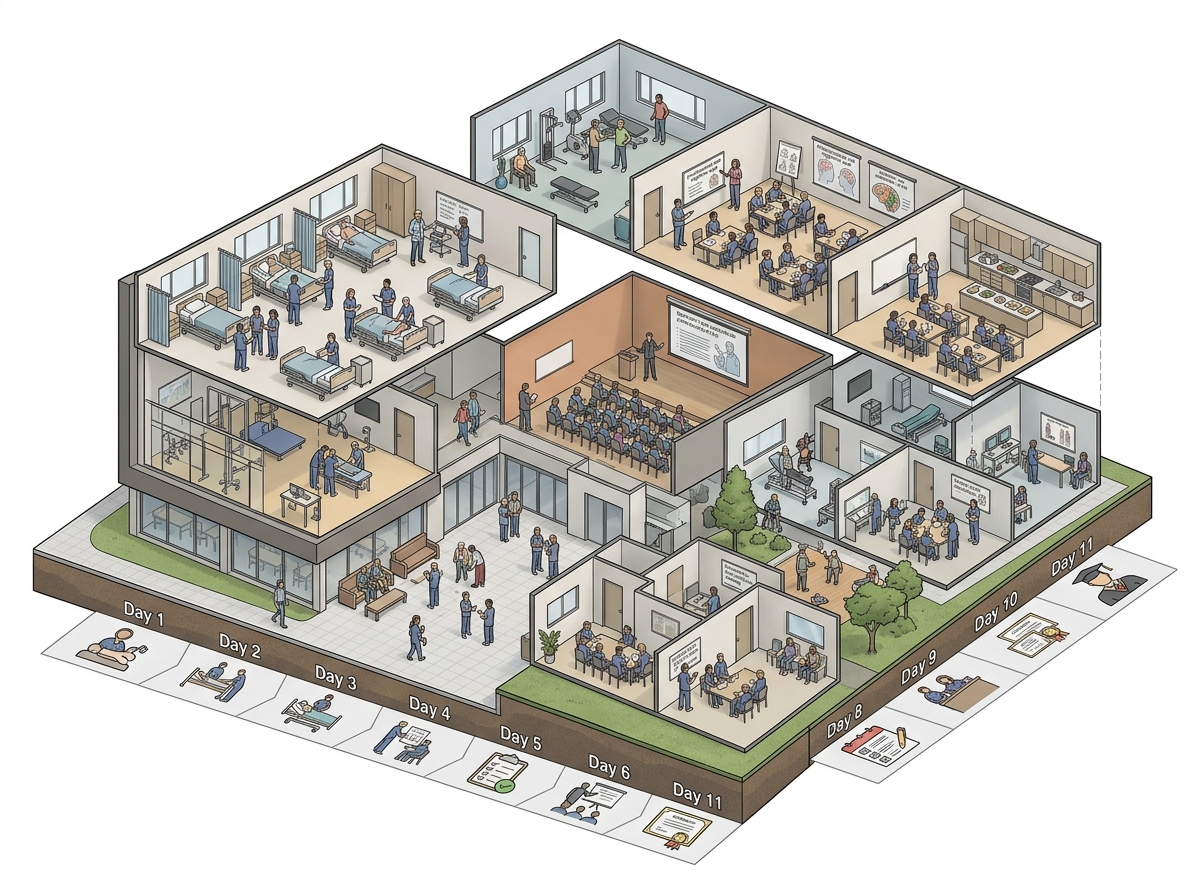
The National Institute of Social Defence (NISD), under the Ministry of Social Justice and Empowerment, conducted an 11-day ‘Training of Trainers’ (ToT) programme from 7 to 18 September 2026 for master trainers in geriatric care provider roles. This initiative, aimed at standardising and professionalising elderly care training, underscores the government’s institutional response to India’s demographic shift towards an ageing population and the growing demand for skilled caregivers. The programme aligns with broader policy efforts to integrate health, nutrition, and psychosocial dimensions into elderly care, ensuring dignity and quality of life for senior citizens.
Background
- India’s elderly population (aged 60+) is projected to reach 194 million by 2031, necessitating a robust ecosystem of trained caregivers to address their multifaceted needs.
- The National Policy for Senior Citizens (2011) and the Maintenance and Welfare of Parents and Senior Citizens Act (2007) mandate state support for elderly welfare, including healthcare and institutional care.
- The National Programme for Health Care of the Elderly (NPHCE), launched in 2010, aims to provide comprehensive primary healthcare services to senior citizens, including geriatric outpatient departments and home-based care.
- The NISD, established under the Ministry of Social Justice and Empowerment, serves as the nodal agency for training and capacity-building in social defence, including elderly care.
- Global frameworks such as the UN Principles for Older Persons (1991) and the Madrid International Plan of Action on Ageing (2002) emphasise the need for integrated, rights-based elderly care systems.
What is the ‘Training of Trainers’ (ToT) Programme for Geriatric Care Providers?
- The ToT programme is a capacity-building initiative designed to create a cadre of master trainers capable of delivering standardised, high-quality training to geriatric care providers across India.
- The programme focuses on two core skill domains: (a) Domain Skills, covering clinical, nutritional, and psychosocial aspects of elderly care, and (b) Platform Skills, encompassing training methodologies, facilitation, and assessment techniques.
- Key thematic areas include age-related physiological changes, non-communicable disease management, dementia care, mental health in elderly, nutrition for seniors, emergency care, and the ethical dimensions of ageing with dignity.
- The curriculum integrates evidence-based practices from geriatrics, public health, and social work, ensuring a holistic approach to elderly care training.
- Participants, including nurses, medical graduates, and allied healthcare professionals, undergo rigorous evaluation to certify their competence as master trainers.
- The programme emphasises self-care for caregivers, recognising that sustainable elderly care requires the well-being of those providing it.
- Certified master trainers are expected to disseminate training modules, ensuring uniformity and quality in geriatric care provision nationwide.
- The ToT model aligns with the National Skill Qualification Framework (NSQF) to ensure professional recognition and employability of trained caregivers.
Key Features
| Feature | Significance |
|---|---|
| 11-day ‘Training of Trainers’ (ToT) programme | Ensures standardised, high-quality training for geriatric care providers through certified master trainers. |
| Dual focus: Domain Skills and Platform Skills | Domain Skills cover geriatric care competencies; Platform Skills enhance training delivery, engagement, and evaluation methods. |
| Interdisciplinary participant pool | Inclusion of GNM, B.Sc./M.Sc. Nursing, MBBS professionals fosters cross-domain learning for holistic elderly care. |
| Comprehensive curriculum | Covers physiological aging, dementia care, mental health, nutrition, emergency care, and dignity in aging, aligning with WHO’s active aging framework. |
| Certification and quality assurance | Standardised documentation, competency benchmarks, and certification processes ensure uniformity and accountability in training outcomes. |
Why it Matters
Demographic Transition and Policy Response
- Addresses India’s aging population (projected 20% elderly by 2050) by institutionalising skilled geriatric care workforce to mitigate dependency burden.
- Aligns with the National Policy on Older Persons (1999) and Maintenance and Welfare of Parents and Senior Citizens Act (2007) by promoting professionalised elderly care.
- Supports SDG 3 (Good Health and Well-being) and SDG 10 (Reduced Inequalities) through equitable access to geriatric healthcare services.
Economic and Social Impact
- Creates employment opportunities in the geriatric care sector, particularly for nursing and allied health professionals.
- Reduces informal caregiving burden on families, enabling higher workforce participation among caregivers.
- Enhances productivity by promoting healthy aging and preventing age-related disabilities through preventive care.
Institutional Capacity Building
- Strengthens National Institute of Social Defence (NISD) as a nodal agency for geriatric care training and policy implementation.
- Establishes a national pool of master trainers to ensure scalability and regional coverage of training programmes.
- Integrates evidence-based practices (e.g., WHO’s Integrated Care for Older People) into India’s geriatric care framework.
Healthcare System Integration
- Bridges gaps in primary healthcare by training providers in geriatric-specific needs (e.g., non-communicable diseases, dementia care).
- Promotes preventive and rehabilitative care, reducing hospitalisation and long-term care costs.
- Facilitates multi-disciplinary collaboration among healthcare, social work, and nutrition professionals.
Challenges
1. Workforce Shortage in Geriatric Care
- Limited availability of trained professionals in geriatric nursing and allied health disciplines.
- Urban-rural divide in access to certified geriatric care providers.
- Need for continuous upskilling to adapt to evolving geriatric care technologies and protocols.
UPSC Link: GS2: Health, Education
2. Standardisation and Quality Assurance
- Ensuring uniformity in training content and delivery across diverse regions and institutions.
- Addressing variability in certification standards and recognition of training programmes.
- Monitoring post-training performance and competency retention among master trainers.
UPSC Link: GS2: Governance
3. Awareness and Stigma Reduction
- Challenging societal stigma associated with professional geriatric care and institutionalised elderly support.
- Promoting dignity and respect in elderly care through cultural sensitivity training.
- Encouraging family and community participation in geriatric care programmes.
UPSC Link: GS1: Social Issues
4. Resource Constraints
- Limited funding for sustained training programmes, particularly in underserved regions.
- Need for public-private partnerships to scale geriatric care initiatives.
- Ensuring equitable distribution of training resources and infrastructure.
UPSC Link: GS3: Economy
5. Policy Implementation Gaps
- Ensuring alignment between national geriatric care policies and state-level execution.
- Addressing legal and ethical challenges in elderly care, such as consent and guardianship.
- Integrating geriatric care into existing healthcare frameworks (e.g., Ayushman Bharat).
UPSC Link: GS2: Governance
Challenges — UPSC Perspective
| Issue | Concern |
|---|---|
| Limited geriatric care professionals | Insufficient trained workforce to meet rising elderly care demands. |
| Regional disparities in training access | Urban-centric programmes exacerbate rural-urban healthcare divide. |
| Certification variability | Lack of standardised benchmarks for geriatric care training programmes. |
| Stigma in elderly care | Cultural reluctance to professionalise geriatric care services. |
| Policy fragmentation | Disjointed implementation of elderly care policies across states. |
| Funding constraints | Inadequate resources for sustained geriatric care training initiatives. |
Way Forward
- Expand the ToT programme to cover Tier-2 and Tier-3 cities for equitable access to geriatric care training.
- Develop a national digital platform for geriatric care training, certification, and resource sharing.
- Collaborate with medical and nursing councils to integrate geriatric care competencies into undergraduate curricula.
- Establish regional geriatric care centres of excellence to serve as training hubs and research nodes.
- Launch public awareness campaigns to promote dignity in elderly care and reduce stigma.
- Incentivise professionals to specialise in geriatric care through scholarships and career progression pathways.
- Strengthen data systems to track geriatric care workforce distribution and training outcomes.
- Foster public-private partnerships to scale geriatric care services and training infrastructure.
UPSC Value Addition
Keywords for Mains Answer-Writing
National Institute of Social Defence · Master Trainers Programme · Geriatric Care Providers · Training of Trainers · Senior Citizen Division · Active Ageing · Dementia Care · Non-Communicable Diseases · Skill Standardisation · Capacity Building · Social Justice and Empowerment Ministry · Ageing Population Policy · Healthcare Workforce · Quality Assurance in Training · Competency-Based Training · Elderly Care Ecosystem
Concept Flow
Aging population → Increased demand for geriatric care → Skill gaps in workforce → NISD’s ToT programme → Certified master trainers → Standardised training → High-quality geriatric care providers → Improved elderly health outcomes → Reduced dependency burden.
Prelims Practice Questions
Q1. Consider the following statements regarding the role of the National Institute of Social Defence (NISD) in India: 1. NISD functions under the Ministry of Social Justice and Empowerment. 2. NISD has recently conducted an 11-day ‘Training of Trainers’ programme for geriatric care providers. 3. The programme exclusively focuses on medical training for geriatric care. 4. The programme aims to standardise and professionalise the training of elderly care providers in India. How many of the above statements are correct?
- Only one
- Only two
- Only three
- All four
Answer: All four — Statements 1, 2, and 4 are correct. Statement 3 is incorrect as the programme includes both medical and non-medical aspects such as communication, nutrition, and mental health.
Q2. Assertion (A): The National Institute of Social Defence (NISD) is mandated to enhance the quality of training for elderly care providers in India. Reason (R): The ‘Training of Trainers’ programme organised by NISD aims to create a pool of certified master trainers who can impart high-quality, competency-based training across the country. Evaluate the Assertion and Reason using the following options:
- Both A and R are true, and R is the correct explanation of A.
- Both A and R are true, but R is not the correct explanation of A.
- A is true, but R is false.
- A is false, but R is true.
Answer: Both A and R are true, but R is not the correct explanation of A. — Both the Assertion (A) and Reason (R) are true. The Reason (R) correctly explains the Assertion (A) as the programme is explicitly designed to strengthen the quality and standardisation of training for geriatric care providers.
Q3. Match the following terms related to geriatric care with their correct descriptions: 1. Active Ageing 2. Dementia Care 3. Non-Communicable Diseases 4. Geriatric Care Providers Column I (Term) | Column II (Description) A. Prevention and management of chronic diseases such as diabetes and hypertension. B. Professionals trained to provide specialised care to elderly individuals. C. A WHO framework promoting health, participation, and security in older age. D. Specialised care strategies for cognitive impairments like Alzheimer’s disease.
- 1-C, 2-D, 3-A, 4-B; 1-A, 2-B, 3-C, 4-D; 1-B, 2-A, 3-D, 4-C; 1-D, 2-C, 3-B, 4-A
- answer_list_index_to_match_column_ordering_is_1
- explain_list_index_to_match_column_ordering_is_1
- format_match_list_index_to_match_column_ordering_is_1
- format_match_list_index_to_match_column_ordering_is_1
Answer: 1-C, 2-D, 3-A, 4-B; 1-A, 2-B, 3-C, 4-D; 1-B, 2-A, 3-D, 4-C; 1-D, 2-C, 3-B, 4-A — 1-C: Active Ageing aligns with the WHO framework. 2-D: Dementia Care involves managing cognitive impairments. 3-A: Non-Communicable Diseases include chronic conditions like diabetes. 4-B: Geriatric Care Providers are professionals trained in elderly care.
Mains Practice Question
✍ The National Institute of Social Defence (NISD) has recently conducted an 11-day ‘Training of Trainers’ programme to standardise and professionalise the training of geriatric care providers in India. Critically examine the significance of this initiative in addressing the challenges posed by India’s ageing population. Also, outline the key components of the programme and their relevance to the evolving elderly care ecosystem in the country. (15 Marks)
Approach: Introduction (2 marks): Briefly define the ageing population challenge in India using data from the UN World Population Ageing 2020 report (e.g., 104 million elderly by 2026) and the role of NISD under the Ministry of Social Justice and Empowerment. State the objective of the ‘Training of Trainers’ programme.
Significance of the Initiative (5 marks):
1. Addressing the skill gap: Highlight the shortage of trained geriatric care professionals in India (cite NITI Aayog’s 2021 report on the healthcare workforce).
2. Standardisation of care: Discuss how the programme ensures uniformity in training quality, reducing disparities in elderly care across regions.
3. Professionalisation of the sector: Explain how certified master trainers will enhance the credibility and recognition of geriatric care as a formal profession.
4. Public health impact: Link improved geriatric care to reduced hospitalisation rates and better management of non-communicable diseases (NCDs) among the elderly.
5. Alignment with global frameworks: Reference the WHO’s ‘Decade of Healthy Ageing (2021-2030)’ and India’s National Programme for Health Care of the Elderly (NPHCE).
Key Components of the Programme (5 marks):
1. Domain skills: Enumerate core areas covered (e.g., age-related physiological changes, dementia care, mental health, nutrition, emergency care).
2. Platform skills: Discuss training methodologies (e.g., interactive sessions, role-playing, certification processes) to ensure effective knowledge dissemination.
3. Interdisciplinary approach: Highlight the inclusion of professionals from nursing, medicine, and social work backgrounds.
4. Capacity building: Emphasise the creation of a national pool of master trainers to sustain long-term training efforts.
Conclusion (3 marks): Summarise the transformative potential of the initiative in building a robust elderly care ecosystem. Highlight the need for continued policy support, funding, and public awareness to scale the programme nationally. Suggest future directions, such as integrating geriatric care into primary healthcare systems and leveraging technology (e.g., telemedicine for elderly care).
Source: PIB (Press Information Bureau)
Generated by AanyaAi for educational purpose.
Related guides on our sites
- Best sociology optional coaching for upsc
- Which is best sociology optional coaching for upsc
- Best teacher of sociology optional for upsc
- Best mentorship programme for upsc

- PM Modi Praises Youth-Led Nasha Mukt Yuva Abhiyan Momentum - September 27, 2026
- राजनाथ सिंह का बड़ा बयान: भारत किसी की ज़मीन कब्ज़ा नहीं करेगा, लेकिन सुरक्षा पर होगा कठोर - September 27, 2026
- Exercise Tarang Shakti 2026: India’s Mega Multi-Nation Air Power Showcase - September 27, 2026

No Comments